
Stop Heating the Neighborhood with This Attic Insulation Guide
Why Most Homes Are Hemorrhaging Heat Through the Attic
This attic insulation guide covers everything you need to stop wasting money on heating and cooling — from checking your current insulation level to choosing the right material and installing it correctly.
Quick answers:
- Do you need more insulation? Look at your attic floor. If you can see the joists, you almost certainly need more.
- How much R-value do you need? R-38 to R-60, depending on your climate zone.
- Best material for most homes? Blown-in cellulose or fiberglass batts cover the majority of situations.
- First step? Air seal before you insulate — always.
- Can you DIY? Yes, for batts and blown-in. Spray foam is best left to pros.
Here’s a number that should get your attention: more than 90% of homes in North America don’t have enough attic insulation. That includes homes built in the 2000s.
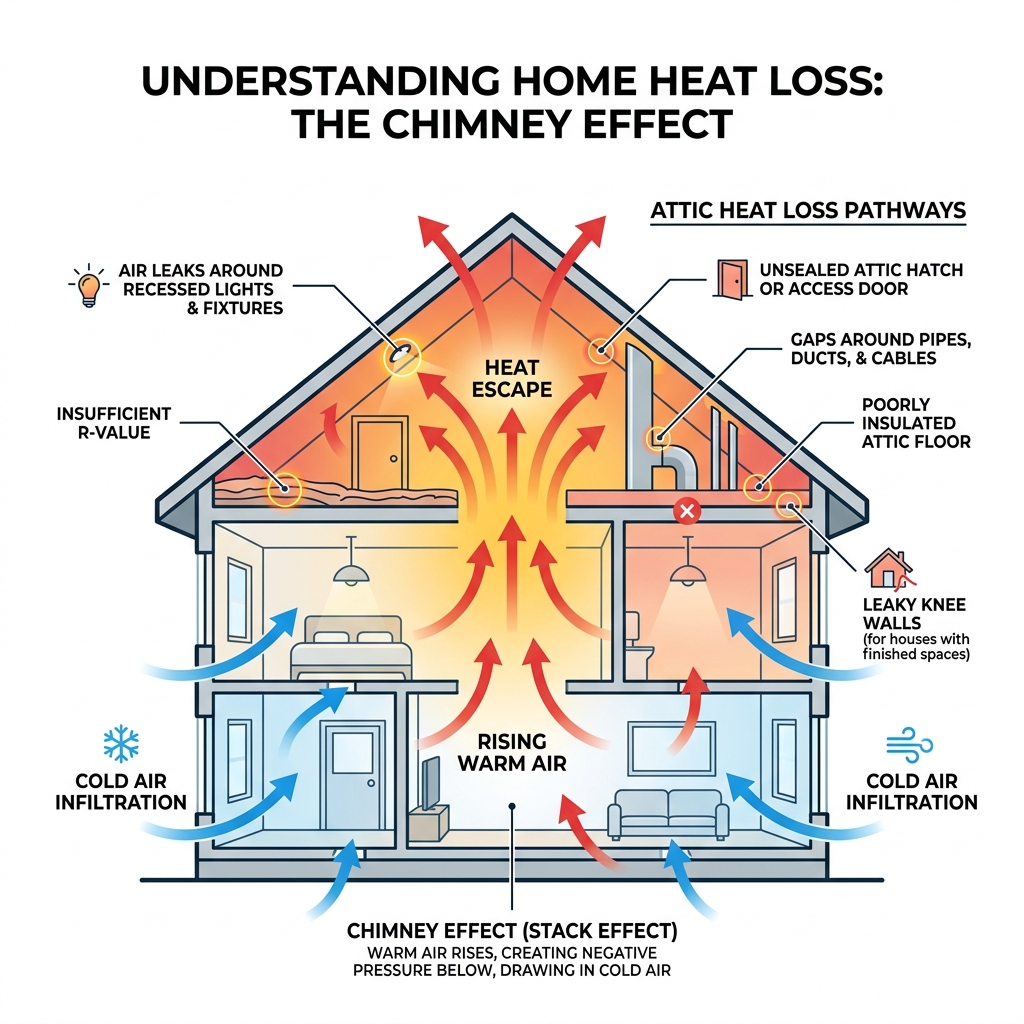
Your attic is where the most heat escapes in winter — and where the most heat invades in summer. Hot air rises. Without a proper thermal barrier at the top of your home, that conditioned air you paid to help heat or cool just… leaves.
Up to 40% of a home’s air leakage happens through the attic floor alone. That’s not a small gap — that’s a major drain on your energy bill every single month.
The good news? Fixing it is one of the highest-ROI upgrades you can make to a home. Proper attic insulation can cut heating and cooling bills by up to 15%, and in some cases up to 20% per year.
This guide walks you through exactly what to do.
Why Your Home Needs an Attic Insulation Guide
When we talk about insulation, we are really talking about thermal resistance. In the industry, this is measured by “R-value.” The higher the R-value, the better the material is at resisting heat flow. In the winter, heat wants to escape to the cold outdoors; in the summer, heat wants to push its way into your cool, air-conditioned sanctuary.
By following a proper attic insulation guide, you aren’t just saving a few bucks on your utility bill—though attic-insulation-tips-save-energy-and-money are certainly a major perk. You are also protecting the structural integrity of your home.
The Hidden Benefits of Better Insulation
Beyond the monthly savings, insulating-your-home-for-energy-efficiency provides several critical protections:
- HVAC Lifespan: When your attic is a sieve, your furnace and AC work overtime. Proper insulation reduces the load, meaning fewer repairs and a longer life for your expensive HVAC system.
- Ice Dam Prevention: In cold climates, heat escaping through the attic melts snow on the roof. That water runs down to the cold eaves and freezes, forming “ice dams” that can force water under your shingles and into your walls.
- Moisture and Mold Control: A well-insulated and sealed attic prevents warm, moist indoor air from hitting cold roof surfaces, which is the primary recipe for mold and wood rot.
Calculating Your Attic Insulation Guide Needs
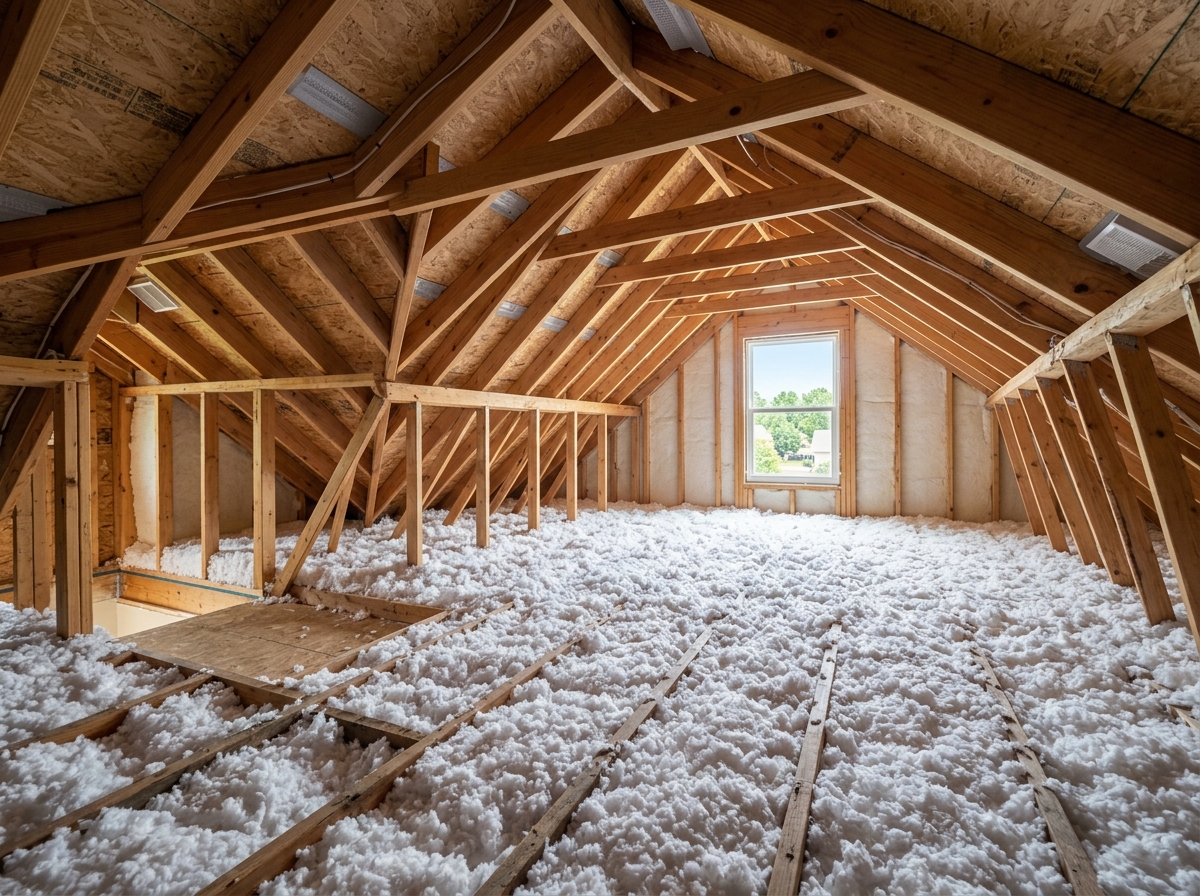
How do you know if you’re part of that 90% of under-insulated homeowners? The easiest way is the “joist test.” Grab a flashlight and peek into your attic. If the insulation is level with or below the floor joists (the wooden beams), you definitely need more. If you can’t see the joists at all because the insulation is buried deep beneath them, you might be in good shape.
To get technical, you need to measure the depth with a ruler. According to Well-Insulated and Sealed Attic | ENERGY STAR, most attics should aim for an R-value of R-38 to R-49.
Generally, common materials provide an R-value of about 3.0 to 3.8 per inch. To hit R-49, you’re looking at roughly 13 to 16 inches of material.
The Importance of Air Sealing First
One of the biggest mistakes homeowners make is dumping new insulation over a leaky attic floor. Insulation is like a wool sweater; it keeps you warm, but if the wind blows right through the knit, you’ll still be cold. You need a “windbreaker”—that’s air sealing.
Before adding a single batt of fiberglass, we must address air leakage. Common culprits include:
- Recessed “Can” Lights: These often act like chimneys, sucking air straight out of your living room.
- Plumbing Stacks and Wire Holes: Small gaps where pipes or wires enter the attic.
- The Attic Hatch: Often the biggest hole in your “thermal envelope.”
Using expanding spray foam, caulk, and weatherstripping to close these gaps is essential. For more on this, check out our energy-saving-methods-for-home-insulation.
Comparing Attic Insulation Materials and Costs
Choosing the right material is the core of any attic insulation guide. There is no “one-size-fits-all” answer, as your budget and attic layout will dictate the best choice.
Fiberglass Batts and Rolls
This is the “pink stuff” most people recognize. It’s made of fine glass fibers and is relatively inexpensive ($0.30–$1.50 per square foot).
- Pros: Easy to handle for DIYers; widely available.
- Cons: Can be itchy to install; loses R-value if compressed; doesn’t fill irregular gaps well.
Blown-In Cellulose
Made from recycled newspaper treated with fire retardants (like boric acid), cellulose is a favorite for retrofitting. It costs about $0.60–$2.30 per square foot.
- Pros: Excellent coverage; eco-friendly; higher R-value per inch (~3.5–3.8) than standard fiberglass.
- Cons: Can be dusty during installation; settles about 15-20% over time, which must be accounted for during the initial blow.
Mineral Wool (Stone Wool)
Often described as looking like a “loaf of bread,” mineral wool is made from basalt rock and steel slag.
- Pros: Incredible fire resistance (withstands up to 2,000°F); superior sound dampening; doesn’t lose R-value when wet.
- Cons: More expensive than fiberglass (25-45% more); heavier and harder to find.
Spray Foam
This is the premium option. It acts as both insulation and an air barrier.
- Pros: Highest R-value (up to R-7 per inch for closed-cell); stops air leaks completely.
- Cons: Most expensive ($1.00–$4.50 per square foot); requires professional installation; can be messy.
For a deeper dive into these options, read the-ultimate-guide-to-insulating-your-home or see the detailed breakdown at Adding Insulation to Attic – This Old House.
Pros and Cons of Common Materials
When deciding, consider the “itch factor” and longevity. Fiberglass is notorious for causing skin irritation, whereas recycled denim (made from old jeans) is soft and safe to touch, though more expensive.
If you are working in a “wet zone” or a damp climate, mineral wool is a champion because it is naturally hydrophobic and mold-resistant. You can learn more about specific material choices in the-best-insulation-to-use-between-studs-in-your-wet-zones.
Balancing Attic Ventilation and Insulation
A common myth is that an attic should be “sealed tight like a drum.” In reality, an unconditioned attic needs to breathe. If you stuff insulation into the corners where the roof meets the walls, you might block your soffit vents.
Without airflow, moisture gets trapped. This leads to roof deck rot and mold. To prevent this, we use baffles (also called rafter vents). These are plastic or foam channels that ensure air can travel from the intake vents (soffits) to the exhaust vents (ridge or gable vents).
The industry standard is a 1:150 ratio—one square foot of vent area for every 150 square feet of attic floor. A balanced system (50% intake, 50% exhaust) is the gold standard for roof health.
DIY vs. Professional Installation Strategies
Can you do this yourself? Absolutely. Installing fiberglass batts or renting a cellulose blower from a big-box store is a classic weekend warrior project.
When to DIY:
- You have a standard attic with plenty of headroom.
- You are comfortable wearing a respirator and crawling on joists.
- You want to save on labor costs (which can be 50% or more of the total project).
When to Hire a Pro:
- Limited Access: If you have a “low-slope” roof or tiny scuttle hole.
- Safety Hazards: If you find knob-and-tube wiring (a major fire risk if covered) or vermiculite (which may contain asbestos).
- Spray Foam: This requires chemical mixing and specialized rigs.
Don’t forget the financial side! The federal government offers tax credits for up to 30% of insulation material costs (up to $1,200) through 2032. Many local utilities also offer rebates ranging from $200 to $500.
Step-by-Step Attic Insulation Guide for Homeowners
If you’ve decided to take the DIY plunge, follow these steps for a professional-grade result:
- Safety First: Wear a long-sleeved shirt, gloves, goggles, and a high-quality N95 respirator. Wear a headlamp so you can see where you’re stepping—only step on the joists, or you’ll end up in the room below!
- Air Seal: Use spray foam and caulk to seal gaps around pipes, wires, and light fixtures.
- Install Baffles: Staple baffles to the roof rafters at the eaves to ensure your soffit vents stay clear.
- Mark Your Depth: If using blown-in, staple “rulers” (strips of cardboard with inch marks) to the joists so you know when you’ve hit your target R-value.
- Layer Up: If using batts, lay the first layer between the joists. If you need a second layer, lay it perpendicular to the first. This covers the tops of the joists and reduces “thermal bridging.”
- The Hatch: Don’t forget the door! Glue a piece of rigid foam board to the top of the attic hatch and add weatherstripping around the edges.
Frequently Asked Questions about Attic Insulation
How do I know if my attic has enough insulation?
The quickest check is the “joist test.” If you can see the wooden floor joists in your attic, you likely have less than R-19, which is insufficient for almost every climate in North America. Use a ruler to measure the depth; if you have less than 10 inches of fiberglass or cellulose, it’s time for an upgrade.
Can you over-insulate an attic?
Yes, but not in the way you might think. You can’t really have “too much” R-value, but you can have too much physical material if it blocks your ventilation. If insulation covers the soffit vents or is packed too tightly against the roof deck, it can trap moisture and cause mold or ice dams.
Should I remove old insulation before adding new?
In most cases, no. You can simply add new insulation on top of the old stuff. However, you must remove it if:
- It is wet or shows signs of past mold growth.
- It is infested with animal waste (rodents, bats, etc.).
- It is “compacted” to the point of being a hard crust (common with very old cellulose).
- It is vermiculite (get this tested for asbestos before touching it).
Conclusion
At Financefyx, we believe that smart home ownership starts with efficiency. While an attic insulation guide might not be as exciting as a kitchen remodel, the long-term ROI is undeniable. You’ll enjoy lower bills, a more comfortable home, and a higher resale value—energy-efficient homes often sell for 2–5% more.
Before you start, consider getting a professional energy audit to identify your home’s specific weak spots. Once you’ve sealed and insulated the “hat” of your home, you can stop heating the neighborhood and start keeping that comfort (and money) where it belongs.
For more ways to keep your home running lean, check out More energy saving tips.
