
Draft Proof Window Strips and Other Ways to Chill Out
Why Draft Proof Window Strips Are Your First Line of Defence Against Winter Heat Loss
Draft proof window strips are self-adhesive sealing strips you apply around window frames to block cold air from sneaking in through gaps — and stop warm air from leaking out.
Here’s a quick answer to what you need to know:
- What they do: Seal gaps around windows to stop air leaks and reduce heat loss
- How they work: Press-and-stick foam, silicone, rubber, or brush material fills the gap between your window and its frame
- Who they’re for: Any homeowner with cold drafts, rising heating bills, or noisy windows
- How much they cost: Typically $10–$25 CAD for a roll that covers one or more windows
- How to install: Clean the surface, measure, cut, peel the backing, and press firmly into place
Cold air doesn’t need a big opening to cause problems. Even a small gap around a window frame can let enough air through to make a room feel chilly — and push your heating system to work harder.
Heat loss through poorly sealed windows is one of the most common — and most fixable — energy problems in Canadian homes.
The good news? Draft proof window strips are one of the cheapest and easiest fixes available. No tools. No contractor. No mess. Just a roll of strip material and 20 minutes of your time.
In this guide, we’ll walk you through the types of strips available, how to pick the right one, and exactly how to install them so they actually work.
Understanding How Draft Proof Window Strips Work
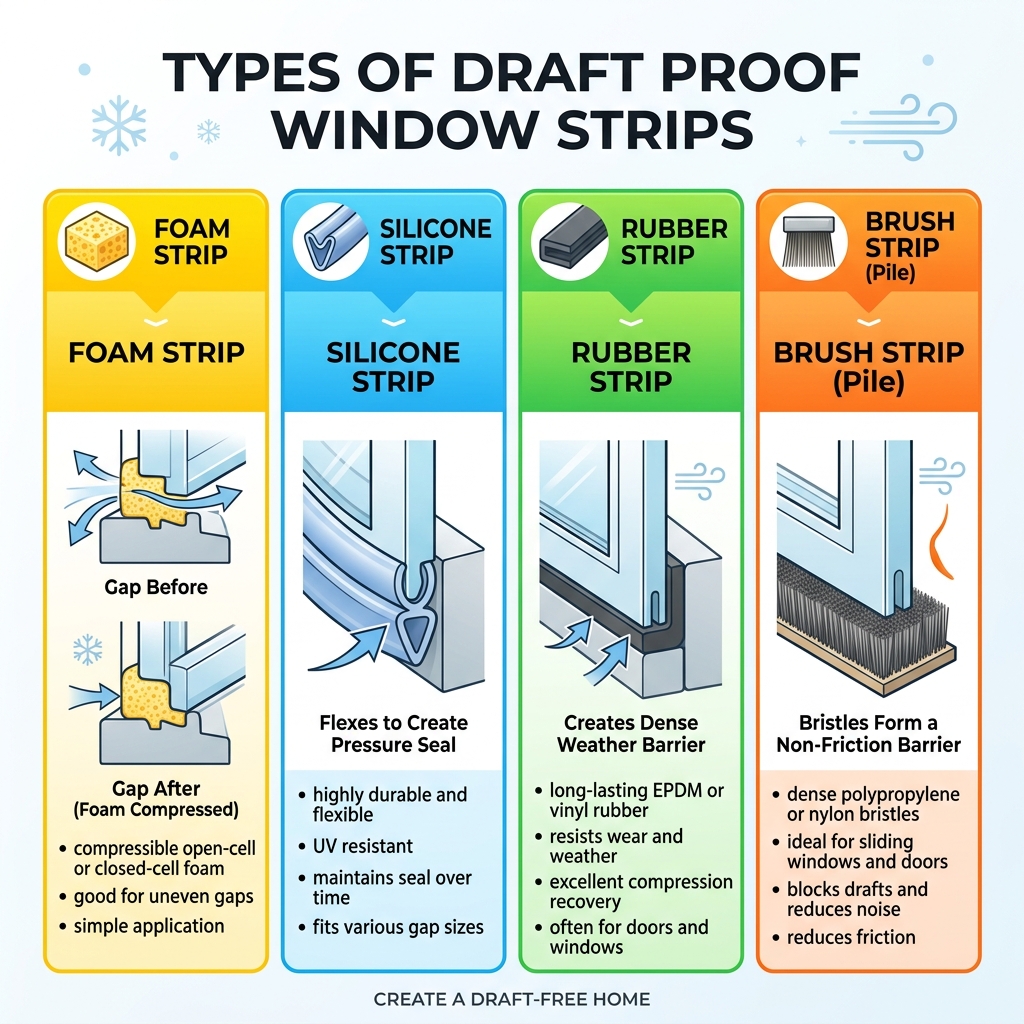
At their core, draft proof window strips act as a physical airflow barrier. Think of them like a gasket on a refrigerator door. When you close your window, the strip compresses, creating a pressure seal that fills the irregular gaps between the sash and the frame.
Without these strips, your windows act as a “thermal bridge.” This means they allow heat to transfer easily from the warm inside of your home to the freezing outside. By sealing these air leaks, we effectively break that bridge. It isn’t just about keeping the wind out; it’s about maintaining a consistent internal pressure so your furnace doesn’t have to kick in every ten minutes.
If you’ve ever sat by a window and felt a “ghostly” breeze, you’re experiencing an air leak. Learning how to seal air leaks to save energy is one of the most effective ways to lower your carbon footprint and your monthly overhead.
5 Essential Types of Draft Proof Window Strips
Choosing the right material is half the battle. We don’t want to use a bulky foam on a tight-fitting casement window, nor do we want a thin tape for a massive gap in an old wooden frame.

- Silicone Seal Strips: These are the modern gold standard. Silicone is highly flexible, waterproof, and doesn’t get brittle in extreme Canadian winters (rated for -40°C to 93°C). They are often transparent, making them nearly invisible once installed.
- Foam Tape: Usually made of PVC or polyurethane, foam strips are the easiest to install. They are highly compressible, making them perfect for irregular gaps. However, they can lose their “bounce” over time.
- Rubber (EPDM) Strips: These are heavy-duty options. They provide excellent soundproofing and are much more durable than foam, often lasting 5–10 years.
- Brush Strips (Pile Weatherstripping): Specifically designed for sliding windows and doors. The “fuzzy” bristles allow the window to slide while still blocking air and dust.
- V-Seal (Tension Seals): These are plastic or metal strips folded into a ‘V’ shape. They use tension to push against the sides of the window, creating a tight seal that doesn’t interfere with opening and closing.
| Feature | Silicone | Foam | Rubber (EPDM) |
|---|---|---|---|
| Durability | High (5+ years) | Low (1-2 years) | Very High (10 years) |
| Visibility | Low (Transparent) | High (Gray/White) | Moderate |
| Best For | Glass/Shower/Windows | Tight Gaps | Exterior Doors/Heavy Drafts |
| Price | Moderate | Low | High |
Choosing the Right Draft Proof Window Strips for Your Gaps
Before you head to the store, we recommend doing a “noise check” or the “candle test.” Hold a lit candle near your window frame; if the flame flickers or smoke swirls, you’ve found your leak.
When selecting your strips, consider the gap size. Most standard rubber or silicone strips can fill gaps up to 1/4 inch, but specialized “D-type” or extra-thick 2mm silicone tapes can handle gaps up to an inch. For the best results, you want a material that compresses slightly when the window is closed—this ensures a snug fit. Insulating your home for energy efficiency starts with these small, precise measurements.
Top-Rated Draft Proof Window Strips and Value Options
The market is flooded with options, but consumer data shows a clear preference for versatility. For example, 32.8FT Silicone Weather Stripping has seen over 500 purchases in the last month alone because it offers a “no residue” promise—perfect for renters.
If you’re looking for high-value foam options, high-density foam tapes often retail for around $11.99, while specialized transparent weather stripping tapes (great for seasonal winter sealing) are priced around $15.99.
Key Benefits: Energy Savings, Noise Reduction, and Comfort
Why bother with draft proof window strips? The ROI is surprisingly fast.
- Utility Bill Savings: Properly sealing your windows can reduce your heating and cooling costs by 10% to 20%. In a harsh winter, that’s real money back in your pocket.
- Soundproofing: High-quality rubber or silicone strips can reduce outside noise by over 50%. If you live near a busy street, this is a game-changer for your sleep quality.
- Dust and Pest Control: Gaps that let in air also let in dust, pollen, and tiny insects. A sealed window keeps your indoor air cleaner.
- Year-Round Comfort: It’s not just for winter. In the summer, these strips keep your expensive air-conditioned air from escaping, which is a core part of energy-saving methods for home insulation.
How to Measure and Install Your Window Seals
Ready to get to work? Follow our step-by-step guide to ensure your seals stay stuck for years.
- Detect the Draft: Use the candle test or an incense stick to find exactly where the air is moving.
- Clean the Surface: This is the most important step! Use rubbing alcohol to wipe down the window frame. Any dust, oil, or old adhesive will cause the new strip to peel off.
- Measure and Cut: Measure the length of the window side you’re sealing. Cut the strip slightly long—you can always trim it, but you can’t stretch it.
- Pro Tip – Heat the Adhesive: If you’re installing in cold weather, use a hair dryer to warm up the adhesive on the strip for about 2 minutes. This makes the bond much stronger.
- Apply and Press: Peel the backing off slowly as you go. Press the strip firmly into place, holding it for 15–30 seconds to ensure a secure bond.
- Cure Time: Avoid opening or closing the window for at least 24 hours. This allows the adhesive to fully cure.
For more aesthetic options, you might also consider how to save energy with insulated window treatments as a secondary layer of protection.
Common Installation Mistakes to Avoid
We’ve seen it all, and most “failed” draft proofing comes down to a few simple errors:
- Sealing the Window Shut: Never apply caulk or permanent tape over the tracks. You need to be able to open your windows in case of an emergency!
- Dirty Frames: If you skip the alcohol wipe, your strips will likely fall off within a month.
- Incorrect Compression: If the strip is too thick, you won’t be able to lock the window. If it’s too thin, it won’t block the air.
- Ignoring the Top and Bottom: Many people seal the sides but forget the horizontal gaps.
Check out our catch-the-heat-insulation-tips-for-winter for more common pitfalls to avoid.
Maintenance and Alternative Insulation Methods
Draft proof window strips aren’t a “set it and forget it” solution forever. They generally last 3 to 5 years. We recommend checking them every autumn. If the foam looks flat or the silicone is peeling, it’s time for a replacement.
If strips aren’t enough, you can look into:
- Window Film Kits: These plastic sheets shrink-wrap your window. They are great for old single-pane windows but must be replaced every year.
- Removable Caulk: A clear, jelly-like substance you can peel off in the spring.
- Door Sweeps: For the gap at the bottom of your door, which is often a massive source of heat loss.
Don’t forget that heat rises! While you’re sealing windows, take a look at these attic insulation tips to save energy and money.
Frequently Asked Questions about Window Draft Proofing
How long do draft-proof strips typically last?
Most high-quality silicone or rubber strips last between 3 and 5 years. Foam strips are more affordable but may need replacing every 1–2 years as the material loses its elasticity. Exposure to direct sunlight (UV rays) and extreme moisture can degrade the adhesive faster.
Can I use window strips on shower doors or exterior doors?
Yes! Waterproof silicone strips are excellent for shower glass to prevent leaks. For exterior doors, we recommend heavy-duty rubber EPDM strips or “D-type” seals that can withstand the friction of constant opening and closing.
Are strips more effective than window insulation kits?
Strips are a more “permanent” and aesthetic solution. They allow you to continue using your windows. Insulation kits (the plastic film) provide a better thermal barrier because they create a pocket of dead air, but they are unsightly and must be removed to open the window.
Conclusion
At Financefyx, we believe that home efficiency shouldn’t cost a fortune. By spending $20 on draft proof window strips, you aren’t just making your home more comfortable; you’re making a smart financial move that pays for itself in just one season.
Sealing your windows is the low-hanging fruit of home maintenance. Once you’ve tackled the windows, you’ll be ready for the next step in your journey toward a cozy, cost-effective home.
Check out more info about home insulation to see how you can maximize your savings!
