
Stop the Breeze and Save Your Cheese with Window Draft Excluders
Why a Window Draft Excluder Could Be the Easiest Way to Cut Your Heating Bills
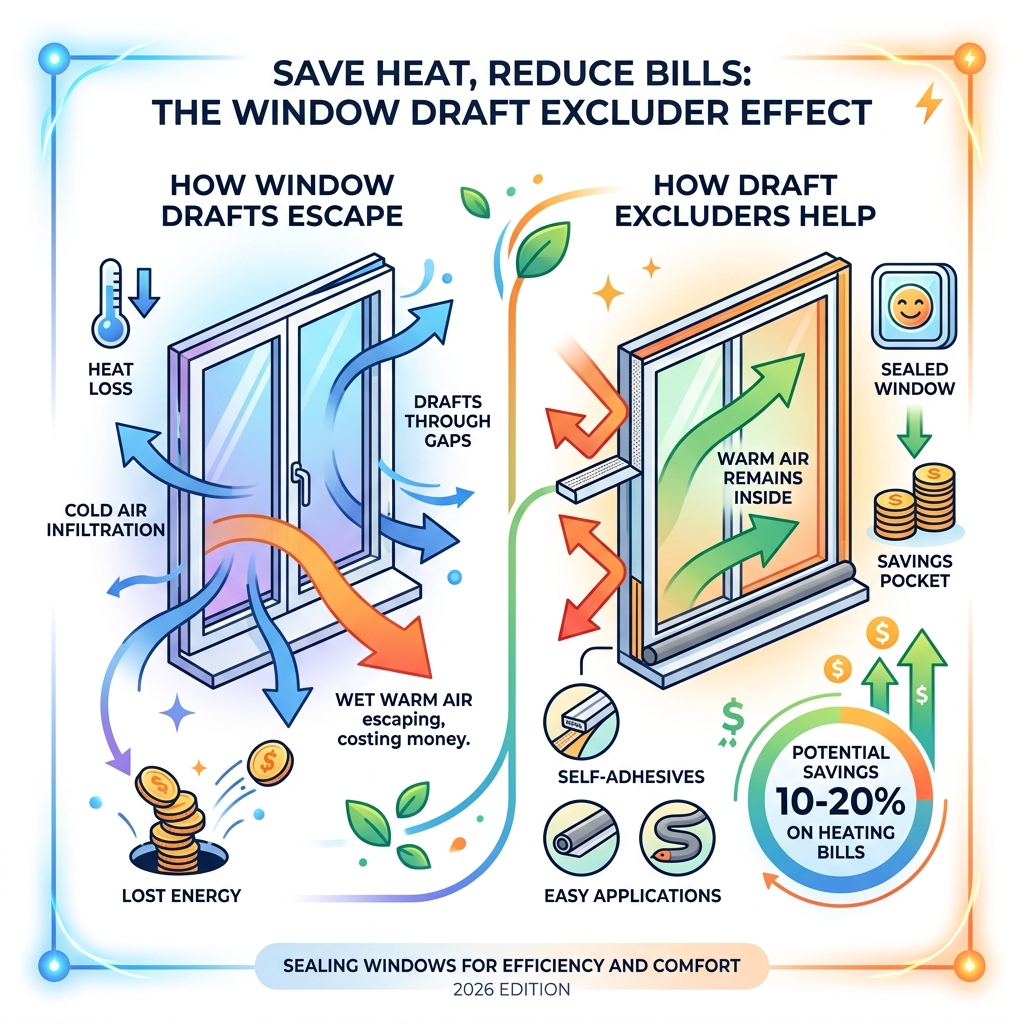
A window draft excluder is a simple seal or strip fitted around your window frame to block cold air from sneaking into your home. Here’s a quick overview of your main options:
- Self-adhesive foam or rubber strips – Stick directly onto the window frame to seal closing edges
- Shrinking film kits – Applied over the window with double-sided tape and shrunk tight with a hairdryer
- Silicone sealant or caulk – Used to fill fixed gaps between the window frame and the surrounding wall
- Weighted draft stopper snakes – Placed along window sills to block low-level airflow
Draughty windows are one of the most common causes of heat loss in the home. And the fix doesn’t have to be expensive. Self-adhesive rubber strips start at just a couple of pounds for a 5-metre length — yet the energy savings they deliver can far outweigh that small upfront cost.
Think of every draft as money escaping through a gap. A window draft excluder is simply the plug that keeps that money in your pocket.
Here’s the bigger picture: properly sealing your windows can reduce your heating bills by 10–20%, with many homeowners seeing a return on their investment within a single winter season.
Essential window draft excluder terms:
Identifying the Culprits: How to Find Window Drafts
Before we start sticking, sealing, and shrinking, we need to know exactly where the enemy is hiding. Drafts are sneaky; they don’t always come from where you think. Sometimes a window looks perfectly shut, but a tiny gap in the sealant or a worn-out gasket is letting in a mini-gale.
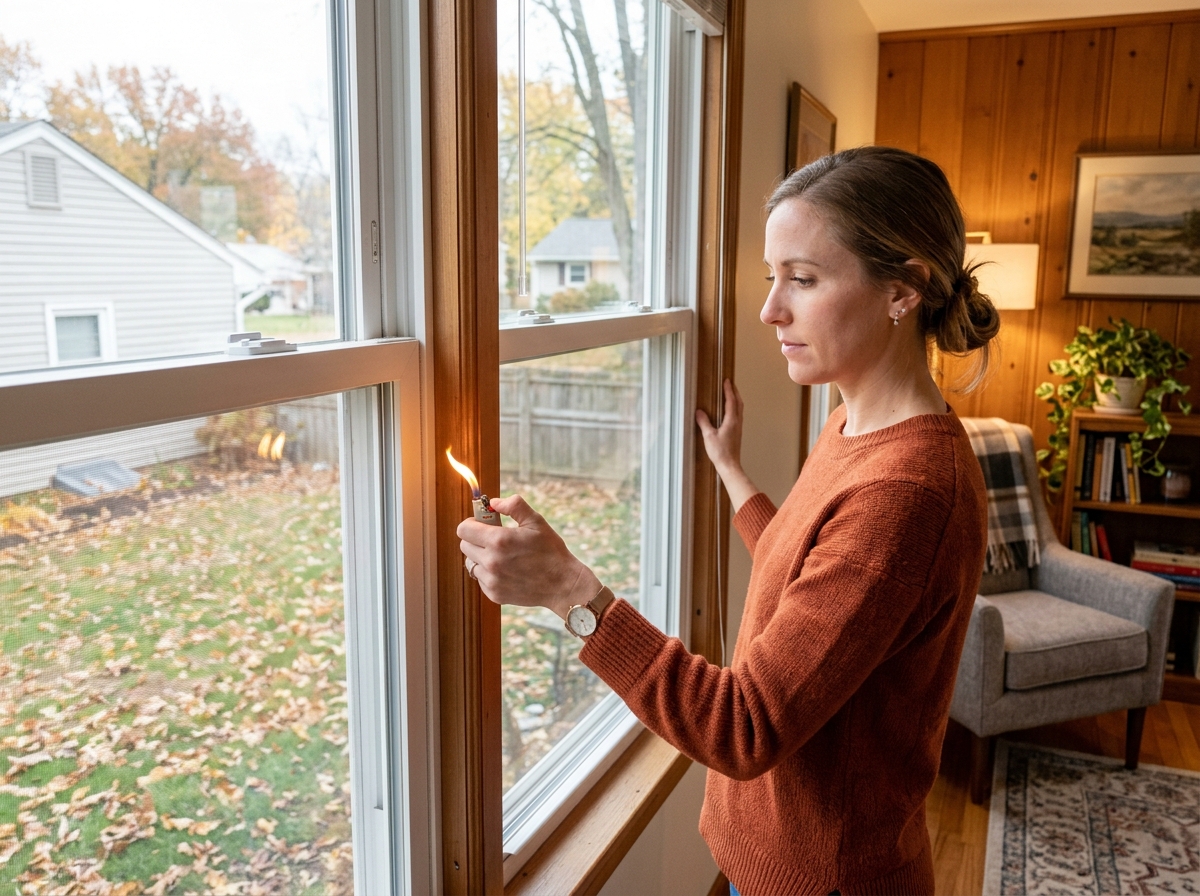
To find these air leaks, we recommend a few simple DIY detective methods:
- The Hand-Feel Method: On a cold or windy day, simply run your hand slowly around the edges of the window frame. Pay close attention to the corners and where the window meets the sill. If you feel a distinct chill or moving air, you’ve found a leak.
- The Moving Curtains Test: If your curtains or blinds flutter even when the window is closed, it’s a dead giveaway that a window draft excluder is needed.
- The Flame Flicker Test: This is the most accurate visual method. Take a lit gas fire lighter or a candle (be careful around curtains!) and hold it near the window frame. Move it slowly along the edges. If the flame flickers or bends, air is pushing through.
- Visual Inspection: Look for visible gaps where light shines through or where the old sealant has cracked and pulled away from the wall.
If you find that the drafts are widespread or your windows are in serious disrepair, you might want to learn how to find the best draft-proofing services without losing your cool to see if professional help is required. However, for most of us, a simple DIY solution will do the trick.
Choosing the Right Window Draft Excluder for Your Home
Not all windows are created equal, and neither are the excluders. The material you choose depends on the size of the gap, the type of window (sash, casement, or uPVC), and how much you want to spend.
Comparing Materials: Foam vs. Rubber vs. Silicone
When browsing for a window draft excluder, you’ll likely encounter three main materials. Here is how they stack up:
| Feature | Foam Strips | EPDM Rubber Strips | Silicone/T-Shaped Seals |
|---|---|---|---|
| Durability | Low (1-2 years) | High (3-5 years) | Very High (5+ years) |
| Compression | Excellent (fits uneven gaps) | Good (holds shape well) | Moderate |
| Price | Very Cheap | Affordable | Mid-range |
| Best For | Small, even gaps | High-traffic windows | Large gaps or sliding tracks |
If you are dealing with particularly stubborn gaps, products like the Weatherproof Foam Seal Strip for Doors & Windows ✅ offer a wedge-shaped profile that can fill gaps ranging from 0.14 to 0.30 inches, making them incredibly versatile.
Self-Adhesive Window Draft Excluder Strips
Self-adhesive strips are the “bread and butter” of draft proofing. They are easy to install and very effective for the edges where the window opens and closes.
How to Install Them Like a Pro:
- Clean the Frames: This is the most important step. Use soapy water or white spirits to remove any grease, dust, or old adhesive. If the surface isn’t clean, the strip will peel off within a week.
- Measure Twice, Cut Once: Measure the length of each side of the frame. Use sharp scissors to cut the strips.
- Choose Your Profile:
- D-profile: Best for larger gaps as the “D” shape compresses down.
- P-profile: Ideal for medium gaps.
- E-profile: Perfect for smaller, narrower gaps.
- Apply Pressure: Peel back the backing paper a few inches at a time and press the strip firmly onto the frame.
- Let it Cure: Avoid opening and closing the window repeatedly for 24 hours to allow the adhesive to fully bond.
For more tips on choosing the right strip for your specific window type, check out our guide on draft-proof window strips and other ways to chill out.
Using Shrinking Film as a Window Draft Excluder
If you have single-glazed windows that feel like a sheet of ice in the winter, shrinking film is your best friend. It acts as a temporary form of secondary glazing, creating a pocket of insulating air between the glass and the room.
The Application Process:
- Apply Tape: Place the provided double-sided tape around the window frame (not the glass).
- Attach Film: Cut the film slightly larger than the window and press it onto the tape, trying to keep it as flat as possible.
- The Hairdryer Magic: Use a hairdryer on a medium setting to blow warm air over the film. You’ll see it magically shrink and tighten until it’s crystal clear and drum-tight.
- Trim: Cut away any excess film with a utility knife.
This method is fantastic because it’s nearly invisible and incredibly effective at stopping the “cold radiation” from old glass. You can find more about this in our article on how to save energy with insulated window treatments.
Advanced DIY Sealing: Silicone and Caulk
Sometimes the draft isn’t coming from the part of the window that moves. Instead, it’s coming from the gap between the window frame and the wall. This is a common issue in older homes where the building has settled over time.
For these “fixed” gaps, a window draft excluder in the form of silicone sealant or caulk is the way to go.
- Tools Needed: Caulking gun, sealant (silicone for external/wet areas, acrylic caulk for internal/paintable areas), a damp cloth, and masking tape.
- Preparation: Remove any old, peeling sealant with a scraper. Apply masking tape to both the frame and the wall, leaving a small gap in between. This ensures a perfectly straight line.
- The Application: Cut the nozzle of the sealant tube at a 45-degree angle. This allows you to “push” the sealant into the gap rather than just laying it on top.
- Smoothing: Run a wet finger or a smoothing tool along the bead of sealant to create a neat finish.
- The Reveal: Remove the masking tape while the sealant is still wet to get a professional, crisp edge.
Sealing these gaps can be intimidating, but we promise it’s easier than it looks. If you’re feeling nervous, read our guide on how to seal window drafts without losing your mind.
The Golden Rule: Draft Proofing vs. Controlled Ventilation
We need to have a quick “safety chat.” While we want to stop drafts, we don’t want to turn our homes into airtight plastic bags. Houses need to breathe to prevent condensation, mold, and dampness.
There is a big difference between a draft (uncontrolled air leaking in) and ventilation (controlled air moving through).
- Do Not Block Trickle Vents: These are the small slats at the top of many uPVC windows. They are designed to let a tiny amount of air circulate to prevent moisture buildup.
- Leave Air Bricks Alone: These are essential for ventilating sub-floors or rooms with open fires.
- Extractor Fans: Never cover these up in kitchens or bathrooms.
The goal is to seal the “accidental” holes while keeping the “intentional” ones clear. If you find your home feels a bit stuffy after draft proofing, you might need to look into products like the Door or Window Double Draft Stop | Frost King® Weatherization Products which provide a flexible way to block air when needed without permanent sealing.
For a deeper dive into balancing warmth with fresh air, see our tips on how to seal air leaks to save energy.
Frequently Asked Questions about Window Draft Excluders
Can I use a window draft excluder on uPVC frames?
Absolutely! In fact, uPVC windows are some of the most common candidates for draft proofing. Over time, the rubber gaskets in uPVC frames can perish or shrink, leading to whistling sounds and cold spots. You can easily replace these gaskets or add thin self-adhesive EPDM strips to the frame. Just ensure you don’t use a strip that is too thick, as it might put pressure on the locking mechanism. For more specific advice, check out our guide to stop the chill with these easy ways to fix drafty uPVC windows.
How much money can I save by draft proofing?
While it depends on the size of your home and how “holey” it was to begin with, the average saving is around 10–15% on heating bills. Considering that a basic window draft excluder kit can cost less than £10, the return on investment (ROI) is massive. Often, the kit pays for itself within the first few weeks of a cold snap. For more ways to maximize your savings, read our Catch the Heat: Insulation Tips for Winter.
What is the best material for sash windows?
Sash windows are notoriously drafty because of the way they slide. Standard sticky foam often gets peeled off by the sliding motion. The best solution for these is “brush seals” or “pile strips.” These allow the window to slide while the fine bristles block the air. If you’re lucky enough to have these classic windows, you’ll want to read the ultimate guide to sash window draft strips to ensure you maintain their beauty while staying warm.
Conclusion
At Financefyx, we believe that home comfort shouldn’t cost the earth. Installing a window draft excluder is one of the most satisfying DIY projects you can undertake. It’s cheap, it’s fast, and you can literally feel the difference the moment you finish.
By taking an hour this weekend to hunt down those pesky drafts and seal them up, you aren’t just making your living room cozier—you’re actively reducing your carbon footprint and keeping more of your hard-earned money in your bank account.
If you’re ready to take the next step in making your home a fortress of warmth, don’t miss the ultimate guide to insulating your home. Stay warm, stay savvy, and stop that breeze!
