
The Ultimate Guide to Fixing Drafty Windows This Winter
Why Drafty Windows in Winter Are Costing You More Than You Think
Drafty windows in winter are one of the most common — and most expensive — problems homeowners face when temperatures drop.
Here’s a quick breakdown of what to do about them:
- Find the draft – Use a candle, your hand, or a dollar bill test to locate where cold air is getting in
- Seal small gaps – Apply weatherstripping, caulk, or foam tape to stop air leaks fast
- Add insulation layers – Thermal curtains, cellular shades, or shrink film provide an extra barrier
- Consider storm windows – A cost-effective middle ground between quick fixes and full replacement
- Replace when necessary – Warped frames, failed seals, or single-pane glass may need a full upgrade
Picture this: it’s a freezing January evening. You’ve turned the thermostat up, you’re wearing your thickest sweater, and you’re still cold. You walk past a window and feel it — that unmistakable icy chill brushing against your skin.
Your windows are likely to blame.
Research shows that homes can lose around 30% of their heating energy through windows alone. That’s a significant chunk of your heating bill disappearing into the cold air outside — often through gaps you can barely see.
The problem gets worse in winter for a few reasons. Bigger temperature differences between inside and outside push cold air through even tiny openings. Wind amplifies those leaks. And cold temperatures cause window frames and seals to contract, making existing gaps even wider.
The good news? Most drafty window problems are fixable — often without spending a lot of money.
This guide walks you through everything: finding the source of the draft, quick DIY fixes, longer-term upgrades, and how to know when it’s time to replace your windows entirely.
Why Do You Have Drafty Windows in Winter?
When we think about our homes, we like to imagine them as sealed boxes keeping the warmth in. Unfortunately, windows are often the “weak link” in that box. According to data from the Department of Energy, houses lose about 30% of their heating energy through windows. If you’ve ever wondered why your furnace seems to be running a marathon just to keep the living room at 68 degrees, those panes of glass are likely the culprits.
There are several reasons why drafty windows in winter become a major headache:
- Air Infiltration: This is the most direct cause. It occurs when outside air physically moves through gaps in the window assembly. This could be due to failing seals, cracked caulk, or worn-out weatherstripping.
- Material Contraction: Most window materials, especially vinyl and wood, expand and contract based on the temperature. When the mercury drops, these materials shrink, which can open up tiny hairline fractures or gaps that weren’t there during the summer.
- Warped Frames: Over time, moisture and age can cause window frames to bow or warp. When a frame is no longer “square,” the window sash won’t sit flush against the frame, leaving a path for the wind to whistle through.
- The Stack Effect: This is a bit of “house physics.” Warm air in your home rises toward the attic. As it escapes through the top of the house, it creates a vacuum effect that pulls cold air in through any openings at the bottom or middle of the house — including your windows. Learning how to seal air leaks to save energy is essential to combatting this pressure.
- Single-Pane Glass: If you have older windows with only one pane of glass, you don’t even need a “leak” to feel a draft. Glass is a poor insulator, and cold air outside turns the glass into a giant ice cube that radiates cold directly into your room.
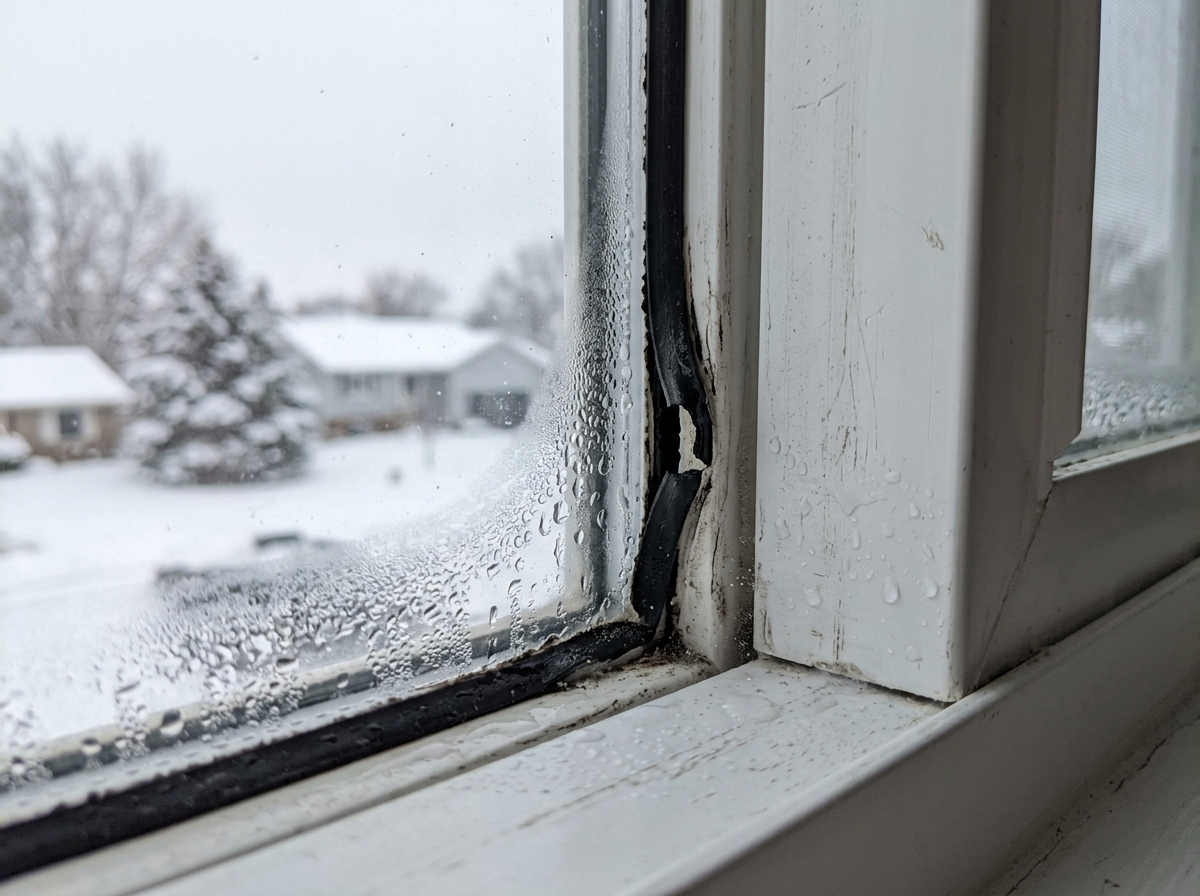
Understanding Convection vs. Air Leaks
It is important for us to distinguish between an actual air leak and something called “convection.” Sometimes you might feel a breeze and assume there is a hole in your window, but that isn’t always the case.
Convection happens when warm air in your room hits a cold window pane. As the air cools down against the glass, it becomes denser and “falls” toward the floor. This creates a circular motion of air that feels exactly like a draft blowing in from the outside. While insulating your home for energy efficiency helps, convection is often a sign that your glass itself is inefficient, rather than the frame being broken.
The Impact of Poor Window Installation
Sometimes, the window itself is high-quality, but the way it was put into the wall is the problem. Professional window installation is vital because even a 1/8-inch misalignment can prevent the locks from pulling the sash tight against the weatherstripping.
If the installer didn’t use enough low-expansion spray foam or insulation in the “rough opening” (the space between the window frame and the house’s wall studs), air will bypass the window entirely and come in through the trim. This leads to hidden moisture damage and mold growth inside your walls. We always recommend checking the perimeter of your trim, not just the glass, when looking for energy-saving methods for home insulation.
How to Identify Where Cold Air Is Entering
Before we start throwing money at the problem, we need to know exactly where the leaks are. You don’t always need high-tech equipment to find the source of drafty windows in winter, though it can certainly help.
Start with a visual inspection. Look for:
- Light visible around the edges of the window frame.
- Gaps in the exterior caulk.
- Visible moisture or condensation between double-paned glass (a sign of a failed seal).
- Rattling panes when the wind blows.
For a deeper dive, check out the-ultimate-guide-to-insulating-your-home to see how windows fit into your overall home envelope.
DIY Detection Methods
If a visual check doesn’t reveal the culprit, try these classic “home detective” tricks:
- The Candle or Incense Test: On a windy day, light a candle or a stick of incense and hold it near the edges of your window. If the flame flickers or the smoke blows sideways, you’ve found an air leak.
- The Hand Test: Simply dampen your hand with a little water and run it along the seams of the window. Your skin is more sensitive to temperature changes when wet, making it easier to feel a faint chilly breeze.
- The Dollar Bill Test: Open your window, place a dollar bill across the threshold, and close the window. If you can pull the dollar bill out easily without any resistance, your window’s seal isn’t tight enough.
- The Flashlight Test: At night, have someone stand outside with a bright flashlight and shine it around the window edges while you stay inside. If you see beams of light peeking through, those are the exact spots where air is getting in.
These catch-the-heat-insulation-tips-for-winter can help you systematically check every room in your house.
Signs of Hidden Window Damage
Sometimes the draft is just the tip of the iceberg. If you ignore drafty windows in winter, you might end up with structural issues. Keep an eye out for:
- Ice Buildup: If you see frost or ice forming on the inside of your window glass or frame, you have a severe insulation failure.
- Window Rot: For those with wood frames, soft spots or peeling paint often indicate that moisture is trapped, which happens when warm indoor air meets cold outdoor air and condenses.
- Mold Growth: Black or green spots around the window sill are a major red flag for air leaks that are carrying moisture.
Just like attic insulation tips save energy and money, keeping your windows in good repair prevents expensive secondary damage to your home’s structure.
Effective Solutions for Every Budget
Once you’ve identified the problem areas, it’s time to take action. There is a wide range of solutions for drafty windows in winter, ranging from “practically free” to “investment level.”
| Method | Estimated Cost | Effectiveness | Ease of DIY |
|---|---|---|---|
| Draft Stoppers | $10 – $20 | Low (bottom only) | Very Easy |
| Window Film Kits | $15 – $30 | Medium-High | Easy |
| Weatherstripping | $10 – $50 | High | Moderate |
| Caulking | $5 – $15 | High | Moderate |
| Thermal Curtains | $30 – $100 | Medium | Easy |
| Storm Windows | $100 – $300 | Very High | Moderate |
| Replacement | $500 – $1,500+ | Maximum | Professional Needed |
For those looking for immediate relief, caulking cracks that are less than 1/4 inch wide on the non-moving parts of the window is a great Saturday project. For the parts of the window that move, weatherstripping is your best friend.
Quick DIY Fixes for Drafty Windows in Winter
If you’re a renter or just need a fix right now, these methods work wonders:
- Shrink Film Kits: These are essentially “plastic wrap” for your windows. You apply double-sided tape to the frame, stick the plastic to it, and use a hair dryer to shrink it taut. It creates a dead-air space that acts as an extra layer of insulation.
- Draft Stoppers: Also known as “draft snakes,” these are fabric tubes filled with sand or dried beans. Placing them along the window sill blocks air from creeping under the sash.
- Rope Caulk: This is a putty-like material that comes in a roll. You can press it into gaps with your fingers and peel it off easily in the spring.
- Nail Polish: Believe it or not, a dab of clear nail polish can temporarily seal a tiny hairline crack in a glass pane to keep it from spreading and letting air through.
Don’t forget that you can also save-energy-with-insulated-window-treatments to add an aesthetic touch to your weatherproofing.
Using Thermal Curtains and Insulated Shades
If you want to reduce heat loss by as much as 25%, look at your window treatments. Thick, heavy curtains that reach the floor can act as a massive thermal blanket for your windows.
Even more effective are insulated cellular shades. These shades have a “honeycomb” design that traps air in pockets, creating a highly effective thermal barrier. In fact, tightly installed cellular shades can lead to 20% heating energy savings. They come in a range of styles and prices, making them one of the smartest investments for winter comfort.
Long-Term Upgrades and Replacements
If you’ve tried the DIY fixes and you’re still shivering, it might be time to look at more permanent solutions. Modern technology has made windows significantly more efficient than they were even 20 years ago.
When shopping for upgrades, you need to understand energy performance ratings. The two most important numbers are:
- U-Factor: This measures how well the window keeps heat from escaping. The lower the number, the better the window is at keeping you warm.
- Solar Heat Gain Coefficient (SHGC): This measures how much heat from the sun comes through the glass. In cold climates, you might actually want a slightly higher SHGC to get “free” heat from the sun during the day.
The National Fenestration Council provides a standardized label for these ratings, so always look for their sticker when comparing products.
Interior vs. Exterior Storm Windows
If full replacement isn’t in the budget, storm windows are an incredible alternative. You can choose between traditional exterior versions or modern interior storm windows. Interior versions are often made of lightweight acrylic or glass and snap into the existing frame using magnets or a friction fit. They are nearly invisible and provide a massive boost to insulation without the cost of a full tear-out.
When to Choose Replacement Over Repair
We often get asked: “Can I just keep patching my windows forever?” Unfortunately, the answer is no. You should strongly consider full replacement if:
- The Frames are Rotting: If the wood is soft, it can no longer hold the weight of the glass or provide a seal.
- The Window is Warped: If the window is so out of alignment that it won’t lock, no amount of caulk will fix the structural gap.
- You Have Single-Pane Windows: In many cases, the energy savings from moving to double or triple-pane glass will pay for the windows over their 30-year lifespan.
- Persistent Moisture: If you have fog between the panes that never goes away, the “insulated glass unit” (IGU) has failed, and the insulating gas has escaped.
You can use this map to see which U-factors are recommended for your specific climate zone. Additionally, the Attachments Energy Rating Council can help you choose the best blinds or storms to pair with your new windows.
Maintenance Tips to Prevent Future Drafts
To keep your windows (new or old) performing well, we recommend a simple yearly maintenance routine:
- Clean the Tracks: Dirt and debris in the tracks can prevent the window from closing all the way, leaving a gap for air.
- Lubricate Hardware: Use a silicone-based lubricant on hinges and locks so they pull the window tight.
- Check the Caulk: Every autumn, walk around the outside of your house and look for cracked caulk. Replacing it before the first freeze is much easier than doing it in the snow.
- Inspect Weatherstripping: Most weatherstripping lasts 2 to 5 years. If it looks compressed or brittle, peel it off and stick on a fresh roll.
Staying on top of these small tasks is a key part of insulating your home for energy efficiency.
Frequently Asked Questions about Drafty Windows in Winter
How much money can I save by fixing my drafty windows?
While every home is different, researchers at MIT note that nearly 30% of heating and cooling energy slips away through inefficient windows. By sealing drafts and using insulated treatments, many homeowners see a reduction of 10% to 20% on their monthly heating bills. Over a long winter, that adds up to hundreds of dollars.
Is it normal for new windows to feel drafty?
Technically, no. New windows should be airtight. However, if you feel a “draft” near a brand-new window, it might be convection (the air cooling against the glass) rather than a leak. If you can actually feel air blowing, it is likely an installation error where the frame wasn’t properly insulated or leveled.
Can I install storm windows myself during the winter?
Yes! Interior storm windows are actually designed to be installed from the inside, making them a perfect mid-winter project. Exterior storm windows are a bit trickier in the cold because caulk doesn’t always cure properly in freezing temperatures, so those are best saved for a “warm spell” or the spring.
Conclusion
Dealing with drafty windows in winter doesn’t have to mean suffering through a cold house or watching your bank account drain into the utility company’s pockets. Whether you choose a $5 tube of caulk, a set of cozy thermal curtains, or a full set of Energy Star-rated replacements, every step you take toward a more sealed home is a win for your comfort and your wallet.
At Financefyx, we believe that energy conservation is one of the best ways to manage your home’s long-term costs. Seasonal maintenance might seem like a chore, but the peace of mind (and the warmth!) you get in return is well worth the effort.
For more deep dives into making your home the most efficient it can be, check out The Ultimate Guide to Insulating Your Home. Stay warm out there!
