
Stop the Draft with the Best Proofing Methods Available
Why Drafty Windows Are Costing You More Than You Think
The best way to draft proof windows depends on your budget, window type, and how permanent a fix you need. Here’s a quick overview of the most effective methods:
| Method | Best For | Permanence | Cost |
|---|---|---|---|
| Weatherstripping | Moving sashes | Semi-permanent | Low |
| Caulking | Fixed frames | Permanent | Low |
| Window insulation film | Seasonal/budget fix | Temporary | Very low |
| Interior storm windows | Maximum insulation | Permanent | Medium |
| Draft snakes/stoppers | Quick barrier | Temporary | Very low |
| Window replacement | Severe damage | Permanent | High |
Windows are one of the biggest weak points in any home’s thermal envelope. In fact, houses lose about 30% of their heating energy through windows. That means if your heating bill feels higher than it should, your windows may be the culprit.
Drafts don’t just make a room feel cold. They force your heating system to work harder, wear out faster, and cost you more every single month.
The good news? Most drafts are fixable. Many solutions cost very little and take less than an hour to apply. Whether you want a quick seasonal fix or a permanent seal, there’s an option that fits your situation.
This guide compares the most effective draft proofing methods side by side, so you can choose the right one for your home.

Detecting Air Leaks: The First Step to Efficiency
Before we start slapping tape and squeezing caulk, we need to find the enemy. Think of yourself as a “Draft Detective.” You don’t need a deerstalker hat, but you do need to know where the air is sneaking in. Even double-glazed units can have leaks around the seals or the frame where it meets the wall.
The Visual Inspection
Start with the basics. Look for visible gaps, cracked glass, or light shining through where it shouldn’t. If you can see daylight through a window seam, you’ve found a major leak. Check for deteriorated glazing putty or old, peeling caulk.
The Smoke and Flame Tests
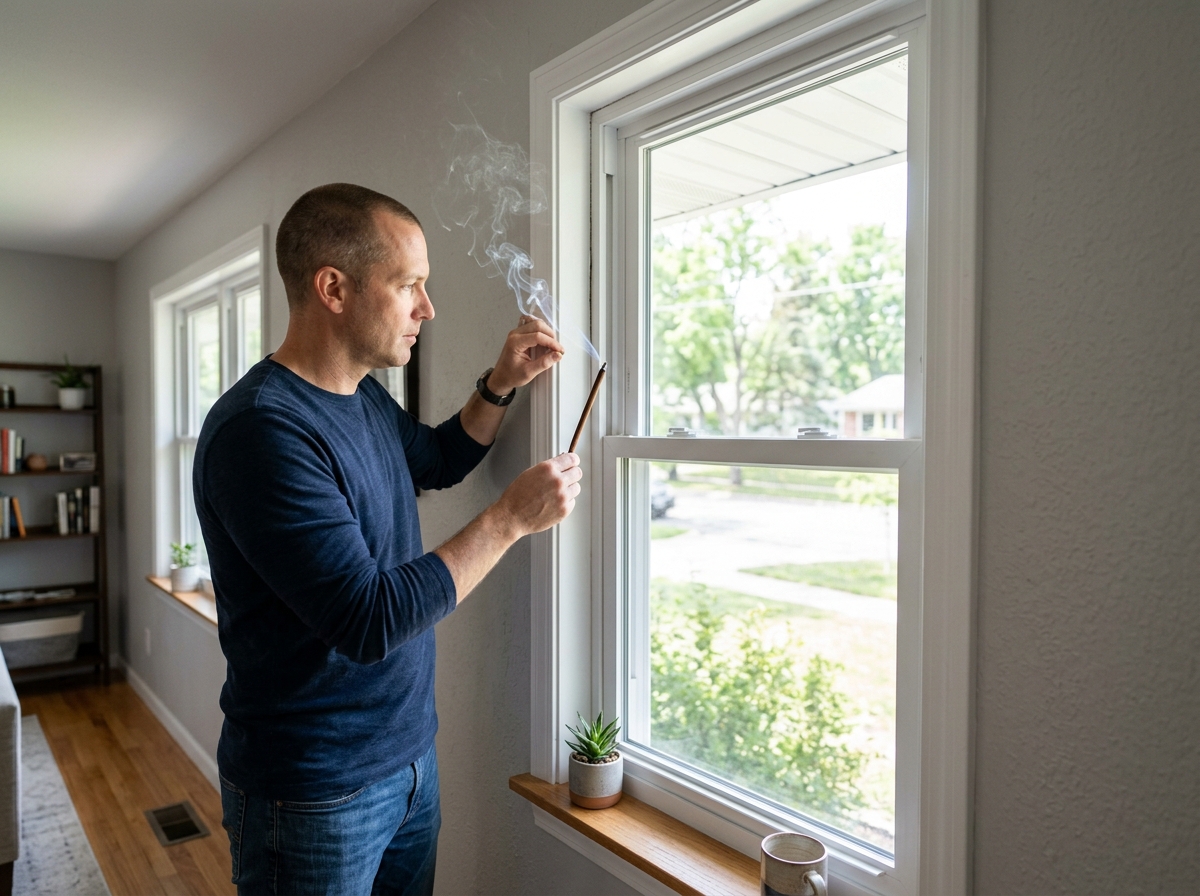
This is the classic DIY method. Light an incense stick or a candle and move it slowly around the window perimeter. If the smoke wavers or the flame flickers, you’ve found an air current. For a safer version, use the “damp hand method.” Wet your hand and move it around the edges; the evaporating water will make your skin feel noticeably cooler when it hits a draft.
High-Tech Detection
If you want to be precise, an infrared thermometer is incredibly revealing. It measures surface temperatures without contact. Leaky spots will show up as cooler areas—look for temperature differences of 5°C or more to identify significant infiltration.
Professional Energy Audits
For a total home overview, you can follow the Energy.gov guide on detecting air leaks. Professionals use blower door tests to depressurize your house, making every tiny leak whistle like a tea kettle. They might also use thermal imaging cameras to create a heat map of your home’s weaknesses.
The Best Way to Draft Proof Windows: DIY Sealing Methods
Once you’ve mapped out the leaks, it’s time to seal them. For most homeowners, the best way to draft proof windows on moving parts is through weatherstripping. This involves applying a material that compresses when the window is closed, creating a tight seal while still allowing you to open the window when spring finally arrives.
Before you start, check out more info about energy saving tips to see how this fits into your overall home efficiency plan.
Types of Weatherstripping
Not all weatherstripping is created equal. You need to choose the right material for the specific part of the window:
- Foam Tape: This is the easiest to install. It’s an adhesive-backed strip that works well for the bottom of sashes. However, it can wear out quickly if the window is opened and closed frequently.
- V-Seal (Tension Seal): This plastic or metal strip is folded into a ‘V’ shape. It uses spring tension to bridge gaps. It’s excellent for the sides of a double-hung or sliding window.
- Tubular Gaskets: These look like small rubber hoses and are great for large, irregular gaps. They provide a high-quality compression seal.
- Silicone Seals: These are durable and flexible, making them ideal for high-traffic windows.
| Weatherstripping Type | Durability | Ease of Install | Best For |
|---|---|---|---|
| Foam Tape | Low | Very Easy | Rarely opened windows |
| V-Seal | High | Moderate | Sliding/Double-hung tracks |
| Tubular Gaskets | Medium | Moderate | Large gaps in frames |
| Silicone | Very High | Moderate | All-weather performance |
Pro Tip: Surface Preparation
The biggest mistake people make with weatherstripping is skipping the cleaning. Adhesives won’t stick to dust or old oils. Wipe the frame down with rubbing alcohol and let it dry completely before applying your seals. This ensures the “best way” doesn’t become the “way that peeled off in a week.”
Permanent Solutions for Long-Term Draft Protection
If you aren’t planning on moving the window parts—like the area where the frame meets the wall—you want a more permanent fix. Caulking is the gold standard here. It’s inexpensive, aesthetically pleasing, and can last for years.
For those looking to improve their home’s value while staying warm, more info about home design can help you integrate these fixes seamlessly.
Caulk vs. Foam
For gaps smaller than 1/4 inch, caulk is your best friend. For larger gaps, especially those hidden behind the window trim, you might need low-expansion spray foam. Be careful: always use “window and door” foam. Standard high-expansion foam can actually warp your window frames as it cures, making the window impossible to open!
Interior Storm Windows and Inserts
Another permanent-feeling upgrade is interior storm windows. These are often acrylic or glass inserts that snap into the existing frame using magnets or a compression fit. They create a secondary air pocket that acts as a powerful insulator. This is often more cost-effective than replacing the whole window unit and is a fantastic way to boost energy performance ratings without a construction crew.
Applying Caulk as the Best Way to Draft Proof Windows Permanently
To get a professional finish, cut the nozzle of your caulk tube at a 45-degree angle. This allows you to “push” the bead of caulk into the gap rather than just laying it on top. Focus on the non-movable parts—the perimeter where the frame meets the drywall or siding.
Check this map to see which climate-specific recommendations apply to your region, as this may dictate whether you use silicone (great for temperature swings) or polyurethane sealants.
Temporary and Seasonal Fixes for Immediate Relief
Sometimes you just need to stop the shivering now. If you’re renting or on a tight budget, a window insulating kit is a lifesaver. These kits use a clear plastic film that you tape to the frame and then shrink with a hair dryer.
The Power of Layers
To reduce heat loss, you can also look at window treatments. Tightly installed cellular shades can lead to 20% heating energy savings because their honeycomb structure traps air. If you pair these with heavy, floor-length curtains, you can slash heat loss by up to 62%! There is a range of styles and prices available to match any decor.
Using Insulation Film as the Best Way to Draft Proof Windows on a Budget
The key to insulation film is the airtight seal.
- Clean the frame thoroughly so the double-sided tape sticks.
- Apply the tape, then press the film onto it, leaving a bit of slack.
- Use a hair dryer on its highest setting to shrink the film until it’s drum-tight and invisible.
This creates a “dead air” space that mimics the insulating properties of a high-end window. You can also look for window quilts or products rated by the Attachments Energy Rating Council for maximum efficiency.
When to Repair vs. Replace Your Windows
We hate to be the bearer of bad news, but sometimes DIY isn’t enough. If your windows are over 20 years old, they might be reaching the end of their functional life.
Signs It’s Time to Replace:
- Fogging: If you see condensation between the panes of a double-glazed window, the hermetic seal has failed. The insulating gas has escaped, and no amount of caulk will fix the loss of efficiency.
- Rot and Warp: If wood frames are soft to the touch or warped so badly the sash doesn’t sit square, the structural integrity is gone.
- Difficulty Operating: If you have to fight the window to open or close it, the frame has likely shifted or warped.
When shopping for replacements, consult The National Fenestration Council ratings. Look for a low U-factor (which measures how well the window keeps heat in) and a Solar Heat Gain Coefficient (SHGC) that matches your climate. Just as you use security tools to protect your digital life, high-quality modern windows protect your physical comfort.
Frequently Asked Questions about Window Drafts
How much money can I save by draft proofing?
Properly draft proofing your windows can lead to 20-30% savings on your heating and cooling bills. Considering that houses lose about 30% of their heating energy through windows, the Return on Investment (ROI) is incredibly high. Most DIY fixes pay for themselves within a single winter season.
What are the most common mistakes to avoid?
- Over-sealing: Your house needs to breathe. If you seal every single crack, you might end up with moisture buildup and stale air, which can lead to mold.
- Sealing Windows Shut: Never caulk a window sash to the frame unless it’s a “fixed” window. You need to be able to open windows for ventilation and emergency egress.
- Skipping the Cleaning: As mentioned, cracks or tears in your seals often happen because the surface wasn’t prepped correctly.
Can I draft proof double-glazed windows without removing them?
Absolutely. Most drafts in double-glazed windows come from the perimeter where the unit sits in the frame or from the moving sashes. You can apply new weatherstripping to the sash tracks and caulk the stationary frame without ever touching the glass unit itself. If the draft is coming from inside the wall, you can remove the interior trim and use low-expansion foam, but for most people, external caulking and internal weatherstripping are the best way to draft proof windows without a major renovation. For more data on how effective these updates can be, check this report on storm windows.
Conclusion
At Financefyx, we know that home efficiency is one of the smartest investments you can make. Draft proofing isn’t just about stopping a breeze; it’s about taking control of your home’s climate and your monthly expenses. Whether you choose the quick fix of a shrink-wrap kit or the long-term protection of new weatherstripping and caulk, your effort will pay off in year-round comfort.
Ready to take the next step in making your home a fortress of efficiency? Check out The Ultimate Guide to Insulating Your Home for more expert strategies on keeping the heat where it belongs—inside with you!
