
Build Your Own Pool Solar Heater: A Bright Idea for Cold Water
Cold Pool? Here’s How to Build a Solar Pool Heater This Weekend
Build a solar pool heater by coiling black irrigation tubing on a plywood frame, connecting it to your pool’s pump system, and positioning it in direct sunlight. Here’s the quick version:
- Choose your design – coiled hose on a frame (cheapest), open-flow corrugated panel, or floating mat
- Gather materials – 200+ feet of black irrigation tubing, plywood, a submersible pump, and basic fittings
- Build the collector – coil the tubing tightly on a painted black wooden frame
- Position it south-facing – angle toward the sun for maximum heat absorption
- Connect to your pool – run water from the pump through the coils and back into the pool
- Run it 10am-5pm – disconnect at night to prevent heat loss
Total materials cost: $50-$200. That’s compared to $3,000-$5,000 for a professionally installed commercial system.
Most pool owners don’t realize their water is cold for a fixable reason: the sun’s energy is free, but nothing is capturing it.
A 20,000-gallon pool sitting at 70°F on a hot summer day is frustrating. You’re paying for the pool. You’re just not swimming in it.
The good news? A simple DIY solar heater built from black irrigation hose and a plywood frame can raise your pool temperature by 5-15°F — enough to extend your swimming season by weeks. One real-world build heated a 20,000-gallon pool from an unswimmable temperature to a comfortable 78°F in just three days of peak sunlight.
The even better news: it can cost under $100 to build.

Why You Should Build a Solar Pool Heater
When we think about heating a pool, our minds often jump to expensive gas heaters or power-hungry electric heat pumps. But why pay for energy when the sun provides it for free? Achieving energy independence in your backyard is one of the most satisfying parts of a build a solar pool heater project.
DIY vs. Commercial Costs
The financial argument is a “no-brainer.” A professionally installed commercial solar pool heater typically costs between $3,000 and $5,000. Even high-end DIY kits can run you nearly $1,000. In contrast, a scratch-built system using materials from your local hardware store—like black polyethylene tubing and plywood—usually lands between $50 and $200.
ROI and Environmental Benefits
The Return on Investment (ROI) is incredibly fast. For example, a DIY floating solar heater costing $340 can pay for itself in under three months when compared to the $1,260 annual cost of running a gas heater. Over five years, that’s a staggering $6,300 in savings!
Beyond the wallet, you’re significantly reducing your carbon footprint. By ditching fossil fuels for renewable energy, you’re contributing to a larger transition toward sustainable living. If you’re interested in how these systems fit into your home’s energy profile, check out our guide on solar water heating systems. For those who love the “why” behind the “how,” there is extensive scientific research on solar pool heating efficiency that proves these simple collectors can capture up to 75% of available solar radiation.
Essential Materials and Design Options
Before we start hammering, we need to choose our “weapon of choice.” There are three main ways to build a solar pool heater, each with its own pros and cons.
| Design Type | Best For | Pros | Cons |
|---|---|---|---|
| Coiled Hose | Above-ground pools | Very cheap, easy to build, sturdy | Requires a frame, can be heavy |
| Open Flow | High efficiency needs | Maximum heat transfer, very fast | More complex plumbing, evaporation risk |
| Floating Mat | Small pools/Stock tanks | No plumbing needed, fast ROI | Can blow in wind, covers pool surface |
The “Secret Sauce”: Black Irrigation Tubing
The most critical material is black garden hose or black polyethylene tubing. Why black? Because black absorbs the full spectrum of visible light, converting it into heat. We recommend 1/2-inch or 3/4-inch black vinyl irrigation hose or PEX. PEX is slightly more expensive but offers better durability against pool chemicals and UV degradation over many years.
Sizing Your System
How much hose do you need? A good rule of thumb is that your solar collector should equal about 50% to 70% of your pool’s surface area. For a standard 16×32 foot pool (512 sq. ft.), you’ll want at least 256 feet of hose. Every 100 square feet of collector can effectively heat about 400 gallons of water.
Plumbing: Series vs. Parallel
When you build a solar pool heater with multiple coils, you have two choices:
- Series: Water flows through one coil, then the next. This creates very hot water at the outlet but slows down the flow and increases pressure on your pump.
- Parallel: Water splits and flows through all coils simultaneously. This is actually more efficient! Even though the water feels “less hot” at the exit, the total energy transferred to the pool is higher because the temperature difference between the sun and the water remains larger.
Step-by-Step Guide to Build a Solar Pool Heater
Ready to get your hands dirty? We’re going to focus on the most popular design: the coiled hose collector. This project is perfect for beginners and can be completed in a single weekend. If you enjoy this, you might want to look into other DIY solar panel projects to power more of your home.
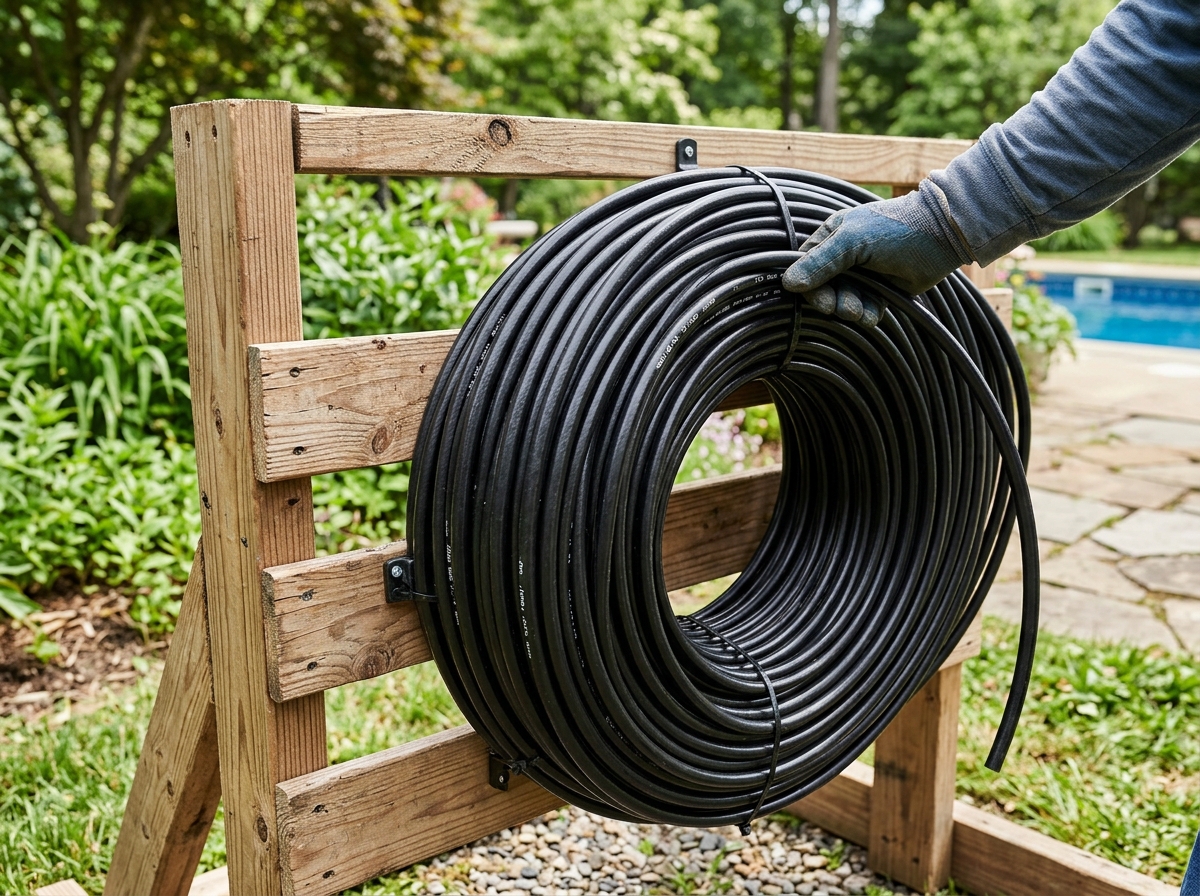
Preparing the Collector Base for Your Build a Solar Pool Heater Project
The base is the “oven” that holds your coils.
- Build the Frame: Use pressure-treated 2x4s to create a square or rectangular frame (usually 4×4 feet is a manageable size).
- Add the Backing: Attach a sheet of plywood to the frame.
- Paint it Black: Use matte black spray paint on the entire interior. This ensures any sunlight that misses the hose is absorbed by the wood and radiated back as heat.
- Insulate (Optional): Adding a layer of foam insulation behind the plywood can prevent heat from escaping through the bottom, especially if the heater is sitting on a cold lawn.
Coiling and Connecting the System
This is where the magic happens.
- Start from the Center: Poke a hole in the center of your plywood for the inlet. Feed your polyurethane hose through and start coiling outward.
- Wind Tightly: Keep the loops as close together as possible. Use 1-hole strap clamps and 1-1/4″ exterior screws every few feet to secure the hose.
- The Glass Effect (Optional): To supercharge your heater, cover the frame with a sheet of plexiglass or clear heavy-duty plastic. This creates a “greenhouse effect,” trapping hot air around the coils.
- Plumb it In: Use a submersible pump or connect to your existing pool pump. You’ll likely need pool hose adapters and clamps to make the connection secure.
Maximizing Performance and Maintenance
Once you build a solar pool heater, you want it to perform at its peak. It’s not just about “setting and forgetting.”
Optimal Flow Rates
A common mistake is thinking that “slower is better” because the water coming out of the hose feels scalding hot. In reality, a faster flow rate transfers more total BTUs to your pool. Why? Because as the water in the hose gets hotter, it starts to lose heat back to the air. By keeping the water moving, you keep the temperature difference high, which maximizes heat transfer. Aim for a flow rate of about 0.5 to 1.5 gallons per minute per square foot of collector.
Positioning for Power
In the Northern Hemisphere, your collector should always face South. Angle it at roughly the same degree as your latitude (or slightly flatter for summer use). Ensure it’s in a spot that gets at least 6 hours of unobstructed sunlight between 10 AM and 4 PM.
Maintenance and Winterization
- Algae Prevention: Stagnant, warm water in black hoses is an algae playground. Ensure water is circulating whenever the sun is out. If you notice a green tint, flush the system with a concentrated pool shock solution.
- Winterization: This is crucial! When the temperature drops, water inside the coils can freeze and split the hose. Drain the system completely and store it in a garage or shed.
- Use a Cover: We cannot stress this enough—use a solar blanket or solar cover on your pool at night. Without it, you can lose up to 5°F of heat overnight through evaporation, essentially undoing all your hard work from the day.
Troubleshooting Your Build a Solar Pool Heater Setup
- Leaking Fittings: Use Teflon tape on all threaded connections and ensure valves are seated properly.
- Air Pockets: If water isn’t flowing, you might have an airlock. Elevate the return hose or briefly increase pump speed to “burp” the system.
- Low Heat: Check for shade. Even a small branch shadow can significantly drop the efficiency of a solar coil.
Frequently Asked Questions about DIY Solar Pool Heating
How long does it take to heat the water?
It depends on your pool size and the sun. For a 20,000-gallon pool, a well-sized DIY system can raise the temperature by about 2-3°F per day. In three days of peak sunlight, you can realistically see a 7-10°F increase. Smaller above-ground pools (around 5,000 gallons) can heat up much faster, sometimes gaining 5°F in a single day.
Do these systems work on cloudy days?
Yes, but with reduced efficiency. Solar collectors absorb UV rays, which can penetrate light cloud cover. However, on thick, overcast days, the heat gain will be minimal. In northern climates or cloudy regions like Washington state, these heaters still work great during the summer months to offset the natural heat loss of the pool.
Can I use a regular garden hose?
While you can, we don’t recommend it for a permanent build. Standard black garden hoses are often made of materials that aren’t designed for constant UV exposure or the high temperatures reached inside a solar collector. They can become brittle and crack within a season. Irrigation-grade polyethylene is much more durable and better at heat transfer.
Conclusion
Transitioning to a more sustainable lifestyle doesn’t have to be expensive or complicated. When you build a solar pool heater, you’re taking a practical step toward reducing your energy bills while making your home more enjoyable. For a small investment of time and about $100 in materials, you can transform a chilly backyard “decoration” back into a functional swimming pool.
At Financefyx, we believe that smart financial moves and green energy go hand-in-hand. Whether you’re interested in solar panels cost and savings or want a home solar panel installation guide, we are here to help you navigate renewable energy.
Ready to dive into more projects? Explore more renewable energy solutions and start saving today!
