
Dealing With Drafty Windows? Here is Your Ultimate Fix-It Guide
Is Your Home Leaking Heat? What You Need to Know First
Drafty window solutions are something millions of homeowners need — especially when heating bills climb and cold air keeps sneaking in no matter how high you turn up the thermostat.
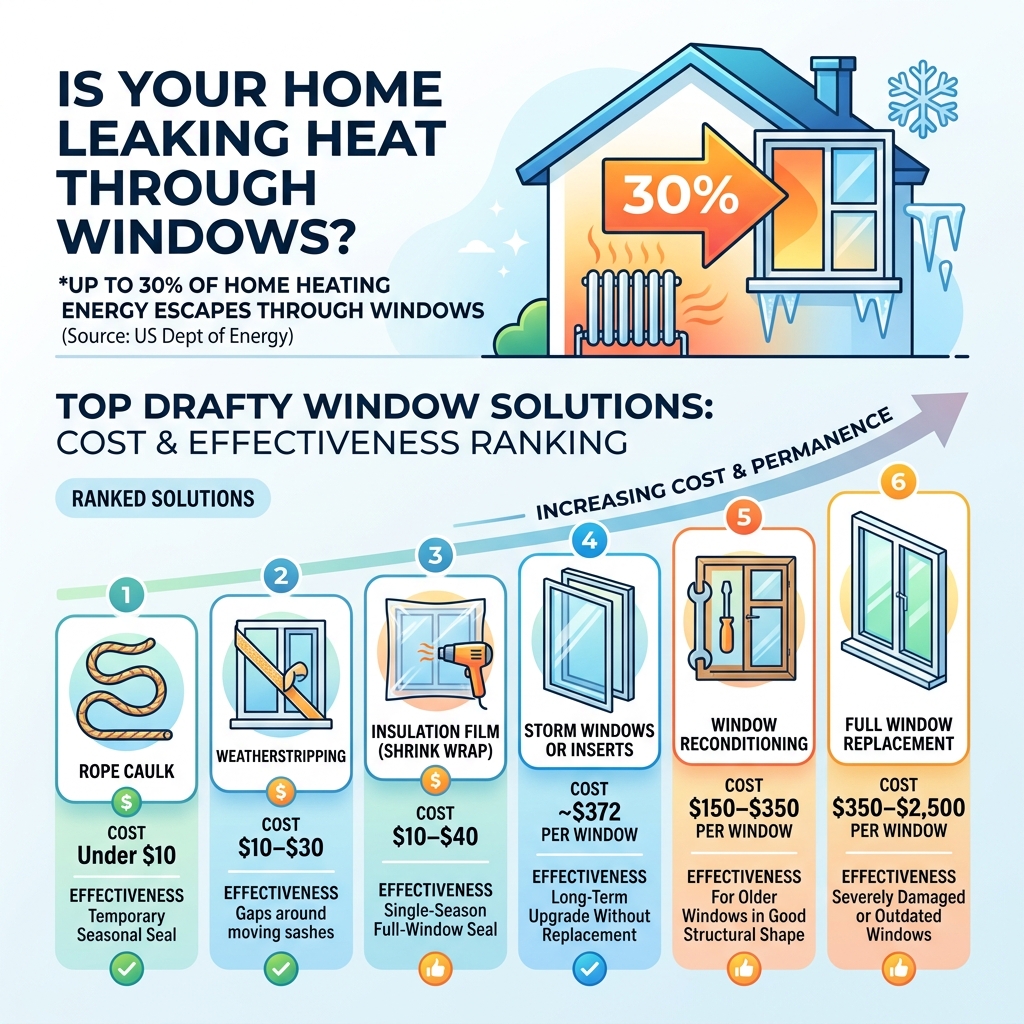
Here is a quick overview of the most effective fixes, from cheapest to most permanent:
| Solution | Best For | Approximate Cost |
|---|---|---|
| Rope caulk | Temporary seasonal sealing | Under $10 |
| Weatherstripping | Gaps around moving sashes | $10–$30 |
| Insulation film (shrink wrap) | Single-season full-window seal | $10–$40 |
| Storm windows or inserts | Long-term upgrade without replacement | ~$372 per window |
| Window reconditioning | Older windows in good structural shape | $150–$350 per window |
| Full window replacement | Severely damaged or outdated windows | $350–$2,500 per window |
Here is why this matters: according to the U.S. Department of Energy, about 30% of a home’s heating energy escapes through windows. That is not a small number. It means roughly a third of what you spend to heat your home could be slipping straight outside.
And it is not always obvious. Sometimes a window feels drafty even when it is not actually leaking air — a physics phenomenon called convection, where warm indoor air cools against the cold glass and sinks, creating a chill you can feel. But real air leaks are also extremely common, especially in older homes.
The good news? Most drafty window problems are fixable — many with tools you already own and materials that cost less than $20.
This guide walks you through everything: how to spot the problem, which DIY fixes actually work, when to call a pro, and how to keep drafts from coming back.
Why Your Windows Are Drafty (and How to Tell)
Before we can dive into the best drafty window solutions, we have to understand the “why” behind the chill. Windows are complex moving parts of our home’s building envelope. Over time, gravity, weather, and simple physics take their toll.
Common Causes of Air Infiltration
There are several reasons why your once-snug windows now feel like open vents.
- Seal Degradation: Weatherstripping and caulking aren’t immortal. Over years of sun exposure and temperature swings, they become brittle, crack, and eventually fall away.
- Poor Installation: If a window wasn’t shimmed or insulated correctly during the initial build, gaps can exist behind the trim where you can’t even see them.
- The Stack Effect: This is a sneaky one. Warm air in your home rises and escapes through attic leaks. This creates a vacuum that pulls cold air in through every available crack in the lower levels—including your windows.
- Aging Frames: Wood can rot or warp; vinyl can expand and contract. This movement creates tiny “daylight gaps” where the sash no longer meets the frame perfectly.
- Single-Pane Glass: Even if perfectly sealed, a single pane of glass has almost zero insulating value. Research shows that nearly 30% of heating and cooling energy slips away through inefficient windows.
How to Hunt Down the Draft
If you aren’t sure where the air is coming from, try these detective methods:
- The Visual Inspection: Look for missing caulk, cracked glazing putty (the “crusty” stuff holding glass in old windows), or visible gaps between the window sash and the sill.
- The Candle/Incense Test: On a windy day, light a candle or a stick of incense and move it slowly around the edges of the window frame. If the flame flickers or the smoke dances horizontally, you’ve found a leak.
- The Flashlight Test: Have a partner stand outside at night and shine a bright light around the window edges while you watch from inside. If you see light peeking through, air is definitely getting through too.
- Listen for Whistling: High-pitched sounds during a storm are a dead giveaway of air being forced through a narrow gap.

Quick and Effective DIY Drafty Window Solutions
If you’re shivering right now, you don’t need a five-year renovation plan—you need heat. Fortunately, there are several low-cost drafty window solutions that you can implement in a single afternoon.
Weatherstripping and Silicone Seals
Weatherstripping is the “gasket” of your window. It fills the space between the moving sash and the stationary frame.
- V-Seal (Tension Seal): A plastic or metal strip folded into a ‘V’ shape. It springs open to bridge gaps. Great for the sides of double-hung windows.
- Foam Tape: An adhesive-backed strip that compresses when the window is closed. It’s incredibly easy to apply but may need replacement every few years.
- Compression Tubes: Silicone or rubber tubes that provide a high-end seal. These are excellent for the bottom of the sash where it meets the sill.
When applying these, always clean the surface first with rubbing alcohol to ensure the adhesive sticks. If you have wood frames you’re worried about damaging, look for “residue-free” tapes or mechanical fasteners. More info about air sealing to save energy can help you decide which material is best for your specific window type.
Draft Stoppers and Foam Inserts
Sometimes the draft is coming from the very bottom of the window. A “draft snake”—a long, fabric tube filled with rice or sand—can be placed along the sill to block air. You can even make these yourself using an old tall sock!
Temporary Drafty Window Solutions Using Rope Caulk
Rope caulk is a favorite among DIYers because it’s cheap, effective, and completely removable. It looks like a roll of grey modeling clay.
How to Apply Rope Caulk:
- Clean the area: Wipe down the window joints to remove dust.
- Pull and Press: Pull off a strand of the caulk and press it firmly into the gap where the window meets the frame. Use your thumb or a putty knife to wedge it in.
- Seal it up: Since it doesn’t “harden” like permanent caulk, it stays flexible.
- Removal: When spring arrives, simply peel it off. It won’t damage the paint or wood, making it one of the safest drafty window solutions for renters or owners of historic homes.
Applying Insulation Film as Drafty Window Solutions
If your windows are particularly “leaky” or you have single-pane glass, a window insulation kit (often called “shrink wrap”) is a game-changer. It creates an airtight barrier and adds a layer of dead air space, which acts as insulation.
Steps to Install:
- Apply Tape: Attach the included double-sided tape to the window trim (not the wall).
- Attach Film: Press the clear plastic sheet onto the tape, starting from the top. Don’t worry if it looks wrinkled at first!
- The Heat Treatment: Use a hairdryer on its highest setting. Move it back and forth over the plastic. You’ll see the wrinkles vanish as the film drums tight.
- Trim: Cut off the excess plastic with a utility knife.
This method is highly effective for reducing condensation and improving the “R-value” (thermal resistance) of your windows for the duration of the winter.
Long-Term Fixes: Reconditioning vs. Full Replacement
While DIY fixes are great for immediate relief, you might eventually want a more permanent solution. This usually comes down to two choices: reconditioning what you have or replacing the unit entirely.
Window Reconditioning
If you have high-quality older windows, reconditioning is often the best path. This involves a professional (or a very dedicated DIYer) removing the sashes, stripping old paint, replacing the glazing putty, and installing modern weatherstripping into the original wood.
- Cost: Generally $150–$350 per window.
- Benefit: Keeps the character of your home and uses high-quality “old-growth” wood that is often more rot-resistant than new materials.
Full Window Replacement
Sometimes a window is too far gone. If the frame is rotted or the window is structurally unsound, replacement is necessary.
- Triple-Pane Windows: These are the gold standard for efficiency. They feature three layers of glass with insulating gases like argon or krypton between them.
- Cost: $350–$2,500 per window depending on material and glass quality.
Comparing the Options
| Feature | Reconditioning | Full Replacement |
|---|---|---|
| Average Cost | $150–$350 | $350–$2,500 |
| Lifespan | 20–50+ years | 15–30 years |
| Energy Savings | Moderate to High | High |
| Aesthetic | Preserves original look | Modernizes look |
For those looking for a “middle ground,” window inserts or internal storm windows are fantastic. These custom-made acrylic panels snap into your existing frame. They provide the efficiency of a double or triple-pane window at a fraction of the cost—averaging around $372 per insert. They are also known to reduce outside noise by up to 50%. For more technical details on these choices, check out this Technical report on window retrofit and replacement.
Maximizing Efficiency Beyond the Glass
Even the best drafty window solutions can be supported by other home improvements. Sometimes the “draft” you feel isn’t air leaking in, but air moving around.
The Convection Problem
As we mentioned in the intro, convection happens when warm air hits a cold window, cools down, and sinks. This creates a circular current of air that feels exactly like a breeze. To stop this, you need to create a thermal barrier.
- Thermal Curtains: These are heavy, multi-layered drapes designed to block both air and light. For them to work, they should be installed as close to the window as possible and even “sealed” to the wall with velcro or tape at the edges.
- Cellular Shades: Also known as honeycomb shades, these trap air in individual cells, providing an excellent layer of insulation. Save energy with insulated window treatments by choosing the right style for your climate.
The Building Envelope
Don’t forget that windows are just one part of the house. If your attic isn’t properly insulated, the “stack effect” will continue to pull air through your windows no matter how well you seal them. Ensure your knee walls and attic hatches are air-sealed to reduce the pressure on your windows. Also, make sure your heat registers are clear of furniture so warm air can circulate effectively near the windows.
Frequently Asked Questions About Drafty Windows
How much can I save on energy bills by sealing drafts?
Sealing drafty windows isn’t just about comfort; it’s about your wallet. On average, homeowners who move from leaky, single-pane windows to well-sealed solutions (like inserts or high-quality weatherization) see a 20% reduction in their annual energy expenses. Given that 30% of your heat escapes through windows, the return on investment (ROI) for a $20 roll of weatherstripping is nearly instantaneous.
Should I insulate the window frame or just the sash?
You should ideally do both! While the sash is where most people feel the draft, a lot of air leaks occur between the window frame and the wall.
- The Sash: Use weatherstripping or rope caulk.
- The Frame: If you suspect air is coming from behind the wood trim, you may need to carefully remove the trim and use a low-pressure expansion foam. It’s vital to use “low-pressure” or “window and door” specific foam—standard spray foam can expand with enough force to actually warp your window frame, making it impossible to open! More info about insulating your home can guide you through the spray foam process safely.
What are the best solutions for old single-pane windows?
If you live in a historic home, you likely have beautiful single-pane windows that you don’t want to throw away.
- Glazing Putty: Check the outside of the glass. If the putty is falling out, the glass is “rattling” and letting air in. Re-glazing is a classic, effective fix.
- Storm Windows: Adding an exterior or interior storm window creates that vital “double-pane” effect without replacing the original window.
- Acrylic Inserts: These are lightweight, nearly invisible, and provide massive thermal improvements. They are often the preferred choice for historic preservation.
Conclusion
Dealing with a cold home can be frustrating, but as we’ve seen, there are plenty of drafty window solutions to fit every budget. Whether you’re pressing in some rope caulk for a quick fix or investing in professional reconditioning, the result is the same: a cozier home and lower utility bills.
Window maintenance is an annual task. Every autumn, we recommend a quick “window walk-through” to clean your tracks, inspect your seals, and re-apply any temporary caulking. Small gaps today become big bills tomorrow!
If you’re ready to take the next step in making your home a sanctuary of efficiency, Stop the chill with these easy ways to fix drafty windows or dive deeper into home performance by checking out The Ultimate Guide to Insulating Your Home. Stay warm out there!
