
Don’t Let Your Money Fly Out the Window with These Cheap Fixes
Why Drafty Windows Are Quietly Draining Your Budget
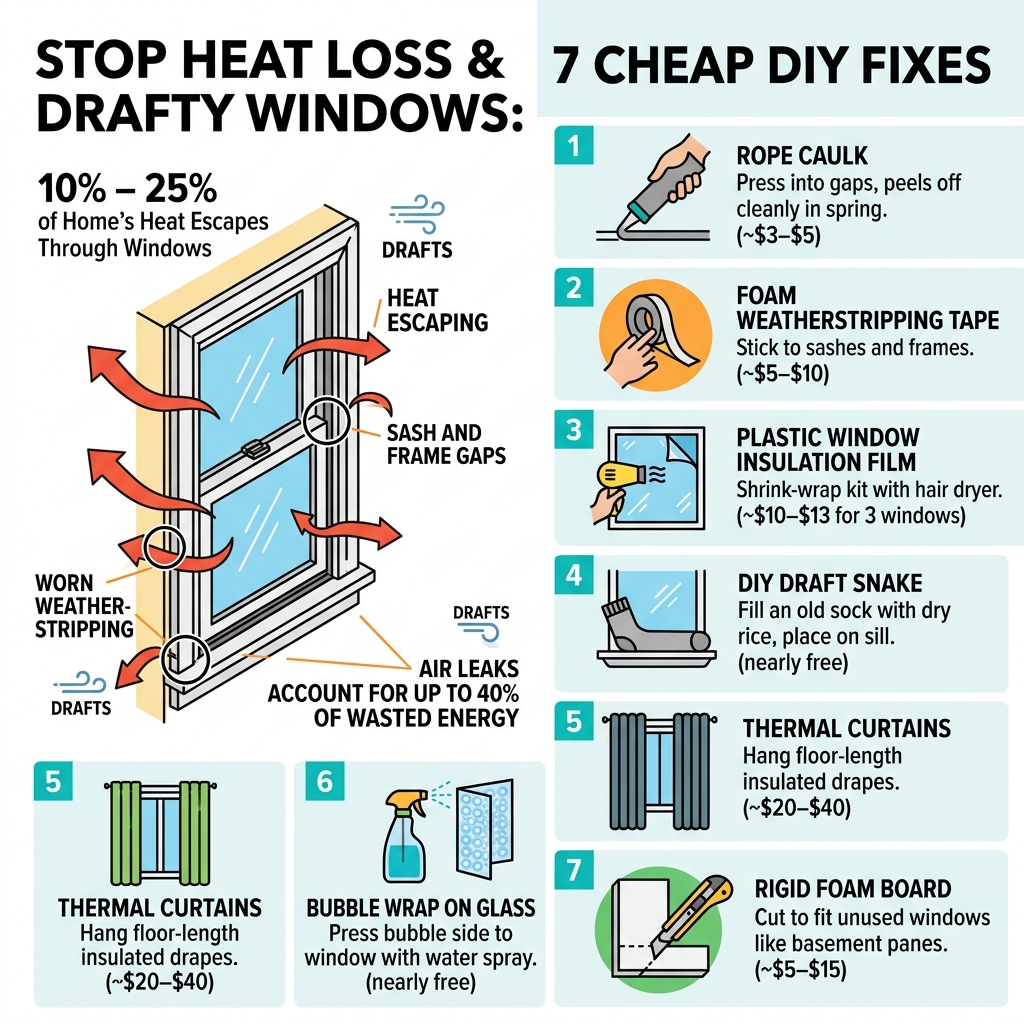
The cheap way to stop drafty windows you’ve been looking for doesn’t require a contractor or a big budget. Here are the most effective options:
Cheapest ways to stop drafty windows:
- Rope caulk – Press into gaps, peels off cleanly in spring (~$3–$5)
- Foam weatherstripping tape – Stick to sashes and frames (~$5–$10)
- Plastic window insulation film – Shrink-wrap kit with hair dryer (~$10–$13 for 3 windows)
- DIY draft snake – Fill an old sock with dry rice, place on sill (nearly free)
- Thermal curtains – Hang floor-length insulated drapes (~$20–$40)
- Bubble wrap on glass – Press bubble side to window with water spray (nearly free)
- Rigid foam board – Cut to fit unused windows like basement panes (~$5–$15)
Now, here’s why this actually matters for your wallet.
On average, 10 to 25 percent of your home’s heat escapes through windows. Across your whole house, air leaks account for up to 40% of wasted heating and cooling energy. That’s not a small leak — that’s money quietly flying out every single month.
The good news? You don’t need to replace your windows. Most drafts come from small gaps, worn weatherstripping, and degraded caulk — all fixable for under $30 in a single weekend.
Whether you own your home or rent, there’s a solution here for you.
Identifying the Culprits: How to Detect Air Leaks
Before we start slapping tape on everything, we need to find out exactly where the “enemy” is entering. Air leaks are sneaky; they often hide in the seams between the window sash and the frame, or where the window trim meets the wall.

To find these leaks without hiring a professional with a thermal camera, try these DIY detective methods:
- The Candle or Incense Test: On a cold, windy day, turn off your HVAC system and fans to keep the air still. Light a candle or a stick of incense and slowly move it around the edges of your window frames. If the flame flickers or the smoke blows sideways, you’ve found a leak.
- The Rattle Check: Give your windows a gentle shake. If they rattle in their tracks, the fit is too loose, which almost certainly means air is getting through.
- The Light Penetration Test: At night, have someone stand outside with a bright flashlight and point it at the window seams while you stay inside. If you see light peeking through the cracks, air is following that same path.
- Visual Inspection: Look for gaps in the exterior caulking or interior trim. Check for “weeping” windows (excessive condensation) or curtains that move even when the heat is off.
For a deeper dive into finding these hidden energy drains, check out our guide on how-to-seal-air-leaks-to-save-energy.
7 Cheap Ways to Stop Drafty Windows This Weekend
Once you’ve identified the leaks, it’s time for action. According to ENERGYSTAR.gov, houses lose about 30% of their heating energy through windows. By spending a few dollars now, you are essentially buying back your future utility budget.
| Method | Estimated Cost | Effectiveness | Best For |
|---|---|---|---|
| Plastic Film | $10–$15 | High | Extreme cold, large panes |
| Weatherstripping | $5–$10 | Medium-High | Moving parts (sashes) |
| Rope Caulk | $5 | Medium | Temporary seasonal sealing |
| Draft Snakes | Free–$10 | Low-Medium | Windowsills and door bottoms |
| Thermal Curtains | $20+ | Medium | Nighttime insulation |
| Bubble Wrap | Free | Medium | Attic/Basement windows |
| Rigid Foam | $10 | Very High | Windows you don’t need to see out of |
Seasonal maintenance is the key to insulating-your-home-for-energy-efficiency. Let’s break down these seven methods in detail.
Install Plastic Window Insulation Kits
If you live in a particularly cold climate, a window insulating kit is a classic for a reason. These kits use a clear plastic shrink film that you apply to the window frame with double-sided tape.
Once the film is in place, you use a hair dryer to “shrink-wrap” it. This creates a drum-tight seal and a pocket of “dead air” between the plastic and the glass. Research shows that plastic shrink film can allow a room to retain as much as 55 percent of its heat. It’s cheap, effective, and provides a crystal-clear view—just don’t forget to leave at least one window in the room uncovered as a fire escape!
Apply Weatherstripping and Foam Tape
Weatherstripping is the cheap way to stop drafty windows that still allows you to open them occasionally. It’s designed to seal the movable parts of the window.
- V-seal (Tension Seal): A plastic or metal strip shaped like a “V” that bridges the gap between the sash and the frame.
- Adhesive Foam Tape: Easiest to install. You simply peel the backing and stick it to the bottom of the sash or the inside of the frame.
Weatherstripping double-hung windows can provide 5-10% energy savings. Before applying, make sure the surface is hospital-clean; use a degreaser or soap and water to ensure the adhesive actually sticks. For more on this, see our article on energy-saving-methods-for-home-insulation.
Use Rope Caulk for Temporary Sealing
Rope caulk is a hidden gem in DIY. It comes in a roll and feels like modeling clay or Silly Putty. You simply pull off a strip and press it into the cracks where the window meets the frame.
It’s a fantastic temporary solution because it stays flexible and doesn’t harden. When spring arrives, you just peel it off. It leaves no residue and won’t damage your paint, making it a favorite for renters.
Create DIY Draft Snakes
A “draft snake” or stopper is essentially a long, weighted fabric tube that sits on the windowsill to block air from creeping in under the bottom sash.
You don’t need to buy these. You can make your own draft stoppers using an old knee sock or a tube of scrap fabric. Fill it with dry rice, dried beans, or even recycled plastic bags to give it weight. It’s an almost free way to stop that “icy-cold” feeling on your neck when you’re sitting near a window.
Hang Thermal Curtains and Heavy Drapes
There’s a reason our ancestors used heavy curtains around their beds—they work! Thermal curtains are made with a thick, insulating layer (often a white acrylic or foam backing) that reflects heat back into the room.
Closing these curtains at night can reduce heat loss by as much as 25%. For maximum effect, ensure they are floor-length and hang as close to the window as possible to prevent “convection loops” where cold air drops out from the bottom of the curtain. Learn more about save-energy-with-insulated-window-treatments.
Apply Bubble Wrap as a Cheap Way to Stop Drafty Windows
This might sound a little “mad scientist,” but bubble wrap is a surprisingly effective translucent insulator. Because bubble wrap is full of tiny air pockets, it acts like a layer of double-paned glass.
To install it, simply spray the glass with a light mist of water and press the bubble side of the wrap against the pane. The surface tension of the water holds it in place. It’s perfect for attic windows or basement panes where you want the light to come in but don’t care about the “view.”
Install Rigid Foam Board for Unused Windows
For windows in unconditioned spaces like garages, attics, or basements, rigid foam board is the gold standard for a cheap way to stop drafty windows.
Cut the foam board slightly larger than the window opening for a “friction fit” and press it into the frame. This provides a high R-value (insulation rating) and completely stops air movement. It’s a great tip from our guide on catch-the-heat-insulation-tips-for-winter.
Renter-Friendly and Temporary Solutions for Drafty Windows
If you rent, you probably can’t go around reglazing windows or applying permanent caulk. You need solutions that are 100% reversible.
- Magnetic Window Inserts: You can build your own custom-fitted window inserts using acrylic panels and magnetic tape. You stick a steel strip to the window frame and magnetic tape to the acrylic. They pop on in seconds and provide a professional-looking seal.
- Tension Rods and Drapes: Use tension rods inside the window frame to hang thermal drapes. This avoids drilling holes in the landlord’s walls.
- Command Hooks: These are great for hanging temporary plastic film or lightweight quilts without damaging the wood finish.
For more renter-specific advice, see the-ultimate-guide-to-insulating-your-home.
Common Mistakes to Avoid When Using a Cheap Way to Stop Drafty Windows
Even a cheap way to stop drafty windows can go wrong if you aren’t careful. Here are the “don’ts”:
- Sealing Weep Holes: Most modern windows have tiny “weep holes” on the exterior bottom of the frame to let moisture drain out. If you caulk these shut, you’ll end up with rotting frames and mold.
- Dirty Surfaces: Adhesive weatherstripping will fall off in three days if the frame is dusty or oily. Clean it first!
- Adhesive Damage: Be careful with “gaffer tape” or heavy-duty duct tape on old wood frames; it can pull the finish right off. Stick to rope caulk or painter’s tape if you’re worried about the wood.
- Ignoring Fire Safety: Never seal every single window in a room with permanent or hard-to-remove materials. You must have an emergency exit.
- Over-Sealing: Your house needs to breathe a little. If you seal it too tight without proper attic-insulation-tips-save-energy-and-money, you might trap humidity and cause indoor air quality issues.
Frequently Asked Questions about Cheap Ways to Stop Drafty Windows
How much money can I save by sealing window drafts?
While every house is different, the 2022 Insulation Industry Opportunity Study suggests that proper air sealing and insulation upgrades can cut up to 45% of your energy waste. Specifically, weatherstripping and sealing windows can lower your heating bills by 10-25% depending on how “holey” your house was to begin with.
How do I remove temporary window seals without damaging the paint?
For plastic film, use a hair dryer to warm the adhesive tape before peeling; this softens the glue. For rope caulk, it should peel off by hand, but any tiny remaining bits can be cleaned with a little bit of paint thinner or adhesive remover on a rag. Always test a small, hidden area first!
When should I stop using cheap fixes and replace my windows?
If your windows are over 20 years old, have rotting wood frames, or the glass is “foggy” (meaning the seal between double panes has failed), it might be time to look at long-term solutions. According to the NAR Remodeling Impact Report, new windows have a high return on investment when you sell your home. However, for most of us, a $10 DIY fix is the smarter immediate move.
Conclusion
At Financefyx, we believe that energy conservation is one of the easiest ways to take control of your monthly budget. You don’t need a massive home renovation to stay warm this winter. By choosing a cheap way to stop drafty windows—whether it’s shrink film, rope caulk, or a simple DIY draft snake—you are empowering yourself to save money and improve your home’s comfort.
Ready to take the next step in home efficiency? Dive into The Ultimate Guide to Insulating Your Home for even more ways to keep your hard-earned cash from flying out the window.
