
How to Seal Your Drafty Windows for Less Than Fifty Bucks
Your Windows Are Costing You Money (Here’s How to Fix That)
The best way to seal a drafty window depends on where the draft is coming from, but for most homes, these five methods work best:
- Weatherstripping – Foam tape or V-channel strip applied to window sashes. Best for movable parts.
- Caulk – Silicone or latex sealant applied around fixed frame edges. Best for cracks and gaps.
- Low-pressure spray foam – Fills larger gaps (1/4 inch or wider) behind trim or around the frame.
- Plastic shrink-wrap film – Temporary insulation kit applied with double-sided tape and a hair dryer.
- Draft stoppers – Fabric or rubber strips placed at the window sill to block bottom-rail gaps.
Imagine you can feel the cold air flowing in through your windows on a winter night. Not just a chill — actual outside air moving through the gap between the sash and frame. It’s a frustrating and expensive problem.
Drafty windows force your heating system to work harder, and that shows up directly on your energy bill. According to ENERGY STAR, sealing leaks around windows and doors can save you up to 10% on your annual energy costs.
The good news? You don’t need to replace your windows to fix the problem. Most drafts can be stopped with materials that cost just a few dollars — and tools you probably already own.
This guide walks you through every method, from a five-minute foam tape fix to a more permanent caulk seal, so you can pick the right solution for your window and your budget.
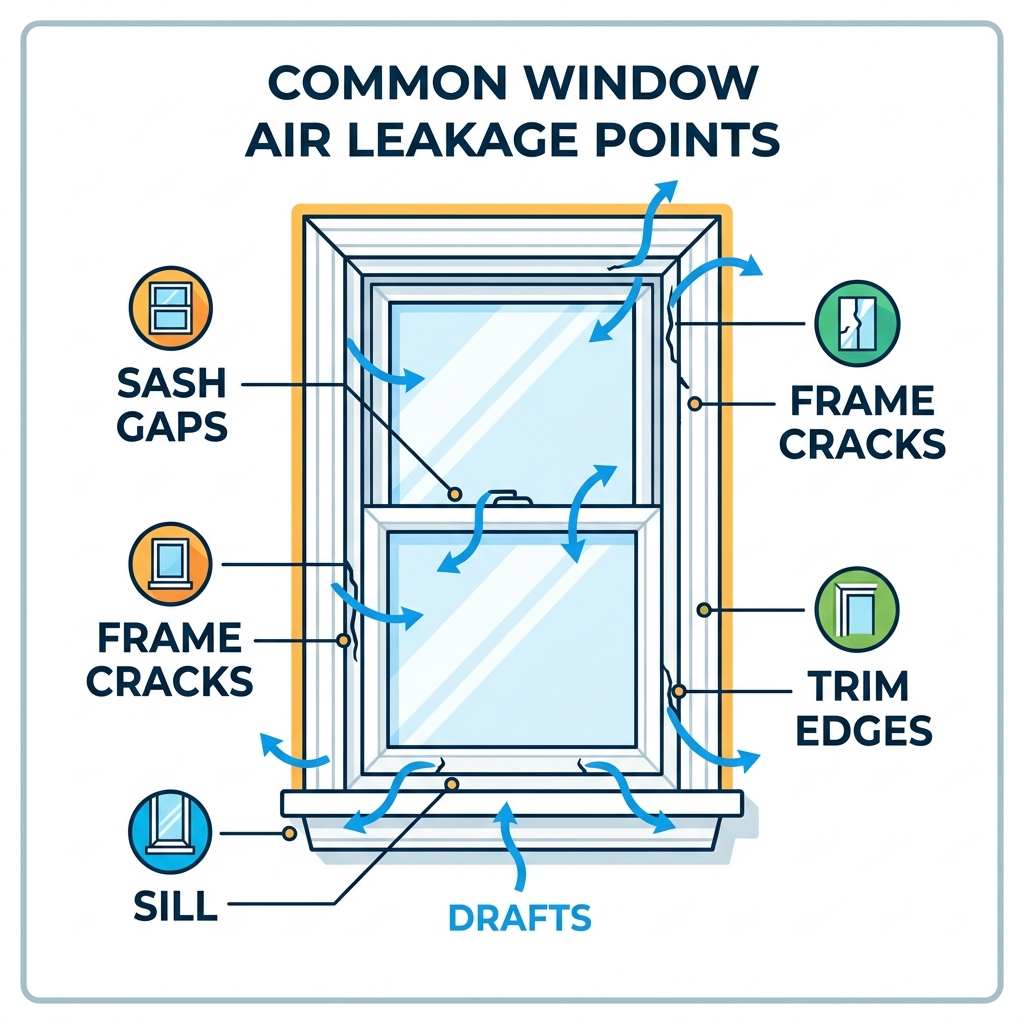
Identifying the Source of the Draft
Before we grab the caulk gun, we need to play detective. Not every draft comes from the same place. Some sneak in through the glass pane’s edge, while others whistle through the space where the window meets the wall. Identifying these leaks is the first step in how to seal air leaks to save energy.
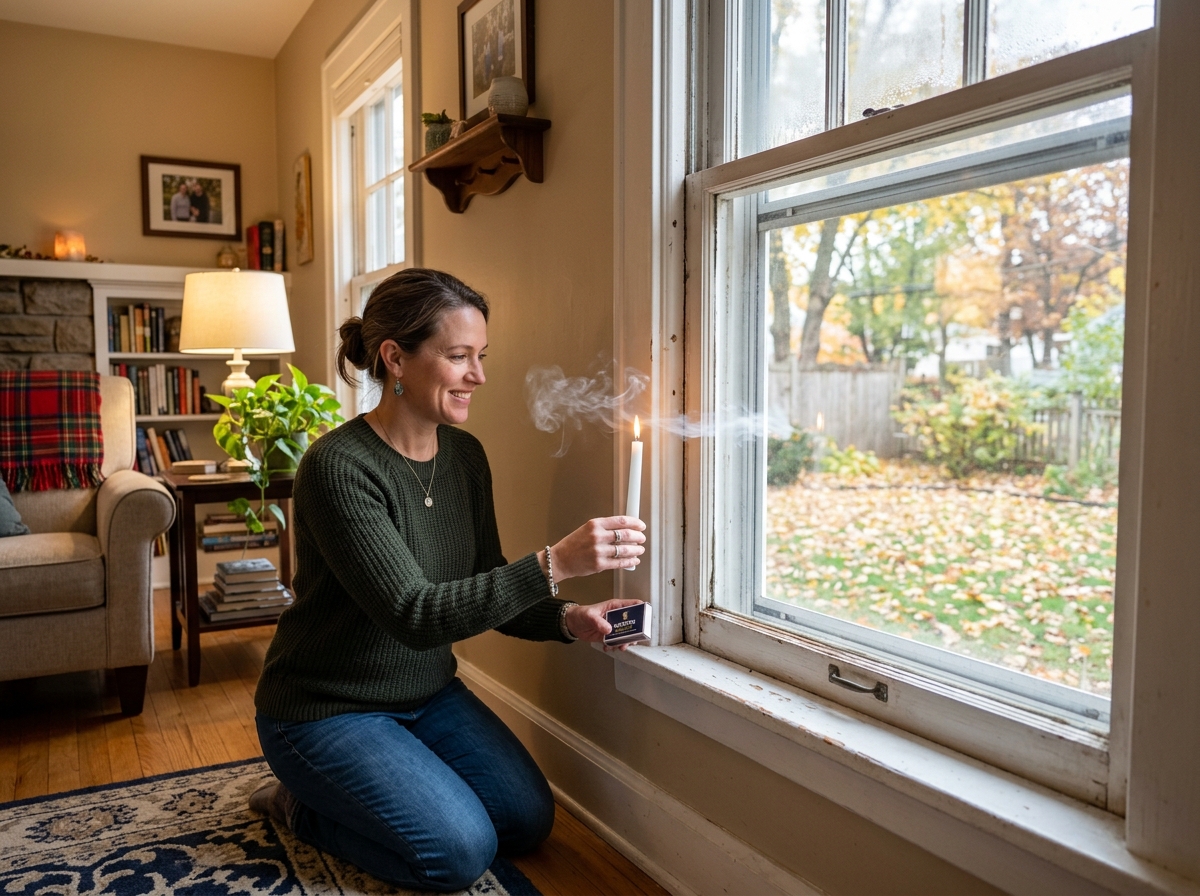
The Candle Smoke Test
This is a classic for a reason. Close all your windows and doors, and turn off any fans or your HVAC system. Light a candle (or a stick of incense) and move it slowly around the perimeter of the window frame. If the smoke flickers or blows sideways, you’ve found a leak. This “air infiltration” is exactly what we want to stop.
The Damp Hand Method
If you don’t want to play with fire, try the damp hand method. Wet your hand with water and run it along the window’s edges. Your skin is more sensitive to temperature changes when wet, making it easier to feel even the smallest cool breeze.
Visual Cues
Look for visible gaps. Can you see daylight through the corners of the sash? Is there condensation or “fog” between the panes? If your curtains move when the wind blows outside, you have a significant air leak. For a high-tech approach, some homeowners use infrared cameras to see heat loss as purple or blue “cold spots” on a screen, but for a DIY budget, the candle and your eyes are usually enough.
The Best Way to Seal a Drafty Window Using Weatherstripping
When it comes to movable parts—the sashes that slide up and down—weatherstripping is the undisputed king. It provides a flexible seal that allows you to open the window in the summer while keeping the cold out in the winter.
There are several types of weatherstripping, and choosing the right one is the best way to seal a drafty window without gluing it shut.
| Type | Best Use | Durability |
|---|---|---|
| Foam Tape | Bottom of sashes, top of window | Moderate; can compress over time |
| V-Channel | Sides of window tracks | High; creates a “tension seal” |
| Felt | Sliding tracks | Low; wears out quickly with friction |
| Rubber/Vinyl | Door and window perimeters | High; very weather-resistant |
Step-by-Step: Best Way to Seal a Drafty Window with V-Channel
V-channel (or V-strip) is a plastic or metal strip folded into a ‘V’ shape. When the window closes, it compresses the ‘V’ to create a tight seal. This is a favorite Do-It-Yourself Savings Project: Weatherstrip Double-Hung Windows because it’s invisible when the window is closed.
- Clean the Surface: Use rubbing alcohol and a rag to clean the window track. If there is dust or old adhesive, the new strip won’t stick.
- Measure and Cut: Measure the height of the side channels. Use Aviation snips to cut the V-strip to length.
- Install: Peel the backing off and press the strip into the side of the frame where the sash slides. The “mouth” of the V should face the outside.
- Secure: For extra durability, you can use a Drill/driver to drive small finish nails into the strip every few inches, ensuring it stays put for years.
Applying Foam Tape for Quick Insulation
If you’re looking for catch the heat: insulation tips for winter that take less than ten minutes, foam tape is your best friend. It’s perfect for the “meeting rail” (where the two sashes touch) and the bottom rail.
Simply clean the bottom of the sash, cut the foam to width, and stick it on. When you lock the window, the foam compresses to block the air. Always use closed-cell foam; it doesn’t soak up water like a sponge, which prevents wood rot and mold.
Applying Caulk and Foam for Permanent Seals
While weatherstripping handles the moving parts, caulk and spray foam handle the stationary gaps. If you have cracks between the window trim and the wall, or where the frame meets the exterior siding, you need a permanent sealant.
Permanent Sealing Materials
- Silicone Sealant: Best for exterior use because it handles extreme temperature changes without cracking.
- Latex Caulk: Easier to apply and paintable, making it ideal for interior trim.
- Low-Pressure Spray Foam: This is not your average “Great Stuff.” You must use a product specifically labeled for “Windows and Doors.” Standard foam expands with enough force to warp window jambs, making the window impossible to open. Low-pressure foam fills the large voids behind the trim without the destructive pressure. This is a key step in insulating your home for energy efficiency.
How to Apply Caulk as the Best Way to Seal a Drafty Window
- Remove the Old Stuff: Use a Utility knife or a putty knife to scrape away old, cracked caulk. New caulk won’t bond to old caulk.
- Prepare the Gap: If the gap is deeper than 1/2 inch, don’t just fill it with caulk. Stuff a “backer rod” (a foam rope) into the gap first, then caulk over it.
- The 45-Degree Angle: Cut the tip of your caulk tube at a 45-degree angle. Hold the gun at that same angle and pull it along the joint with steady pressure.
- Smooth it Out: Use a smoothing tool or a damp finger to press the caulk into the crack. This ensures a waterproof, airtight seal.
Low-Cost and Temporary Sealing Solutions
Maybe you’re a renter and can’t go prying off trim, or maybe you just need a fix for the next three months. There are several ways to save energy with insulated window treatments that are completely reversible.
Plastic Shrink-Wrap Kits
These kits are legendary for a reason. You apply double-sided tape to the window frame, stick a large sheet of plastic to it, and then use a hair dryer to shrink the plastic until it’s tight and clear. It creates an airtight buffer of “dead air” between the glass and the room. It’s cheap, effective, and satisfies the search for the best way to seal a drafty window on a shoestring budget.
Rope Caulk and Removable Sealants
Rope caulk comes in a roll and feels like modeling clay. You can press it into gaps with your fingers and simply peel it off in the spring. There are also “zip-off” liquid sealants that go on like regular caulk but can be peeled away like a rubber band when the weather warms up.
Draft Snakes and Thermal Curtains
Don’t overlook the power of fabric. A “draft snake” is a long, fabric tube filled with rice or dried beans that sits on the window sill. It’s a simple way to block the common gap at the bottom of the sash. Pairing this with heavy thermal curtains—which are designed with a built-in vapor barrier—can significantly reduce the “radiant” cold you feel standing near a window.
Frequently Asked Questions about Sealing Windows
How much money can I save by sealing my windows?
You can save you 10% on your annual energy bills by properly sealing air leaks. When your home is airtight, your HVAC system doesn’t have to cycle on and off as frequently. This reduces wear and tear on your furnace and AC, extending their lifespan. For more ideas, check out our guide on energy-saving methods for home insulation.
When should I replace my windows instead of sealing them?
Sealing is a great patch, but it’s not a cure-all. You should consider replacement if:
- The windows are over 20 years old and the wood is rotting.
- The glass is “foggy” (this means the seal between double panes has failed).
- The frame is so warped that the window won’t lock. A window that doesn’t lock cannot be sealed properly because the sashes aren’t being pulled together.
What safety precautions should I take when sealing windows?
- Fire Safety: Never seal every window in a room with permanent caulk or shrink-wrap. You must have at least one window that can be opened easily as a fire escape.
- Lead Paint: If your home was built before 1978, be careful when sanding or prying at window trim, as it likely contains lead paint.
- Ventilation: If you’re using heavy-duty sealants or spray foam, keep the room well-ventilated.
- Ladder Safety: If you’re sealing exterior gaps on a second story, always have a spotter for your ladder. For more safety tips, see our attic insulation tips to save energy and money.
Conclusion
At Financefyx, we believe that home maintenance shouldn’t break the bank. Finding the best way to seal a drafty window is one of the highest-return DIY projects you can undertake. For less than fifty dollars and a Saturday afternoon, you can transform a drafty, uncomfortable room into a cozy sanctuary—all while putting money back into your pocket through lower utility bills.
Sealing is just one part of a comfortable home. To see the full picture of how to keep your house efficient year-round, dive into The Ultimate Guide to Insulating Your Home. Stay warm, stay savvy, and stop letting your hard-earned money whistle through the cracks!
