
How to Use Foam and Caulk to Stop Window Leaks for Good
Choosing the Best Caulk for Drafty Windows
When we talk about caulk for drafty windows, we aren’t just talking about one single product. The “best” caulk depends entirely on where the gap is, how large it is, and whether you plan to paint over it later. Using the wrong tube can lead to a messy failure that peels off within a season.
To help you choose, we’ve broken down the main categories of sealants you’ll find at the hardware store:
| Feature | Latex-Based (Acrylic) | 100% Silicone | Hybrid Sealants (SMP) | Removable Caulk |
|---|---|---|---|---|
| Best For | Interior trim and baseboards | Kitchens, baths, glass-to-glass | High-movement exterior joints | Renters and seasonal use |
| Paintable? | Yes (usually in 30-120 mins) | No (paint will bead up) | Yes | No |
| Cleanup | Soap and water | Mineral spirits | Solvent/Wipe | Peels off by hand |
| Flexibility | Moderate to High | Very High | Maximum | Low |
| Shrinkage | Some (needs backer rod for >1/4″) | Minimal | Zero | N/A |
For a deeper dive into why these seals matter, check out our guide on how-to-seal-air-leaks-to-save-energy.
Selecting Interior Caulk for Drafty Windows
For the inside of your home, we almost always recommend a high-quality, siliconized latex caulk. Why? Because interior windows are usually surrounded by painted trim. If you use 100% silicone, you’ll be stuck with a shiny, rubbery bead that refuses to take paint, leaving a permanent eyesore.
A top-tier choice for this is DAP Dynaflex Ultra 10.1-oz Window and Door White Paintable Latex Caulk . This product is a favorite among DIYers because it offers “Weather Max” technology, which resists cracking and chalking. It’s also low-odor and cleans up with simple soap and water, making it much friendlier for indoor use than solvent-based alternatives.
When working indoors, look for a “tack-free” time of about 30 minutes. This means you won’t have dust or pet hair sticking to your fresh seal. For more tips on keeping your indoor environment stable, see our article on insulating-your-home-for-energy-efficiency.
Applying Exterior Caulk for Drafty Windows
The outside of your window is a different battlefield. Here, the sealant has to fight UV rays, driving rain, and extreme temperature swings. In climates like New Jersey, where it might be 10°F in January and 95°F in July, your caulk needs massive elongation (stretch) so it doesn’t snap when the window frame contracts.
For these tough conditions, many professionals turn to QUAD Advanced 10 oz. White #001 Exterior Window, Door, and Siding Caulk Sealant (12-pack) . This is an “all-weather” sealant that can actually be applied to wet or cold surfaces—even down to 20°F. It’s self-tooling, meaning it settles into a smooth bead without you having to smear it with your finger.
If you are dealing with exterior leaks, you might also want to explore other energy-saving-methods-for-home-insulation to ensure your entire building envelope is tight.
Preparation and Tools for a Long-Lasting Seal

We cannot stress this enough: Caulk is only as good as the surface it sticks to. If you apply fresh caulk for drafty windows over old, crumbling sealant or a layer of dust, it will pull away within weeks.
Before you even touch the trigger of your caulk gun, gather these essentials:
- Utility Knife & Putty Knife: Use these to scrape away every bit of old, dried caulk. If the old stuff is stubborn, a heat gun or a specialized caulk remover gel can help.
- Rubbing Alcohol or Mineral Spirits: Once the old caulk is gone, wipe the area down. This removes oils and fine dust that prevent adhesion.
- Vacuum with Brush Attachment: Suck out any debris from deep inside the window gaps.
- Damp Rag: Keep this handy for cleaning up your fingers and smoothing the bead (if using latex).
Preparation isn’t just for windows; it’s the same logic we use for attic-insulation-tips-save-energy-and-money—you have to clear the way for the new material to do its job.
Step-by-Step Guide to Sealing Window Gaps
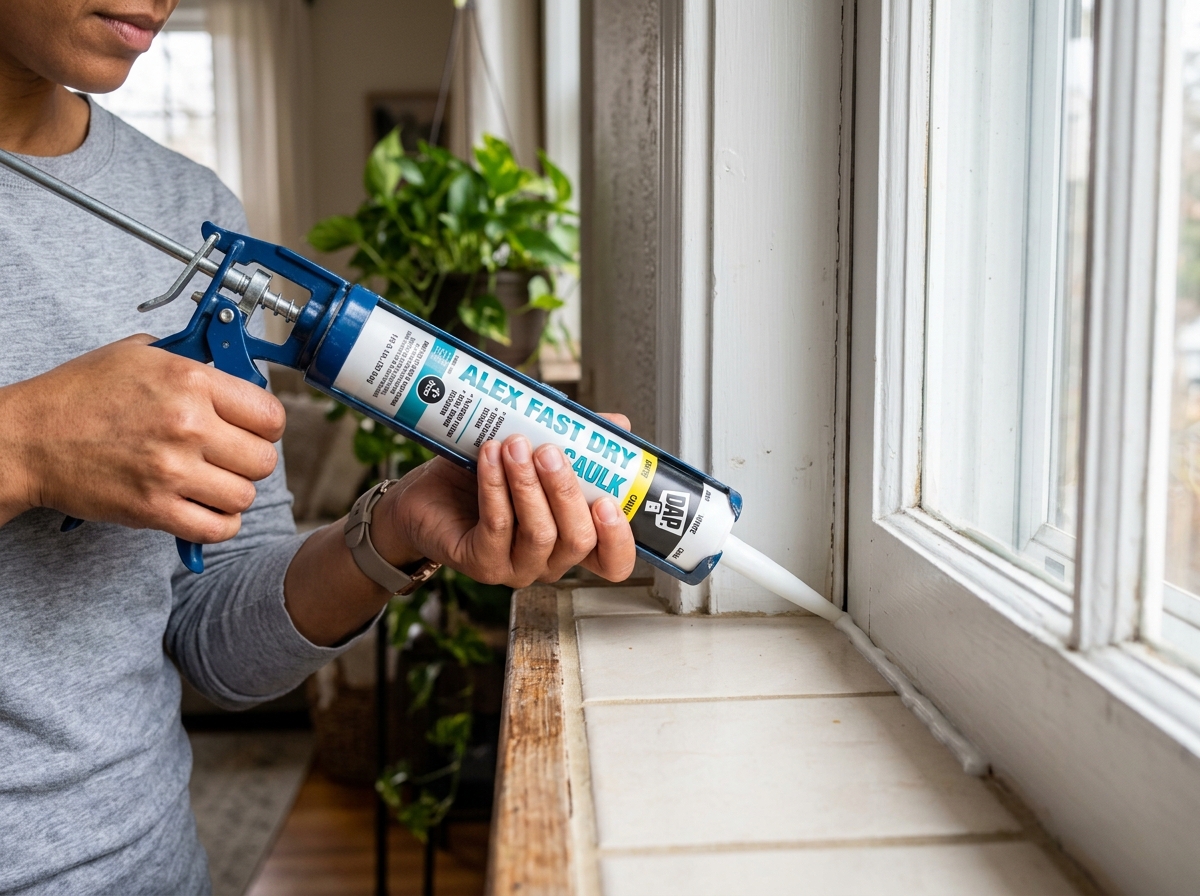
Ready to seal? Follow this process for a professional-looking finish that actually stops the wind.
- Cut the Nozzle: Don’t just hack the top off the tube. Cut the plastic tip at a 45-degree angle. For most window gaps, you want a small opening (about 1/8 to 3/16 of an inch).
- Puncture the Seal: Many high-end caulks have a foil seal inside the nozzle. Use a long nail or the thin metal rod on your caulk gun to poke through it.
- The “Push” vs. “Pull” Method: Hold the gun at a 45-degree angle. We recommend “pushing” the bead into the gap rather than pulling the gun toward you. Pushing forces the caulk deep into the crack for a better mechanical bond.
- Tooling the Bead: Within 5-10 minutes of applying, use a specialized tooling tool or a wet finger to smooth the caulk. This creates a concave shape that looks clean and ensures the edges of the caulk are firmly pressed against both the window and the trim.
- Cure Time: Products like KILZ® PREMIUM SEAL No. S11 & S12 are fantastic because they offer 950% elongation (it stretches like a rubber band!) and are paint-ready in about an hour. However, “paint-ready” isn’t the same as “fully cured.” Most caulks take 24 to 72 hours to reach full strength.
While you’re waiting for things to dry, consider adding save-energy-with-insulated-window-treatments to your windows for an extra layer of thermal protection.
Addressing Large Gaps with Foam and Backer Rods
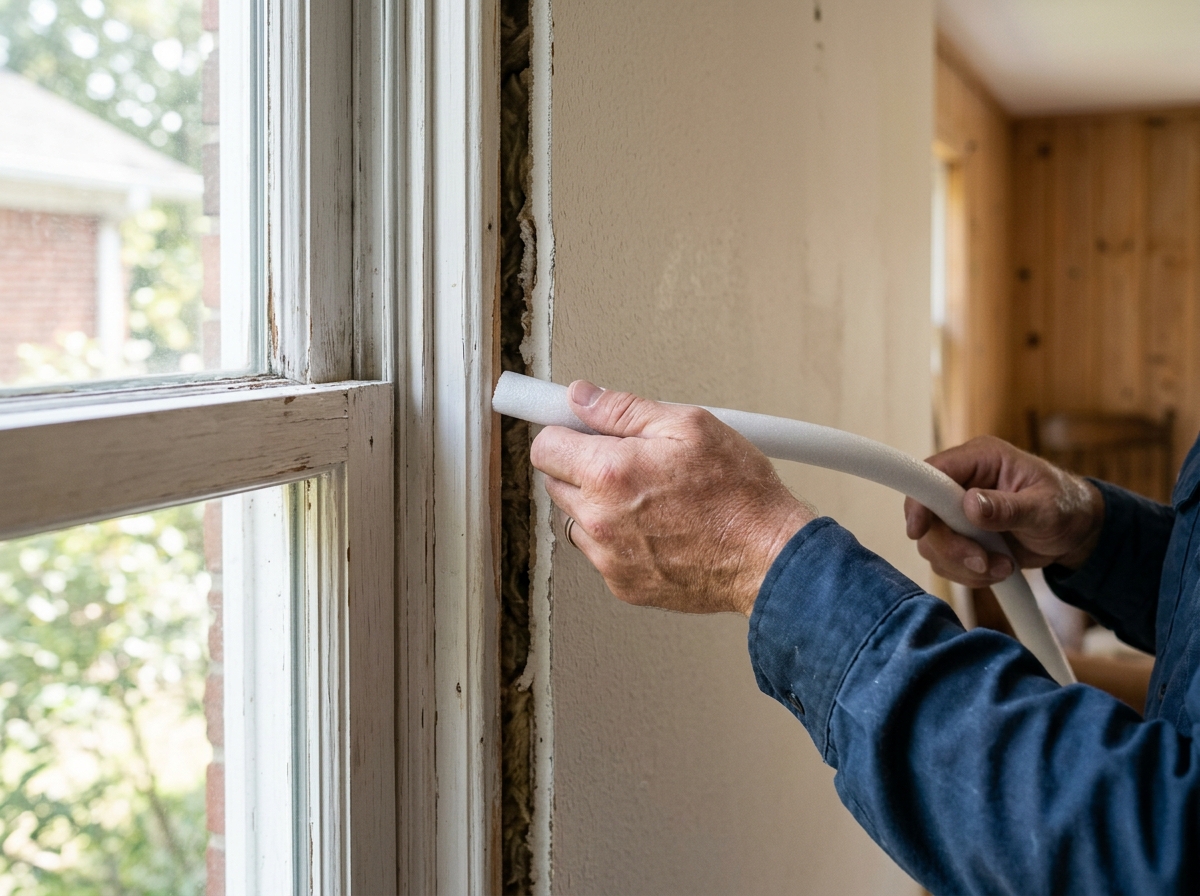
What happens if the gap is huge? If you try to fill a 1/2-inch wide gap with just caulk, two things will happen: it will sag into a gooey mess, and as it dries, it will shrink and pull away from the edges.
The Rule of Thumb: If the gap is wider than 1/4 inch, you need a “bridge.”
- Backer Rod: This is a flexible foam rope. You tuck it into the deep gap, leaving about 1/8 to 1/4 inch of space on top. The caulk then sits on the rod. This prevents “three-point adhesion” (where the caulk sticks to the back of the gap and both sides), which often causes the caulk to tear when the window moves.
- Low-Pressure Expanding Foam: For the space behind the trim (between the window frame and the wall studs), use a “window and door” specific foam. Standard expanding foam can expand with enough force to warp your window frame, making it impossible to open! Look for “No-Warp” formulas.
For versatile sealing in these tricky areas, Seal & Fill Multi-Purpose Window & Door Caulk is a great option because it adheres to almost everything, including wood, vinyl, and metal.
Frequently Asked Questions about Window Sealing
How long does caulk take to cure before it can be painted?
Most modern latex-based caulk for drafty windows is “dry to the touch” in 30 to 60 minutes. However, “paint-ready” times vary. Some fast-acting products are ready for latex paint in just 30 minutes, while others require 2 to 4 hours. Always check the tube! If you paint too early, the paint might crack or bubble as the caulk continues to shrink slightly during its full 24-hour cure.
Can I use silicone caulk on interior window trim?
We generally advise against it. While 100% silicone is incredibly durable and waterproof, it is a nightmare for interior aesthetics. You cannot paint it. If you ever want to change your room color, you’ll have a white or clear stripe around every window that the paint won’t touch. Stick to a high-quality “siliconized latex” or a hybrid like THICC Window & Door Sealant Caulk which gives you silicone-like flexibility but remains paintable.
What are the best temporary solutions for renters?
If you don’t own the home, you probably shouldn’t be applying permanent adhesive. Instead, look for “Seal ‘N Peel” or “Zip-A-Way” removable caulks. These go on like regular caulk but stay rubbery and don’t bond permanently. In the spring, you simply grab one end and peel the entire string away like a giant rubber band. It leaves no residue and won’t damage the landlord’s paint.
Conclusion
Sealing your windows doesn’t have to be a daunting task. By choosing the right caulk for drafty windows—whether it’s a paintable latex for your living room or a heavy-duty hybrid for your exterior siding—you can significantly increase your home’s comfort and lower your energy bills.
At Financefyx, we want to help you make smart, cost-effective upgrades to your home. Taking the time to properly prep your surfaces, use backer rods for large gaps, and choose a high-quality sealant will ensure your DIY fix lasts for years to core. For more comprehensive advice on making your home a fortress against the elements, don’t miss the-ultimate-guide-to-insulating-your-home. Happy sealing!
