
Seal the Deal with These Top-Rated Draft Strips for Windows
Why Your Windows Are Costing You More Than You Think
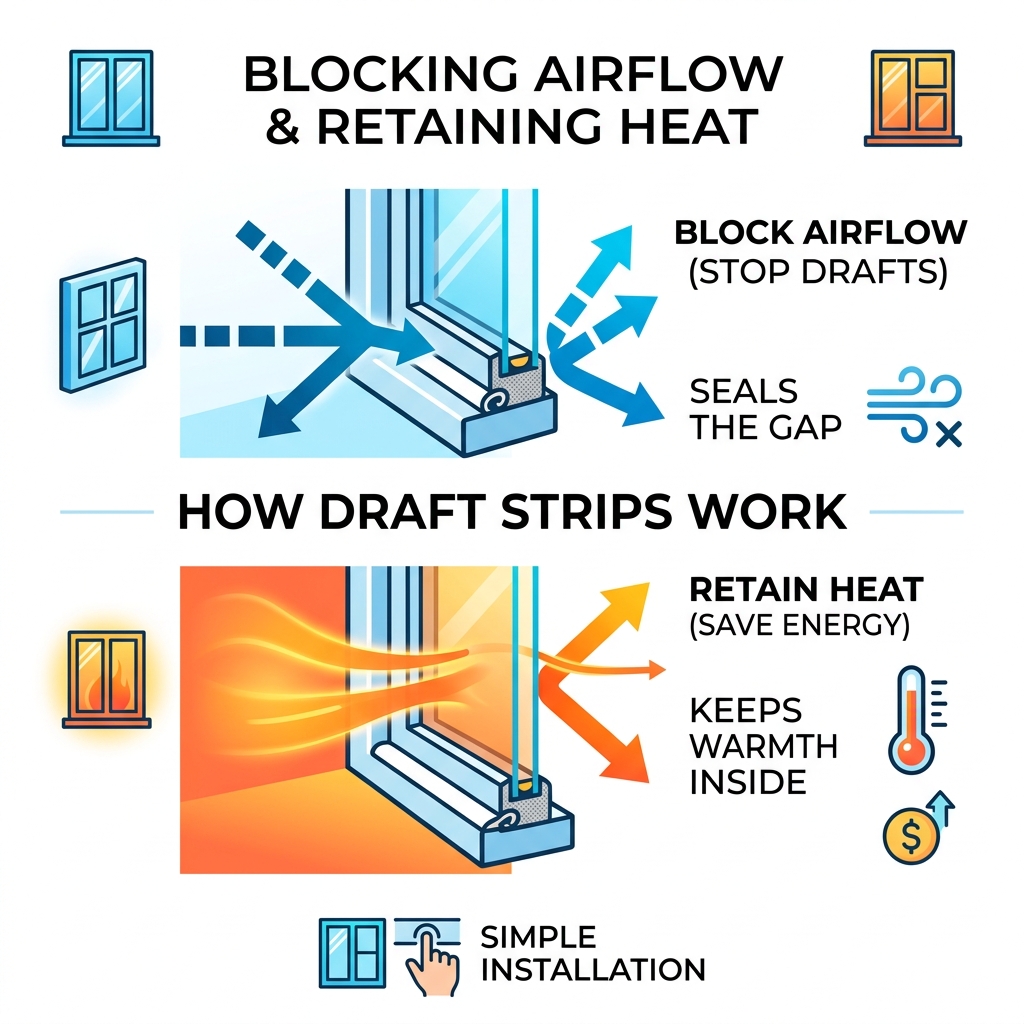
Draft strips for windows are self-adhesive or slide-on sealing products that block cold air from sneaking through gaps in your window frames — and they can make a real difference on your heating bill.
Here are the most popular types to know about:
- Foam tape – cheap, easy to apply, good for small gaps
- Silicone seals – flexible, durable, ideal for irregular gaps
- V-strips (tension seals) – great for sliding and double-hung windows
- D-type profiles – suit gaps from 2mm to 7mm, easy to cut to size
- Shrink film kits – cover the full window for maximum insulation
- Fabric draft snakes – slide-on solution, no adhesive needed
Most products cost between $5 and $35, are available on Amazon, Walmart, and Home Depot, and can be installed in minutes with no tools.
That said, picking the wrong type for your window — or installing it badly — means cold air keeps getting in anyway.
If your home feels chilly even with the heat running, your windows are likely the culprit. Gaps as small as 2mm can let in enough cold air to noticeably raise your energy costs over a winter season. In fact, worn-out window seals are one of the most common — and most overlooked — sources of heat loss in homes.
The good news? You don’t need to replace your windows. A quality draft strip costs a few dollars and takes less than 30 minutes to install. Thousands of homeowners have already made the switch — products like the XFasten Transparent Weather Sealing Tape and Frost King shrink film kits each carry tens of thousands of positive reviews from people who solved exactly this problem.
Below, we break down the best-rated draft strips for windows, how to choose the right one, and how to install it properly so it actually works.
Understanding the Different Types of Window Seals and Alternatives
When we talk about draft strips for windows, we aren’t just talking about a single roll of tape. There is a whole world of materials designed to tackle specific gaps and window styles. Choosing the right one is the difference between a cozy living room and a room that feels like a wind tunnel.
Common Materials and Their Uses
- Foam Tape: This is the “old reliable” of weatherstripping. It usually comes in rolls with an adhesive backing. It is excellent for compression—meaning when you close the window, the foam squishes down to create a tight seal.
- Silicone Seals: These are often T-shaped or flat strips. Silicone is highly flexible and handles extreme temperature changes without cracking. It’s a great choice for sliding doors or windows where there is a lot of friction.
- Fabric Snakes and Weighted Blockers: These are non-adhesive solutions. Some, like the “Draft Buster,” use a double-seal design with foam tubes encased in fabric that slides onto the bottom of a window or door. Others are weighted with materials like balsam fir needles or sand and simply sit on the windowsill.
- Shrink Film: This isn’t a “strip” per se, but it’s a vital part of the draft-blocking family. You tape clear plastic over the entire window frame and use a hairdryer to shrink it tight. It creates an airtight buffer of stationary air.
- V-Strips and D-Type Profiles: These refer to the shape of the rubber or plastic. A V-strip (tension seal) folds into a ‘V’ shape to fill gaps, while a D-type profile, like the Tesa TesaMoll Classic P-profile White draft strip, is hollow in the middle. This hollowness allows it to bounce back and maintain a seal even as the window frame expands or contracts.
Comparing Your Options
| Material | Durability | Best Gap Size | Ease of Removal |
|---|---|---|---|
| Foam Tape | 1-3 Years | 1mm – 4mm | Moderate |
| Silicone | 5-10 Years | 2mm – 7mm | Easy |
| V-Strips | 5+ Years | 1mm – 5mm | Difficult |
| D-Type Rubber | 8 Years | 2mm – 5mm | Moderate |
| Shrink Film | 1 Season | N/A (Full Cover) | Very Easy |
Caulking vs. Weatherstripping
We often get asked if you should just use caulk instead. While how to seal air leaks to save energy often involves both, they serve different purposes. Caulk is a permanent sealant used for the stationary parts of the window (where the frame meets the wall). Draft strips for windows are meant for the moving parts. If you caulk your window shut, you won’t be able to open it in the spring!
The Benefits of Sealing Your Windows
Installing draft strips for windows isn’t just about stopping a breeze; it’s a multi-functional home upgrade. When we seal those cracks, we are essentially building a defensive perimeter around our living space.
Energy Savings and Temperature Regulation
The most immediate benefit is financial. According to industry data, sealing air leaks can significantly reduce heating and cooling bills. When your HVAC system doesn’t have to fight a constant influx of cold winter air or humid summer heat, it runs more efficiently and lasts longer. For more on this, check out our guide on catch the heat: insulation tips for winter.
Noise Reduction and Comfort
Have you ever noticed how much louder the street sounds when a window is even slightly cracked? Air carries sound. By using high-density foam or silicone strips, you aren’t just blocking air; you’re creating a sound barrier. Many users report that products like the MAGZO Door Draft Stopper or various silicone seals help create a much quieter indoor environment.
Protection Against the Elements (and Pests)
A good seal does more than manage air. It acts as a barrier against:
- Dust and Pollen: Keeping your sills cleaner and your air quality higher.
- Insects: Blocking the tiny entry points that spiders and mosquitoes love.
- Odors: Preventing outside smells (like car exhaust or a neighbor’s grill) from seeping in.
- Light: Certain thick draft blockers can help eliminate “light leaks” at the bottom of frames, which is perfect for bedrooms.
What Real Users Say
The market is full of high-performing products. For instance, the Frost King Indoor Shrink Window Kit has nearly 10,000 reviews with a 4.3-star rating, proving its effectiveness for seasonal insulation. Meanwhile, the XFasten Transparent Window Weather Sealing Tape maintains a 4.4-star rating with over 8,000 reviews, specifically praised for being “wood-safe” and leaving no residue upon removal. If you need something heavy-duty, silicone strips like those from TAROSE often boast over 16,000 reviews, highlighting their 8-year durability and resistance to UV rays.
How to Choose and Install the Best Draft Strips for Windows
Choosing the right product requires a quick “audit” of your windows. You don’t want to buy a thick foam for a window that already closes tightly, nor do you want a thin tape for a massive gap in an old wooden frame.

Factors to Consider
- Window Type: Sliding windows work best with brush strips or silicone seals that allow for gliding. Casement windows (that crank out) do well with compression foam or V-strips.
- Location: Are you sealing from the inside or the outside? Most adhesive tapes are designed for interior use, but some rubber D-profiles are UV-resistant and can handle exterior exposure.
- Durability: If you are a renter, you might want something easy to remove, like the Alien Draft Seal or Flex Seal Draft Tape. If you own your home, a long-term solution like the TesaMoll strip (lasting up to 8 years) is a better investment.
- Weather Extremes: In very cold climates, standard adhesives can sometimes fail. Look for “all-weather” or “grid-adhesive” backings which provide a stronger bond. For more detailed specs, you can Download our Flex Seal Draft Tape Guide.
Measuring Your Gaps for Draft Strips for Windows
Before you head to Amazon or Home Depot, grab a ruler.
- Small Gaps (1-3mm): Use thin foam tape or V-strips.
- Medium Gaps (2-5mm): P-profiles or D-profiles are your best bet.
- Large Gaps (5-7mm): Large D-type foam rubber or adjustable fabric draft stoppers.
To test where the air is coming from, we recommend the “damp hand test.” Simply wet your hand and move it slowly around the window perimeter. The moisture makes your skin much more sensitive to cool air movement.
Step-by-Step Installation of Draft Strips for Windows
Installing draft strips for windows is a classic DIY project. Follow these steps for a seal that actually stays put:
- Clean the Surface: This is the most important step! Use rubbing alcohol to remove dust, oils, and old adhesive. If the surface is dirty, the tape will peel off within a week.
- Dry and Measure: Ensure the frame is completely dry. Measure each side of the window individually rather than trying to use one long continuous strip.
- Dry Fit: Before peeling the backing, hold the strip up to the gap to ensure it fits and allows the window to close.
- Cut to Size: Use sharp scissors or a utility knife. For D-type strips, you can often split them down the middle to double your length if the gap is narrow.
- Apply and Press: Peel the backing slowly. Apply the strip and press firmly for 15-30 seconds. This “sets” the adhesive.
- Curing Time: Avoid opening and closing the window for 24 hours if possible to let the bond reach maximum strength.
Common Mistakes to Avoid:
- Stretching the Tape: If you pull the tape tight while applying it, it will eventually shrink back and peel at the corners.
- Ignoring the Temperature: Most adhesives don’t bond well if the window frame is freezing cold. Try to install them on a relatively mild day or use a hairdryer to slightly warm the frame first.
- Over-Thickening: If you use foam that is too thick, you might strain the window lock or hinges.
Frequently Asked Questions about Window Insulation
Can draft strips be used for both interior and exterior windows?
Yes, but you must check the product label. Most foam tapes and transparent “surface-safe” tapes are strictly for interior use because rain and UV rays will degrade the adhesive. However, high-quality silicone and EPDM rubber strips are often rated for both. For exterior use, ensure the surface is bone-dry and degreased before application.
How long do adhesive draft strips typically last?
It depends on the material. Cheap open-cell foam might only last one or two seasons before it loses its “squish.” High-end rubber or silicone profiles (like the TesaMoll P-profile) are rated to last up to 8 years. If you notice the material becoming brittle, cracking, or failing to spring back after being compressed, it’s time for a replacement.
Do draft strips help with soundproofing and noise reduction?
Absolutely. Because sound travels through air, any gap that lets in a breeze also lets in noise. High-density materials like silicone or weighted fabric snakes are particularly good at dampening sound. While they won’t make your home “soundproof,” they can significantly reduce the “hiss” of traffic and wind.
Conclusion
At Financefyx, we believe that home maintenance shouldn’t be expensive or complicated. Draft strips for windows are one of the highest-ROI (Return on Investment) upgrades you can make. For less than the price of a takeout dinner, you can lower your monthly utility bills, increase your home’s comfort, and even protect your interiors from dust and pests.
Whether you choose a high-tech silicone seal, a classic foam tape, or a decorative fabric snake, the key is to act before the peak of winter or summer hits. For a deeper dive into making your entire property more efficient, don’t miss The Ultimate Guide to Insulating Your Home.
Seal those gaps today, and enjoy a quieter, warmer, and more affordable home tomorrow!
