
Shed Some Light on Warmth with These DIY Shed Wall Insulation Tips
Selecting Materials and R-Values for Your Project
Choosing the right materials is the most critical decision in any insulating shed walls diy project. The “best” material depends on your budget, your shed’s construction (wood vs. metal), and how you plan to use the space.
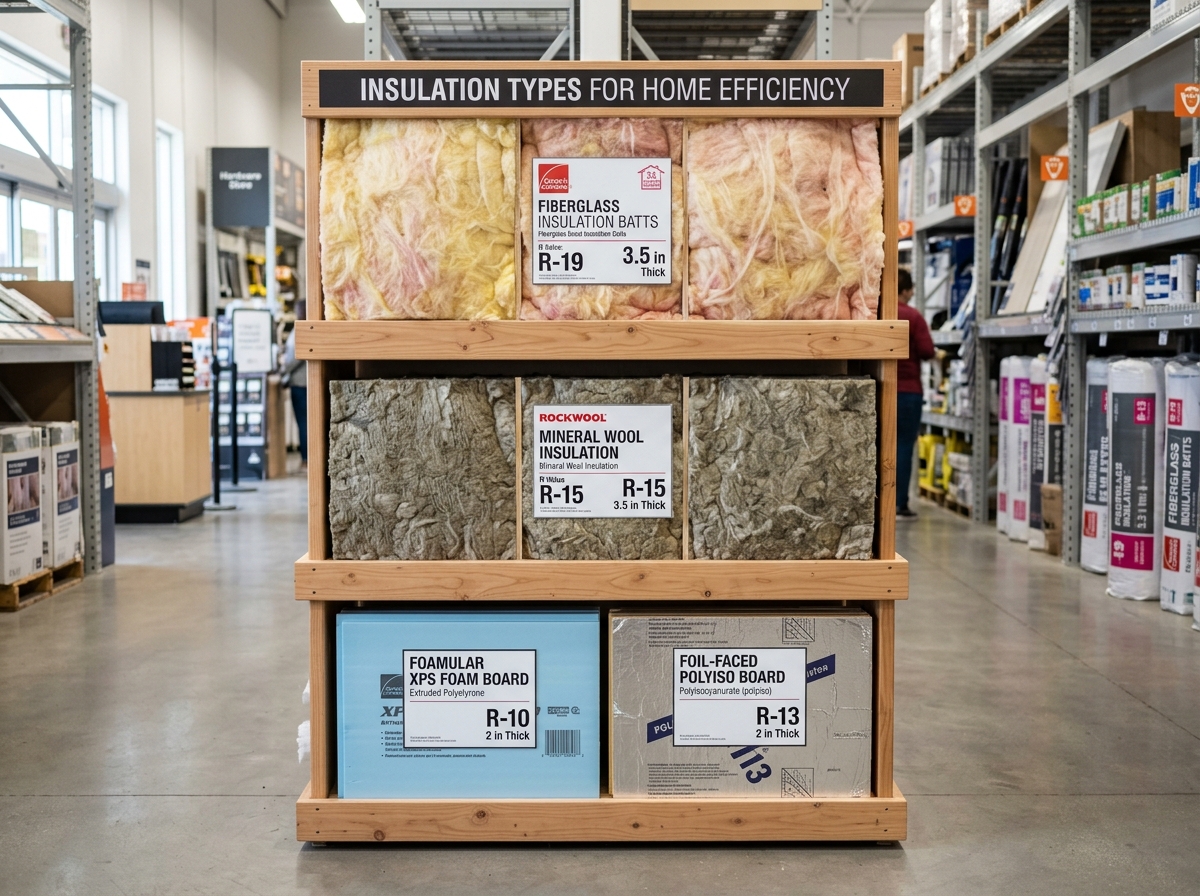
Choosing the Best Materials for Insulating Shed Walls DIY
When we look at the market, four main contenders stand out for DIYers:
- Fiberglass Batts: This is the most affordable and common option. It costs roughly $0.60 per square foot for R-13. It’s easy to find at any hardware store, but it can be itchy to handle and loses its effectiveness if it gets wet or compressed.
- Mineral Wool (Rockwool): Many DIYers, ourselves included, consider this the gold standard for sheds. Rockwool benefits include being fire-proof, water-resistant, and highly effective at soundproofing. It doesn’t slump over time and is much less itchy than fiberglass. While it costs more (around $1.75 per square foot), the ease of installation and durability often justify the price.
- Rigid Foam Boards: These are fantastic for moisture resistance. They are typically made of expanded polystyrene (EPS) or extruded polystyrene (XPS). They are ideal for thin walls or metal sheds where space is at a premium. You can easily cut them to size with a utility knife and friction-fit them between studs.
- Spray Foam: While professional spray foam provides a superior airtight seal, it is expensive (costing over $6.00 per square foot installed). DIY “froth kits” exist, but they can be messy and difficult to apply evenly across large wall sections. We generally recommend saving spray foam for sealing small gaps and cracks around windows and doors.
Recommended R-Values for Shed Walls
R-value measures a material’s resistance to heat flow. The higher the number, the better the insulation. For a shed, your target R-value depends on your local climate and the depth of your wall studs.
- For 2×4 Framing: You are generally looking at R-13 to R-15 insulation. This fits the 3.5-inch depth of a standard 2×4 without compression.
- For 2×6 Framing: You can go up to R-21 or R-23.
- Climate Considerations: In cold climates, aim for the higher end of the spectrum (R-19 to R-21). In moderate climates, R-13 is usually sufficient for walls. That heat rises, so your ceiling should always have a higher R-value (R-30 to R-49) than your walls. For a deeper dive into these values, check out The Ultimate Guide to Insulating Your Home.
Essential Tools and Preparation for Success
Before you start stuffing insulation into the walls, you need to set the stage. Proper preparation prevents the two biggest shed enemies: moisture and air leaks.
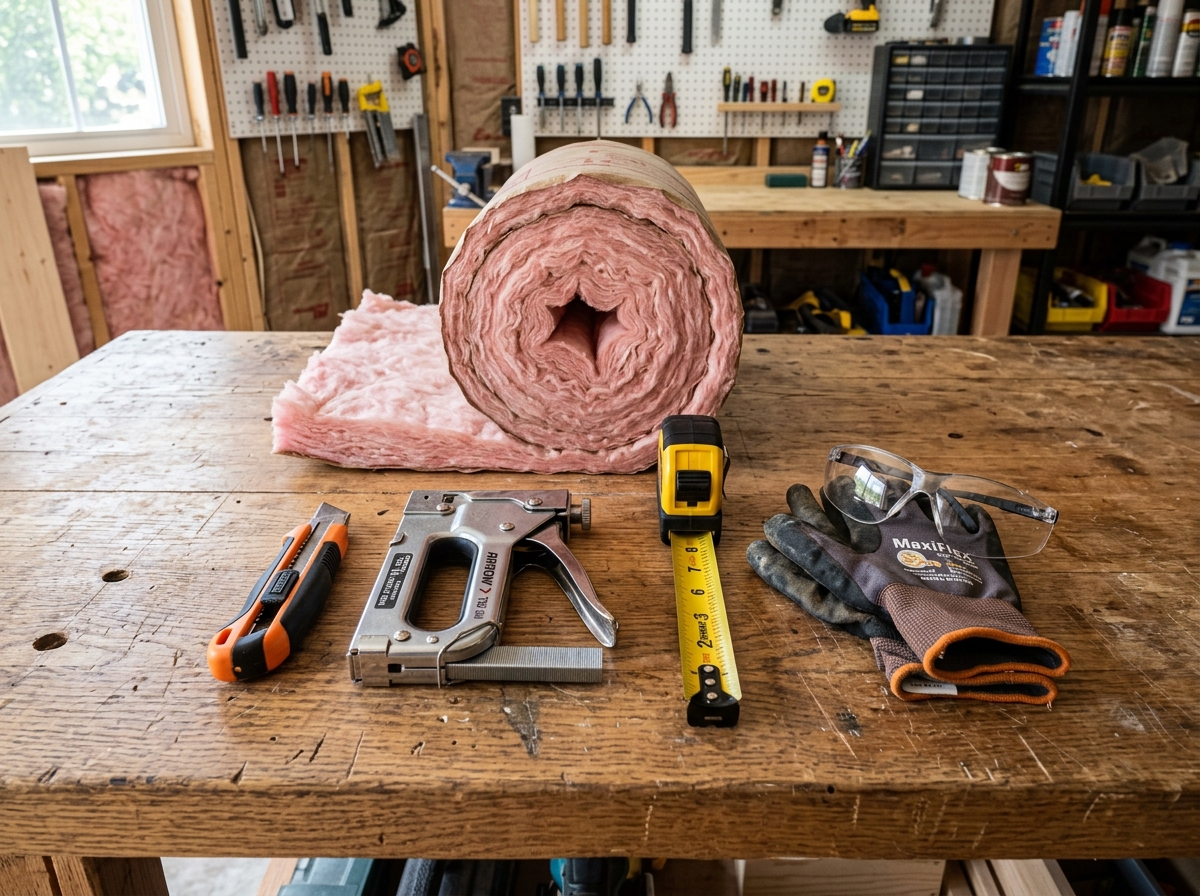
Essential Tools for Insulating Shed Walls DIY
To get the job done right, gather these tools:
- Utility Knife or Insulation Knife: A sharp blade is a must. A long, serrated insulation knife (or even a dedicated bread knife) works best for Rockwool or thick fiberglass.
- Tape Measure: Accuracy is key to a snug fit.
- Heavy-Duty or Pneumatic Stapler: Essential for securing vapor barriers and faced insulation.
- Safety Gear (PPE): Do not skip this! You need safety glasses, gloves, and a NIOSH-certified N95 respirator. If using fiberglass, wearing long sleeves and even applying a little baby powder to your skin can help prevent the “itch.”
- Tuck Tape or High-Tack Seam Tape: Specifically for sealing the vapor barrier.
Preparing Your Shed for Insulation
We recommend starting with an empty shed. It is much easier to work when you aren’t tripping over a lawnmower or moving heavy workbenches.
- Inspect and Repair: Check for any signs of leaks or rot. Insulation trapped against a wet wall will lead to mold.
- Seal Air Leaks: Use caulk or small cans of expanding spray foam to seal gaps around window frames, door headers, and where the wall meets the floor. Learning how to seal air leaks to save energy now will make your insulation much more effective.
- Electrical Check: If you plan on adding outlets or lights, do it now! It is much harder to run wires once the insulation and wall coverings are up.
- Clean the Stud Bays: Use a broom or leaf blower to clear out cobwebs and dust so adhesives and tapes stick properly. For more tips on prep, see our guide on energy saving methods for home insulation.
Step-by-Step Guide to Insulating Shed Walls DIY
Now for the main event. Installing the insulation is repetitive but satisfying work.
Measuring and Cutting Insulation
Don’t assume every stud bay is the same width, especially in prefabricated sheds. We’ve seen “16-inch on-center” studs vary by an inch or more.
- Measure Each Bay: Measure the width between studs at the top, middle, and bottom.
- The “Oversize” Rule: Cut your insulation about 1/2 inch to 3/4 inch wider than the actual opening. This ensures a “friction fit” that holds the material in place without gaps.
- Avoid Compression: This is the most common mistake. Insulation works by trapping air. If you fold, stuff, or squash it to fit a small space, you destroy its R-value. If it’s too big, trim it; don’t cram it.
Installing Insulation Around Obstructions
Your shed walls aren’t just empty rectangles; you’ll have to navigate wires and boxes.
- Electrical Boxes: Hold the batt up to the box and mark the edges. Use your knife to cut a notch out of the insulation so it fits snugly around the box.
- Wiring: For horizontal wires, don’t just push the insulation behind them. Instead, slit the insulation batt halfway through its thickness (like a hot dog bun) and tuck the wire inside the slit. This keeps the insulation at its full thickness on both sides of the wire.
- Windows and Doors: Use small strips of insulation or low-expansion spray foam to fill the narrow gaps between the window frame and the studs.
Managing Ventilation and Vapor Barriers
If you skip this section, your DIY project could end up causing structural rot. When you heat or cool a shed, moisture from the air wants to condense on the cold exterior walls.
Installing a Vapor Barrier
A vapor barrier prevents moist interior air from reaching the cold exterior sheathing.
- Material: Use a 6-mil plastic vapor barrier.
- Installation: Staple the plastic to the face of the studs, starting from the top and working down.
- Sealing: Overlap seams by at least 6 inches. Use high-tack tape (like blue Tuck Tape) to seal every single seam, staple hole, and gap around electrical boxes. You want it to look like an airtight cocoon.
- Climate Rule: Generally, the vapor barrier goes on the “warm-in-winter” side of the wall (the interior). For more details, see the official guidance on vapor barriers.
Shed Ventilation and Roof Airflow
Insulation and ventilation go hand-in-hand. Without airflow, heat and moisture get trapped in the roof, leading to mold and shingle damage.
- Soffit and Ridge Vents: This is the most effective system. Cool air enters through soffit vents at the eaves and exits through a ridge vent at the peak.
- Baffles: If you are insulating the ceiling, you must install rafter vents (baffles). These are plastic channels that keep the insulation from blocking the airflow from the soffit vents up to the roof peak.
- Gable Vents: If your shed doesn’t have eaves for soffit vents, gable vents on either end can provide cross-ventilation. For more on this, read our attic insulation tips.
Special Considerations: Metal Sheds and Common Pitfalls
Metal sheds present a unique challenge because metal is a fantastic conductor of heat and a magnet for condensation.
Insulating Metal Shed Walls
You can’t easily staple insulation to metal. Here is how we handle it:
- Rigid Foam is King: Use rigid foam boards. They provide high R-value in a thin profile and won’t sag.
- Adhesive: Use a high-quality construction adhesive that is compatible with foam (so it doesn’t melt the board) to bond the insulation directly to the metal panels.
- Spray Foam Gaps: Use spray foam to fill the ribs and channels of the metal panels where flat boards can’t reach.
- Thermal Bridging: The metal studs themselves will still conduct cold. Covering the entire wall with a continuous layer of thin foam before adding wall panels can help “break” this thermal bridge. For more winter-specific advice, see our insulation tips for winter.
Common Mistakes to Avoid When Insulating Shed Walls DIY
We’ve seen a lot of DIY projects go sideways. Avoid these blunders:
- Ignoring the Floor: You can have the best walls in the world, but if your floor is uninsulated, you’ll lose up to 40% of your heat. If you can access the underside, install rigid foam between the joists.
- Gaps in the Barrier: Even a small hole in your vapor barrier can let in enough moisture to cause mold over a few seasons. Tape everything!
- Using the Wrong Lights: If you have recessed lights in the ceiling, they must be “IC-rated” (Insulation Contact) to be safe.
- Blocking Vents: Never stuffed insulation all the way into the corners of the roof where it might block your vents.
- Over-Compression: We’ll say it again—don’t squash your batts! For more on efficiency, check out insulating your home for energy efficiency.
Frequently Asked Questions about Shed Insulation
How much does it cost to insulate a typical shed?
For a standard 10×12 shed, you can expect to spend between $150 and $400 for fiberglass or rigid foam. If you choose Rockwool, the cost may climb to $500–$800. Professional spray foam for a shed that size could easily top $1,500. DIYing saves you the labor cost, which is usually 50% or more of a professional quote.
Should I insulate my shed walls before or after electrical wiring?
Always install your electrical wiring, outlets, and light boxes before the insulation. It is much easier to cut insulation around a box that is already mounted than it is to try and fish wires through a wall full of fiberglass.
Can I insulate a shed that is already full of equipment?
You can, but it’s a headache. You’ll spend more time moving boxes and covering tools with tarps than actually insulating. If possible, move your gear to a temporary tent or the garage for the weekend. If you must work around items, focus on one wall at a time.
Conclusion
At Financefyx, we believe that taking care of your property is one of the smartest ways to save money in the long run. Insulating shed walls diy is a perfect example: for a few hundred dollars and a weekend of work, you gain a brand-new functional room on your property and protect your expensive tools from the elements.
Whether you’re turning your shed into a cozy office or just a better-organized storage space, the comfort and energy efficiency you gain are well worth the effort. Once your walls are done, don’t forget the finishing touches like insulated window treatments to keep that hard-earned warmth inside.
For more ways to upgrade your space and lower your bills, explore more energy saving tips on our site!
