
Stop Heating Water Vapor and Start Saving Money Today
Why Your Heating Bill Is Higher Than It Should Be
Dehumidifier reduce heating costs by making your home feel warmer at lower thermostat settings — so your furnace runs less and your bills shrink.
Here’s the short answer:
- High indoor humidity makes air harder to heat. Water vapor has a higher heat capacity than dry air, meaning your heating system burns more energy for the same result.
- Your home feels colder than it actually is. Moisture on your skin causes evaporative cooling, making 18°C feel more like 14°C.
- Your furnace compensates by working harder. Research suggests heating systems can work 10–15% harder when humidity is 10–20% too high.
- A dehumidifier breaks this cycle. By bringing humidity down to the 30–50% range, your home feels warmer at the same temperature — letting you turn the thermostat down.
- The potential savings are real. Lowering your thermostat by just 2°C can cut heating costs by around 15%, and annual energy savings of €100–€200 are achievable with consistent humidity control.
Every winter, millions of homeowners crank up the thermostat and still feel cold. The temperature reads 20°C, but it feels nothing like it. The culprit is often invisible: excess moisture in the air.
One homeowner testing this idea in a cold, historic cottage described the feeling without humidity control as “sitting in a large industrial fridge.” With a dehumidifier running, she felt warm enough to delay switching on her central heating entirely — even as outdoor temperatures dropped.
That experience points to something important. The problem isn’t always how much heat you’re generating. It’s how efficiently your home holds and feels that heat. And humidity is a bigger factor than most people realise.
This guide explains exactly how humidity drives up your heating costs, and what you can do about it.
The Science of Chill: Why Humid Air Costs More to Heat
To understand how a dehumidifier reduce heating costs, we first have to look at the physics of the air inside our four walls. We often think of “air” as a single substance, but in reality, it is a mixture of gases and water vapor. In the winter, that water vapor becomes a financial parasite.
Water has a much higher heat capacity than dry air. In simple terms, this means it takes significantly more energy (and therefore more money from your wallet) to raise the temperature of water than it does to raise the temperature of air. When your home is damp, your furnace isn’t just heating the oxygen and nitrogen you breathe; it’s wasting energy trying to vibrate heavy water molecules.
Furthermore, there is the issue of evaporative cooling. You’ve likely experienced this in the summer: you sweat, the sweat evaporates, and you feel cooler. In a humid winter home, the moisture in the air clings to your skin. Even a tiny amount of airflow can cause that moisture to evaporate, drawing heat away from your body. This creates a “chilly” effect that leads most people to “creep” their thermostat higher and higher.
According to NYSERDA, managing this moisture is critical for appliance efficiency. If you find your home is still losing heat too fast despite these efforts, you might want to check out our catch the heat insulation tips for winter to ensure your hard-earned warmth stays inside.
How High Humidity Makes Your Home Feel Colder
The way we perceive temperature is rarely about the number on the dial. It’s about thermal conductivity. Humid air is more thermally conductive than dry air, meaning it moves heat away from your body faster.
When the relative humidity (RH) is high, the moisture on your skin cannot evaporate effectively into the “saturated” air, but the dampness itself makes the air feel “raw” and biting. This is why a 15°C day in a dry climate feels brisk and pleasant, while 15°C in a damp climate feels like it’s soaking into your bones. This discomfort leads to “thermostat creep,” where we keep bumping the heat up to 22°C or 23°C just to stop shivering, even though a dry 19°C would feel perfectly cozy.
Why Your Furnace Works Harder in Damp Conditions
Your HVAC system is designed to move air, but it struggles with “moisture load.” When the humidity is 10-20% higher than it should be, your heating system can work 10-15% harder to maintain the same temperature.
This isn’t just a matter of comfort; it’s a matter of mechanical strain. A furnace running longer cycles to combat damp air burns more fuel, experiences more wear and tear, and ultimately costs you more in both monthly bills and long-term maintenance. By removing that “liquid weight” from the air, you allow your heating system to do its job with far less effort.
How a Dehumidifier Can Reduce Heating Costs and Improve Efficiency
If you’ve ever looked at a dehumidifier and thought, “That’s just another appliance to pay for,” we have some good news. While a dehumidifier does use electricity, the HVAC optimization it provides often creates a net gain for your bank account.
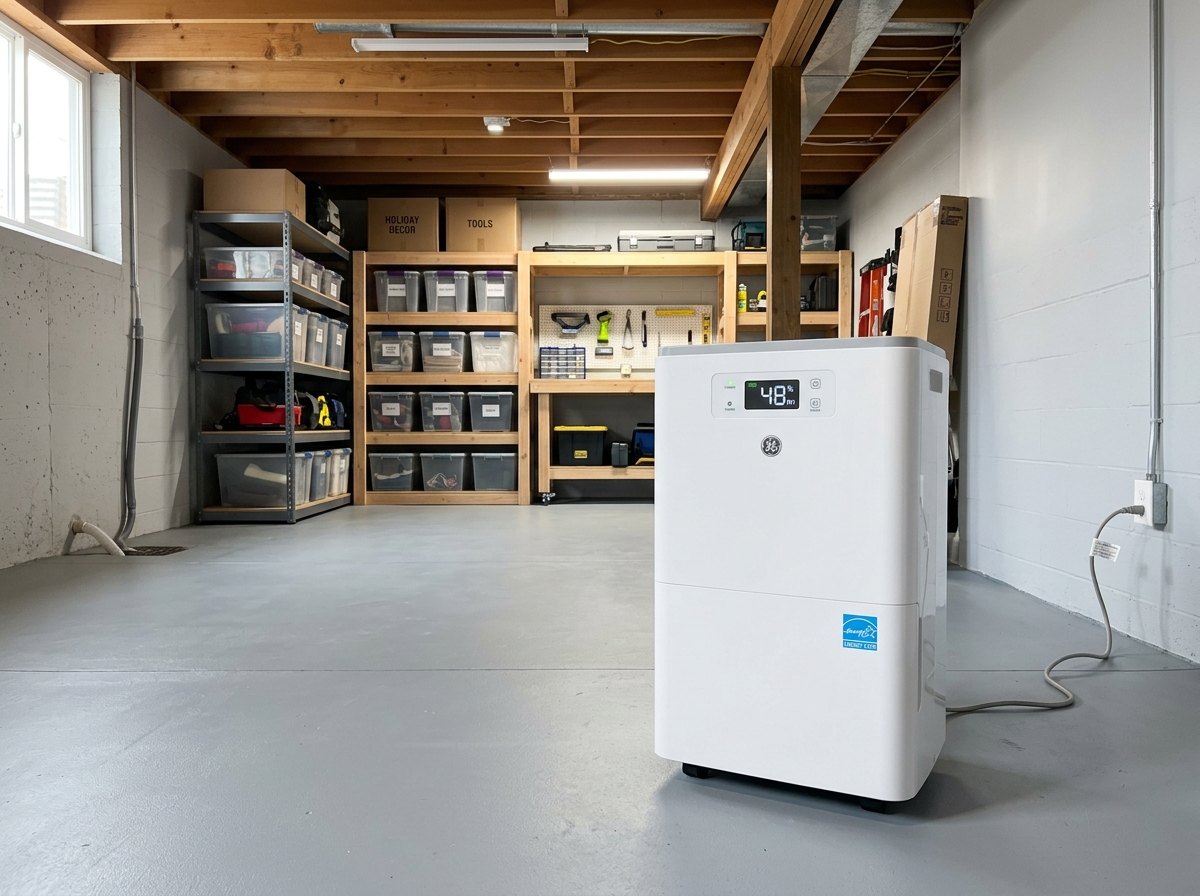
When the air is dry, your primary heating system becomes much more efficient. It reaches the target temperature faster and stays there longer. However, a dehumidifier is only one piece of the puzzle. To truly maximize your home’s efficiency, you should also learn how to seal air leaks to save energy. After all, there’s no point in drying the air if you’re letting damp air leak in through the windows! Combining humidity control with insulating your home for energy efficiency is the “gold standard” for winter savings.
Using a Dehumidifier Reduce Heating Costs by Lowering Thermostat Settings
The biggest financial win comes from the “Perceived Temperature Shift.” Research suggests that by lowering your home’s humidity to an optimal level, you can comfortably lower your thermostat by about 2°C.
In energy savings, a 2°C reduction is massive—it typically translates to a 15% saving on your total heating bill. For an average household, this could mean saving €50 to €100 per year on heating alone. When you factor in the reduced strain on your furnace, the “Comfort Zone” created by a dehumidifier starts to look like a very smart investment.
Does a Dehumidifier Reduce Heating Costs More Than a Space Heater?
A common question we hear is: “Why not just use a space heater?” The answer lies in the byproduct heat.
Dehumidifiers (specifically refrigerant models) actually generate a small amount of heat as they work. As they condense water vapor into liquid, they release what scientists call “latent heat.” This means the air coming out of the back of the unit is usually 1-2 degrees warmer than the air going in. Unlike a space heater, which only provides warmth, a dehumidifier provides warmth and removes the moisture that was making you feel cold in the first place.
| Feature | Dehumidifier | Standard Space Heater |
|---|---|---|
| Primary Goal | Remove Moisture | Generate Heat |
| Wattage | 280W – 700W | 1500W – 2500W |
| Byproduct | Gentle Warmth (Latent Heat) | None (Only Heat) |
| Efficiency Benefit | Makes primary HVAC 15% more efficient | No effect on HVAC efficiency |
| Cost per Hour | Low (approx. 5p – 12p) | High (approx. 30p – 50p) |
Choosing the Most Efficient Dehumidifier for Winter Use
Not all dehumidifiers are created equal, especially when the mercury drops. If you want to dehumidifier reduce heating costs, you need a unit that won’t freeze up when it gets chilly.
There are two main types to consider:
- Refrigerant (Compressor) Dehumidifiers: These are the most common. They work by whistling air over cold coils. They are incredibly efficient in warmer or moderately cool rooms (above 15°C). They also produce the most “byproduct heat,” which helps warm your room.
- Desiccant Dehumidifiers: These use a chemical absorbent to soak up water. They are the champions of cold-temperature operation (below 10°C), making them perfect for unheated basements or garages. While they use slightly more electricity, they are much more effective at moisture extraction in freezing conditions.
For more on how to choose the right tech for your home, take a look at our guide on energy saving methods for home insulation.
Whole-Home Systems vs. Portable Units for Long-Term Savings
If you have a persistent dampness problem throughout the entire house, a whole-home dehumidifier might be the better play. These units are integrated directly into your existing HVAC ductwork.
While the initial investment is higher (often between €1,500 and €3,000), they offer 30-40% energy savings compared to running multiple portable units in different rooms. They also require less day-to-day maintenance since they typically drain automatically into your plumbing. For long-term financial planning, the ROI on a whole-home system is often realized within 5–7 years through lower energy bills and extended HVAC lifespan.
The Importance of Energy Star Certification
We cannot stress this enough: look for the blue Energy Star label. An Energy Star certified dehumidifier uses about 13% less energy than a standard model.
These units use more efficient compressors, fans, and coils to remove the same amount of moisture. Over the course of a single winter, an Energy Star model can save enough electricity to power your refrigerator for two months. When calculating your ROI, the slightly higher upfront cost of an efficient model usually pays for itself in less than six months of regular use.
Practical Strategies to Maximize Your Energy Savings
Simply turning a dehumidifier on isn’t enough; you need a strategy to ensure you aren’t just swapping a high heating bill for a high electric bill.
The first step is monitoring. You can’t manage what you don’t measure! Buy a cheap hygrometer to track your Relative Humidity (RH). During the winter, the goal is different than in the summer. To prevent window condensation and maintain comfort, aim for 30-40% RH in cold weather. If you go too low (below 30%), the air becomes too dry, leading to itchy skin and static shocks.
Pairing your dehumidifier with a programmable thermostat is a “pro move.” You can set your dehumidifier to run during off-peak electricity hours or coordinate it with your heating cycles for maximum efficiency.
Optimal Placement and Maintenance for Peak Performance
Where you put your dehumidifier matters. For the best results:
- Give it space: Ensure there is at least 12 inches of clearance around the air intake and exhaust. Placing it against a wall can reduce efficiency by up to 40%.
- Centralize it: If using a portable unit, place it in the most humid room (often the basement or laundry area) or a central hallway.
- Keep it clean: A dirty filter can increase energy consumption by 15%. Clean your filter every month and check the coils for frost or dust annually.
When a Dehumidifier Might Not Be Cost-Effective
We want to be honest: a dehumidifier isn’t a “magic wand” for every home. If your house has major insulation leaks or literal holes in the walls, a dehumidifier is just trying to dry out the entire neighborhood—and your electric bill will reflect that.
If your local electricity rates are astronomical and your heating fuel (like natural gas) is very cheap, the math might not always result in a net saving. However, for most of us, the combination of comfort, mold prevention, and reduced furnace strain makes it a win. Before buying a unit, ensure you’ve followed the ultimate guide to insulating your home to make sure your home is ready to hold that dry, warm air.
Frequently Asked Questions about Dehumidifiers and Heating
Does a dehumidifier actually blow out warm air?
Yes! As we mentioned earlier, the process of condensation releases latent heat. Additionally, the mechanical work of the compressor generates heat. In a small room, like a home office or a bedroom, a running dehumidifier can raise the temperature by 1 to 2 degrees Celsius. It’s not a replacement for a furnace, but it is a very welcome “free” byproduct of keeping your air dry.
How much does it cost to run a dehumidifier daily?
Based on current energy averages, a modern energy-efficient dehumidifier costs between 4p and 12p per hour to run. If your unit runs for 12 hours a day, you’re looking at about 48p to £1.44 daily. While that adds up, you are aiming to save 15% on a heating bill that might be £5 or £10 a day during a cold snap. The trade-off is almost always in your favor.
Can a dehumidifier prevent window condensation in winter?
Absolutely. Window condensation happens when warm, moist indoor air hits the cold glass (the “dew point”). By keeping your humidity between 30-40%, you lower the dew point, meaning the moisture stays in the air rather than turning into water on your windowsills. This protects your home from structural rot and prevents the growth of black mold.
Conclusion
At Financefyx, we believe that smart financial planning starts at home. Understanding how a dehumidifier reduce heating costs is a perfect example of how a small change in your environment can lead to significant long-term savings.
By managing your home’s humidity, you aren’t just buying a gadget; you’re investing in the longevity of your HVAC system, the health of your family, and the efficiency of your monthly budget. When you stop “heating water vapor” and start heating your home, you’ll find that staying cozy doesn’t have to cost a fortune.
Ready to take control of your home’s economy? Start saving on your home energy bills today by implementing these simple, effective moisture-control strategies.
