
Stop the Shiver and Prevent Window Air Leaks Today
Why Drafty Windows Are Costing You More Than You Think
Prevent window air leaks and you could stop hundreds of dollars from quietly slipping out of your home every winter. Cold drafts sneaking in around window frames force your heating system to work harder — and that shows up directly on your energy bill.
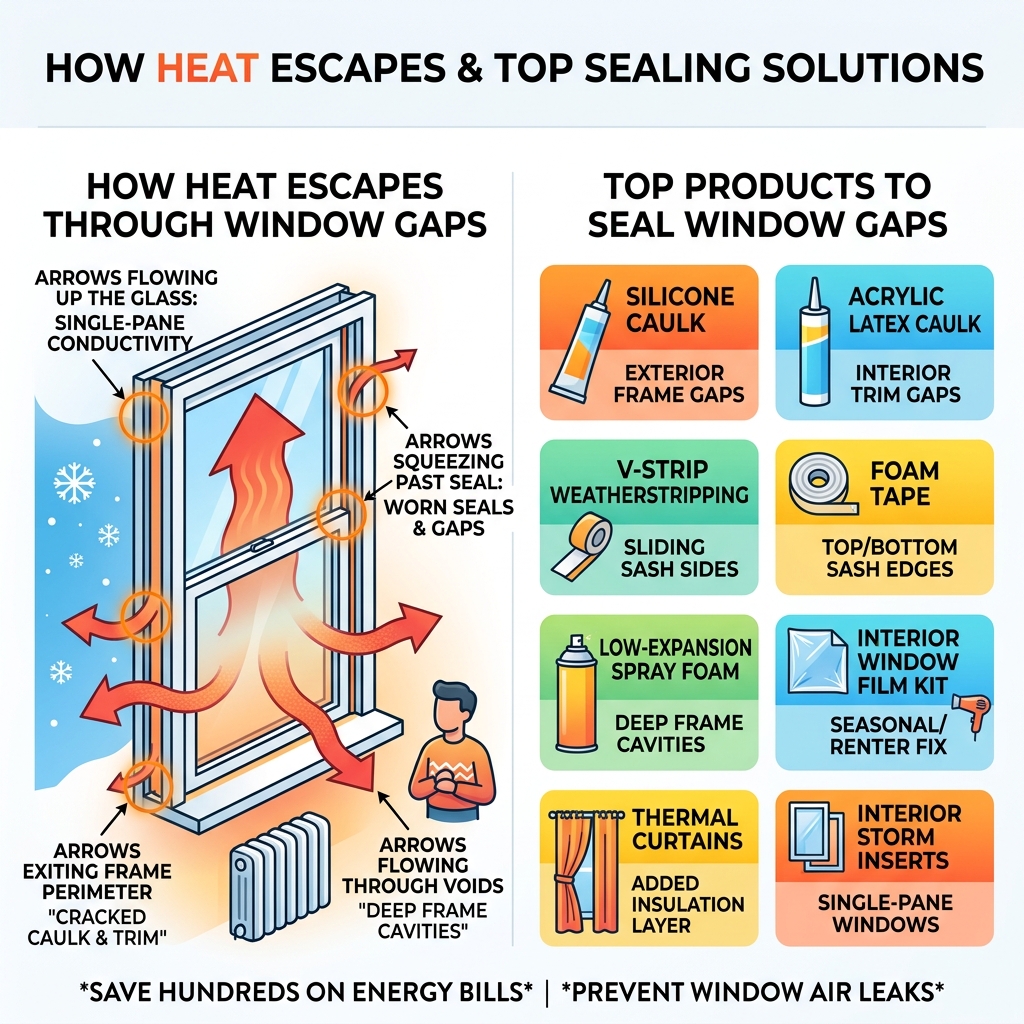
Here are the most effective products to seal window air leaks fast:
| Product | Best For | Difficulty |
|---|---|---|
| Silicone caulk | Exterior frame gaps | Easy |
| Acrylic latex caulk | Interior trim gaps | Easy |
| V-strip weatherstripping | Sliding sash sides | Easy |
| Foam tape | Top/bottom sash edges | Easy |
| Low-expansion spray foam | Deep frame cavities | Moderate |
| Interior window film kit | Seasonal/renter fix | Easy |
| Thermal curtains | Added insulation layer | Easy |
| Interior storm inserts | Single-pane windows | Moderate |
Cold air doesn’t just make your home uncomfortable. It pulls in through gaps around window frames, worn seals, and cracked caulk — especially in older homes with single-pane glass or windows that haven’t been maintained in years.
Even newer homes aren’t immune. A ranch house built in 2022 can develop cracked caulk within just a couple of winters, silently driving up heating costs.
The good news? Most window air leaks can be fixed with simple, affordable products — often for under $40 total.
Identifying the Culprits: Why Windows Leak Air
Before we grab the caulk gun, we need to understand why our windows are betraying us. It isn’t always a case of “old age,” though that’s a frequent offender. Windows are complex systems of glass, wood, vinyl, and seals. When one part fails, the whole unit starts to “breathe” in ways we definitely don’t want.
One of the biggest factors is the glass itself. Single-pane windows are notorious for allowing cold air to pass through easily. They lack the insulating air pockets found in double-pane or triple-pane windows, which are designed to diffuse heat transfer and reduce conductivity. If you have single-pane windows, you aren’t just fighting air leaks; you’re fighting physics.
However, even the fanciest double-pane window can fail. Failed glazing or broken seals between the panes can lead to foggy glass and a loss of insulating power. Then there’s the frame itself. Over time, houses settle, causing window frames to warp or pull away from the wall. This creates gaps that weren’t there when the house was built. Improper installation is another common culprit; if a window wasn’t shimmed or insulated correctly in the “rough opening” during construction, it will leak air from day one.
Understanding Energy Saving Methods for Home Insulation is key to realizing that while windows aren’t always the major source of leakage in a home (attics often take that crown), they are the most noticeable source of discomfort.
Comparing Window Types and Air Leakage
| Window Feature | Air Leakage Potential | Why? |
|---|---|---|
| Single-Pane Glass | High | No thermal break; high conductivity. |
| Double-Pane Glass | Low | Argon or air pockets diffuse heat. |
| Aged Wood Frames | Moderate to High | Prone to rot, warping, and shrinking. |
| Modern Vinyl/Composite | Low | Designed for tight tolerances and expansion. |
| Poorly Installed Units | High | Gaps between the frame and the house structure. |
Common Leak Points by Window Type
Different windows have different “personalities” when it comes to drafts. To effectively prevent window air leaks, we have to know where to look:
- Single-Hung Windows: These usually leak at the “wiper seals” along the frame or where the moving sash meets the fixed upper pane.
- Double-Hung Windows: These are famous for leaking at the “meeting rail” (where the two sashes lock in the middle) and along the side “tracks” or jambs.
- Sliding Windows: Air often whistles through the tracks at the bottom or the vertical meeting point of the two panes.
- Casement Windows: These are generally tighter because they clamp shut, but leaks occur at the hinges or if the weatherstripping has flattened over time.
Learning How to Seal Air Leaks to Save Energy involves targeting these specific moving components with the right materials.
How to Detect and Prevent Window Air Leaks
You don’t need to be a professional detective to find a draft, but you do need a few “tools of the trade.” Sometimes a leak is obvious—you can hear the wind whistling—but often, it’s a silent thief.

The Visual Inspection
Start with your eyes. Look for “daylight” around the edges of your window frame. If you can see the sun peeking through a crack between the wood and the drywall, you’ve found a major leak. Check for rattling panes, which indicate the glazing compound has failed, or visible cracks in the exterior caulk.
The Hand and Smoke Tests
On a cold, windy day, try the Hand Test. Simply run the back of your hand along the window perimeter. The back of the hand is more sensitive to temperature changes than the palm.
For a more precise “visual” of the air movement, use the Smoke Test. Light an incense stick or a candle and hold it near the window seams. If the smoke wavers or the flame flickers violently, you’ve pinpointed a leak. This is a classic method for Detecting Air Leaks recommended by energy experts.
The Dollar Bill Test
This is great for checking the compression of your weatherstripping. Close the window on a dollar bill. If you can pull the bill out easily without any resistance, your seals aren’t tight enough. It should “grip” the bill firmly.
The Flashlight Test
At night, have someone stand outside with a bright flashlight and shine it around the window edges while you stay inside. If you see rays of light coming through, those are the exact spots where air is escaping.
If you want to go deeper, we recommend checking out A Comprehensive Home Energy Audit Checklist to see how window leaks fit into your home’s overall efficiency picture.
The Best DIY Materials and Products for Sealing Drafts
Once you’ve found the holes, it’s time to plug them. There is a wide array of products designed to prevent window air leaks, ranging from permanent fixes to “get me through the winter” solutions.
For those looking for a high-tech, non-invasive solution, Indow Windows offers interior storm window inserts. These are laser-cut, acrylic glazed inserts that press into your existing frame. They provide insulation that rivals double or even triple-pane windows without the need for a full replacement.
Other essential materials include:
- Low-expansion spray foam: Perfect for filling the “rough opening” gaps behind the trim. Make sure it is “low-expansion” so it doesn’t warp your window frame!
- Backer rods: Foam ropes used to fill deep gaps before applying caulk.
- Thermal Curtains: These act as a heavy blanket for your windows. Keeping them closed at night can significantly Catch the Heat: Insulation Tips for Winter.
- Draft Snakes: Long, fabric tubes filled with sand or beans that sit on the windowsill to block bottom-rail drafts.
For a deeper dive into materials, see our guide on Insulating Your Home for Energy Efficiency.
Using Caulk to Prevent Window Air Leaks
Caulk is your best friend for sealing “stationary” parts of the window—the places that don’t move.
- Selection: Use 100% silicone or siliconized latex for the exterior. It stays flexible through freeze-thaw cycles and resists UV rays. For the interior, use paintable acrylic latex caulk, which blends seamlessly with your indoor trim.
- Preparation: This is the step most people skip, but it’s the most important. You must repair cracks or holes with caulk only after removing the old, failed stuff. Use a utility knife to scrape away old caulk, clean the area with rubbing alcohol, and let it dry completely.
- Application: Aim for a steady, uninterrupted bead. Use a smoothing tool or a wet finger to press the caulk into the gap immediately after applying.
- A Warning on Weep Holes: Look at the bottom of your exterior window frame. You might see small rectangular holes. Do not caulk these! These are “weep holes” designed to let water drain out. If you seal them, you’re inviting wood rot and mold.
Weatherstripping to Prevent Window Air Leaks
While caulk handles the stationary parts, weatherstripping handles the moving sashes. You need to apply your weatherstripping correctly to ensure the window still opens and closes smoothly.
- V-Strip (Tension Seal): A durable vinyl or metal strip that folds into a ‘V’ shape. It’s perfect for the side tracks of double-hung or sliding windows.
- Foam Tape: An inexpensive, adhesive-backed foam. It works well on the top and bottom rails where the sash compresses against the frame. Foam tape usually needs replacement every 1-3 years as it loses its “spring.”
- Felt Strips: An old-school choice that is cheap but not very durable. It’s best for areas with low friction.
- Tubular Rubber/Silicone: These look like small straws and offer excellent compression for casement windows.
Long-Term Maintenance and Energy Savings
Fixing a leak today is great, but preventing one tomorrow is better. We recommend an annual window inspection every autumn before the first frost.
Start by cleaning the tracks. Dust and pet hair can build up in sliding window tracks, preventing the sash from sitting flush and creating a gap. Lubricate the hardware (hinges and locks) to ensure they pull the window tight against the seals. A window that doesn’t “lock” properly is a window that leaks air.
Taking these steps helps Make Your Home Energy Efficient with These Tips. Beyond just the “shiver factor,” sealing leaks reduces the load on your HVAC system, potentially extending its lifespan and saving you a fortune in repairs. Furthermore, preventing air leaks also helps with moisture control, which is essential for mold prevention in humid climates.
If you are planning a larger project, consider Remodeling Your Home for Energy Efficiency to incorporate high-performance windows from the start.
When to Choose Replacement Over Repair
Sometimes, a tube of caulk isn’t enough. If your windows are 15-20 years old and you’re seeing the following signs, it might be time for a replacement:
- Structural Rot: If the wood frame is soft or crumbling, no amount of sealant will save it.
- Persistent Fogging: This means the internal seals of your double-pane glass have failed.
- Major Warping: If the window is so bent that it no longer fits in its frame.
In these cases, Save Energy with Insulated Window Treatments can help in the short term, but professional installation of new, energy-efficient windows is the only permanent fix.
Frequently Asked Questions about Window Sealing
Is it safe to apply silicone caulk over existing rubber seals?
We generally advise against this. On single-hung windows, the “wiper seals” are designed to be flexible. Applying a bead of silicone over them might stop the leak temporarily, but it will likely prevent the window from opening or make a mess of the tracks. The better DIY move is to remove the sash and replace the worn wiper seals with generic weatherstripping.
What are the best temporary fixes for renters?
If you can’t make permanent changes, window film shrink kits are a lifesaver. You apply the clear film to the frame with double-sided tape and use a hair dryer to shrink it taut. It creates an airtight barrier that you can simply peel off when you move out. Removable caulk (which peels off like a rubber band) and thermal drapes on tension rods are also excellent renter-friendly options. For more temporary tips, check out our Attic Insulation Tips: Save Energy and Money.
How much can I save by fixing window air leaks?
While every home is different, energy-efficient improvements can save homeowners hundreds of dollars per year. In places like New York, where gas delivery revenues have caused monthly bills to jump by nearly $60, every bit of heat you keep inside is money in your pocket. Sealing leaks is one of the highest-ROI home improvements you can make because the material costs are so low. Explore more Energy Saving Tips to maximize your budget.
Conclusion
At Financefyx, we believe that a comfortable home shouldn’t break the bank. Learning how to prevent window air leaks is a fundamental skill for any homeowner or renter. It’s a project that pays for itself in just a few months through lower utility bills and a significantly higher “cozy factor.”
Whether you’re embarking on a full DIY weekend with caulk and weatherstripping or considering a professional energy assessment, taking action now will protect your home’s value and your wallet. For a complete look at how to protect your home from the elements, don’t miss The Ultimate Guide to Insulating Your Home.
Stop the shiver today—your future self (and your bank account) will thank you!
