
The Highs and Lows of Learning How to Do Loft Insulation
Why Knowing How to Do Loft Insulation Could Cut Your Heating Bills by Hundreds
Learning how to do loft insulation is one of the smartest moves you can make as a homeowner. Here’s the quick version:
How to do loft insulation (summary):
- Prepare – clear the loft, check for damp, hazards, and electrical cables
- Measure – calculate your floor area and existing insulation depth
- Buy materials – mineral wool rolls are the most common DIY choice
- Lay the first layer – 100mm between joists, starting from the eaves
- Lay the second layer – 170mm on top, perpendicular to joists, to reach 270mm total
- Finish up – insulate the loft hatch, lag pipes, and ensure eaves ventilation
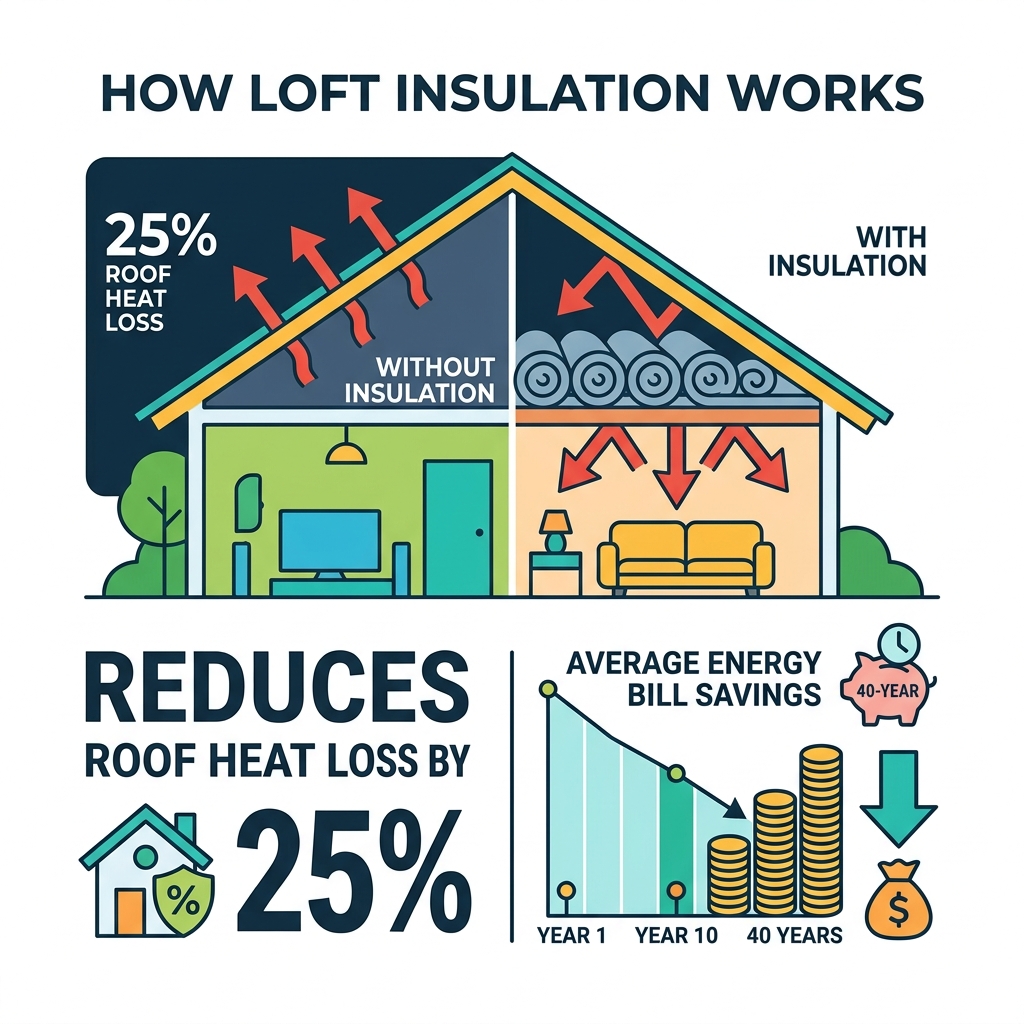
Here’s why this matters: an uninsulated home loses around 25% of its heat straight through the roof. That’s a quarter of your heating bill disappearing into the sky every single winter.
The good news? Loft insulation is one of the most cost-effective home improvements you can make. A DIY installation for a typical three-bedroom semi costs around £300, and the insulation can last up to 40 years if fitted correctly. That’s decades of lower energy bills from a single weekend project.
It’s also one of the few home improvements that genuinely suits confident DIYers. You don’t need specialist skills – just the right materials, some basic safety gear, and a clear plan.
This guide walks you through the whole process, from first inspection to final fit.
Understanding the Basics of Thermal Efficiency
Before we get our hands dirty, we need to understand what we are trying to achieve. In energy efficiency, we often talk about “Cold Lofts” versus “Warm Lofts.”
A Cold Loft is the most common DIY project. This is where you lay insulation on the “floor” of the loft (between the joists). This keeps the heat in your living spaces below but leaves the loft itself cold. A Warm Loft, on the other hand, involves insulating the rafters (the sloping beams of the roof). This is usually done if you plan to use the loft as a living space or if you want to keep the area at a regulated temperature.
When researching how to do loft insulation, you’ll encounter two technical terms: U-values and R-values.
- U-value measures how effective a building element (like a roof) is as an insulator. The lower the U-value, the better.
- R-value measures the thermal resistance of the specific material. The higher the R-value, the better.
Current Building regulations for fuel and power are quite strict. For a new build, the “notional” roof U-value is 0.11 W/(m²K), which requires a massive 395mm of mineral wool. For most of us in existing homes, we aim for a depth of at least 270mm to meet modern standards. To get a broader view of how this fits into your property, check out The Ultimate Guide to Insulating Your Home.
Measuring Your Space Before Learning How to Do Loft Insulation
You wouldn’t buy a carpet without measuring the room, and the same goes for insulation. You need to calculate the square footage of your loft floor (length x width).
Next, check your joist spacing. Most UK homes have joists spaced either 400mm or 600mm apart. Insulation rolls are often sold in widths that match these gaps (typically 380mm or 570mm) to save you from endless cutting.
Finally, check your current depth. Many older homes have about 100mm or 120mm of old glass fibre. If you already have some, you don’t necessarily need to rip it out—you can “top it up.” You can use this handy ruler for checking insulation depth to see exactly where you stand.
Choosing the Right Materials for Your Project
There is no “one size fits all” material, but here are the heavy hitters:
- Mineral Wool (Glass or Rock): The most common and affordable. It comes in rolls (quilts) and is very easy to handle.
- Natural Fibres (Sheep Wool/Wood Fibre): More expensive but sustainable. Sheep wool is great because it can actually absorb moisture without losing its insulating properties and doesn’t require itchy PPE.
- PIR Boards: Rigid foam boards. These are high-performance and great for tight spaces or rafters, but they require more precise cutting.
- Multi-foil: Thin, reflective layers. These are often used in rafters to reflect heat back into the room.
For a deeper dive into which material suits your budget, see our guide on Insulating Your Home for Energy Efficiency.
Essential Preparation and Safety Gear
Safety first! Lofts are dark, dusty, and full of spiders. They are also places where one wrong step can land you in the bedroom below.

Before you start, gather your PPE (Personal Protective Equipment):
- FFP3 Mask: Essential for mineral wool, which releases tiny irritating fibres.
- Goggles: To keep dust and fibres out of your eyes.
- Gloves and Long Sleeves: To prevent “insulation itch.”
- Crawling Boards: Never walk on the plasterboard between joists. Use sturdy planks that span at least three joists to create a safe walkway.
- Lighting: A head torch is often better than a stationary light as it follows your gaze.
For more preparation tips, read our Attic Insulation Tips Save Energy and Money.
Identifying Hazards and Obstacles
Before unrolling a single inch of wool, we need to perform a “loft audit.”
- Electrical Cables: These can overheat if buried under deep insulation. Ideally, they should be clipped to the top of the joists or left resting on top of the insulation.
- Downlights: Recessed lights in the ceiling below generate heat. You must use “downlight covers” or loft caps to create a safety gap so the insulation doesn’t touch the hot bulb.
- Damp Patches: If you see black mould or wet timber, stop. Insulation will only trap that moisture and cause rot. Fix the leak or ventilation issue first.
- Bats: In the UK, bats are legally protected. If you see signs of bat droppings, you must seek Bat Conservation Trust advice before proceeding. Disturbing a roost is a criminal offence!
Common Mistakes to Avoid When Learning How to Do Loft Insulation
We’ve seen it all, and most mistakes come down to enthusiasm over-ruling logic.
- Compression: Do not squash your insulation to make it fit. The air trapped between the fibres does the insulating. If you squash it, you kill the R-value.
- Gaps: Even a small gap acts like a chimney, letting heat escape. Butt the rolls tightly against each other.
- Blocking the Eaves: This is the big one. You need airflow to prevent condensation. Always leave a 25mm gap at the edges where the roof meets the walls.
- Overheating Wires: As mentioned, never bury high-power cables (like those for electric showers).
For more seasonal advice, check Catch the Heat Insulation Tips for Winter.
Step-by-Step Guide: How to Do Loft Insulation
Now for the main event. Here is how to do loft insulation like a pro.
- Clear and Clean: Remove any old suitcases or Christmas trees. Vacuum between the joists if there’s a lot of debris.
- The First Layer (Base Layer): Lay your 100mm insulation between the joists. Start at the furthest corner and work back toward the hatch. Ensure it is snug against the joists but not compressed.
- The Second Layer (Top Layer): To reach the magic 270mm mark, you need another 170mm. Lay this layer perpendicular (at a 90-degree angle) to the joists. This “cross-layering” covers the wooden joists themselves, which otherwise act as “thermal bridges” that leak heat.
- Trim to Fit: Use a long serrated knife or a dedicated insulation saw. Don’t tear the material; a clean cut ensures no gaps.
DIY vs Professional: The Cost Comparison
| House Type | DIY Cost (Materials) | Professional Cost | Potential Annual Saving |
|---|---|---|---|
| Detached | £400 – £500 | £1,200+ | £400+ |
| Semi-Detached | £250 – £350 | £900 – £1,100 | £250 |
| Mid-Terrace | £200 – £300 | £700 – £900 | £200 |
Insulating the Loft Hatch and Water Tanks
Don’t forget the “heat bypass” areas. Up to 5% of your home’s heat can escape through an uninsulated loft hatch.
- The Hatch: Glue a block of rigid foam insulation or a thick piece of mineral wool (wrapped in plastic) to the top of the hatch. Apply draught-excluding tape around the edges of the frame.
- Water Tanks: If you have a cold water tank, insulate the sides and the top with a tank jacket. Crucial Tip: Do not insulate underneath the tank. You want the heat from the house to rise up and keep the bottom of the tank warm to prevent it from freezing in winter.
- Pipes: Use foam “lagging” for all exposed pipes. This is a vital part of Energy Saving Methods for Home Insulation.
Managing Ventilation and Condensation
When you insulate a loft, you make it much colder. Cold air cannot hold as much moisture as warm air, which means any steam from your bathroom or kitchen that drifts up there will turn into water droplets on your roof timbers.
To prevent rot:
- Maintain Eaves Vents: Ensure the 25mm gap is clear. You can buy “eaves ventilators” (plastic trays) that keep the insulation from sliding into the gap.
- Check Tile Vents: Ensure your roof has adequate ventilation tiles or ridge vents.
- Seal Gaps: Use a sealant to close gaps around pipes or cables that lead from the house into the loft to stop moist air from rising.
If you are worried about dampness, it might be worth consulting TrustMark registered installers to ensure your ventilation is up to scratch.
Advanced Considerations: Storage and Professional Help
One of the most common questions we get is: “Can I still use my loft for storage?” If you lay 270mm of insulation, it will be much higher than your joists. If you put boards directly on top, you will squash the insulation and cause damp issues.
The solution is Loft Legs. These are plastic stilts that screw into your joists and support a secondary floor of chipboard. This creates a “storage deck” with a 50mm air gap above your 270mm insulation. It’s the only way to have both a warm house and a place for your suitcases!
When to Hire a Professional Installer
While we love a DIY project, sometimes you should call in the experts:
- Flat Roofs: These are notoriously difficult to insulate and often require a “warm roof” setup that involves stripping the outer membrane.
- Damp and Mould: If your loft is already wet, you need a professional to find the source.
- Inaccessible Spaces: If you have a very low-pitched roof where you can’t safely move, “blown-in” insulation (installed by a machine) is the best option.
- Asbestos: In some older homes, old loose-fill insulation might contain asbestos. If you suspect this, do not touch it—call a specialist.
Grants and Funding Opportunities
You might not even have to pay for this! The UK government has several schemes to help:
- Warm Homes Plan: A massive investment aimed at upgrading UK home energy efficiency.
- Great British Insulation Scheme (GBIS): Targeted at those in lower council tax bands or with lower EPC ratings.
- NISEP (Northern Ireland): If you are in NI, the Northern Ireland Energy Advice Service can guide you toward specific grants.
Frequently Asked Questions about Loft Insulation
Can I install loft insulation over existing layers?
Yes, as long as the old insulation is dry and in good condition. If it’s been flattened or is damp, it’s better to remove it. If it’s fine, just lay the new layer perpendicular to the old one.
Is it safe to cover electrical cables with insulation?
Generally, no. High-power cables (like those for showers or cookers) should never be covered as they can overheat and cause fires. Light-duty lighting cables are usually okay if they have slack, but it’s best practice to keep all cables on top of the insulation.
How much money will I save by topping up to 270mm?
If you are topping up from 120mm to 270mm, you’ll save around £20-£30 a year. However, if you are going from zero insulation to 270mm, the savings can be as high as £250-£400 per year depending on your house type.
Conclusion
At Financefyx, we believe that energy efficiency is the ultimate investment. Learning how to do loft insulation isn’t just about the immediate “payback period” (which is usually less than 5 years); it’s about the long-term value of your home.
A well-insulated loft improves your EPC (Energy Performance Certificate) rating, which can increase your home’s value by up to 16%. It also slashes your carbon footprint and makes your home significantly more comfortable during those biting winter months.
Whether you choose the DIY route for £300 or hire a TrustMark professional, the result is the same: a warmer home and a cooler energy bill. Start saving today with our energy-saving tips and take control of your home’s climate!
