
The Mystery of the Draft Coming Through New Windows
That Cold Feeling Isn’t in Your Head: Understanding a Draft Coming Through New Windows
A draft coming through new windows is one of the most frustrating surprises a homeowner can face — especially after spending good money on a fresh installation.
Here’s a quick breakdown of why it happens and what to do:
| Cause | Quick Fix | Permanent Solution |
|---|---|---|
| Caulk shrinkage around the frame | Apply temporary rope caulk | Re-caulk with professional-grade sealant |
| Poor insulation during install | Use window film or thermal curtains | Have installers add low-expansion foam |
| Sash or frame misalignment | Tighten window hardware | Call installers back for re-shimming |
| Manufacturing seal failure | Draft snake or foam tape | File a warranty claim |
| Structural settling | Weatherstripping | Professional re-inspection |
New windows should stop drafts — that’s the whole point. But even brand-new installations can leak air if the window wasn’t sealed properly, the caulk shrunk during curing, or the frame wasn’t set square in the rough opening.
The good news? Most causes are fixable. And fixing them matters more than you might think.
According to the U.S. Environmental Protection Agency, air leaks account for up to 40% of the energy wasted on heating and cooling a home. A drafty window isn’t just uncomfortable — it’s silently inflating your heating bills every single month.
This guide walks you through exactly why new windows draft, how to find the leak, and what to do about it — from a quick weekend fix to a full installer callback.
Why is a Draft Coming Through New Windows?
It feels like a betrayal. You’ve just invested thousands in high-efficiency glass, yet you’re still reaching for a sweater while sitting by the window. To solve the mystery of a draft coming through new windows, we have to look beyond the glass itself. Often, the culprit isn’t the window unit, but the “interface”—the space where the new window meets your old house.
Several factors can lead to post-installation drafts:
- Manufacturing Defects: Sometimes a unit leaves the factory with a faulty seal or a warped frame.
- Installation Flaws: If the window isn’t perfectly level, square, and plumb, the sashes won’t meet the weatherstripping correctly.
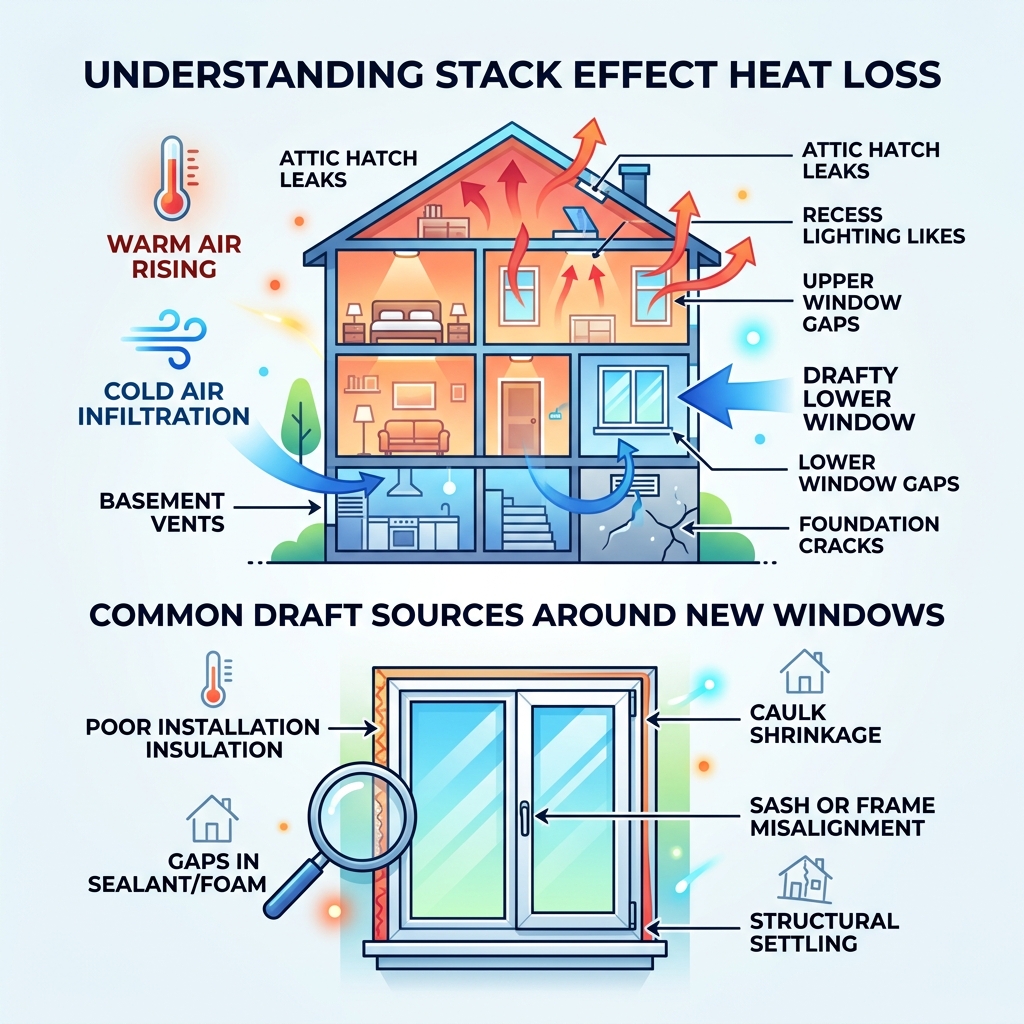
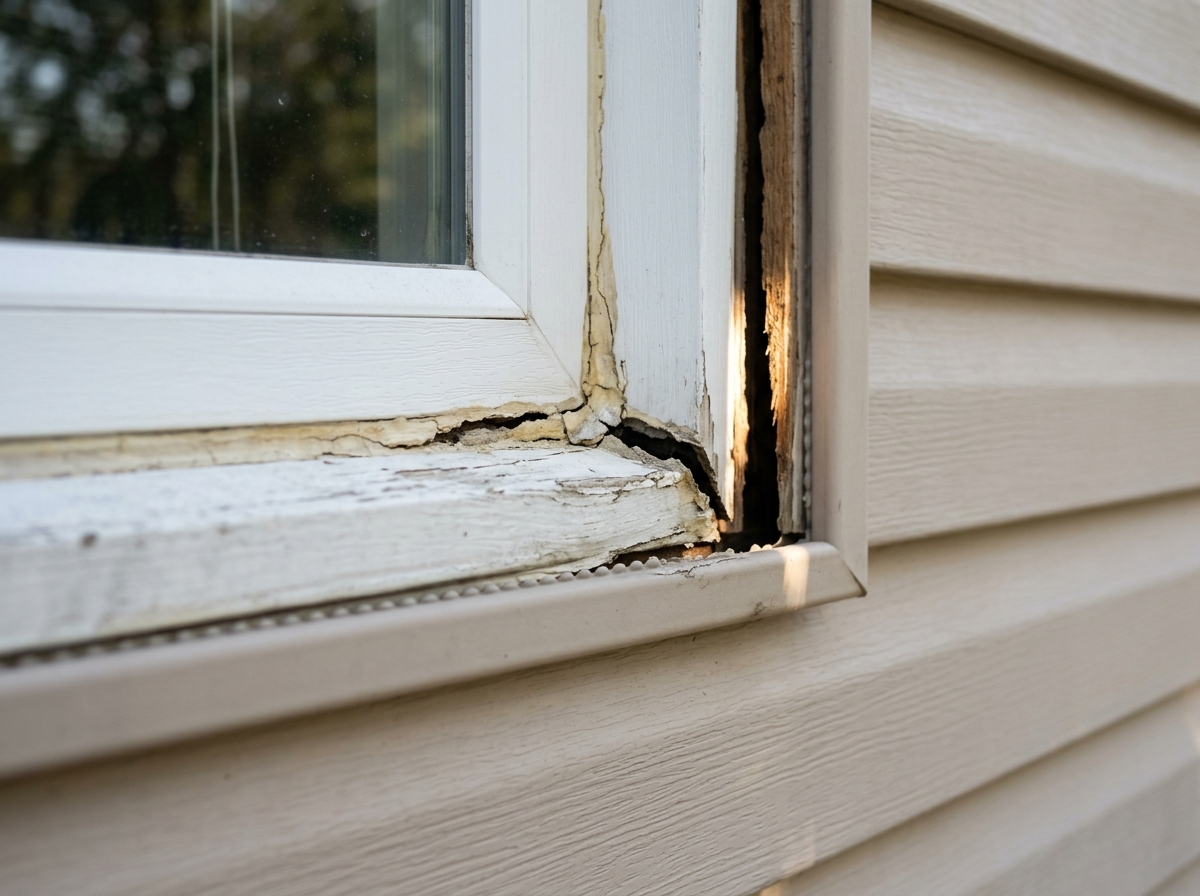
- Caulk Shrinkage: As sealant cures, it can pull away from the siding or frame, leaving microscopic (or visible) gaps.
- House Settling: If your home is older, the weight of a new, heavier double-pane window can cause slight shifts in the surrounding wall.
- Thermal Bridging: In some cases, what feels like a draft is actually “convection.” Cold air hits the glass, cools down, and “falls,” creating a rolling current of air that mimics a leak.
According to scientific research on home air sealing, even tiny cracks can lead to significant energy loss. If you can see light through a gap or feel a distinct “jet” of air, you aren’t dealing with convection; you have a physical air leak.
Manufacturing Defects vs. Installation Issues
How do you know who to blame? If the draft is coming from between the glass panes or the window won’t lock properly despite being level, it might be a manufacturing defect.
Manufacturing issues often manifest as:
- Seal Failure: Fogging or condensation between the two panes of glass.
- IGU Integrity: The Insulated Glass Unit (IGU) loses its argon gas fill, reducing its R-value.
- Warped Frames: Rare in new windows, but a frame that isn’t straight from the factory will never seal.
Installation issues are far more common and usually include:
- Sash Alignment: The window sits “crooked” in the opening, meaning the weatherstripping doesn’t touch the frame.
- Missing Insulation: The “rough opening” around the window was left hollow instead of being filled with foam or backer rod.
Is Caulk Shrinkage Normal?
In a word: Yes. Most high-quality caulks are designed to be flexible, but as the solvents inside them evaporate during the curing process, the material can lose a small percentage of its volume. If the installer applied a thin bead during a very hot day, and the temperature then dropped significantly, the material might pull away.
While minor shrinkage is normal, it shouldn’t result in a whistling draft. If the gap is large enough to stick a fingernail into, the installer likely didn’t use a “backer rod” (a foam rope used to fill deep gaps) before caulking. Without a backer rod, the caulk has nothing to grip but the two sides of the gap, making it much more prone to tearing as it shrinks.
Common Installation Mistakes and Prevention
The difference between a cozy home and a drafty one often comes down to the final 15 minutes of the installation. We’ve seen many cases where a premium window was rendered useless by a rushed contractor.
| Proper Technique | Improper Technique | Result of Error |
|---|---|---|
| Use of low-expansion spray foam | Stuffing gaps with fiberglass batts | Fiberglass allows air to pass through; foam seals it. |
| Shimming to maintain squareness | Forcing the window into a tight opening | Frame warps, prevents sashes from sealing. |
| Applying a “continuous” bead of caulk | Leaving gaps or “spotting” caulk | Creates air bypasses and water entry points. |
| Keeping weep holes clear | Caulking over the drainage holes | Water backs up into the house, causing rot. |
One of the best ways to protect your investment is to learn how to seal air leaks to save energy so you can spot when a professional is cutting corners.
The Role of Proper Insulation and Air Sealing
A major misconception is that stuffing pink fiberglass insulation around a window frame stops drafts. It doesn’t. Fiberglass is a filter, not an air barrier. To truly stop a draft coming through new windows, installers should use closed-cell, low-expansion spray foam. This foam expands to fill every nook and cranny, creating a permanent thermal boundary.
For larger gaps, a “backer rod” should be inserted first. This provides a “third point of contact” for the caulk and ensures the seal remains airtight for years. You can read more about insulating your home for energy efficiency to understand why these barriers are so critical.
Preventing Drafts During Your Next Installation
If you haven’t had your windows installed yet, or you’re planning a second phase of replacement, prevention is your best friend.
- VET YOUR CONTRACTOR: Don’t just go with the lowest bid. Ask specifically if they use low-expansion foam or just fiberglass.
- PRE-INSTALL INSPECTION: Ensure your window openings are structural and dry.
- FLASHING DETAILS: Make sure they use “flashing tape” on the exterior to prevent air and water from getting behind the window frame.
- ON-SITE TESTING: Before the installers leave, perform a simple “hand test” around the perimeter while the wind is blowing.
How to Locate the Leak Source
Before you call the installers back and start pointing fingers, you need to know exactly where the air is coming from. Sometimes a draft feels like it’s coming from the window, but it’s actually coming from an outlet or a baseboard nearby due to the “stack effect.”
Testing for a Draft Coming Through New Windows
You don’t need fancy equipment to find a leak. Here are four tried-and-true DIY methods:
- The Candle/Incense Test: On a windy day, light a candle or a stick of incense and move it slowly around the edges of the window frame. If the flame flickers or the smoke dances horizontally, you’ve found your leak.
- The Flashlight Method: At night, have one person stand outside with a bright flashlight and shine it around the window edges. If you can see light from the inside, air is definitely getting through.
- The Dollar Bill Test: Open the window, place a dollar bill across the weatherstripping, and close the window. If you can pull the bill out easily without any resistance, your weatherstripping isn’t making a tight seal.
- The Hand Test: Wet your hand with water and run it along the seams. Evaporation makes your skin much more sensitive to even the slightest movement of cool air.
Identifying Structural Shifts
New windows are rigid, but your house is a living, breathing thing. Foundation settling can cause a window frame that was perfectly square on Tuesday to be slightly “racked” by Friday. If you notice that your new window is suddenly harder to lock, or if you see new cracks in the drywall near the corners of the window, the house may have shifted. This pressure can pull the frame away from the sash, creating a gap that lets in a draft.
Solutions: From Quick Fixes to Permanent Repairs
Once you’ve identified that you have a draft coming through new windows, it’s time to take action. Depending on your budget and whether you own or rent, you have several options. Proper sealing can potentially save you 10–20% on winter energy costs!
Quick Fixes for a Draft Coming Through New Windows
If it’s the middle of a blizzard and you can’t wait for a contractor, try these temporary measures:
- Draft Snakes: These are long, fabric tubes filled with sand or dried beans. Placing one on the windowsill can block air coming through the bottom rail. You can even find a DIY video for making draft stoppers using household items.
- Window Insulation Film: This is a clear plastic sheet that you “shrink-wrap” over the entire window using a hair dryer. It creates an airtight buffer zone.
- Rope Caulk: This is a non-permanent, putty-like caulk that comes in a roll. You can press it into gaps and simply peel it off in the spring.
- Thermal Curtains: These heavy-duty drapes add an extra layer of insulation. Check out our guide on how to save energy with insulated window treatments for more ideas.
Long-Term Solutions for Persistent Drafts
If the “band-aids” aren’t enough, you need a permanent fix:
- Professional Re-caulking: Remove the old, shrunken caulk entirely. Clean the surface with rubbing alcohol and apply a high-grade silicone or “solar seal” caulk with a backer rod.
- Hardware Tightening: Sometimes the “keepers” (the part the lock grabs) just need to be moved a fraction of an inch to pull the sash tighter against the weatherstripping.
- Frame Re-shimming: If the frame is bowed, a pro may need to remove the interior trim and adjust the shims to straighten the frame.
- Whole-House Sealing: Sometimes the draft isn’t the window’s fault—it’s the house’s “negative pressure” pulling air in. Sealing attic leaks can often stop window drafts by neutralizing the stack effect.
Navigating Warranties and Installer Callbacks
You shouldn’t have to pay to fix a mistake on a brand-new installation. Most reputable window companies offer two types of protection: a Manufacturer’s Warranty (covering the glass and frame) and a Labor Warranty (covering the installation).
Should I Caulk Gaps Myself?
Be careful here! While it’s tempting to grab a tube of caulk and “fix” a gap yourself, doing so could actually void your installation warranty. Most contracts specify that any “unauthorized repairs” release the installer from liability. If you see a gap, take a photo and send it to the project manager first. Let them decide if they want to send a technician out or if they give you the “green light” to DIY it.
Making a Successful Warranty Claim
To get a fast response, treat your claim like a legal case:
- Photo Evidence: Take clear, well-lit photos of gaps, light shining through, or your “candle test” in action.
- Documentation: Have your original contract and installation date ready.
- Be Specific: Don’t just say “it’s drafty.” Say “there is a 1/8 inch gap in the lower-left corner where the caulk has pulled away.”
- Reference Standards: Most manufacturers have “allowable air infiltration” rates. If your curtains are moving, you are likely well beyond those standards.
For more on staying warm, check out our catch the heat insulation tips for winter.
Frequently Asked Questions about New Window Drafts
Is it normal for some air to leak through new windows?
Believe it or not, no window is 100% airtight. The industry measures this as “Air Infiltration.” However, a high-quality, properly installed window should have a rating so low that you cannot feel the air movement with your hand. If you feel a distinct breeze, it is not normal.
How much money can I save by sealing window drafts?
Sealing drafty windows can lower your heating expenses by about 10%. When combined with attic insulation and other air-sealing measures, homeowners often see a total reduction in energy waste of up to 45%. It’s one of the highest ROI (Return on Investment) projects you can do.
When should I call the installers back?
You should pick up the phone if you notice:
- Visible gaps between the window frame and your wall.
- Whistling or “howling” sounds during windstorms.
- Curtains or blinds that move when the window is closed.
- Ice or frost forming on the inside of the window frame.
Conclusion
A draft coming through new windows is a problem that deserves an immediate solution. Whether it’s a simple case of caulk shrinkage or a more complex installation error, leaving it unaddressed will only lead to higher energy bills and a less comfortable home.
At Financefyx, we believe that energy efficiency is the foundation of a healthy financial home. By identifying these leaks early and holding installers accountable, you protect both your comfort and your wallet. If you’re looking to dive deeper into making your home an energy-efficient fortress, don’t miss The Ultimate Guide to Insulating Your Home. Stay warm out there!
