
What are Building Integrated Solar Panels?
When we talk about building integrated solar panels, we are referring to a shift in how we think about construction. Traditionally, a building is a shell, and solar panels are “accessories” bolted on afterward. BIPV changes that relationship entirely. According to Wikipedia, these materials are functional parts of the building envelope. They aren’t just on the building; they are the building.
This integration creates energy-efficient structures that serve a dual purpose. On one hand, they provide the structural integrity, weather protection, and insulation you expect from a wall or a roof. On the other, they act as a silent power plant. For anyone looking to achieve carbon-neutral goals, this is the gold standard. By turning every sun-drenched surface into an energy harvester, we can transform stagnant structures into active assets. If you are new to sun-powered homes, our solar energy guide for beginners is a great place to start understanding the core physics of how light becomes electricity.
The Evolution of Building Integrated Solar Panels
The journey of building integrated solar panels didn’t happen overnight. While the first solar arrays began appearing on rooftops in the 1970s (mostly as bulky, experimental add-ons), the 1980s focused on improving cell efficiency and bringing down the exorbitant costs of the technology.
It wasn’t until the 1990s that BIPV products became commercially available as true construction materials. Innovations in thin-film technology and crystalline silicon allowed manufacturers to create flexible laminates and rigid glass modules that architects could actually use in their designs. Today, as noted by Britannica, the demand is skyrocketing because these products can now fully replace traditional materials like slate, ceramic tiles, or industrial glazing.
BIPV vs. BAPV: Understanding the Difference
It is easy to get lost in the alphabet soup of solar terminology, but the distinction between BIPV and BAPV is crucial for your budget and design.
- BIPV (Building-Integrated Photovoltaics): These are integrated during new construction or major renovations where you are replacing a structural element. For example, instead of buying asphalt shingles and then solar panels, you just buy solar shingles. The cost of the solar is “offset” because you didn’t have to pay for the traditional roofing material or the labor to install it.
- BAPV (Building-Applied Photovoltaics): This refers to retrofitting. These are your standard rectangular panels attached to an existing structure using a rack or mounting system.
While BAPV is currently more common because it’s easier to slap onto an existing house, BIPV is the “sleeker” sibling. It offers a seamless look that doesn’t disrupt the roofline. If you’re weighing your options for a current home, check out our home solar panel installation guide to see which approach fits your architecture.
Architectural Applications and Customization Options
One of the biggest hurdles for solar adoption has always been aesthetics. Let’s be honest: not everyone wants giant blue-black rectangles on their beautiful Victorian home. Building integrated solar panels solve this by offering incredible customization.
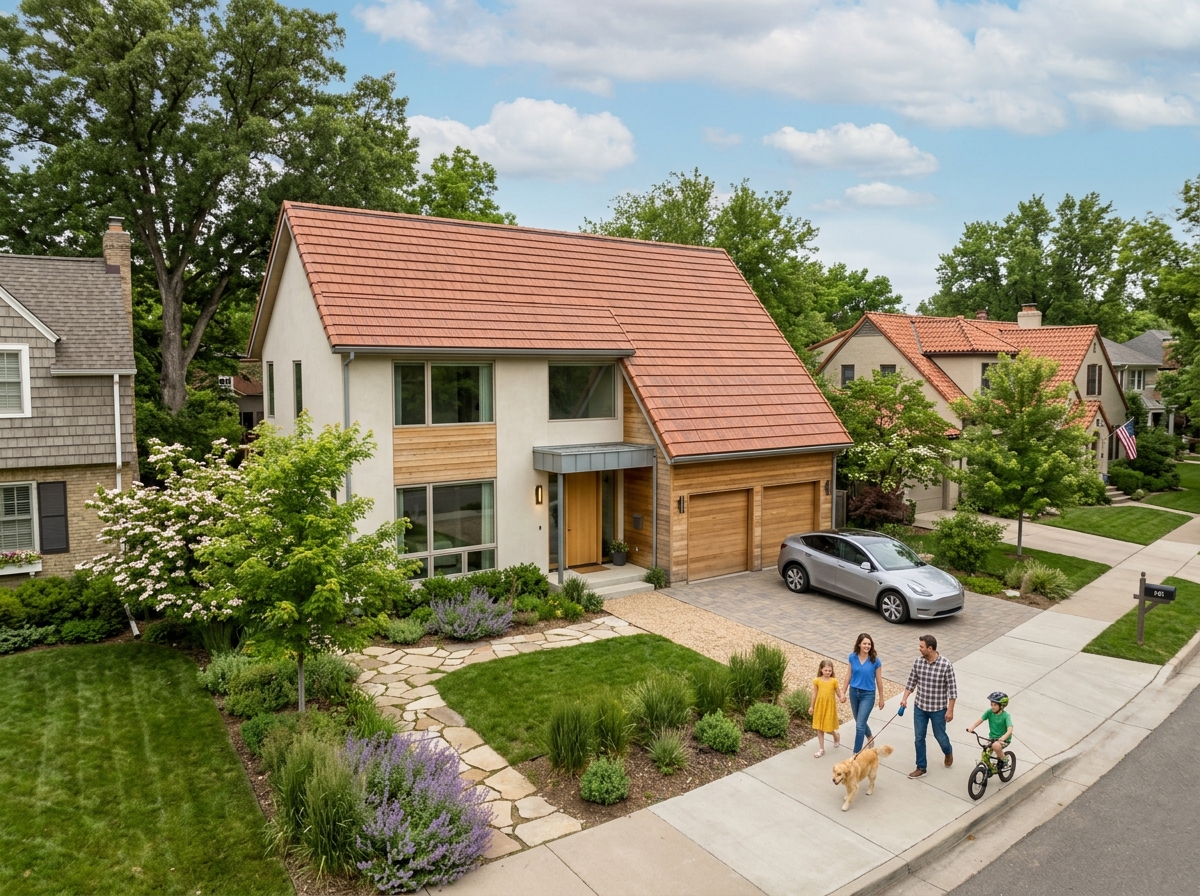
Designing with Building Integrated Solar Panels
We no longer live in a world where solar only comes in “dark blue.” Modern manufacturing allows for solar glass in 12+ colors and dynamic finishes. You can now get terracotta-colored modules that blend perfectly into historic Mediterranean-style neighborhoods or “full black” modules that make the solar cells virtually invisible.
Customization options include:
- Color: Using “structural colors” (like Kromatix™ technology), modules can appear green, gold, or bronze with minimal efficiency loss.
- Transparency: Solar windows can be manufactured with varying levels of transparency to allow natural light in while still capturing energy.
- Shape and Size: Modules can be cut to fit specific architectural “voids” or curved surfaces.
For the creative homeowner, this opens the door to diy solar panel projects where solar elements are used in garden sheds or custom patio covers without looking like an industrial eyesore.
Beyond the Roof: Facades, Windows, and Skylights
The roof is just the beginning. In high-density urban areas, the roof might be tiny, but the walls are massive. This is where solar facades and curtain walls come into play.
- Solar Facades: Ventilated wall systems can provide insulation and noise reduction while generating power.
- Solar Windows & Skylights: Semi-transparent modules (often using amorphous silicon) can replace standard glass. They filter UV and infrared radiation, reducing your cooling bill while making electricity.
- Balustrades & Louvres: Even the railings on your balcony can be power producers.
If you live in an apartment and can’t change the walls, you might consider portable solar panels for apartment balconies as a smaller-scale entry point into integrated living.
Measuring Performance and Efficiency Factors
How do we know if these “hidden” panels actually work? We measure them using the same metrics as traditional panels, but with a few extra considerations for their role as building materials.
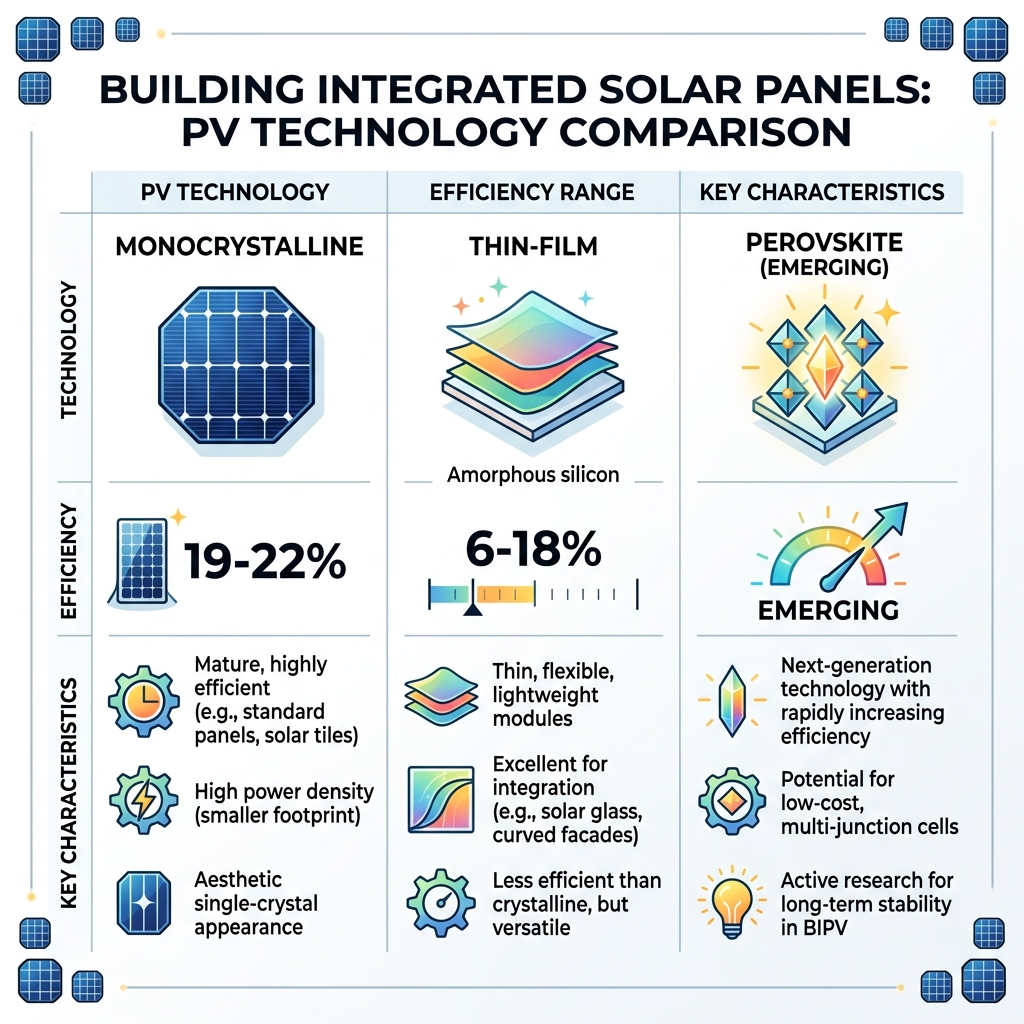
The Performance Ratio (PR) is the gold standard for BIPV. It compares the actual energy yield to what is theoretically possible. A well-designed BIPV system can achieve a PR above 74%. However, factors like color and temperature play a huge role. For example, crystalline silicon modules lose about 0.45% efficiency for every degree Celsius the temperature rises. This is why ventilated facades are so popular—they allow air to flow behind the panels, keeping them cool and efficient.
Electrical Generation and Self-Consumption
The goal of building integrated solar panels is to increase your Self-Sufficiency Index (SSI). In a typical home, the SSI is usually between 20% and 25%. This means you are only using about a quarter of the energy you produce; the rest goes back to the grid (often for a lower price than you pay to buy it back).
To get that number above 40%, you need energy storage. Pairing your BIPV system with a home battery storage for solar allows you to save the energy generated at noon for use at 8 PM. Choosing the best home batteries for energy storage is the “secret sauce” to making your house truly pay its own rent.
Non-Electrical Performance: Thermal and Acoustic Benefits
BIPV modules aren’t just electrical components; they are high-performance building materials.
- Thermal Properties: Solar glass can have a very low U-value (meaning it’s a great insulator). It also controls the Solar Heat Gain Coefficient (SHGC), preventing your house from turning into a greenhouse in the summer.
- Acoustics: Because BIPV modules are often made of thick, laminated safety glass, they provide excellent acoustic insulation against city noise.
- Weatherproofing: BIPV roofing must pass strict water resistance tests (like the 10g/m²/5min leakage rate standard) to ensure your living room stays dry.
For more on how these systems impact your wallet over time, see our breakdown of solar panels cost and savings.
Safety, Durability, and Implementation Process
When you replace your wall with a solar panel, safety becomes paramount. You aren’t just worried about an electrical short; you’re worried about the wall falling down or catching fire.
BIPV systems must undergo rigorous testing for:
- Wind and Seismic Loads: They must stay attached during 150 mph winds or earthquakes.
- Impact Resistance: They are tested with “pendulum impact tests” to ensure they can handle hail or a stray baseball.
- Fire Safety: Systems must comply with standards like IEC 61730. While many modules use combustible materials like EVA (ethylene vinyl acetate), high-quality glass-on-glass modules offer superior fire resistance.
Long-Term Reliability and Maintenance
A typical BIPV system is designed to last 25 to 30 years. During that time, the panels will slowly degrade. Light-Induced Degradation (LID) can shave off about 5% of power early on, but after that, the decline is usually less than 0.5% per year.
Maintenance is surprisingly low. For vertical facades, rain does most of the cleaning. For roofs, you just need a visual inspection once a year to check for “hot spots” or wiring issues. If you are going for an independent setup, our off-grid solar panel tips cover the essential upkeep for long-term reliability.
The Decision-Making Framework for BIPV Projects
Building a BIPV home is a journey. It typically follows these steps:
- Site Assessment: Does your building actually get sun? A solar access study is vital.
- Design Integration: Choosing colors and materials that match the neighborhood.
- Financial Modeling: Calculating the ROI. You must subtract the cost of the “traditional” materials you didn’t buy from the total BIPV price tag.
- Implementation: Working with certified installers who understand both electrical codes and building envelopes.
If you’re curious about the entry-level costs of a standard system for comparison, read our 2025 guide to 5kw solar panel system costs.
Frequently Asked Questions about BIPV
How much do building integrated solar panels cost?
Generally, BIPV costs 20% to 40% more than a standard solar installation. However, the “real” cost is often lower because you are saving on the cost of roofing or siding. A 2,000 sq. ft. residential roof might range from $30,000 to $60,000 before incentives.
Can BIPV replace traditional roofing materials?
Yes! That is the entire point. Solar shingles and tiles are designed to be the primary water-shedding layer of your home. They are often more durable than traditional asphalt shingles, withstanding larger hail and higher winds.
Do colored solar panels lose efficiency?
Yes, but not as much as you might think. While a standard black panel is the most efficient, a terracotta-colored module might only lose about 15% efficiency. Green modules often lose only about 4%. For many architects, this small loss is a fair trade for a beautiful, integrated design.
Conclusion
At Financefyx, we believe that the future of housing isn’t just about “using less” energy—it’s about buildings that actively contribute to the grid. Building integrated solar panels represent the ultimate synergy between sustainable architecture and financial common sense. By turning your home’s exterior into a high-tech energy harvester, you aren’t just saving the planet; you’re creating a house that effectively pays its own rent.
Whether you are planning a new build or a major renovation, the technology is ready, the colors are beautiful, and the ROI is clearer than ever. To stay updated on the latest in green tech and financial strategies for homeowners, Explore our Renewable Energy Categories and start your journey toward a net-zero future today.
