
Why a Solar Panel Insulation Guide Can Save You Money (and Headaches)
A solid solar panel insulation guide covers everything you need to set up solar panels correctly — from choosing the right insulation materials to mounting, wiring, and protecting your investment through every season.
Here’s a quick overview of what you need to know:
- Assess your home – Check roof age, orientation, shading, and structural strength before buying anything.
- Choose the right insulation – Polyiso rigid foam, closed-cell spray foam, and radiant barriers are top options for solar-ready roofs.
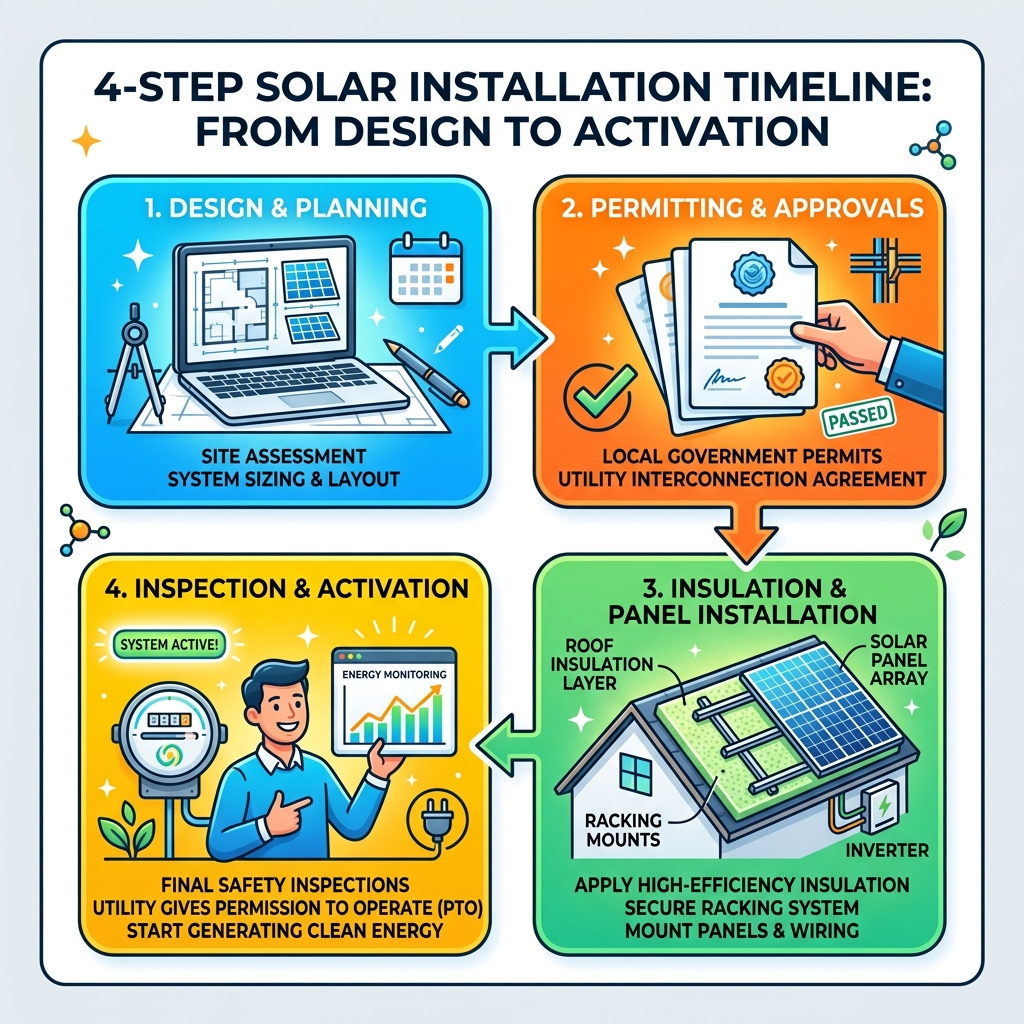
- Get permits first – Almost every installation requires a building permit and a utility interconnection agreement.
- Install in the right order – Insulation → racking → panels → wiring → inverter → battery (if applicable).
- Monitor and maintain – Clean panels regularly, track performance, and inspect insulation for wear seasonally.
Installing solar panels is one of the best moves a homeowner can make. The average homeowner saves around $60,000 over 25 years — but only when the system is set up right.
Here’s the part most guides skip: insulation matters just as much as the panels themselves.
Poor roof insulation can cause your panels to overheat, losing up to 25% efficiency during peak hours. It can also drive up your heating and cooling bills, eating into the savings solar was supposed to deliver.
If you’re already dealing with cold drafts and high winter energy bills, adding solar without fixing your home’s thermal performance first is like filling a leaky bucket.
The good news? Getting both right isn’t complicated — it just requires knowing what to do and in what order.
This guide walks you through every step, from checking whether your roof is ready to understanding what insulation materials work best under and around solar panels.
Assessing Your Home’s Solar Potential and Insulation Needs
Before we start drilling holes in the roof, we need to make sure your home is actually a good candidate for solar. Not every roof is “solar-ready,” and jumping the gun can lead to expensive repairs down the road.
Is Your Roof Ready?
The first thing we look at is the roofline. In the U.S., a south-facing roof is the gold standard for catching rays. If your roof only faces north, or if it is heavily shaded by towering oaks or neighboring buildings, your solar potential drops significantly. You should also look out for “crowded” roofs—those with too many dormers, vents, and skylights can make it difficult to fit a standard array.
Structural Integrity and Age
Solar panels are built to last 25 years or more. If your roof is already 15 years old and showing signs of wear, it is much smarter to replace the roof and upgrade your insulation before the panels go on. Removing and reinstalling a solar array just to fix a leak five years later is a cost nobody wants.
We recommend using a system estimator to get a baseline of your production potential. Additionally, a professional site assessment will verify your roof’s structural strength. Panels and racking add significant weight, and in snowy climates, the “snow load” (the weight of accumulated snow) can put immense pressure on your rafters.
Ground-Mount vs. Rooftop
If your roof isn’t a fit, don’t worry! Ground-mounted systems are an excellent alternative. They are often easier to maintain and can be positioned at the perfect angle for your latitude. However, they do require more trenching and “dig safety” precautions. For more on the basics, check out our home-solar-panel-installation-guide.
The Ultimate Solar Panel Insulation Guide: Materials and Preparation
When we talk about a solar panel insulation guide, we are looking at two things: the insulation inside your roof that keeps your home efficient, and the thermal management of the panels themselves.
Solar panels actually perform better in cold temperatures. Once they get too hot (typically above 77°F), they lose about 0.5% efficiency for every degree the temperature rises. Proper roof insulation prevents attic heat from radiating upward and “cooking” the panels from below.
Comparing Insulation Performance
| Material | R-Value (per inch) | Moisture Resistance | Best For |
|---|---|---|---|
| Polyiso Rigid Foam | 6.5 – 7.0 | High | Solar mounting support |
| Closed-Cell Spray Foam | 6.0 – 7.0 | Excellent | Seamless air sealing |
| Fiberglass Batts | 2.9 – 4.3 | Moderate | Budget-friendly DIY |
| Cellulose | 3.2 – 3.8 | Moderate | Eco-conscious homes |
Essential Tools and Prep
Before starting, you’ll need to gather your gear. Beyond the solar kit, you will need:
- A Complete List of Recommended Tools & Their Uses (including a torque wrench and multimeter).
- Protective gear like a fall-arrest harness, gloves, and safety goggles.
- Chalk lines for marking rafters.
For internal home efficiency, see our tips on insulating-your-home-for-energy-efficiency and attic-insulation-tips-save-energy-and-money.
Choosing the Right Materials for Your Solar Panel Insulation Guide
Selecting the right material is the foundation of a high-performing system.
- Polyisocyanurate (Polyiso): This is often considered the premier choice for solar-ready roofs. Its rigid structure provides excellent support for mounting hardware and resists compression under the weight of the panels. We recommend installing polyiso boards with staggered joints to prevent “thermal bridging.”
- Closed-Cell Spray Foam: This creates an unparalleled thermal envelope. It expands to fill every crevice, which is vital for protecting solar electrical components from moisture.
- Radiant Barriers: In hot climates, Radiant barrier systems are a lifesaver. They reflect up to 97% of radiant heat away from your home, helping panels stay within their optimal operating temperature.
Safety Precautions and Site Preparation
Safety isn’t just a suggestion; it’s a requirement. When working with electricity, always use a multimeter to ensure there is zero voltage before touching wires.
If you are installing a ground-mount system, you must Call the local authority to locate buried power lines or septic systems before you dig. For rooftop installs, home improvement and electrical safety knowledge is key. You’ll be marking rafters—usually using “echo location” (tapping) or exploratory drilling from the attic—to ensure your racking is bolted into the skeleton of the house, not just the plywood.
Step-by-Step Solar Installation and Thermal Optimization
Now for the fun part: the actual build. Whether you choose How-To DIY Installation Videos or hire a pro, the steps remain largely the same.
- Install the Racking: This is the “skeleton” of your system. For roofs, you’ll install flashings and rails. For ground mounts, you might use an IronRidge ground mount racking system or a ground mount system from Unirac.
- Thermal Gap: Always maintain a 1-2 inch air gap between the panels and the roof surface. This “airflow” is essential for cooling.
- Mount the Panels: Secure the panels to the rails. If you’re in a snowy area, ensure your panels have a high snow load capacity (20-50 psf).
- Wiring and Inverters: Connect the panels in series or parallel (depending on your design) and run the wires through conduit to your inverter.
For beginners, our solar-energy-guide-for-beginners is a great place to start.
Wiring, Inverters, and Electrical Connections
The inverter is the “brain” of your system, converting DC power from the panels into the AC power your TV and fridge use. You can watch SolarEdge’s HD-Wave solar panel installation video or SMA’s Sunny Boy installation video for a deep dive into the wiring process.
- Grounding: Your system must be properly grounded to protect against lightning and surges. Integrated solutions like the IronRidge UFO can ground an entire array with a single lug.
- Conduit: NEC codes require solar wiring to transition to metal conduit (EMT) before entering a building.
- Monitoring: Use apps like VictronConnect to track your production. If your output drops suddenly, it’s a sign you might need to clean the panels or check for shading issues.
If you are adding storage, consult a manufacturer’s guide for Crown batteries or similar to ensure safe ventilation. Batteries hate heat; according to Battery University, they can lose half their lifespan for every 15°F they sit above 77°F.
Maintenance Tips for Your Solar Panel Insulation Guide
Maintenance is mostly about “keeping it clear.”
- Cleaning: Dust and pollen can reduce output by 5-10%. A simple wash with a hose usually does the trick.
- Snow: In heavy snowfall zones, use steeper angles (35-45 degrees) to help snow slide off. Never use a metal shovel on your panels; use a soft-bristled broom if necessary.
- Thermal Check: Periodically check your energy-saving-methods-for-home-insulation to ensure your attic isn’t getting too hot, which can affect the panels above. Check out our catch-the-heat-insulation-tips-for-winter for more seasonal advice.
Navigating Permits, Costs, and Long-Term Value
You can’t just slap panels on a roof and call it a day—the “paperwork” phase is often the longest part of the process.
Permits and Approvals
You will typically need a building permit from your city or county—the Authority Having Jurisdiction (AHJ)—and an interconnection permit from your utility. Local solar permits vary; some states require a three-foot “fire pathway” around your panels, while others are more lenient.
Costs and Financing
The average cost of a home solar system is between $15,000 and $30,000 before incentives. However, the federal solar tax credit can knock 30% off that price. If you’re looking at the numbers, our guide on solar-panels-cost-and-savings breaks down the ROI.
Avoiding Scams
The solar industry is booming, which unfortunately attracts a few “bad actors.” To avoid scams:
- Get at least three quotes.
- Check for NABCEP certification.
- Be wary of anyone promising “free solar” (it’s usually a lease with high long-term costs).
- Read the-ultimate-guide-to-insulating-your-home to ensure your installer isn’t cutting corners on the thermal side of the project.
Frequently Asked Questions about Solar Panel Insulation
How much does a typical solar installation cost?
Across the United States, most homeowners pay around $30,505 before incentives. After the 30% federal tax credit and local rebates, that cost often drops to the $15,000 – $21,000 range. Financing options like solar loans allow you to pay this off over time, often for less than your current monthly electric bill.
Can I install solar panels myself to save money?
Yes! A typical 6 kW system can save you roughly $10,500 if you do it yourself. However, it requires construction skills and electrical knowledge. Plan for about 2 hours of work per panel (so 32 hours for a 16-panel system). If you’re not comfortable on a roof or working with high-voltage wiring, hiring a pro is the safer bet.
How does insulation affect solar panel efficiency?
Insulation is the silent partner of solar efficiency. By regulating your roof’s temperature, you prevent panels from reaching the “overheating” threshold where they lose power. Furthermore, proper insulation reduces your home’s overall “load,” meaning you need fewer panels to achieve 100% energy independence.
Conclusion
Mastering your solar panel insulation guide is about more than just green energy—it’s about building a home that is resilient, efficient, and cost-effective for decades to come. By combining high-quality panels with the right thermal barriers like Polyiso or spray foam, you ensure that your system performs at its peak even in the heat of summer or the depths of a snowy winter.
At Financefyx, we believe the transition to sustainable living should be rewarding, not overwhelming. Whether you are starting with a Personalized Power Plan or just tightening up your attic, every step toward efficiency puts money back in your pocket.
Ready to dive deeper into clean energy? More info about renewable energy services is just a click away. Let’s get your home powered by the sun—the right way!
