
Home Insulation Materials Comparison: Which One is Actually Cool?
Why a Home Insulation Materials Comparison Could Cut Your Energy Bills in Half
A home insulation materials comparison is the fastest way to figure out which product will stop heat from escaping your home — and which one fits your budget. Here’s a quick look at the main options:
| Material | R-Value per Inch | Avg. Cost (per sq ft) | Best For |
|---|---|---|---|
| Fiberglass batts | R-2.9 to R-3.8 | $0.30 – $1.00 | Walls, floors (DIY-friendly) |
| Blown-in cellulose | R-3.1 to R-3.7 | $0.60 – $1.50 | Attics, retrofit walls |
| Mineral wool | R-3.0 to R-3.3 | $1.00 – $2.00 | Fire-rated areas, soundproofing |
| Open-cell spray foam | R-3.7 per inch | $1.50 – $3.50 | Air sealing, attic decks |
| Closed-cell spray foam | R-6.2 to R-7.0 | $2.25 – $5.00 | Rim joists, crawl spaces |
| Rigid foam board | R-4.0 to R-6.5 | $0.25 – $1.00 | Basements, exterior walls |
About 90% of single-family homes in the U.S. don’t have enough insulation. That’s a staggering number — and it means most homeowners are paying more than they should every winter and summer.
The good news? The right insulation can cut your heating and cooling costs by 15% to 50%.
But here’s the tricky part: there is no single “best” insulation material. The right choice depends on where you’re installing it, your local climate, your budget, and how comfortable you are with DIY work.
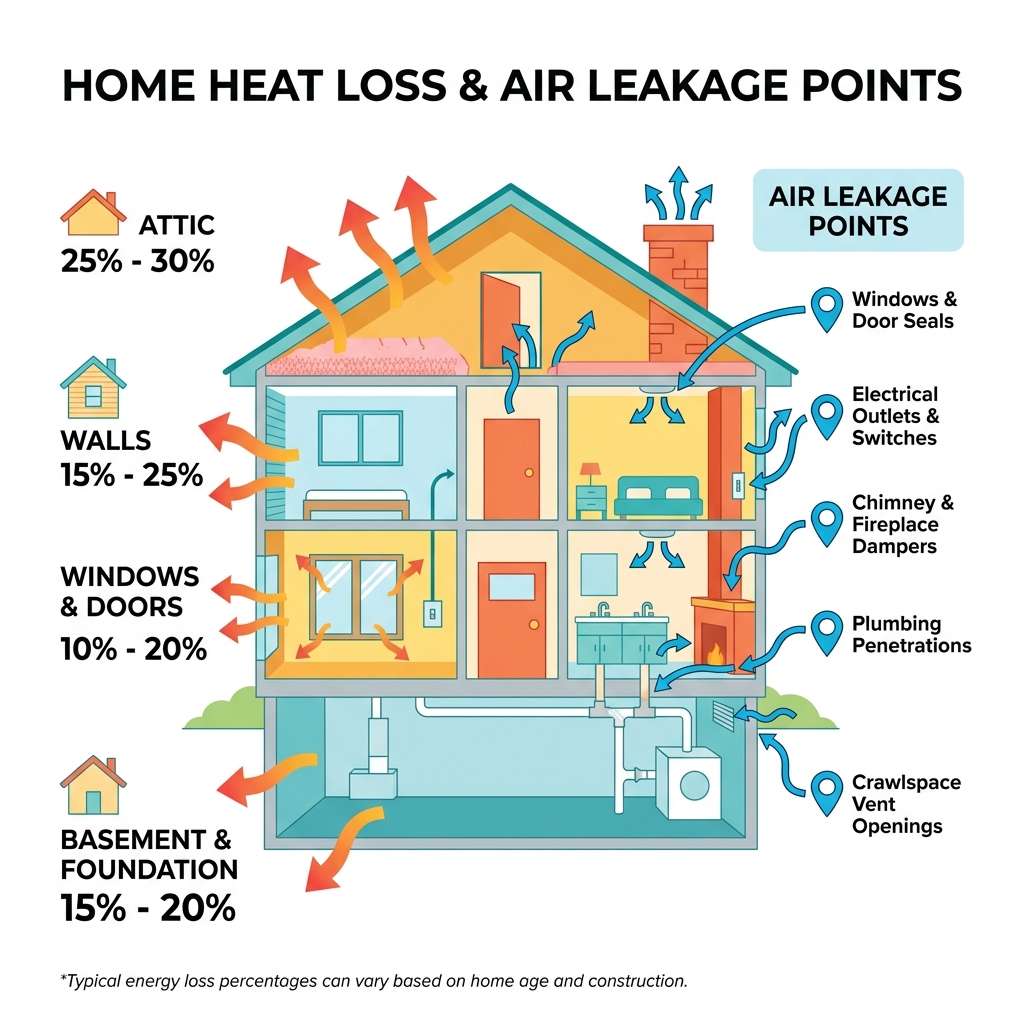
What makes this even more important is that air leakage alone accounts for 25% to 40% of your home’s heating and cooling energy loss. So it’s not just about which material has the highest R-value — it’s about finding the right fit for your specific situation.
This guide breaks it all down in plain language so you can make a confident, informed decision.
Understanding R-Value and Climate Needs
Before we dive into the materials, we need to talk about the “alphabet soup” of the insulation world: the R-value. If you’ve ever looked at a package of insulation, you’ve seen this number prominently displayed. But what does it actually mean?
Put simply, R-value measures thermal resistance. The “R” stands for resistance—specifically, how well a material resists the flow of heat. The higher the R-value, the better the material is at keeping heat where you want it (inside during winter, outside during summer). According to U.S. Department of Energy guidance on insulation, choosing the right R-value is the first step in any weatherization project.
When insulating your home for energy efficiency, we have to remember that heat is a bit of a wanderer. It always moves from warm areas to cool areas. Insulation acts like a thermal “security guard,” blocking that movement.

R-Value and Home Insulation Materials Comparison
The R-value of a material isn’t just a random number; it’s determined by the material’s thickness, density, and type. For example, a three-inch thick piece of fiberglass has a lower R-value than a three-inch thick piece of closed-cell spray foam.
However, a high R-value on paper doesn’t always mean high performance in the real world. Factors like “thermal bridging”—where heat bypasses insulation through wooden studs or metal frames—can lower your “effective” R-value. This is why the ultimate guide to insulating your home emphasizes that the quality of the installation is just as important as the material itself. If there are gaps or if the material is compressed, that R-value starts to plummet.
Choosing the Best Home Insulation Materials Comparison for Your Climate
Where you live changes everything. The U.S. is divided into eight climate zones. If you’re in Zone 1 (think Miami), your main goal is keeping the heat out. If you’re in Zone 7 (think North Dakota), you’re fighting for your life against the cold.
- Hot Climates (Zones 1-3): You might focus on radiant barriers that reflect sun away from your attic, potentially lowering cooling costs by 5% to 10%.
- Cold Climates (Zones 6-8): You need maximum thermal resistance. In these areas, attics often require an R-value of R-49 to R-60, which could mean nearly 20 inches of loose-fill insulation!
For those of us in the middle, catch the heat insulation tips for winter can help balance year-round comfort.
Home Insulation Materials Comparison: The Big Five
Now, let’s get into the nitty-gritty of the materials themselves. We like to call these “The Big Five.” Each has its own personality, price tag, and “best-use” scenario. To help you visualize the safety standards, the fiberglass and mineral wool trade group safety data provides excellent resources on how these materials are tested for home use.
Fiberglass and Mineral Wool Characteristics
Fiberglass is the “classic” choice. It’s made from fine glass fibers and usually contains 40% to 60% recycled glass. You’ll find it in batts (those big pink blankets) or loose-fill. It’s inexpensive and DIY-friendly, but it doesn’t stop air leaks on its own.
Mineral Wool (also called Rock Wool) is the “tough guy” of the group. It’s made from basalt rock and steel slag. It’s significantly denser than fiberglass, which makes it an incredible soundproofer. It also has a melting point above 2,000°F, making it virtually fireproof. If you’re building a home theater or want extra fire protection in a mechanical room, this is your winner.
Cellulose and Natural Fiber Options
Cellulose is the eco-warrior’s favorite. It’s made of about 80% to 85% recycled newsprint. To make it safe, it’s treated with borates for fire and insect resistance. It’s often “blown-in,” meaning it can fill every tiny nook and cranny in an attic.
One thing to watch out for: cellulose can settle by about 20% over time. This means you (or your contractor) need to install it a bit thicker than the target R-value to account for that future “slump.” There are also natural options like denim insulation (made from recycled jeans!) which are non-toxic and very easy to handle without itchy skin.
Spray Foam and Rigid Foam Performance
If you want the “Ferrari” of insulation, you’re looking at Spray Foam.
- Open-Cell Foam: Lighter and more flexible. It’s great for sound dampening and fills large cavities easily.
- Closed-Cell Foam: The heavyweight champion. It provides the highest R-value per inch (up to R-7.0) and acts as its own air and moisture barrier. It even adds structural strength to your walls!
Rigid Foam Board (like Polyisocyanurate or XPS) is fantastic for continuous insulation. It’s often used on the outside of house framing or in basements to stop thermal bridging. However, be aware that the EPA has raised concerns regarding certain chemicals in spray foams, so professional installation and proper ventilation are non-negotiable.
Performance Beyond R-Value: Air Sealing and Safety
If you put on a thick wool sweater on a windy day, you’ll still feel cold. Why? Because the wind blows right through the fibers. But if you put a thin windbreaker over that sweater, you’re suddenly toasty. Insulation works the same way.
Air leakage accounts for 25% to 40% of energy loss in a typical home. This is why we always say: seal before you insulate. Learning how to seal air leaks to save energy is just as vital as picking the right material.
Fire Safety and Health Impacts
Safety isn’t just about heat; it’s about what happens in an emergency.
- Fiberglass and Mineral Wool: Naturally non-combustible.
- Cellulose: Uses chemical flame retardants. While effective, some studies suggest these can lose potency over decades.
- Spray Foam: Can release toxic fumes if it catches fire, which is why building codes usually require it to be covered by a thermal barrier like half-inch drywall.
Regarding health, 90% of residential fiberglass is now formaldehyde-free, reducing concerns about indoor air quality. However, always wear a mask and long sleeves when handling it—those tiny glass shards are no joke for your skin or lungs!
Moisture Resistance and Mold Prevention
Moisture is the enemy of insulation. When fiberglass gets wet, it loses its R-value and can become a breeding ground for mold. This is why vapor barriers are crucial in certain climates. According to the Building Science Corporation moisture guide, crawl spaces should only be insulated with materials that aren’t sensitive to water, like closed-cell foam.
Hydrophobic materials like mineral wool are great because they don’t absorb water. And don’t forget your windows! You can save energy with insulated window treatments to prevent condensation and drafts in the “weak spots” of your home’s thermal envelope.
Application Guide: Where to Put What
Not every material belongs in every room. Here is our “cheat sheet” for where to use your home insulation materials comparison knowledge:
- Attics: Blown-in cellulose or fiberglass is usually best because it covers the joists and fills irregular gaps. Check out these attic insulation tips to save energy and money for more details.
- Existing Walls: Unless you’re tearing down drywall, “injection foam” or “dense-pack cellulose” are your best bets. Small holes are drilled, the material is pumped in, and the holes are plugged.
- Crawl Spaces and Rim Joists: These areas are moisture magnets. Closed-cell spray foam or rigid foam boards are the gold standard here because they seal out humid air.
- Basements: Rigid foam boards against the concrete walls help prevent that “damp basement” smell.
DIY vs. Professional Installation Considerations
Can you do it yourself? It depends on your patience and your gear.
- DIY-Friendly: Installing fiberglass batts or renting a blowing machine for attic cellulose. It’s dusty work, but manageable. Just be sure to follow the Federal Trade Commission R-value Rule for proper coverage.
- Pro-Only: Spray foam. The chemical ratios must be perfect, and the temperature of the surfaces must be just right. If it’s mixed wrong, it can pull away from the walls or leave a permanent “fishy” odor.
Insulating Secondary Areas
Don’t stop at the walls! You can find easy wins in small places:
- Water Heaters: Adding an R-8 insulation jacket can reduce standby heat loss by 25% to 45%.
- Hot Water Pipes: Insulating these can raise your water temperature by 2 to 4 degrees, meaning you don’t have to turn the heater up as high.
- Ductwork: If your AC ducts run through a hot attic, they are losing efficiency every second. Wrap them!
Costs, Savings, and 2025 Incentives
We know what you’re thinking: “How much is this going to cost me?” While the upfront price of high-end materials like spray foam can be double or triple that of fiberglass, the long-term energy savings often pay for the upgrade in 5 to 8 years.
There are many energy saving methods for home insulation that focus on low-cost, high-impact changes, but a full insulation overhaul is one of the best investments you can make in your property’s value.
Federal Tax Credits and Rebates
2025 is a great year to insulate. Under the Energy Efficient Home Improvement Credit, homeowners can claim a federal tax credit of 30% of the cost of insulation materials, up to a maximum of $1,200 annually.
To qualify, the insulation must meet specific ENERGY STAR or International Energy Conservation Code standards. Always keep your receipts and the manufacturer’s “Summary of Certification” for your tax records.
Long-Term Value and Payback Periods
Think of insulation as a “set it and forget it” investment. Unlike a furnace or an AC unit, fiberglass and mineral wool can last 80 to 100 years. Spray foam has a similar lifespan. Cellulose lasts about 20 to 30 years before it might need a “top-off” due to settling.
Beyond the monthly utility savings, a well-insulated home is quieter, has better air quality (fewer outdoor pollutants leaking in), and is much more attractive to buyers if you ever decide to sell.
Frequently Asked Questions about Home Insulation
Which insulation material has the highest R-value per inch?
Closed-cell spray foam takes the crown, offering between R-6.2 and R-7.0 per inch. This makes it the best choice for thin walls or tight spaces where you need maximum protection in a small footprint.
What is the most eco-friendly insulation option?
Cellulose is widely considered the most eco-friendly. It is made from 80% recycled paper, requires very little energy to manufacture, and actually sequesters carbon (trapping the carbon that was in the paper) inside your walls.
Can I install spray foam insulation myself?
We strongly recommend against it. While “DIY kits” exist for small gaps, whole-home spray foam requires precise chemical mixing and specialized safety gear. Errors can lead to structural damage or health issues from off-gassing.
Conclusion
At Financefyx, we believe that a comfortable home shouldn’t cost the earth—literally or figuratively. By using this home insulation materials comparison, you’ve taken the first step toward a more sustainable and affordable lifestyle. Whether you choose the budget-friendly reliability of fiberglass or the high-performance seal of spray foam, the best time to start is now.
Ready to dive deeper into lowering your bills? Check out More energy saving tips to keep your home running like a well-oiled (and well-insulated) machine!
