
A Simple Guide to How Heat Pumps Actually Work
Why Understanding Heat Pumps Could Cut Your Heating Bills in Half
Heat pumps explained simply: a heat pump is a device that moves heat from one place to another instead of generating it from scratch — making it 3 to 5 times more efficient than a traditional gas boiler or electric heater.
Here’s a quick breakdown of the key facts:
- What it does: Heats, cools, and provides hot water for homes and businesses
- How it works: Extracts heat from outdoor air, ground, or water and transfers it indoors using a refrigerant cycle
- How efficient is it: For every 1 unit of electricity used, a heat pump delivers 3–5 units of heat (a COP of 3–5)
- Where the energy comes from: About 80% from renewable sources (air, ground, water), only 20% from electricity
- Does it work in cold weather: Yes — modern models operate down to -22°F (-30°C)
- Is it good for the environment: Heat pumps can reduce CO2 emissions by 45–80% compared to high-efficiency gas boilers
If your heating bills spike every winter and your home never quite feels warm enough, you’re not alone. Millions of homeowners are overpaying to generate heat the hard way — by burning gas or running electric resistance heaters that convert electricity into warmth at a 1-to-1 ratio.
Heat pumps flip that logic entirely. Rather than creating heat, they move it — pulling warmth that already exists in outdoor air (even freezing air) and bringing it inside. Think of it like a refrigerator running in reverse.
The technology isn’t new. Heat pumps have been around since the 1850s and are standard in new buildings across much of Europe. In Norway alone, over 60% of buildings are heated this way. Yet many homeowners still haven’t made the switch — often because no one has explained clearly how they actually work.
That’s exactly what this guide does.
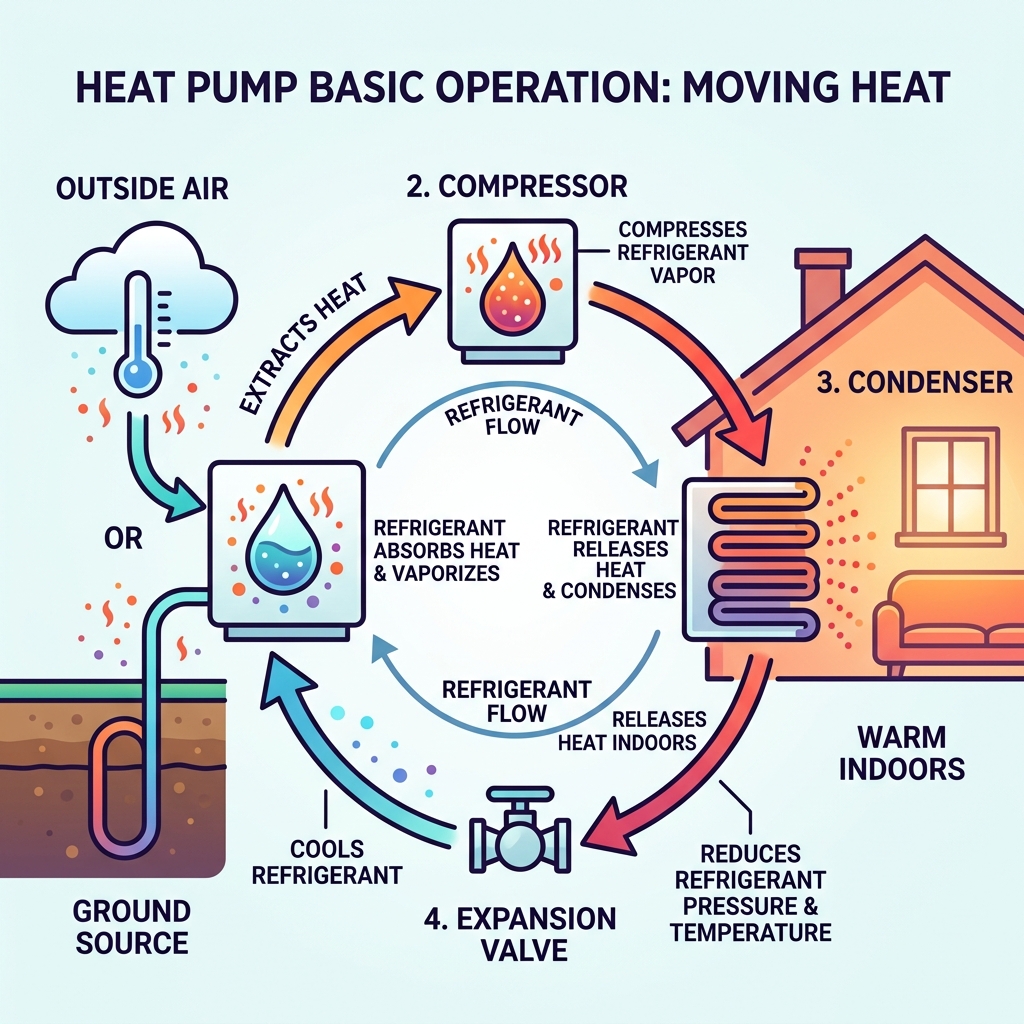
Heat Pumps Explained: The Mechanics of Sustainable Heating
To understand the magic of a heat pump, we first have to debunk a common myth: that “cold” air has no heat. In physics, heat exists in everything until you reach absolute zero (-273°C). Even on a crisp -10°C day, there is an abundance of thermal energy floating in the backyard.
A heat pump doesn’t “make” heat like a toaster or a gas flame. Instead, it acts as a thermal ferry. It uses a small amount of electricity to power a compressor that moves a special fluid called a refrigerant through a closed loop. This refrigerant has a very low boiling point, allowing it to turn into a gas even in freezing temperatures.
By manipulating the pressure of this refrigerant, we can force it to absorb heat from the outside environment and release it inside our homes. It is a brilliant application of thermodynamics that allows us to get much more energy out than we put in. You can see this process in action in this video on how heat pumps work.
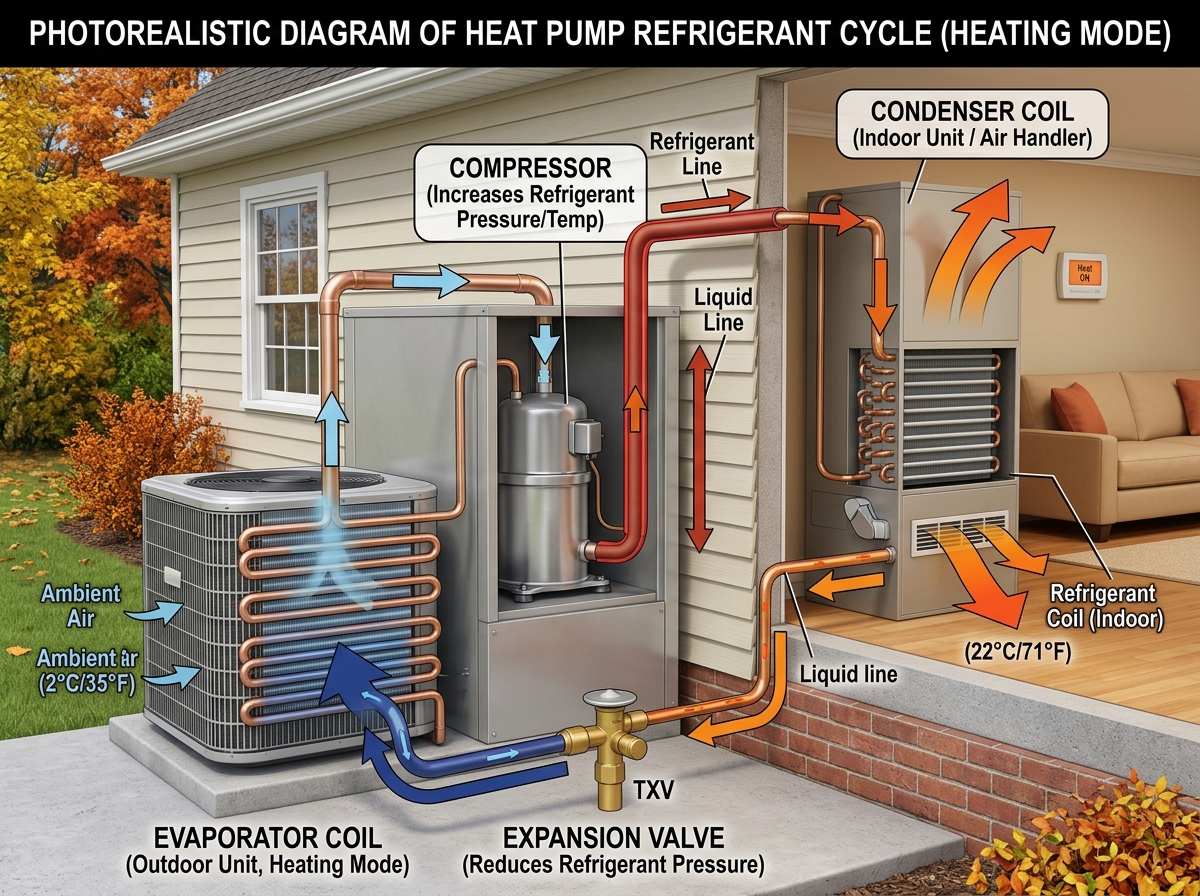
The Four Phases of the Refrigerant Cycle
The heart of every heat pump is the refrigerant cycle. To have heat pumps explained thoroughly, we need to look at the four distinct stages that allow this system to move energy against the natural flow of temperature.
- Evaporation: The cycle begins at the outdoor unit. Cold, liquid refrigerant passes through an evaporator coil. Because the refrigerant is colder than the outside air (yes, even in winter!), it absorbs heat from the air and evaporates into a low-pressure gas.
- Compression: This gas travels to a compressor. When we compress a gas, its temperature rises dramatically—think of how a bicycle pump gets hot when you use it. The compressor uses electricity to squeeze the gas, turning it into a very hot, high-pressure vapor.
- Condensation: The hot gas moves to the indoor unit’s condenser coil. As indoor air blows over the coil, the refrigerant releases its heat into your home. As it loses heat, the refrigerant cools down and condenses back into a high-pressure liquid.
- Expansion: Finally, the liquid refrigerant passes through an expansion valve. This valve acts like a nozzle, dropping the pressure of the liquid instantly. This causes the temperature to plummet, readying the refrigerant to head back outside and start the cycle all over again.
For a more detailed visual breakdown, check out this visual guide to the refrigerant cycle.
Heating and Cooling Versatility
One of the coolest (and warmest) features of a heat pump is its ability to multitask. Unlike a furnace, which only knows how to heat, a heat pump includes a “reversing valve.”
In the summer, this valve simply flips the direction of the refrigerant flow. Instead of picking up heat from outside and bringing it in, the system picks up heat from your living room and dumps it outdoors. This means a heat pump is essentially an air conditioner that can run in reverse. By investing in one system, we get year-round climate control and make our homes more energy efficient.
Comparing Air, Ground, and Water Source Systems
While the internal physics remain the same, heat pumps can “mine” heat from different places. Choosing the right one depends on your budget, your property size, and your local climate.
| Feature | Air Source (ASHP) | Ground Source (GSHP) | Water Source (WSHP) |
|---|---|---|---|
| Heat Source | Ambient outdoor air | Underground soil/rock | Lake, river, or well water |
| Installation Cost | Lower ($3k – $6k) | Higher ($10k – $25k+) | Moderate to High |
| Efficiency (COP) | 2.5 – 4.0 | 3.0 – 6.0 | 3.0 – 6.0 |
| Ease of Install | High (like an AC unit) | Low (requires digging) | Moderate (requires water access) |
| Best For | Most residential homes | Large lots/New builds | Homes near water bodies |
Air Source Heat Pumps Explained
Air source heat pumps (ASHPs) are the most popular choice globally, making up about 85% of all installations. They are relatively easy to install because they don’t require any digging; they look and act much like a standard central air conditioning unit.
There are two main types of ASHPs:
- Air-to-Water: These connect to your “wet” central heating system, like radiators or underfloor heating.
- Air-to-Air: These use fans to blow warm or cool air directly into your rooms.
ASHPs are a fantastic entry point for anyone looking to ditch fossil fuels. You can learn more about specific setups in this air source heat pumps guide.
Ground and Water Source Options
If you’re looking for peak efficiency, ground source heat pumps (GSHPs)—often called geothermal systems—are the gold standard. While air temperatures fluctuate wildly between seasons, the ground stays a constant, mild temperature (usually around 10-12°C) just a few meters down.
GSHPs use a loop of pipes buried in your yard to swap heat with the earth. Because the “source” temperature is so stable, the pump doesn’t have to work nearly as hard, leading to incredibly high efficiency. Water source systems work similarly but use a nearby pond or river. These are more niche but can be incredibly effective for the right property. For those interested in the deep science, check out this ground source heating research.
Efficiency, Cold Climates, and Environmental Impact
When we talk about heat pumps explained, the conversation eventually turns to the environment. Heating and cooling are responsible for about 51% of final energy demand in Europe and 27% of its CO2 emissions. Transitioning to heat pumps is one of the single most effective ways we can reduce our collective carbon footprint.
Because heat pumps move existing heat rather than burning fuel, they are incredibly “green.” When powered by renewable electricity from wind or solar, they become 100% carbon neutral. Even on the standard grid, they typically reduce emissions by 45% to 80% compared to gas boilers.
Efficiency Ratings and Heat Pumps Explained
To measure how well a heat pump performs, we use the Coefficient of Performance (COP). If a heater has a COP of 1, it means for every 1 kilowatt-hour (kWh) of electricity you put in, you get 1 kWh of heat out. This is how old-school electric baseboard heaters work.
Heat pumps, however, typically have a COP between 3 and 5. This means they are 300% to 500% efficient! They are essentially “cheating” the system by grabbing “free” energy from the environment. For every 1 unit of electricity we pay for, we get 3 to 5 units of heat delivered into our homes. This efficiency is a cornerstone of the IEA report on the future of heat pumps.
Performance in Freezing Temperatures
A common misconception is that heat pumps stop working when it gets cold. If that were true, they wouldn’t be the primary heating source in Norway, Sweden, and Finland!
While it’s true that efficiency drops as the temperature falls, modern “cold climate” heat pumps are designed to handle the chill. Advanced compressors and better refrigerants allow these units to maintain high performance even at -20°F. In fact, a study on cold climate performance proved that heat pumps remain more efficient than fossil fuel alternatives even in sub-zero conditions.
To get the most out of a system in cold weather, we always recommend insulating your home for energy efficiency first. A well-insulated house keeps that precious moved heat inside where it belongs.
Costs, Installation, and Financial Incentives
Let’s talk turkey. The biggest hurdle for most people is the upfront cost. A single air source unit can cost between $3,000 and $6,000, and larger homes might need multiple units or a more complex ducted system.
However, we need to look at the “Total Cost of Ownership.” Because heat pumps are so much more efficient, the monthly savings on energy bills can be massive. Over the 15-year lifespan of a unit, it often pays for itself several times over compared to expensive oil or electric resistance heating.
Long-Term ROI and Savings
When we compare a boiler vs heat pump, the heat pump almost always wins on long-term value.
- Gas Boilers: Max out at about 95% efficiency. You lose money every month to exhaust and combustion.
- Electric Resistance: 100% efficient, but electricity is often more expensive than gas, making these very pricey to run.
- Heat Pumps: 300-500% efficient. You are basically getting a 75% discount on the energy needed to heat your home.
Pairing your system with the most efficient smart home gadgets or programmable thermostats can further optimize these savings by ensuring you aren’t heating empty rooms.
Global Adoption and Incentives
Governments worldwide are desperate to get people off gas. In the US, the Inflation Reduction Act offers a 30% tax credit on heat pumps. In Canada, the Greener Homes Initiative provides thousands in rebates. Some European countries even offer incentives that cover 100% of the cost for low-income households.
China is currently leading the world in capacity, with over 250 GW installed. Meanwhile, Europe sold 3 million units in 2023 alone. Before you buy, check your local municipality—you might be surprised by how much help is available to offset the initial price tag.
Frequently Asked Questions about Heat Pumps
Do heat pumps work in extreme cold?
Yes! Modern cold-climate models use variable-speed compressors and specialized refrigerants to extract heat even when it’s -22°F (-30°C) outside. While they use more electricity at these extremes than they do on a mild day, they are still usually more efficient than traditional electric heaters.
Can a heat pump replace a central AC?
Absolutely. In fact, a heat pump is a central AC with a few extra parts that allow it to run in reverse. If you are already looking to replace an old air conditioner, upgrading to a heat pump is often a no-brainer because it handles both your cooling and your heating needs in one unit.
How long do these systems typically last?
With proper maintenance, a heat pump should last between 10 and 25 years. The outdoor units are built to be sturdy, but we recommend an annual check-up to clean the coils and ensure the refrigerant levels are correct. Neglecting maintenance can reduce efficiency by 10-25% over time.
Conclusion
At Financefyx, we believe that the transition to a sustainable future starts at home. Having heat pumps explained isn’t just about understanding a piece of HVAC equipment; it’s about recognizing a more intelligent way to live.
By moving heat instead of creating it, we can drastically reduce our energy bills, increase our year-round comfort, and take a massive step toward a net-zero future. Whether you opt for a simple air-source unit or a high-tech geothermal system, you’re investing in a technology that works with the laws of physics, not against them.
Ready to take control of your home’s energy? Start by exploring smart home energy automation or checking out our latest smart thermostat reviews to find the perfect partner for your new heat pump. The future of heating is here, and it’s looking very efficient indeed.
