
How to Prevent Window Drafts Without Breaking the Bank
Why Drafty Windows Cost You More Than You Think
Prevent window drafts and you can stop one of the biggest sources of wasted energy in your home. Here’s a quick overview of the most effective ways to do it:
Top ways to prevent window drafts:
- Apply weatherstripping to movable window parts (sashes and frames)
- Caulk fixed gaps around window trim and frames
- Use draft stoppers along the bottom window rail
- Hang thermal curtains or honeycomb shades
- Install window insulation film or inserts for extra air sealing
- Schedule a professional energy audit for persistent or whole-house problems
That cold air creeping in on a winter evening is more than just uncomfortable. It’s expensive.
Home air leaks account for up to 40% of the energy wasted on heating and cooling your home. Windows are one of the biggest culprits — and the gaps don’t have to be large. Even a tiny 1/8-inch gap around a window frame can let in a surprising amount of outside air.
The good news? Most window draft problems are fixable without professional help and without spending a lot of money. Many of the best solutions cost under $30 and can be done in an afternoon.
This guide covers everything — from finding exactly where the cold air is sneaking in, to cheap DIY fixes, to knowing when it’s time to call a pro.
Identifying the Source of Your Window Drafts
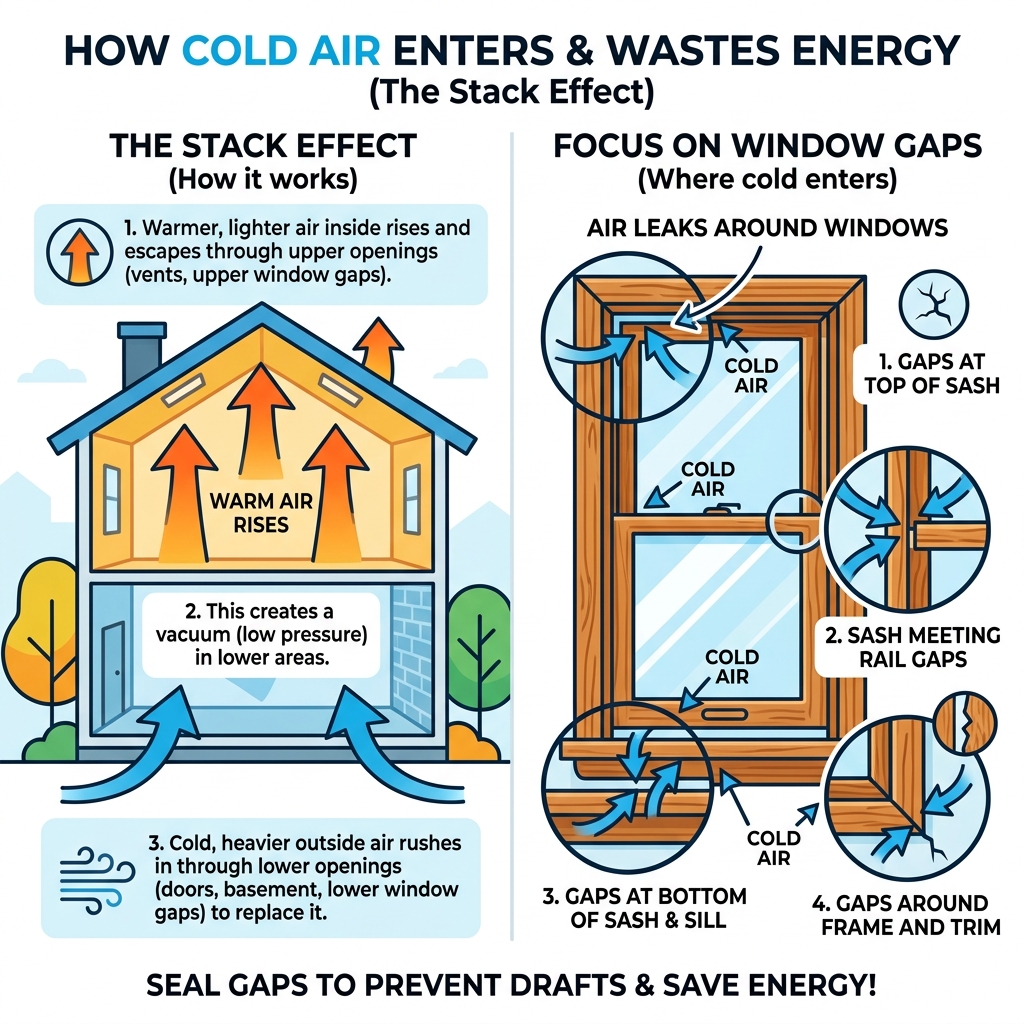
Before we start sticking foam and slathering caulk everywhere, we need to play “draft detective.” You might feel a chill, but where exactly is it coming from? Is it the glass itself, the moving sash, or the trim where the window meets the wall?
Finding the leak is the first step to prevent window drafts effectively. Here are the best ways to hunt them down:
- The Candle or Incense Test: This is a classic for a reason. On a windy day, close all your windows and doors. Light a candle or an incense stick and slowly move it along the edges of the window frame, the sash, and the joints. If the flame flickers or the smoke suddenly dances sideways, you’ve found a leak.
- The Damp Hand Method: Wet your hand with a little water and hold it near the window edges. Your skin is much more sensitive to temperature changes when wet, making it easier to feel that tiny stream of “arctic” air.
- Visual Inspection: Sometimes the problem is staring you in the face. Look for cracked or missing caulk on the exterior, or daylight peeking through the corners of the frame. If you can see the sun through a gap, you can bet the wind is coming through it too.
- The Flashlight Test: Have a partner stand outside at night and shine a bright flashlight around the window perimeter while you stay inside. If you see light beams cutting through the darkness indoors, you’ve found a structural gap.
For a deeper dive into finding these sneaky leaks, check out our guide on how to seal air leaks to save energy.

Effective DIY Methods to Prevent Window Drafts
Once you’ve identified the culprits, it’s time to choose your “weapon.” Not every draft requires the same fix. Some parts of your window move (like the sash), while others are stationary (like the trim). Choosing the right material ensures your windows still open when you want them to and stay sealed when you don’t.
| Method | Best For | Difficulty | Approx. Cost |
|---|---|---|---|
| Weatherstripping | Movable sashes and tracks | Easy | $5 – $15 per window |
| Caulking | Stationary trim and frames | Moderate | $5 – $10 per tube |
| Window Film | Glass panes and small leaks | Easy | $20 – $30 per kit |
| Draft Stoppers | Window sills and bottom rails | Very Easy | $0 (DIY) – $20 |
For more comprehensive advice on home sealing, the ENERGYSTAR.gov Air Sealing Guide is a fantastic resource. We also recommend reading our article on insulating your home for energy efficiency to see how windows fit into the bigger picture.
Installing Weatherstripping to Prevent Window Drafts
Weatherstripping is the MVP of DIY window repair. It’s designed to seal the gaps between the moving parts of your window. There are several types to choose from:
- V-Seal (Tension Seal): These are durable plastic or metal strips folded into a ‘V’ shape. They compress when the window closes, creating a tight seal. These are excellent for the side tracks of double-hung or sliding windows.
- Adhesive Foam Tape: This is the easiest to install. It’s essentially a sponge with a sticky back. It works well for the bottom of a window sash where it meets the sill. However, foam can degrade over 1–3 seasons, so keep an eye on it.
- Felt Strips: An old-school choice that is inexpensive but not very durable. It’s best for low-traffic windows.
- Compression Seals: These are often rubber or vinyl tubes that “squish” when the window is locked.
Pro Tip: Always clean the window frame with soap and water (and let it dry!) before applying adhesive strips. If the surface is dusty or oily, that expensive weatherstripping will peel off before the first snow falls.
Using Caulking to Seal Fixed Gaps
If the draft is coming from where the window frame meets the wall, weatherstripping won’t help—you need caulk. This is for the “non-movable” joints.
- Choose the Right Stuff: Use an exterior-grade silicone or siliconized acrylic caulk. Silicone is waterproof and won’t shrink or crack as the house shifts with the seasons.
- The Technique: Cut the nozzle of your caulk tube at a 45-degree angle. This allows you to lay a smooth, angled bead. Use a caulk gun for better control.
- The Finish: After applying a line of caulk, smooth it immediately with a damp finger or a caulk finishing tool. This pushes the material into the crack and creates a professional-looking concave seal.
IMPORTANT: Never seal the “weep holes” on the outside of your window frames. These are small gaps designed to let moisture escape. If you plug them, you could end up with rotting frames or mold inside your walls.
Temporary and Non-Plastic Solutions for Quick Relief
Maybe you’re a renter and can’t go around applying permanent caulk, or perhaps you just want a solution that doesn’t involve covering your beautiful views with plastic wrap. There are plenty of ways to prevent window drafts using physical barriers.
How to Prevent Window Drafts with Thermal Drapes
Think of thermal drapes as a winter coat for your windows. These aren’t your standard thin curtains; they are thick, multi-layered fabrics designed to trap air.
- Thermal-Lined Curtains: These can reduce heat loss by up to 25%. They create a pocket of still air between the cold glass and your warm room.
- Honeycomb (Cellular) Shades: These are arguably the most effective window treatment. Their “cell” structure traps air in individual pockets, providing an R-value (insulation rating) of up to 4.5.
- Layering: For maximum protection, use a combination. A cellular shade tucked inside the window casing, paired with heavy drapes over the top, can slash heat loss by over 60%.
Learn more about these options in our guide on how to save energy with insulated window treatments.
Window Insulation Kits and Inserts
While many people use shrink-fit window insulation film, it’s not the only option. If you dislike the “crinkly” look of plastic, consider these:
- Acrylic Window Inserts: Companies like Indow make custom-fitted window inserts that press into place inside your existing frame. They are virtually invisible and provide the insulation of a double-pane window.
- Magnetic Secondary Glazing: These use magnetic strips to attach a lightweight acrylic sheet over your window. They are easy to pop off in the spring.
- The Bubble Wrap Method: If you don’t mind a “frosted” look, misting your window with water and pressing bubble wrap against it creates a surprisingly effective (and cheap!) layer of insulation.
For more quick fixes, see our insulation tips for winter.
Using Draft Stoppers
Sometimes called “draft snakes,” these are weighted tubes placed along the window sill or the meeting rail (where the two sashes of a double-hung window touch).
You can easily make one yourself! Simply sew a tube of fabric (or use an old tall sock) and fill it with dried rice, beans, or even popcorn kernels. These work like “faithful sentries” at your windows, blocking the air that leaks through the bottom rail. Check out this video on making draft stoppers with recycled materials for a fun weekend project.
Long-Term Strategies and Professional Upgrades
Sometimes, DIY fixes are just a band-aid. If your home feels like a wind tunnel despite your best caulking efforts, the problem might be structural.
Whole-House Air Sealing
Drafts are often caused by the “stack effect.” This is when warm air rises and escapes through leaks in your attic, creating a vacuum that “sucks” cold air in through your windows and doors.
If you want to prevent window drafts permanently, you might actually need to look at your attic. According to ENERGY STAR, attics should have 10 to 14 inches of insulation. Upgrading your insulation and air sealing the “bypass” leaks in your attic can reduce your total energy waste by up to 45%. You can find more details in the 2022 Insulation Industry Opportunity Study or our attic insulation tips.
When to Consider Professional Window Replacement
We know—new windows are expensive. However, there are times when repair is no longer an option. Consider replacement if:
- The frames are rotting: If you can poke a screwdriver into the wood and it feels soft, the window is structurally compromised.
- The seals have failed: If you see “fog” or condensation between the two panes of glass that you can’t wipe away, the insulating gas (like Argon) has escaped.
- The window is warped: If the window won’t close or lock properly, no amount of weatherstripping will create a perfect seal. Locking your windows is crucial because it pulls the sashes together to close air gaps. If you can’t lock it, you can’t seal it.
Frequently Asked Questions about Window Drafts
How much money can I save by fixing window drafts?
On average, homeowners can save about 15% on their heating and cooling bills by sealing air leaks. If you spend $1,500 a year on energy, that’s $225 back in your pocket every single year. Since most DIY materials cost less than $75 for the whole house, your investment usually pays for itself in just one or two months. For more ways to cut costs, explore our energy-saving methods for home insulation.
What are the most common mistakes when sealing windows?
- Sealing Weep Holes: As mentioned, these are vital for drainage.
- Dirty Surfaces: Adhesive weatherstripping won’t stick to dust.
- Ignoring the Lock: A window that isn’t locked isn’t fully closed.
- Wrong Foam Thickness: If the foam is too thick, you won’t be able to close the window; if it’s too thin, it won’t block the draft.
Can I fix drafty windows during the winter?
Absolutely! In fact, winter is the best time to find them because the temperature difference makes drafts very obvious. While exterior caulking usually requires temperatures above 40°F to cure properly, you can apply interior weatherstripping, window film, and draft snakes any time of year.
Conclusion
You don’t have to shiver through another winter or watch your hard-earned money fly out the window. By taking a few hours to identify leaks and apply simple fixes like weatherstripping and caulk, you can prevent window drafts and create a much more comfortable home.
Remember to make “draft detection” part of your annual fall maintenance checklist. Clean your window tracks, check the condition of your caulk, and ensure your window locks are functioning properly.
At Financefyx, we’re dedicated to helping you keep your home efficient and your wallet full. For a complete deep dive into making your home an energy-saving fortress, don’t miss The Ultimate Guide to Insulating Your Home. Stay warm!
