
Don’t Let Your Sash Windows Give You the Cold Shoulder
Why Draft Proofing for Sash Windows Is One of the Smartest Home Upgrades You Can Make
Draft proofing for sash windows is the process of sealing the gaps around your sash window frames, sashes, and beads to stop cold air getting in and warm air escaping. Here’s a quick overview of what it involves:
Quick Answer: How to Draft-Proof Sash Windows
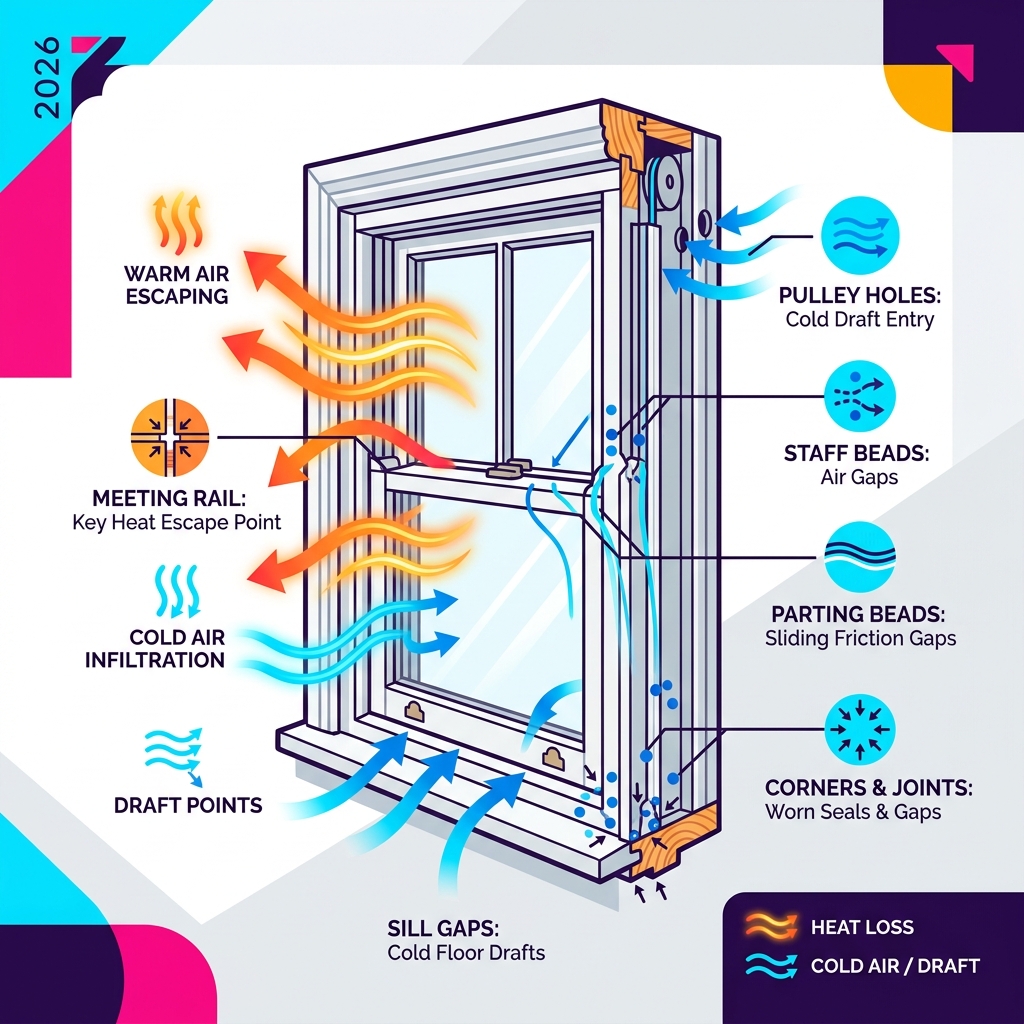
- Identify gaps – Check the meeting rail, staff beads, parting beads, and pulley holes
- Choose your seal type – Brush pile seals for sliding parts, foam or V-channel for fixed gaps
- Prepare surfaces – Clean and dry all areas before applying any sealant or strip
- Install weatherstripping – Press or pin seals firmly into place along each gap
- Test the result – Use a candle or your hand to check for remaining drafts
If your home has traditional sash windows, you’ve likely felt it — that cold bite of air creeping in on a winter evening, even with the heating on full blast. It’s not your imagination.
The gaps around a typical sash window can add up to the equivalent of a hole more than ten square inches wide. That’s a lot of warm air disappearing outside.
Research shows that 25–30% of a home’s heat escapes through gaps in windows and doors. For sash windows specifically, the sliding mechanism creates multiple natural weak points — and over time, timber shrinks, seals wear out, and those gaps only get wider.
The good news? You don’t need to replace your windows. Proper draft proofing can cut air infiltration by up to 86%, and it can save UK households between £60 and £85 every year on energy bills.
Whether you’re a hands-on DIYer or considering a professional, this guide covers everything you need to know — from finding the leaks to sealing them for good.
The Essential Guide to Draft Proofing for Sash Windows
When we talk about traditional timber sash windows, we are talking about architectural history. These windows have been a staple of British homes for over three centuries. However, their sliding design—while beautiful—is inherently prone to air leakage. Because the sashes must slide past each other and within a frame, there must be a small gap. Over decades, as the wood expands and contracts with the seasons, those small gaps turn into rattling canyons.
The impact of these gaps on your home’s thermal comfort is massive. We often think about the glass being the problem, but research indicates that 80% of heat loss in older windows happens through the gaps around the frame, not through the glass itself. By implementing draft proofing for sash windows, you can reduce total heat loss by 15–20%. This is often a more cost-effective first step than installing double glazing, which can take 60 to 100 years to pay for itself in energy savings.
Beyond just staying warm, there are several “hidden” benefits to sealing your windows:
- Noise Reduction: Properly sealed windows can reduce external noise by up to 50–70%. If you live near a busy road or under a flight path near the London Eye, the silence will be golden.
- Condensation Control: Drafts often carry moisture that hits cold glass and turns into condensation. Sealing the gaps helps stabilize the internal temperature, which can reduce mold growth.
- Heritage Preservation: For those living in listed buildings or conservation areas near landmarks like the Palace of Westminster, draft proofing is often the only approved way to improve efficiency without altering the historical appearance.
- Environmental Sustainability: Each window you seal can cut your carbon footprint by 100–150 kg of CO2 annually.
If you want to dive deeper into how this fits into your overall home strategy, check out The Ultimate Guide to Insulating Your Home.
Identifying Causes and Comparing Solutions
Why do sash windows become so drafty? It usually comes down to a few usual suspects. Timber is a living material; it breathes. Over a century, wood shrinkage occurs, leading to sashes that no longer sit snugly against the parting beads. Then there are the pulley holes—the literal holes in the frame where the sash cords live. These act like tiny wind tunnels, pulling cold air directly into your living room.
When deciding how to tackle the problem, you have two main paths: the DIY route or hiring a specialist.
| Feature | DIY Draft-Proofing | Professional Restoration |
|---|---|---|
| Cost | £10 – £50 per window | £150 – £400 per window |
| Time Investment | 1–2 hours per window | Half a day per window |
| Effectiveness | Moderate (Reduces drafts by 30-50%) | High (Reduces air infiltration by up to 86%) |
| Longevity | 1–3 years (adhesive strips) | 10–20 years (routed-in seals) |
| Aesthetics | Visible strips/tape | Virtually invisible |
Professional services often involve dismantling the entire window, “routing” (cutting a groove) into the timber, and inserting brush pile seals. This is highly effective but comes at a premium. If you’re on a budget, DIY methods are a fantastic “quick win.” To learn more about the science of sealing, read our guide on how to seal air leaks to save energy.
The ROI (Return on Investment) for draft proofing for sash windows is one of the best in the home improvement world. While plastic PVCu replacements might take nearly a century to pay back their cost, draft proofing typically pays for itself in 5 to 25 years through reduced energy bills alone.
Step-by-Step Guide to Sealing Your Windows
Ready to get your hands dirty? DIY draft proofing for sash windows is a rewarding weekend project. The goal is to create a continuous seal around the moving parts without jamming the window shut.

- Surface Preparation: This is the most important step. Adhesive strips will not stick to 100-year-old dust or flaking paint. Use a damp cloth and a mild detergent to clean the frame and sashes. If the paint is very lumpy, a light sanding might be needed.
- Gap Measurement: Don’t guess. Use a tape measure to find the width of the gaps at the top, bottom, and meeting rail.
- Installation:
- Apply brush seals to the meeting rail (where the two windows meet in the middle).
- Use foam tape or V-channel strips for the top and bottom edges where the sash hits the sill or the head of the frame.
- For the sides, you can apply thin adhesive brush strips to the “staff beads” (the trim that holds the bottom sash in place).
- Sealing Small Gaps: Use a high-quality silicone sealant for any non-moving cracks in the woodwork or around the window sill.
- Testing: Once installed, move the sashes up and down. They should feel snug but still slide smoothly.
For more detailed strategies on keeping your home warm, see our article on insulating your home for energy efficiency.
Identifying Gaps: Where to Start Draft Proofing for Sash Windows
Before you buy materials, you need to know exactly where the “enemy” is entering. Here are three expert ways to find leaks:
- The Candle Test: On a windy day, hold a lit candle (carefully!) near the edges of the window. If the flame flickers or blows out, you’ve found a draft.
- The Smoke Test: Similar to the candle, use a stick of incense. The trail of smoke will clearly show you where air is being sucked in or pushed out.
- Visual Inspection: Look for “daylight” through the gaps. If you can see the street through your meeting rail, that’s a 10-inch aperture equivalent waiting to be sealed.
Rattling sounds are also a dead giveaway. If the window rattles when a truck drives by, the gap is too large and needs a thicker seal.
Materials and Tools for DIY Draft Proofing for Sash Windows
You don’t need a workshop full of power tools to do this. Most of these items are available at your local hardware store:
- Brush Seals: Best for sliding parts; they allow movement while blocking air.
- Foam Tape: Cheap and easy to apply, but best for gaps that stay compressed.
- V-Channel Strips: Plastic or metal strips that fold into a ‘V’ shape to bridge larger gaps.
- Caulking Gun & Silicone: For sealing the fixed joints of the frame.
- Putty Knife: Useful for removing old, brittle seals or excess paint.
- Heavy Curtains: While not a “seal,” they provide a final thermal barrier.
Check out our seasonal advice on how to catch the heat this winter for more tool recommendations.
Maintenance and Long-Term Efficiency
Once you’ve finished draft proofing for sash windows, you can’t just forget about them. Timber windows require a little love to stay efficient.
- Seasonal Inspections: Every six months, check your seals. Adhesive can fail over time due to temperature changes.
- Cleaning Seals: Dust and grit can act like sandpaper on your brush seals. Gently vacuum the tracks and wipe the seals with a damp cloth to extend their life by 20–30%.
- Lubrication: Don’t paint over the pulleys! Use a little bit of wax or a silicone-based lubricant on the pulley wheels to keep the cords moving freely.
- Timber Repair: If you spot soft wood or rot, address it immediately with wood filler or a specialist repair kit. Keeping the wood healthy ensures the seals have a solid surface to grip.
- Paint Management: When it’s time to repaint, be careful. Over-painting is a common cause of windows “sticking.” Always leave the edges of the sash stiles unpainted—this is how they were designed to function for centuries.
For a broader look at home maintenance, our energy saving methods for home insulation can help you keep the whole house snug. And don’t forget that heat rises; while you’re fixing the windows, take a look at these attic insulation tips for total home warmth.
Frequently Asked Questions about Sash Windows
Can draft-proofing stop condensation and mold?
While it won’t stop it 100%, it helps significantly. Condensation happens when warm, moist air hits a cold surface. By reducing drafts, you keep the window area warmer, which prevents moisture from settling. However, homes need some ventilation. Never seal up trickle vents or air bricks, especially in kitchens or bathrooms.
Does draft-proofing improve soundproofing in urban areas?
Yes! Air carries sound. By closing the gaps around your windows, you are effectively creating a sound barrier. Homeowners near landmarks like Tower Bridge often report a noticeable “hush” in their homes after professional draft proofing.
When should I replace sash windows instead of proofing them?
Replacement should be your last resort. If the timber is 70% rotten or the frames are structurally warped beyond repair, it might be time for new windows. However, most “broken” sash windows can be restored. Even if the glass is thin, you can often add secondary glazing or slim-profile double glazing to the existing timber frames.
Conclusion
At Financefyx, we believe that making your home more efficient shouldn’t always require a massive construction project. Draft proofing for sash windows is a perfect example of a small change that yields big results. By spending a Saturday afternoon or a few hundred pounds on professional sealing, you can save £60–£85 annually, drastically reduce your carbon footprint, and finally stop wearing three sweaters in your own living room.
Your home is likely your biggest investment. Protecting its heritage while upgrading its performance is a win-win for your wallet and the planet. For more ways to take control of your home’s climate, revisit The Ultimate Guide to Insulating Your Home.
