
Your thermostat can waste electricity without making your home any more comfortable. If your air conditioner runs while you are away, or your heating and cooling system works harder than needed overnight, those small habits can add up on your electric bills and inflate your monthly energy bills.
Smart thermostat savings come from better timing, useful automation, and a clearer view of how your home uses energy. By relying on advanced smart thermostats, you can optimize your temperature control and significantly improve daily energy efficiency. You still control the temperature, but smart thermostats help you avoid paying for comfort when no one is there to enjoy it.
The best results come from matching the device settings to your home, your schedule, and your local electricity rates, which ultimately maximizes smart thermostat savings and lowers your energy bills over time.
Key Takeaways
- While a traditional programmable thermostat requires manual scheduling, modern smart thermostats reduce wasted heating and cooling by following schedules, sensing occupancy, and adjusting temperatures automatically for better energy efficiency.
- Your energy savings depend on climate, insulation, HVAC system efficiency, electricity rates, household routines, and the temperatures you choose.
- Small temperature setbacks can lower heating and cooling costs without making your home feel uncomfortable, directly boosting your overall energy savings.
- Features such as geofencing technology, energy reports, and demand response programs from your local utility provider can add useful savings opportunities.
- Smart thermostats work best when they are compatible with your HVAC system and installed in a suitable location.
How Smart Thermostat Savings Start at Home
A standard programmable thermostat follows the rigid schedule you set. Modern smart thermostats can do much more. They connect to Wi-Fi, provide remote access through a mobile app, and utilize adaptive learning to adjust to your daily patterns over time.
The main purpose is simple: your heating and cooling system should run less when you do not need full comfort. For many households, that means raising the temperature slightly during summer work hours and lowering it slightly on winter nights.
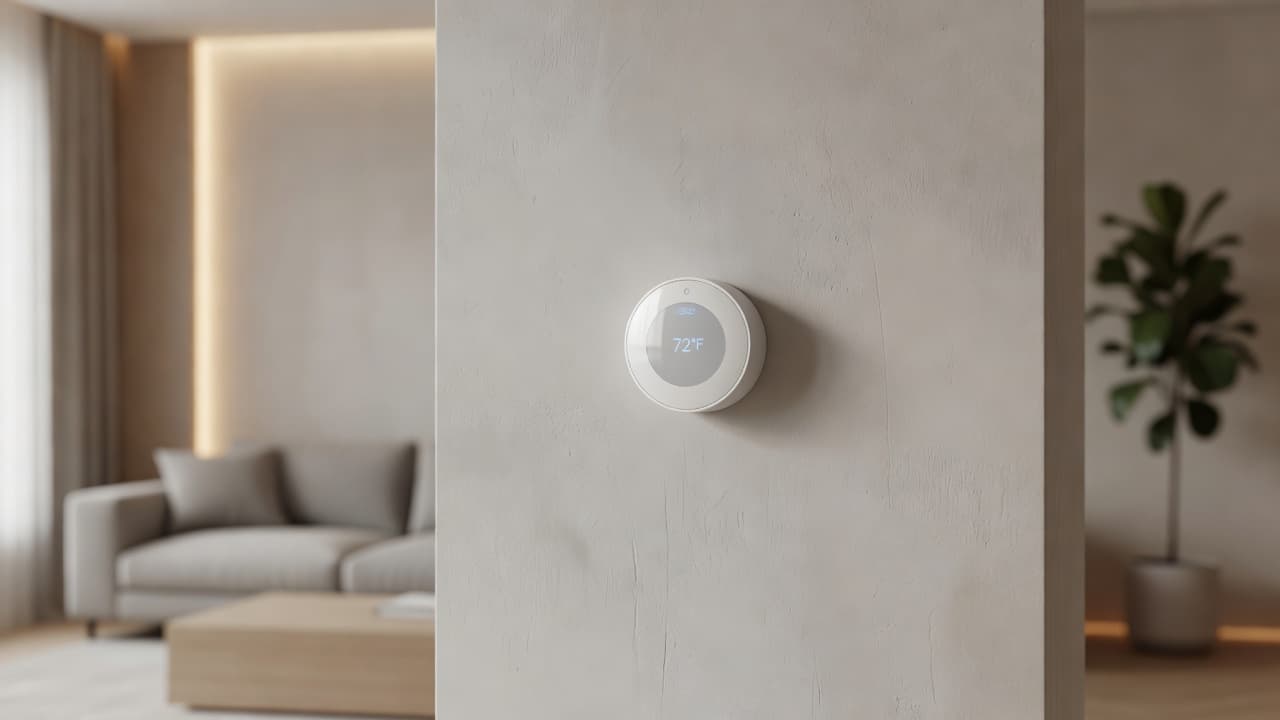
Smart thermostat savings often begin with automatic adjustments and setbacks. Instead of cooling an empty house at your preferred evening temperature, smart thermostats can maintain a less demanding setting. They then return to your comfort setting before you arrive home, lowering overall energy consumption.
This approach is more practical than constantly changing a programmable thermostat yourself. Busy mornings, unexpected plans, and weekend errands can easily disrupt a manual routine. Automation keeps the plan working even when your day changes, helping reduce total energy bills.
According to the ENERGY STAR smart thermostat FAQ, smart thermostats users save an average of about 8% on heating and cooling bills. That is a useful benchmark, but it is not a promise for every home.
Smart thermostats cannot fix a poorly insulated home or an aging HVAC system, but they can stop those systems from running longer than your routine requires.
If your home uses electricity for air conditioning, a heat pump, electric baseboard heating, or electric resistance heating, lower HVAC system use can directly reduce your electric bills. If you use natural gas, propane, or oil for heating, some energy savings may appear on a separate fuel bill instead, while still lowering overall heating and cooling costs.
The Features That Cut Unnecessary Energy Use
Different models offer different tools, but the most useful features are usually the ones that reduce runtime without asking you to think about the thermostat all day.
A custom schedule is the starting point for your heating and cooling. You can set warmer summer temperatures or cooler winter temperatures while you sleep, work, or travel to support better energy efficiency. Unlike older programmable models, a Google Nest or an Ecobee thermostat makes changes easier through a mobile app. You can also adjust your schedule when your daily routine shifts.
Many models, including popular options from Google Nest and the Ecobee thermostat, use motion sensors. The Google Nest thermostat may detect motion in the home or use optional motion sensors to understand where people are spending time. This can help prevent your HVAC system from conditioning rooms that are empty for long periods, securing steady energy savings through automatic adjustments.
Geofencing technology uses your phone location to recognize when household members leave or return. When the last person leaves, geofencing technology can switch the device to an away setting. When someone heads home, it can prepare the house for arrival. Review the mobile app privacy options before turning on location-based features.
Energy usage reports are another useful feature for temperature control. They show when your HVAC system runs most often and may suggest small changes to reduce use. You might notice that your heating and cooling runs for long periods each afternoon. That could point to a setting issue, direct sunlight, an overdue filter change, or gaps in your insulation.
Some electricity providers also offer demand-response programs. During periods of high demand, such as a hot summer afternoon, your utility provider may ask the thermostat to make a small, temporary adjustment. In return, your utility provider may offer a bill credit, utility rebates, or other incentives. Terms vary by your utility provider, and you can usually override a comfort change if needed. You might also qualify for separate utility rebates just for upgrading your heating and cooling controls.
The U.S. Department of Energy’s thermostat benchmarking research also shows why product performance needs careful testing. Features are useful only when they lead to reliable temperature control and less unnecessary equipment runtime for your HVAC system.
Your Home Determines the Size of the Savings
Smart thermostats are not a fixed-dollar solution. Two homes can use the same model and see very different results regarding overall energy savings.
Climate has a major effect on your heating and cooling demands. In a hot, humid area, summer cooling may be the largest driver of your high electric bills. In a cold region with electric heat or a heat pump, winter temperature control settings matter more. Mild climates may have less heating and cooling demand, so the potential reduction in energy consumption is smaller.
Your HVAC system also plays a role in determining your energy bills. A well-maintained heat pump or central air conditioner responds differently than an oversized older unit, window air conditioners, or electric baseboard heaters. Upgrading from a basic programmable thermostat to advanced smart thermostats allows your HVAC system to run more efficiently, though some setups require a special adapter or professional installation.
Home construction changes the picture as well. Air leaks, thin attic insulation, single-pane windows, and direct afternoon sun can increase overall energy consumption. While smart thermostats can reduce avoidable runtime, they cannot keep heat from moving through poorly insulated walls or a leaky attic.
Local electricity rates are equally important when calculating your energy savings. A household with time-of-use pricing managed by a local utility provider may save more by reducing cooling during expensive peak hours. Furthermore, checking with your utility provider can unlock exclusive utility rebates that offset the initial cost of smart thermostats. Check your utility bill or online account to see whether rates change by season or time of day.
The following factors shape your results:
- Your preferred indoor temperature and how often you use away or sleep settings, managed by smart thermostats.
- The number of people at home during the day, including remote workers and pets.
- The condition, size, and efficiency of your heating and cooling equipment.
- Insulation, window coverings, duct condition, and air sealing, which dictate overall energy efficiency.
- Electricity prices, utility programs, and the type of fuel your heating and cooling equipment uses.
A small adjustment can make a meaningful difference in your monthly energy bills over a full season. The Northeast Energy Efficiency Partnerships notes that lowering a thermostat by one degree may reduce heating and cooling costs by about 3%, though real results vary by home and conditions. Read its explanation of thermostat temperature adjustments before choosing settings that fit your comfort level.
Set Up Your Thermostat for Practical Savings
Installation is the first point to get right. Before buying a device, check whether your HVAC system has a C-wire, also called a common wire. Many smart thermostats need it for reliable power. Some models include an adapter, but a qualified technician can help if compatibility is unclear when installing smart thermostats.
Popular units like a Google Nest or an Ecobee thermostat require careful placement away from direct sunlight, drafty doors, kitchens, lamps, and supply vents. A poor location can hinder accurate temperature control and cause false temperature readings. If you have rooms that are always warmer or cooler, a model with motion sensors may help you base comfort on the rooms you use most.
Once your equipment is ready, download the companion mobile app to establish a custom schedule. Avoid changing settings every day. Start with a realistic weekly routine and give it time to work. Remote access lets you check in from anywhere, and automatic adjustments handle the rest. If your summer comfort setting is 72 degrees, try 74 degrees while you are away. In winter, try a modest nighttime setback if your HVAC system can recover comfortably.
You can maximize smart thermostat savings without turning your home into an uncomfortable space by focusing on energy efficiency:
- Use away settings whenever the home is empty for several hours.
- Keep temperature changes modest, then adjust gradually based on comfort.
- Replace HVAC filters on the schedule recommended for your system.
- Close blinds or curtains during strong summer sun, especially on west-facing windows.
- Use ceiling fans to improve comfort, then raise the cooling setting slightly.
- Review the monthly energy usage reports and look for unusual runtime patterns.
Renters can benefit too. Many smart thermostats install without major changes, but you should ask your landlord before replacing the existing unit. Keep the original thermostat and confirm that the new model works with the building heating and cooling equipment.
A smart thermostat is also a useful reminder system. Low-battery alerts, filter reminders, and unusual temperature notifications can help you catch small problems before they become costly habits.
Frequently Asked Questions
How much money can I actually save with a smart thermostat?
According to data from ENERGY STAR, smart thermostat users save an average of about 8% on heating and cooling bills. However, your exact savings will depend heavily on your local climate, energy rates, household habits, and how your HVAC system is configured.
Do I need a common wire (C-wire) to install a smart thermostat?
Many modern smart thermostats do require a C-wire to maintain a continuous and reliable flow of power. If your existing wiring lacks a C-wire, some models include a power adapter, or you may need to consult a qualified technician to ensure proper compatibility.
Can a smart thermostat help me qualify for utility company rebates?
Yes, many electricity providers offer utility rebates or bill credits when you install a compatible smart thermostat. Additionally, participating in local demand-response programs allows your utility provider to make minor, temporary adjustments during peak energy hours in exchange for financial incentives.
A Smarter Routine Can Reduce Energy Waste
The strongest energy savings usually come from a steady routine, not a complicated set of rules. Set temperatures that feel comfortable when you are home, then let modern smart thermostats reduce heating or cooling when you sleep or leave. By relying on features like adaptive learning, smart thermostats continuously refine your daily schedule to capture long term smart thermostat savings without constant manual adjustments.
These smart thermostat savings are most useful when the device works alongside basic home improvements to maximize overall energy efficiency. Clean filters, sealed air leaks, sensible window coverings, and good insulation all reduce the workload on your HVAC system. When your HVAC system operates more efficiently, your home experiences a noticeable drop in daily energy consumption and lower monthly energy bills.
You do not need extreme temperature settings to lower your energy bills. A compatible smart thermostat, a realistic schedule, and proper energy management can make your home much easier to condition. Furthermore, pairing your smart thermostats with energy efficiency programs from your local utility provider can unlock additional rebates and steady energy savings for your household heating and cooling needs.
