
Flexible Window Seal Tape and Other Gadgets to Keep the Cold Out
Is Your Home Leaking Heat Through the Windows?
Draft seal windows are one of the fastest, most affordable ways to stop cold air from sneaking into your home — and to keep your heating bills from spiraling out of control.
Here are the best options for sealing window drafts, at a glance:
| Solution | Best For | Approximate Cost |
|---|---|---|
| Flexible silicone tape | Gaps around frames | $5–$15 |
| Foam weatherstripping | Movable window sashes | $5–$20 |
| Window shrink film kit | Full window insulation | $10–$25 |
| Draft snake / stopper | Window sills and bottoms | $5–$20 |
| Silicone caulk | Fixed, non-opening windows | $5–$15 |
| Thermal curtains | Added insulation layer | $20–$60 |
Any of these can be picked up at a hardware store or ordered online, and most take under an hour to install.
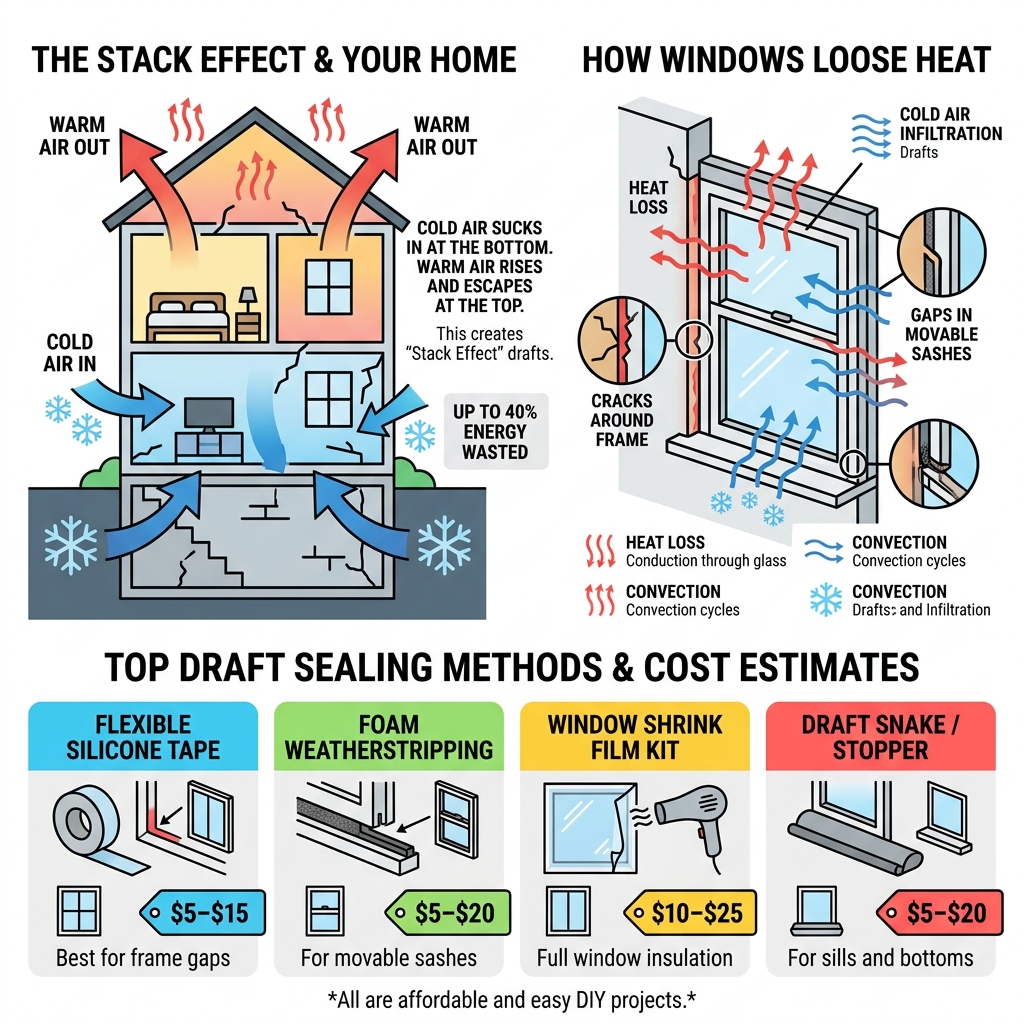
Home air leaks are a bigger problem than most people realize. According to ENERGY STAR, they account for up to 40% of the energy wasted on heating and cooling your home. A large share of that waste comes straight from your windows.
It’s not always about old or broken glass, either. The real culprit is usually air infiltration around the window frame — tiny gaps and worn-out seals that let cold air pour in while warm air escapes. This gets worse over time as temperature swings cause frames to expand and contract, and as indoor humidity from cooking, showering, and daily life gradually breaks down seals.
The result? Cold spots near the floor, a thermostat that never quite catches up, and a heating bill that keeps climbing.
The good news: you don’t need to replace your windows to fix this. A handful of simple, low-cost products can make a dramatic difference — and this guide walks you through exactly which ones work best.
Why Your Home Needs Draft Seal Windows
When we talk about draft seal windows, we aren’t just talking about comfort; we’re talking about the physics of your home. Many homeowners believe that if their glass isn’t cracked, their windows are fine. Unfortunately, the frame and the seals are often where the real “energy theft” occurs.
The Stack Effect and Air Infiltration
One of the primary reasons we feel drafts is a phenomenon known as the “stack effect.” In the winter, warm air rises to the top of your house and escapes through leaks in the attic. This creates a vacuum in the lower levels of your home, which literally sucks cold outdoor air in through any available opening—most commonly the gaps around your windows. This constant cycle of air infiltration makes your HVAC system work overtime.
Why Seals Fail
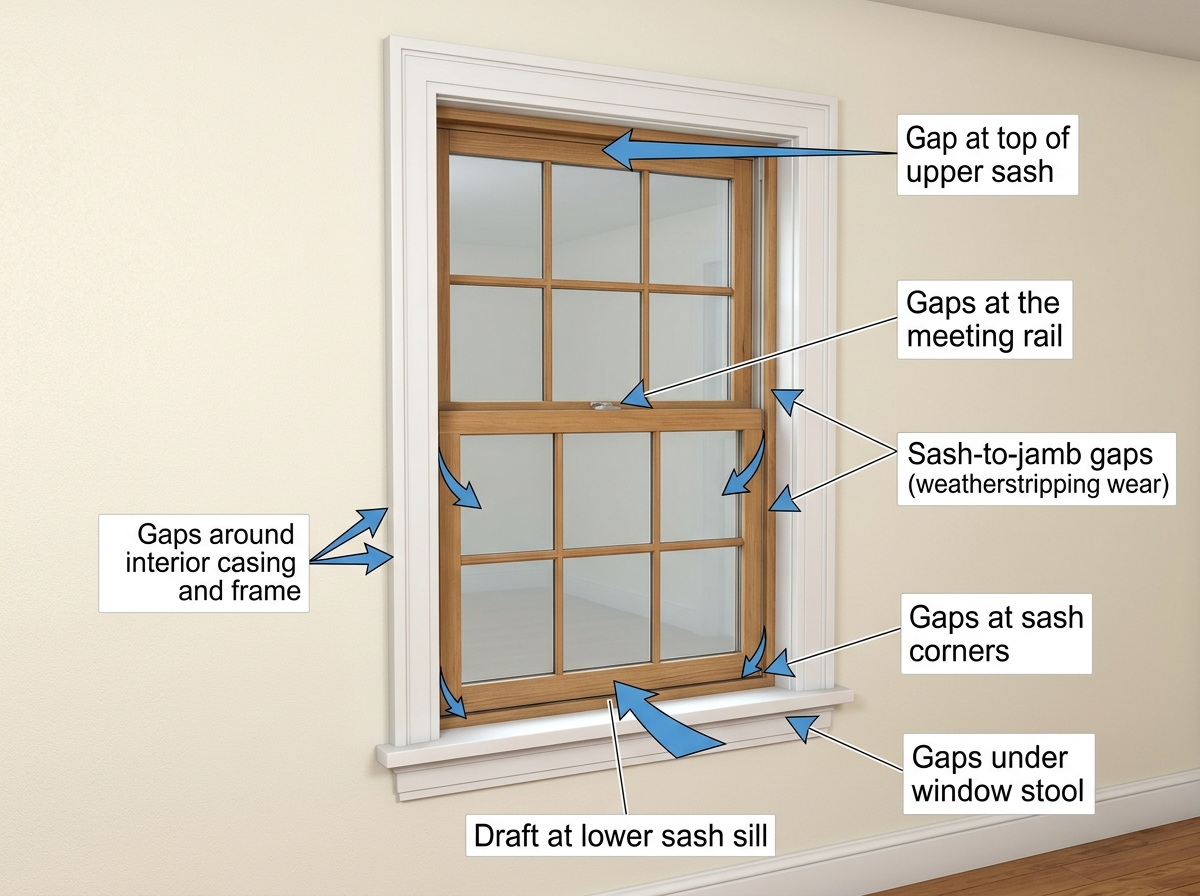
Windows are subjected to extreme conditions. On the outside, they face freezing temperatures and baking sun. On the inside, activities like cooking, laundry, and showering increase humidity levels. This constant expansion and contraction cause window frames to pull away from the wall, and the original factory seals to harden, crack, or lose their flexibility.
If you’ve noticed condensation between panes or a whistling sound on windy days, your seals have likely reached the end of their lifespan. According to the ENERGY STAR guide on air sealing, addressing these leaks is a critical first step in home maintenance. You can learn more about the specifics in our guide on how-to-seal-air-leaks-to-save-energy.
Top DIY Gadgets for Sealing Window Drafts
You don’t need a construction degree to fix a draft. There is a wide variety of “gadgets” and materials designed specifically for DIYers. We’ve broken down the most effective methods below.
| Method | Durability | Ease of Install | Best Use Case |
|---|---|---|---|
| Shrink Film | Seasonal | Moderate | Single-pane windows; high-draft areas |
| Foam Tape | 1-3 Years | Easy | Gaps where the window closes |
| Silicone Seals | 5+ Years | Easy | Long-term weatherproofing |
| Draft Snakes | 5+ Years | Very Easy | Bottom of the window sill |
| Thermal Curtains | 10+ Years | Easy | Blocking radiant cold and light |
Shrink Film Kits
These kits involve a plastic sheet that you tape to the window frame and then “shrink” with a hair dryer. While some sources suggest they have a low R-value (insulation rating), they are incredibly effective at stopping the physical movement of air. They create an airtight buffer between the glass and your room.
Draft Snakes and Stoppers
A “draft snake” is essentially a weighted fabric tube that sits on the windowsill. It’s a classic for a reason—it works! You can even make these yourself using recycled materials. Check out this DIY draft stopper video for a quick tutorial on using household items like plastic bags or rice to create a custom seal.
For more comprehensive advice on keeping the heat in, see our article on insulating-your-home-for-energy-efficiency.
Using Flexible Tape as a Draft Seal for Windows
One of the most innovative gadgets on the market today is flexible weather sealing tape. Unlike traditional duct tape, these products are designed to be transparent, residue-free, and highly flexible.
- Transparent Application: Most high-quality draft tapes are clear, meaning they won’t ruin your home’s aesthetic.
- Surface Prep is Key: For the best bond, always clean the window frame with rubbing alcohol first. This removes oils and dust that prevent the adhesive from sticking.
- Gap Coverage: These tapes often come in widths up to 2 inches, allowing you to seal even the widest gaps where the window meets the casing.
- Removability: Look for products that are “repositionable.” This allows you to fix mistakes during installation without wasting the strip.
For a detailed look at how to apply these products, you can refer to the Flex Seal Draft Tape Guide.
Weatherstripping and Caulking for Draft Seal Windows
If you want a solution that stays in place year-round without being visible, weatherstripping and caulk are your best bets.
Weatherstripping Types:
- V-Strip (Tension Seal): A durable plastic or metal strip folded into a ‘V’ shape that bridges gaps by pressing against the sides of a window.
- Felt: One of the oldest methods; inexpensive but best for low-traffic windows as it wears down over time.
- Foam Tape: Sold in rolls, this is perfect for the top and bottom of window sashes. When you close the window, the foam compresses to create a tight seal.
Caulking and Glazing: For fixed windows that you don’t plan to open, silicone caulk is a permanent fix. Apply it to the exterior where the frame meets the siding, and the interior where the trim meets the wall. However, never caulk your weep holes (the tiny holes at the bottom of the exterior frame). These are designed to let moisture escape; sealing them can lead to wood rot and mold.
If you have older single-pane windows, you might also need to “reglaze” them. This involves removing the old, brittle putty that holds the glass in the frame and applying new glazing compound. This is a bit more technical but can save you from having to replace the entire unit. For more ideas on window-specific treatments, check out save-energy-with-insulated-window-treatments.
Professional vs. DIY: When to Call the Experts
While we love a good DIY project, sometimes the “band-aid” approach isn’t enough. If you’ve applied draft seal windows gadgets and your home still feels like a refrigerator, the problem might be deeper.
Whole-House Air Sealing
Sometimes, the draft you feel at the window is actually air being pushed through the wall cavity from the attic or basement. Professionals use a “Blower Door Test” to depressurize your house and find exactly where the air is leaking.
Attic Insulation
According to ENERGY STAR, most attics need 10 to 14 inches of insulation to be effective. If your attic is under-insulated, no amount of window tape will stop the stack effect from making your floors cold. Upgrading your insulation isn’t just about comfort—homeowners can recover up to 84% of the cost of an insulation upgrade at resale.
If you are dealing with high energy bills and persistent drafts, it might be time for a professional energy audit. You can find more tips on this in our guide on attic-insulation-tips-save-energy-and-money.
Frequently Asked Questions about Window Sealing
How much can I save by sealing window drafts?
Sealing drafts is one of the highest-ROI home improvements you can make. On average, homeowners can save up to 10% on their annual energy costs just by using simple silicone draft seals. If you combine window sealing with professional air sealing and insulation upgrades, you could cut your energy waste by up to 45%. For more detailed strategies, see our energy-saving-methods-for-home-insulation.
Can I fix drafts without replacing my windows entirely?
Absolutely. Most drafts come from the seals, not the glass. Products like interior storm window inserts or custom-fitted acrylic panels can provide the same insulation benefits as triple-pane windows at a fraction of the cost. These inserts press into the existing frame and create a secondary airtight barrier that also significantly reduces outside noise.
What maintenance is required for window seals?
Window seals are not “set it and forget it.” We recommend a seasonal inspection:
- Spring: Check for any moisture or mold buildup. Clean the tracks to ensure the window closes fully.
- Fall: Test for drafts using a dampened hand or a smoke stick. Replace any foam tape that has lost its “spring” or caulk that has begun to peel.
- Cleaning: Use mild soap and water. Avoid harsh chemicals that can degrade silicone or rubber seals.
Conclusion
At Financefyx, we believe that a comfortable home shouldn’t cost a fortune. By investing a few dollars and a Saturday afternoon into draft seal windows, you can transform your living space. Not only will you see a reduction in your monthly utility bills, but you’ll also enjoy a quieter home with better air quality, as seals also block out dust, pollen, and street noise.
Whether you choose a high-tech flexible tape or a simple DIY draft snake, the most important step is simply to start. For a deep dive into making your entire home more efficient, don’t miss the-ultimate-guide-to-insulating-your-home. Stay warm!
