
How to Seal Old Window Gaps Without Losing Your Mind
The Real Cost of Drafty Old Windows (And How to Fix Them Fast)
Drafty old windows are one of the biggest reasons your heating bill climbs every winter — and most homeowners don’t realize how much air they’re losing until the cold really sets in.
Here’s a quick answer to the most common fixes:
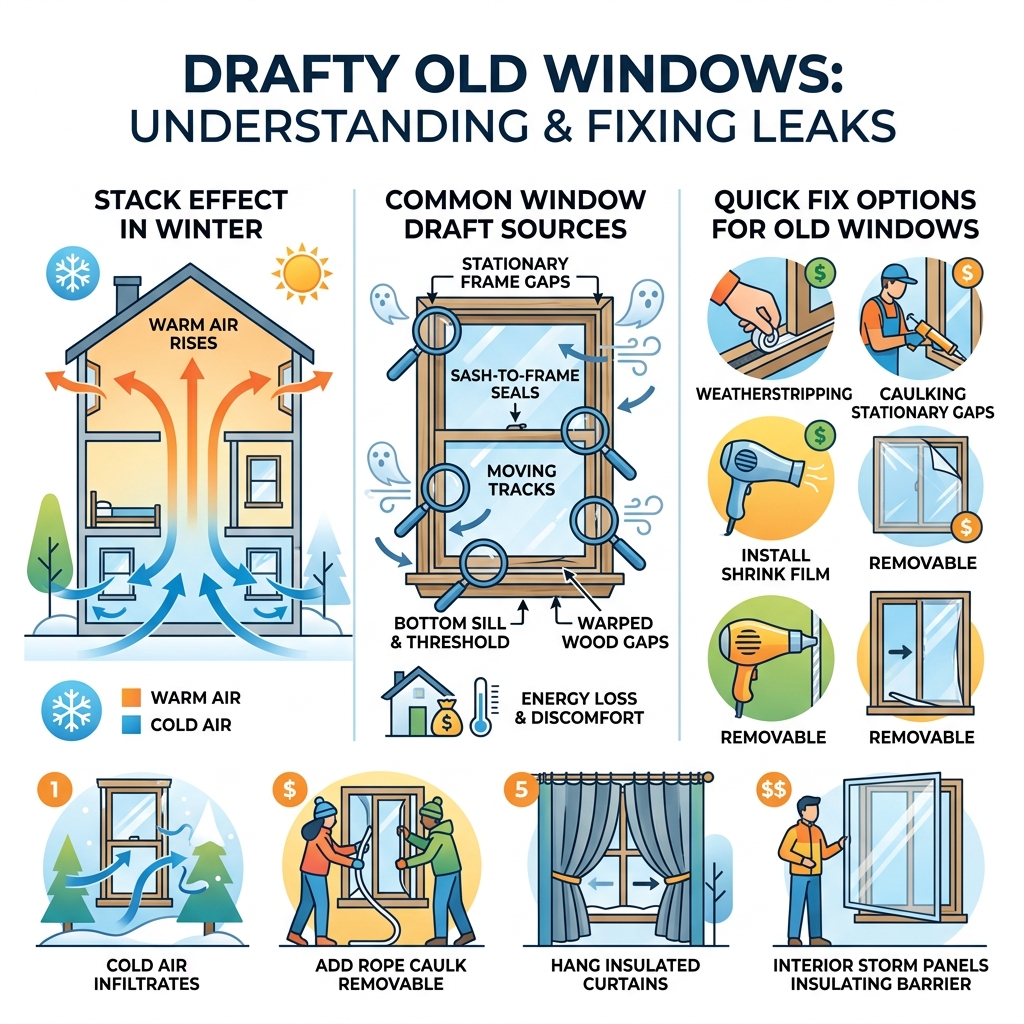
- Apply weatherstripping to moving window parts (sashes, tracks)
- Caulk stationary gaps around the frame where windows don’t open
- Install shrink film over the interior window for a fast, cheap insulation layer
- Add rope caulk to gaps — it’s removable, so it’s renter-friendly
- Hang insulated curtains as an extra barrier against cold air
- Add interior storm windows or acrylic panels for historic homes where you can’t modify the original window
These range from a few dollars to a couple hundred per window — and they work.
Now, here’s why this matters more than you might think.
In older Michigan homes, drafty windows can account for 25–30% of total heating and cooling energy usage. Homes built in the early 20th century can have two to three times more air leaks per hour than modern homes — some as much as five times the air exchange rate of new construction.
That’s not a small problem. That’s money leaving your home every single hour of every cold day.
And it’s not just discomfort. Moving air from window gaps strips heat from your skin faster than still air does, so a room can feel colder than it actually is — even when the thermostat reads fine. Your heating system works harder, wears faster, and costs more.
The good news? Most drafty window problems are fixable without replacing the windows entirely.
This guide walks you through exactly how to find the leaks, seal them yourself, and know when it’s time to call in a professional.
Why Your Home Has Drafty Old Windows
If you’ve ever sat near a window in January and felt a literal breeze, you aren’t imagining things. But why does it happen? Understanding the “why” is the first step toward a permanent fix.
Aging Seals and Wood Warping
Most drafty old windows suffer from the simple passage of time. Wood is a living material that expands and contracts with the seasons. Over decades, this constant movement causes the wood to warp, creating tiny gaps between the sash and the frame. Furthermore, the original glazing putty—that hard stuff holding the glass in place—brittles and cracks, allowing air to leak directly around the panes.
The Stack Effect and Attic Bypasses
Interestingly, your windows might be “leaking” because of your attic. In a phenomenon known as the stack effect, warm air rises and escapes through leaks in your attic or roof. This creates a vacuum in the lower levels of your home, which actively sucks cold outdoor air in through any available opening—most notably your window sashes and door frames. Learning how to seal air leaks to save energy often starts with looking upward at your attic insulation.
Pulley Systems and Balloon Framing
If your home was built before the 1940s, it likely uses a rope-and-pulley system with heavy lead or iron weights hidden inside the wall. These “weight pockets” are essentially hollow boxes that are rarely insulated. In homes with balloon framing, these pockets can act as chimneys, allowing cold air to travel from the basement all the way to the attic, leaking out into your living space through the pulley holes.
Household Condensation
Believe it or not, your daily habits contribute to window degradation. Cooking, showering, and even breathing release moisture. In poorly ventilated old homes, this moisture condenses on cold glass and wooden sills, leading to rot and the premature failure of seals.
Simple Tests for Drafty Old Windows
Before you spend a dime on supplies, you need to know exactly where the air is coming from.
- The Damp Hand Test: This is the easiest DIY method. Simply dampen your hand with water and run it slowly around the perimeter of the window frame. The evaporation will make even the slightest cool draft feel like a localized ice cube.
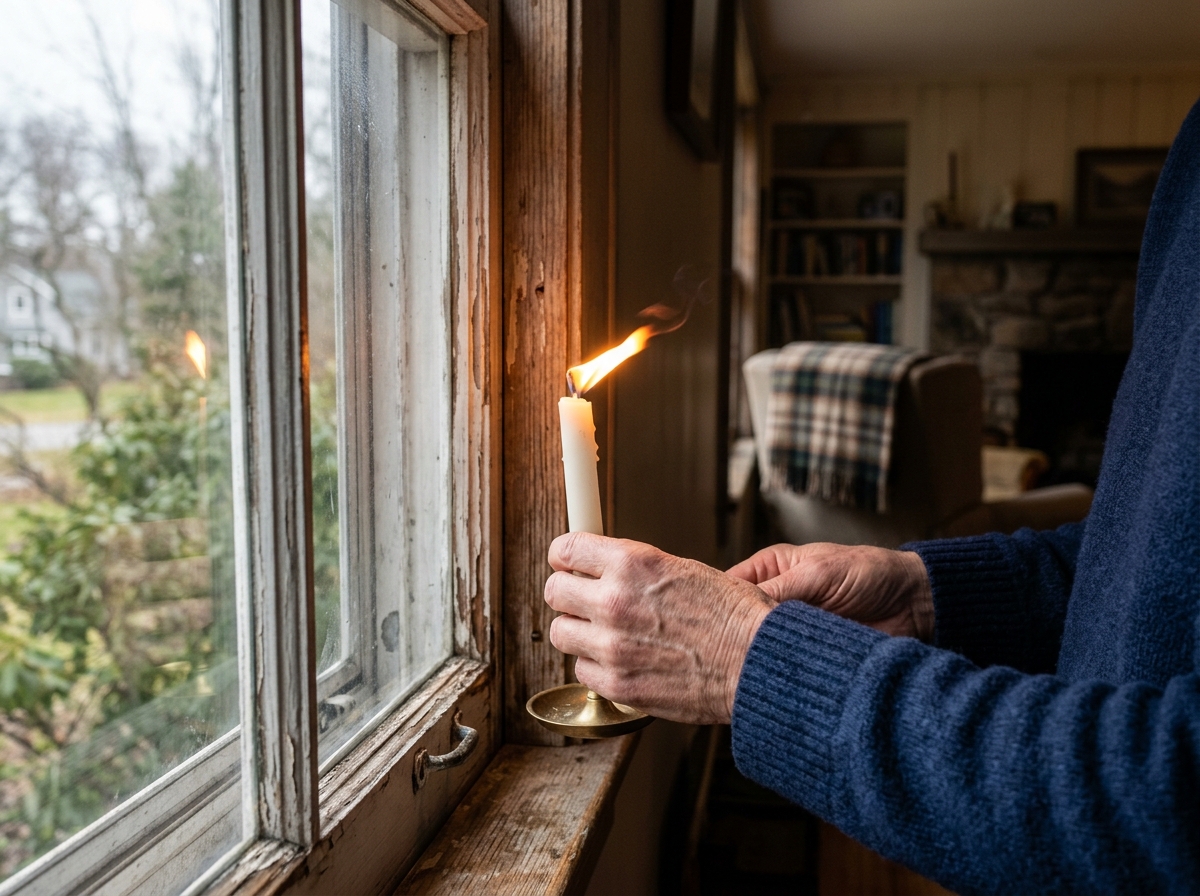
- The Candle or Incense Test: On a windy day, hold a lit candle or incense stick near the window edges. If the flame flickers or the smoke blows sideways, you’ve found a leak.
- Visual Inspection: Look for “daylight” through the cracks. If you can see the outdoors through a closed window, you have a major infiltration point. Also, check for cracked caulk or missing glazing putty.
- The Dollar Bill Test: Close the window on a dollar bill. If you can pull the bill out easily without any resistance, the seal is too loose.
- Professional Audits: For a high-tech approach, a comprehensive home energy audit checklist might include using infrared cameras to see exactly where heat is escaping in bright purple and blue hues.
DIY Solutions for Immediate Relief
Once you’ve identified the culprits, it’s time to take action. You don’t need a contractor’s license to make a massive dent in your energy bills.
The Weatherstripping Menu
Weatherstripping is your primary defense for the moving parts of a window. Here is how the most common types compare:
| Type | Best For | Pros | Cons |
|---|---|---|---|
| V-Strip (Tension Seal) | Sides of sashes | Durable, invisible | Can be tricky to install |
| Foam Tape | Top and bottom rails | Inexpensive, easy | Wears out in 1-2 seasons |
| Felt Strips | All-purpose | Very cheap | Not great at stopping wind |
| Silicone Tubing | Large gaps | High performance | Most expensive DIY option |
Temporary Fixes for Renters and Budget-Savers
If you are renting or just need to get through one more winter, these methods are lifesavers:
- Shrink Film Kits: You’ve likely seen these—the clear plastic you tape to the frame and “shrink” with a hairdryer. While it’s not the most aesthetic choice, it creates a dead-air space that acts as a secondary pane of glass.
- Rope Caulk: This looks like a roll of grey putty. You press it into the gaps where the window meets the frame. It stays flexible and can be peeled off in the spring without damaging the paint.
- Backer Rods: For those “pinky-sized” gaps often found in 1920s homes, a foam backer rod can be stuffed into the crack before applying caulk.
- Draft Snakes: A weighted fabric tube (or even a rolled-up towel) placed on the windowsill can block the air that leaks through the bottom rail.
For more on managing your home’s thermal envelope, check out our Home Energy Guide insights or learn how to save energy with insulated window treatments like honeycomb shades or heavy velvet drapes.
Preservation-Friendly Options for Historic Homes
If you live in a historic district like Heritage Hill in Grand Rapids, you can’t just rip out your windows. Nor should you—original windows are often made of old-growth timber that is significantly more rot-resistant than anything you can buy at a big-box store today.
The Power of Reglazing
If your window glass rattles when the wind blows, the glazing putty has failed. Removing the old putty and applying fresh glazing compound creates a literal airtight seal between the glass and the wood. This is a messy job, but it’s one of the most effective ways to restore drafty old windows while keeping the original wavy glass.
Interior Storm Windows and Acrylic Panels
Modern technology has given us a “hidden” solution: interior storm inserts. These are custom-cut acrylic or glass panels with a silicone compression seal. You pop them into the interior of the window frame during winter. They are nearly invisible, preserve the exterior architectural integrity, and provide insulating values that rival modern double-pane windows.
Spring Bronze Weatherstripping
For a truly historic fix, use spring bronze. It’s a metal strip that you nail into the window tracks. It creates a permanent tension seal that lasts for decades, unlike foam or adhesive strips. This is the gold standard for the ultimate guide to insulating your home when dealing with 19th-century architecture.
Professional Restoration vs. Full Replacement
There comes a point where DIY isn’t enough. Deciding between restoration and replacement is a major financial decision.
When Restoration is Best
Professional reconditioning usually costs between $150 and $600 per window. A pro will strip the paint, repair any minor rot, replace the ropes, and install high-quality weatherstripping.
- Pros: Maintains home value, preserves historic character, and utilizes superior old-growth wood.
- Cons: Labor-intensive and may still not reach the U-factor of a triple-pane window.
The Case for Full Replacement
If your frames are structurally rotted (you can poke a screwdriver through the wood) or if the windows are dangerously stuck, replacement is likely the answer. Modern Energy Star-certified triple-pane windows can offer incredible thermal performance.
When replacing, it is vital to address the “weight pockets” mentioned earlier. A good installer will remove the old weights and fill that hollow wall cavity with spray foam or dense-pack insulation. This step alone can cut your heating and cooling costs by as much as 25%.
When to Replace Drafty Old Windows
- Age: Most modern vinyl or aluminum windows have a 20-year lifespan. If yours are from the 90s, the seals have likely failed.
- Safety: If the window won’t stay open or won’t lock, it’s a safety hazard.
- Condensation Between Panes: If you see fog inside a double-pane window, the seal is broken, and the insulating gas has escaped.
Frequently Asked Questions about Window Drafts
How much can I save on energy bills?
Sealing drafty old windows isn’t just about comfort; it’s about ROI.
- Restoration/Sealing: Can reduce window-related energy loss by 20–25%.
- Annual Savings: For a typical older home, this translates to roughly $300–$500 in annual savings.
- Total Usage: Windows account for up to 30% of your home’s total energy usage.
Is expanding foam safe for old windows?
Use extreme caution here! Standard expanding foam (the “red can”) expands with enough force to bow a window jamb, making it impossible to open or close the window.
- The Fix: Use only “Window and Door” low-expansion foam (usually the “blue can”).
- The Pro Tip: For very narrow gaps (1/8 inch), use a latex-based foam like DAP, which is much easier to clean up and won’t distort the frame.
Do new windows always stop drafts?
Not necessarily. A $1,000 window will still be drafty if the “rough opening” (the space between the window frame and the house studs) isn’t insulated. Many installers simply cover these gaps with trim. If your new windows feel cold, the draft is likely coming from around the frame, not through the glass.
Conclusion
Tackling drafty old windows doesn’t have to be a source of stress. Whether you choose a $10 roll of rope caulk or a $500 professional restoration, the goal is the same: keeping the heat you pay for inside your home.
At Financefyx, we believe that energy efficiency is one of the smartest investments you can make for your long-term comfort and financial health. Start with the simple hand test today, and work your way up to more permanent solutions as your budget allows. For a deeper dive into making your entire house a fortress against the cold, don’t miss The Ultimate Guide to Insulating Your Home.
Stay warm, stay cozy, and keep your hard-earned money in your pocket—not drifting out the window!
