
Insulation Thermal Conductivity Comparison for Beginners
Why Insulation Thermal Conductivity Comparison Matters for Your Home
Insulation thermal conductivity comparison is the fastest way to find out which insulation material stops heat from escaping your home most effectively.
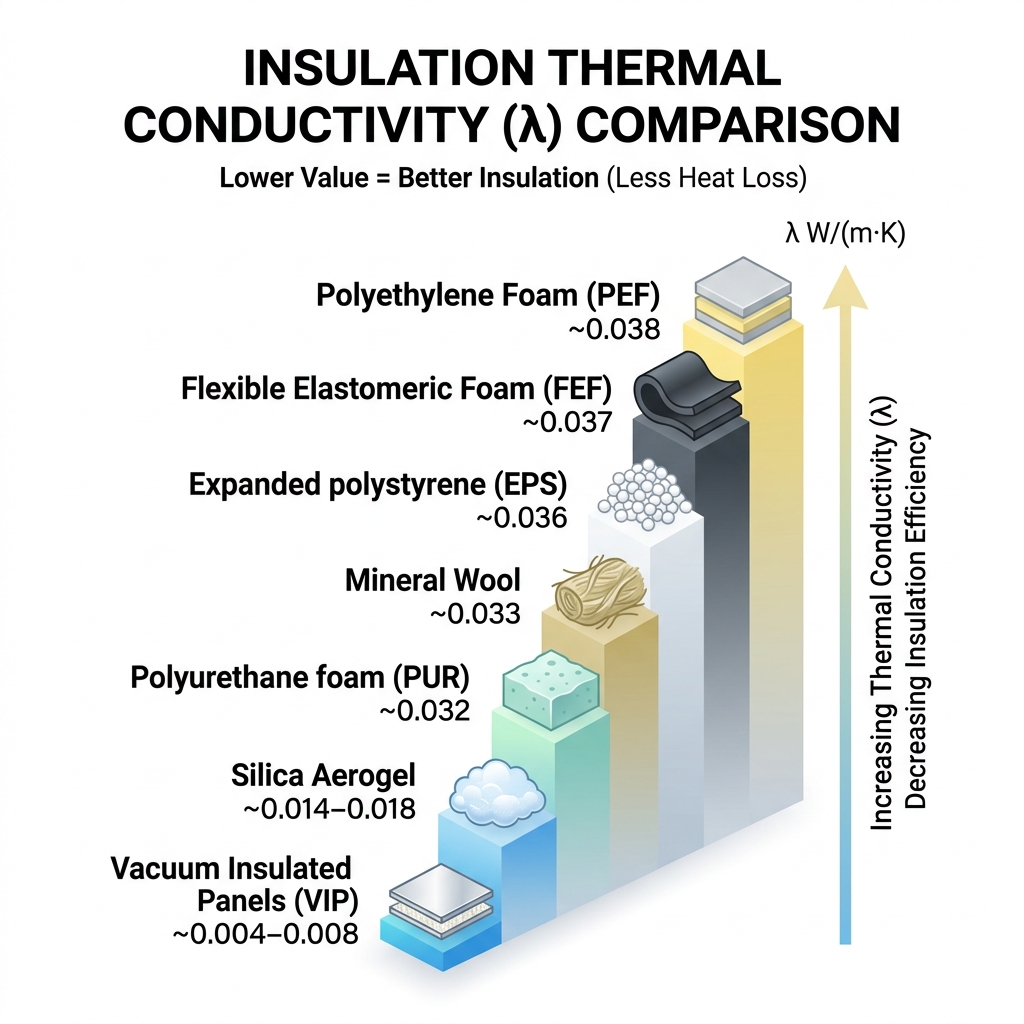
Here’s a quick look at how common insulation materials stack up by their lambda (λ) value — the lower the number, the better the insulation:
| Insulation Material | Thermal Conductivity (λ) at 10°C |
|---|---|
| Polyurethane foam (PUR) | ~0.032 W/(m·K) |
| Mineral wool | ~0.033 W/(m·K) |
| Expanded polystyrene (EPS) | ~0.036 W/(m·K) |
| Flexible elastomeric foam (FEF) | ~0.037 W/(m·K) |
| Polyethylene foam (PEF) | ~0.038 W/(m·K) |
| Silica aerogel | ~0.014–0.018 W/(m·K) |
| Vacuum insulated panels (VIP) | ~0.004–0.008 W/(m·K) |
PUR and mineral wool lead the pack for everyday use. Aerogel and vacuum panels perform far better but cost significantly more.
If your home feels cold in winter despite having insulation, the material you chose — and how well it was installed — matters more than most people realize.
Every insulation material has a thermal conductivity value, often written as λ (lambda). Think of it as a score for how easily heat passes through the material. A lower score means heat stays in your home longer, which means lower heating bills.
The challenge? Not all insulation performs the way its label says. Research comparing tested values against manufacturer declarations found that 50% of tested insulation specimens had higher thermal conductivity than declared — meaning they let more heat through than advertised.
That gap between the label and reality is exactly why understanding this comparison is so useful before you spend money on insulation.
Understanding the Basics of Insulation Thermal Conductivity Comparison
When we talk about an insulation thermal conductivity comparison, we are essentially looking at how well a material fights against the movement of heat. Heat is a restless traveler; it always wants to move from a warm area to a cold one. In the winter, it wants to leave your cozy living room and head into the freezing night. In the summer, it’s trying to barge into your air-conditioned bedroom.
The “Lambda” (λ) symbol is our primary weapon in measuring this. It represents the thermal conductivity of a material, measured in Watts per meter-Kelvin (W/m·K). This number tells us the amount of heat that passes through a square meter of material that is one meter thick, when there is a temperature difference of one degree between the two sides.
For those of us focused on Insulating Your Home for Energy Efficiency, the goal is simple: find the material with the lowest lambda value possible within our budget. A low lambda value means the material is a “lazy” conductor—it doesn’t let heat move through it easily.
Key Metrics in Insulation Thermal Conductivity Comparison
To truly understand these comparisons, we have to look at “steady-state” conditions. This is a fancy way of saying we measure the material when the temperatures on both sides have stopped changing. We look at the “heat flux,” or the rate of heat energy flow.
While lambda measures the material’s inherent ability to conduct, you might be more familiar with the R-value. The R-value measures “thermal resistance.” While lambda is about the material itself, the R-value depends on how thick that material is. You can find more info about insulation properties that explain how a thicker layer of a mediocre material can sometimes equal a thinner layer of a high-performance one.
How Density and Temperature Affect Conductivity
It would be nice if the lambda value stayed the same forever, but physics likes to keep us on our toes. Thermal conductivity is influenced by how dense a material is and what temperature it’s sitting in.
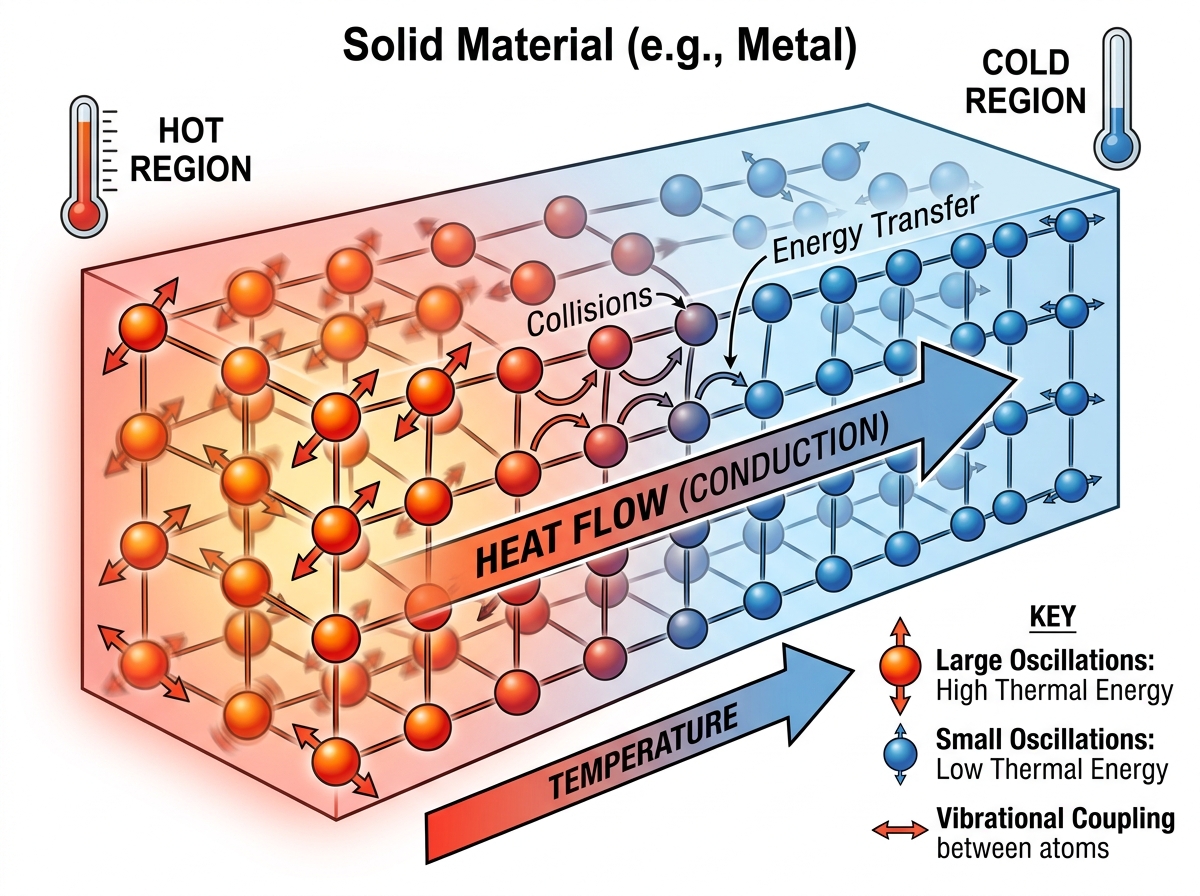
- Molecular Vibration: In solids, heat moves when molecules vibrate and bump into their neighbors. In insulation, we try to stop this by using materials with lots of tiny air pockets.
- Gas Conduction: Most insulation works by trapping air. However, air itself has a thermal conductivity of about 0.026 W/m·K at room temperature.
- Convective Loops: If the air pockets are too big, the air inside starts to circulate, creating “convective loops” that actually carry heat across the gap. This is why high-density mineral wool or EPS (Expanded Polystyrene) often performs better—the smaller the pockets, the less the air can move.
As you Catch the Heat: Insulation Tips for Winter, most materials actually become less effective as they get hotter. For example, air’s conductivity jumps from 0.026 W/m·K at 25°C to nearly 0.040 W/m·K at 225°C. This is why industrial insulation needs to be much more robust than what we use in our attics.
Comparing Common Insulation Materials and Their Lambda Values
Let’s get into the nitty-gritty of the insulation thermal conductivity comparison. When we look at standard building materials at a mean temperature of 10°C (50°F), we see a clear hierarchy.
- Mineral Wool: A classic choice. It usually sits right at 0.033 W/m·K. In independent tests, mineral wool is the “straight-A student”—its measured values almost always match what the manufacturer claims.
- Polyurethane (PUR): Often declared at 0.032 W/m·K. It’s a fantastic insulator, but research shows it can be a bit “optimistic.” Some PUR specimens measured as high as 0.035 W/m·K in real-world tests.
- Expanded Polystyrene (EPS): The white “beadboard” you see in packaging and construction. It usually clocks in around 0.036 W/m·K. It’s reliable and cost-effective.
- Extruded Polystyrene (XPS): Usually slightly better than EPS, ranging from 0.033 to 0.035 W/m·K. It’s more moisture-resistant, making it great for basements.
For those looking for technical data on insulation material thermal conductivity, it’s important to note that Flexible Elastomeric Foam (FEF) and Polyethylene Foam (PEF) are also common, especially for pipes, with lambda values hovering between 0.037 and 0.041 W/m·K.
High-Performance Materials in Insulation Thermal Conductivity Comparison
If you have a very tight space and a larger budget, you might look at the “super-insulators.” These materials use advanced engineering materials and conductivity values to achieve results that seem almost impossible.
Silica Aerogel is often called “frozen smoke” because it is 97% air but remains a solid. It has a thermal conductivity of roughly 0.014 to 0.018 W/m·K. This gives it an incredible R-value of about R-10 per inch.
Even more impressive are Vacuum Insulated Panels (VIP). By removing the air entirely, they eliminate gas conduction. These panels achieve a lambda value of 0.004 to 0.008 W/m·K, which translates to a mind-blowing R-30 to R-50 per inch. To put that in perspective, you would need about 10 inches of fiberglass to match just one inch of a VIP!
Natural and Sustainable Insulation Alternatives
We don’t always have to rely on plastics and chemicals. Natural materials are becoming huge players in the insulation thermal conductivity comparison.
- Wood Fiber: With a lambda of 0.038 W/m·K, it’s nearly as good as standard foams but much better for the environment.
- Cellulose: Made from recycled paper, it ranges from 0.035 to 0.040 W/m·K.
- Sheep’s Wool: Naturally fire-resistant and moisture-wicking, it sits at about 0.038 W/m·K.
- Hempcrete: While higher at 0.06 W/m·K, it provides excellent thermal mass, meaning it stores heat and releases it slowly.
If you’re following The Ultimate Guide to Insulating Your Home, these options are great for “breathable” wall systems that prevent mold.
Real-World Factors That Impact Thermal Performance
In a laboratory, insulation is kept dry, clean, and perfectly flat. In your home or an industrial plant, things get messy.
One of the biggest issues is Thermal Drift. Materials like PUR and PIR (Polyisocyanurate) use special “blowing agents” (gases) trapped inside their cells to achieve those low lambda values. Over time, these gases leak out and are replaced by regular air. This is why a PUR panel might start at R-7 per inch but drop to R-6 or lower after five years.
For those interested in Energy Saving Methods for Home Insulation, understanding moisture is also critical. If mineral wool gets wet, its thermal conductivity skyrockets because water is a much better conductor than air.
Why Declared Values Differ in Insulation Thermal Conductivity Comparison
Why do manufacturers sometimes claim a lambda of 0.032 when a lab measures 0.035? It isn’t always a case of “stretching the truth.”
- Measurement Uncertainty: Even the best equipment, like the Netzsch Taurus TLR 1000, has an expanded uncertainty of about 3.64%.
- The +10% Discrepancy: International standards (ISO 13787) actually allow for a 10% margin of error. However, research shows that some PEF materials can exceed their declared values by up to 16.4% at higher temperatures!
- Testing Methods: There is a big difference between the “ISO 11561 slicing method” (where they cut the insulation into thin sheets) and the “EN 13166 heat acceleration” method. Slicing can destroy the very closed-cells that make foams like PIR effective, leading to unfairly poor test results.
When evaluating building materials and thermal resistance, always look for independently verified data rather than just the marketing brochure.
The Importance of Pipe-Specific Testing (ISO 8497)
If you are insulating pipes—whether for a home HVAC system or industrial use—standard flat-slab tests don’t apply. This is a common mistake in insulation thermal conductivity comparison.
Pipes have a “cylindrical geometry,” which means heat flows radially (outward in all directions). This creates air gaps between the pipe and the insulation. These gaps allow for convection, which can significantly increase heat loss. ISO 8497 is the specific standard for pipe insulation testing, and it’s essential because it accounts for these real-world air gaps. If you’re looking for Attic Insulation Tips: Save Energy and Money, don’t forget the pipes running through that attic!
Practical Recommendations for Material Selection
Choosing the right insulation isn’t just about the lowest lambda value; it’s about the right tool for the job.
- Consider the Climate: In very cold zones, some materials like Polyiso actually perform worse as the temperature drops. XPS or mineral wool might be more consistent.
- Factor in Fuel Costs: Research in different climate zones has shown that the “optimal thickness” changes based on whether you burn coal or natural gas. If your fuel is expensive, it pays to invest in thicker, higher-quality insulation.
- Space Constraints: If you only have 3.5 inches of space in a wall, you need a high R-per-inch material like closed-cell spray foam or PIR. If you have an open attic, cheap blown-in cellulose at a greater thickness is often the smarter financial move.
- Moisture Risks: For basement walls or crawlspaces, avoid fiberglass or mineral wool. Use XPS or closed-cell foam that won’t lose its R-value if it gets damp.
Even small changes, like when you Save Energy with Insulated Window Treatments, rely on these same principles of stopping heat transfer through conductivity and convection.
Frequently Asked Questions about Thermal Conductivity
What is the difference between R-value and thermal conductivity?
Thermal conductivity (lambda) is a property of the material regardless of how thick it is. R-value is the “thermal resistance” of a specific product at a specific thickness. To get the R-value, you divide the thickness by the lambda value.
Why does the thermal conductivity of PUR and PIR change over time?
This is due to “thermal drift.” The high-performance gases trapped inside the foam cells slowly diffuse out, and atmospheric air moves in. Since air is a slightly better conductor than those gases, the insulation performance drops slightly over the first few years.
Which insulation material has the lowest measured thermal conductivity?
Vacuum Insulated Panels (VIPs) have the lowest, with lambda values as low as 0.004 W/m·K. Among traditional materials, Silica Aerogel is the winner at roughly 0.014 W/m·K.
Conclusion
Conducting an insulation thermal conductivity comparison is more than just a math exercise; it’s about technical validation and long-term energy optimization. Whether you are choosing mineral wool for its reliability or PUR for its high performance, understanding the “why” behind the numbers helps you avoid the 50% of materials that don’t live up to their labels.
At Financefyx, we believe that the best way to save money is to make informed, data-driven decisions about your home’s efficiency. By accounting for aging, moisture, and temperature fluctuations, you can ensure your insulation keeps you comfortable for decades to reach. Ready to cut your bills even further? Explore more energy saving tips on our pillar pages!
