
Material World: Choosing Your Insulation
Why a Thermal Insulation Materials Comparison Can Cut Your Energy Bills
A solid thermal insulation materials comparison can be the difference between a warm, affordable home and one that bleeds heat all winter. Here’s a quick overview of the most common options:
| Material | R-Value per inch | Thermal Conductivity (λ) | Recycled Content |
|---|---|---|---|
| Fiberglass (high-density batt) | ~3.8–4.3 | ~0.040 W/m·K | 40–60% |
| Mineral wool (rock/slag) | ~3.0–3.3 | ~0.033–0.040 W/m·K | ~75% |
| Cellulose (blown-in) | ~3.2–3.8 | ~0.040 W/m·K | 82–85% |
| EPS foam board | ~3.6–4.0 | ~0.033–0.038 W/m·K | Low |
| XPS foam board | ~5.0 | ~0.029–0.033 W/m·K | Low |
| Polyisocyanurate (polyiso) | ~5.6–6.5 | ~0.022–0.028 W/m·K | Low |
| Phenolic foam | ~7.5+ | ~0.020 W/m·K | Low |
| Aerogel | ~8–10 | ~0.013–0.020 W/m·K | Low |
| Sheep’s wool | ~3.5 | ~0.035–0.040 W/m·K | Natural/renewable |
| Cork | ~3.6–4.0 | ~0.037–0.043 W/m·K | Natural/renewable |
Your building envelope – the walls, roof, and floor – accounts for 50–60% of your home’s total heat gain and loss. That means the insulation you pick directly controls how much you spend heating your home every single winter.
But here’s what most people miss: there’s no single “best” insulation material. The right choice depends on your space, your budget, your climate, and what you’re trying to solve – whether that’s cold drafts, high bills, moisture, or noise.
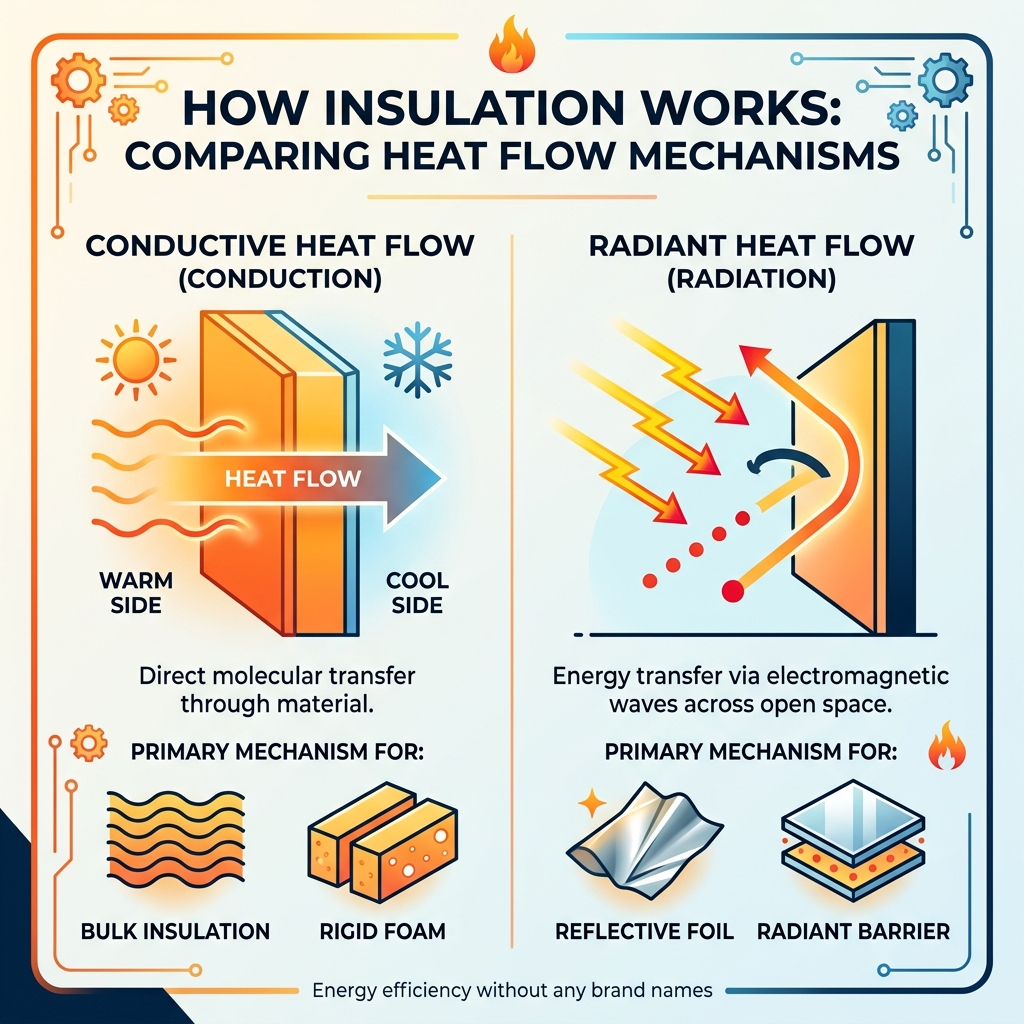
Heat moves through a building in three ways: conduction (through solid materials), convection (through air movement), and radiation (through space as heat energy). Different insulation types tackle these differently. Bulk fiber materials like fiberglass and mineral wool primarily block conductive heat flow. Rigid foam boards trap low-conductivity gases to slow conduction. Reflective foils and radiant barriers bounce radiant heat away.
This guide breaks down every major material so you can make a confident, informed decision.
The Core Contenders: A Thermal Insulation Materials Comparison
When we dive into a thermal insulation materials comparison, we have to look at more than just the price tag. We need to talk about R-value (thermal resistance) and Lambda (λ) values (thermal conductivity). In simple terms: R-value is how well a material resists heat flow (higher is better), while λ-value is how easily heat travels through it (lower is better).
For many of us, the decision starts with what’s available and what fits our building type. For example, if you are working on a timber-framed home, your needs for fire safety and breathability are very different from someone insulating a concrete basement. Research into A Comprehensive Comparison of Insulation Materials for Timber Building Systems shows that while mineral wools offer top-tier fire protection, natural materials like cork can provide unique environmental benefits.
Whether you are retrofitting an old attic or building a brand-new energy-efficient home, understanding these core materials is your first step. For a deeper dive into the basics, check out More info about insulating your home to see how these choices fit into your overall energy strategy.
Bulk Fibers and Loose-Fill Performance
Bulk fibers are the “traditional” choices we see in most homes. They usually come in three forms: batts (pre-cut blankets), rolls, or loose-fill (blown-in).
- Fiberglass: Made from fine glass fibers, this is the most common material in North America. High-density fiberglass batts for a 2×4-inch wall provide an R-15, which is a significant jump over the R-11 provided by standard low-density types. It typically contains 40% to 60% recycled glass.
- Mineral Wool: Often called rock wool or slag wool, this material is a beast. It’s made from basalt rock or industrial furnace slag and contains an average of 75% post-industrial recycled content. It’s denser than fiberglass, making it better at soundproofing and extremely resistant to fire.
- Cellulose: This is the heavyweight of the eco-friendly world, consisting of 82% to 85% recycled newsprint. It’s usually blown into attics or “dense-packed” into walls. One thing to watch for with loose-fill materials is settling. Over time, gravity can cause the material to pack down, potentially leaving a gap at the top of your walls.
If you are a DIY enthusiast, the fiberglass and mineral wool trade group instructions are a goldmine for ensuring you don’t leave performance-robbing gaps during installation.
Rigid Foam and High-Performance Thermal Insulation Materials Comparison
When space is tight or you need a higher R-value per inch, rigid foam boards are the way to go. These materials are essentially “trapped gas” in plastic form.
- Expanded Polystyrene (EPS): Think of a coffee cup. It’s the most affordable rigid foam but has the lowest R-value of the group.
- Extruded Polystyrene (XPS): Usually blue or pink, this is denser and more moisture-resistant than EPS, often used for foundation walls.
- Polyisocyanurate (Polyiso): This is the high-performance option for roofs and walls, offering one of the highest R-values per inch.
However, foam isn’t perfect. Many foams suffer from thermal drift. This happens because the special gases used to blow the foam (which have lower conductivity than air) slowly leak out over the first two years, being replaced by regular air. This causes the R-value to drop slightly before stabilizing. Additionally, health organizations like the EPA have raised health concerns on spray foam chemicals, particularly regarding isocyanates, which can cause respiratory issues if not handled by professionals with proper gear.
Beyond R-Value: Fire Safety, Acoustics, and Moisture
Choosing insulation isn’t just about staying warm; it’s about staying safe and quiet. In our thermal insulation materials comparison, we have to look at how these materials behave when things go wrong—like a fire or a pipe leak.
Fire Safety: Mineral wool is the undisputed king here. It is naturally non-combustible and can withstand temperatures over 2,000°F. Fiberglass is also non-combustible, though the “facings” (the paper or foil on the outside) can be flammable. On the other hand, materials like cellulose and foam require chemical flame retardants to meet building codes.
Moisture and Mold: This is where many homeowners get into trouble. Fiberglass and mineral wool are inorganic, meaning mold can’t eat them. However, if fiberglass gets wet, it loses its insulating power because the water fills the air pockets. Cellulose can absorb 5–20% of its weight in moisture, which can lead to mold if the wall doesn’t have a way to dry out. Properly managing this often requires learning How to seal air leaks to save energy to prevent humid air from getting trapped in your walls in the first place.

Acoustic Control and Soundproofing
If you live near a busy road or have a home theater, acoustic performance is probably higher on your list than thermal resistance. We measure this using STC (Sound Transmission Class) for blocking sound through walls and NRC (Noise Reduction Coefficient) for absorbing sound within a room.
- Mineral Wool and Fiberglass: These are excellent sound absorbers, achieving NRC ratings up to 1.00 (perfection). In a standard 2×4 wood-framed wall, they can reach an STC of 43.
- Cellulose: Because it is dense and fills every nook and cranny, blown-in cellulose is fantastic at stopping air-borne noise like talking or music.
- The Timber Challenge: Lightweight timber buildings often struggle with low-frequency noise (think the “thump” of footsteps). Research on the Sound insulation properties of building elements suggests that a combination of dense insulation and resilient channels is needed to tackle these vibrations.
For more tips on how to balance quiet with comfort, our guide on Insulating your home for energy efficiency covers the best of both worlds.
Eco-Friendly Alternatives and Sustainable Selection
We are seeing a massive shift toward “green” insulation. If you’re worried about the embodied carbon (the energy it took to make the product) or want a home that “breathes,” natural fibers are worth a look.
- Cork: This is a superstar in Portugal and other Mediterranean regions. It’s made from the bark of the cork oak tree, which regrows after harvesting. It’s actually carbon-negative because the trees suck up more CO2 than the manufacturing process emits. You can read more about the Environmental implications of agglomerated cork to see why it’s a top choice for sustainable builders.
- Hemp: Industrial hemp grows incredibly fast without the need for pesticides. Hemp batts are breathable, meaning they can manage moisture without rotting, making them great for historic timber renovations.
- Sheep’s Wool: Naturally fire-resistant and capable of absorbing harmful chemicals like formaldehyde from the air, wool is a premium choice. It offers about R-13 in a 2×4 wall.
These materials often cost more upfront, but they provide a healthy indoor environment that synthetic materials can’t always match. Check out our Energy-saving methods for home insulation for more ways to go green.
Natural Fibers in a Thermal Insulation Materials Comparison
When we put natural fibers into a thermal insulation materials comparison, we see some surprising stats. For example, recycled cotton (often made from denim scraps) consists of 85% recycled content and is much softer to handle than fiberglass—no itchy skin here!
- Straw Bales: An old-school method seeing a revival. While thick (taking up a lot of floor space), they provide incredible insulation and are a byproduct of grain farming.
- Wood Fiber: Popular in Europe, these boards are made from sawmill waste. They have a high “thermal mass,” meaning they can soak up heat during the day and release it at night, which is great for preventing summer overheating.
A Life cycle assessment of bio-based materials confirms that these options significantly lower the carbon footprint of your home. If you’re looking to stay warm using these natural wonders, don’t miss our Catch the heat with winter insulation tips.
Frequently Asked Questions about Insulation Materials
Which insulation material has the highest R-value per inch?
If space is your biggest constraint, Vacuum Insulation Panels (VIPs) win by a landslide, offering R-values up to R-50 or higher in specialized cases. However, they are incredibly expensive and can’t be cut to fit. For standard construction, Phenolic foam (up to R-7.5+ per inch) and Polyisocyanurate (R-6.5 per inch) are the top performers. Aerogel, often called “frozen smoke,” is also a top contender with a thermal conductivity as low as 0.013 W/m·K, but it remains a specialty material due to its high cost.
Is spray foam insulation safe for residential use?
Yes, but it requires professional installation. The main concern involves isocyanates, which are released during the mixing and spraying process. Occupants usually need to stay out of the house for 24 to 48 hours while the foam “cures” and finishes off-gassing. Once cured, it is generally considered safe, but there is an ongoing debate about the Flame retardants under fire used in these products.
How does moisture affect the performance of fiberglass?
Fiberglass works by trapping air. If it gets wet, water (which is a great conductor of heat) replaces that air. This causes the R-value to plummet. While fiberglass is inorganic and won’t rot, the dust trapped in it can provide food for mold if it stays damp. This is why a proper vapor barrier is essential in cold climates.
Conclusion: Making the Right Choice for Your Project
At the end of the day, your thermal insulation materials comparison should lead you to a choice that balances performance with your specific reality. If you have a tight budget and plenty of space, fiberglass or cellulose are hard to beat. If you are building a high-end, eco-friendly home, cork or wood fiber might be the soul of your project.
The best material in the world will fail if it’s installed poorly. Gaps, compression, and moisture can turn an R-30 attic into an R-10 nightmare. Focus on lifecycle costs—the money you save on bills over 20 years usually outweighs the extra few hundred dollars spent on better materials today.
We hope this guide helps you build a home that is quiet, safe, and incredibly efficient. For more ways to lower your footprint and your bills, Save energy with our comprehensive tips.
