
Power to the People: A Step-by-Step Guide to Building a Solar Power Plant
Why Building a Solar Power Plant Is One of the Smartest Energy Investments Right Now
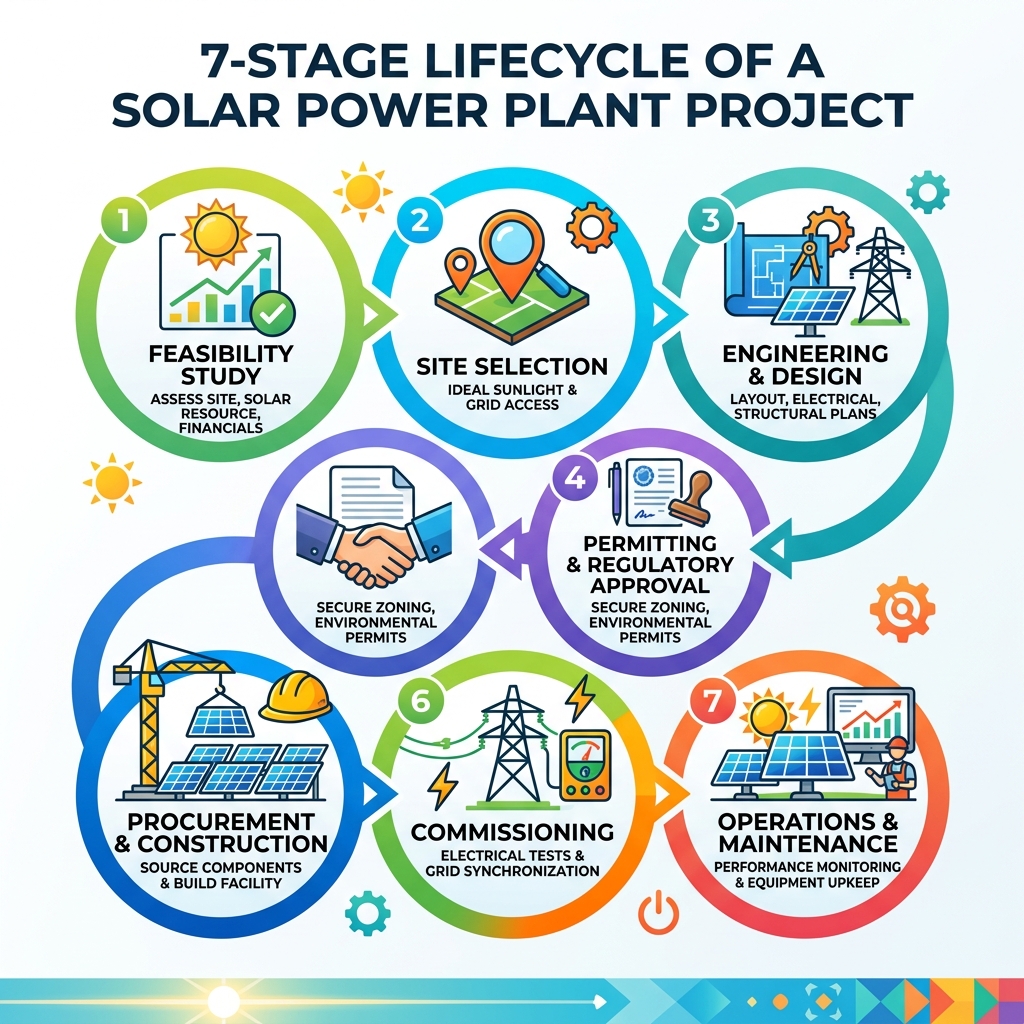
Building a solar power plant is a multi-stage process that takes a project from raw land to a fully operational electricity-generating facility. Here is a quick overview of the core steps:
- Feasibility study – Assess the site, solar resource, grid access, and financial viability
- Site selection – Identify land with strong solar irradiance, minimal shading, and proximity to transmission infrastructure
- Engineering and design – Create layout, civil, structural, and electrical plans
- Permitting and regulatory approval – Secure zoning, environmental, and interconnection permits
- Procurement and construction – Source components and build the physical plant
- Commissioning – Run electrical tests and synchronize with the grid
- Operations and maintenance – Monitor performance and maintain equipment over a 25-30 year lifespan
The numbers behind solar energy are hard to ignore. There are already more than 10,000 solar farms operating across the United States. A single megawatt of solar capacity can power around 200 homes. And research from the National Renewable Energy Laboratory shows that utility-scale solar covering just 0.6% of U.S. land could power the entire country.
Yet despite all that promise, roughly 80% of solar projects never make it to construction. The gap between a good idea and a working power plant is filled with complex decisions – land evaluation, regulatory hurdles, engineering design, grid interconnection, and financial modeling.
This guide walks you through every stage clearly and practically, whether you are exploring a small community solar project or a large utility-scale facility.
Essential building a solar power plant terms:
Understanding the Core Components of a Solar Facility
Before we start moving dirt, we need to understand the “anatomy” of a power plant. Unlike a backyard DIY project, a utility-scale facility is a complex machine where every part must work in perfect harmony.
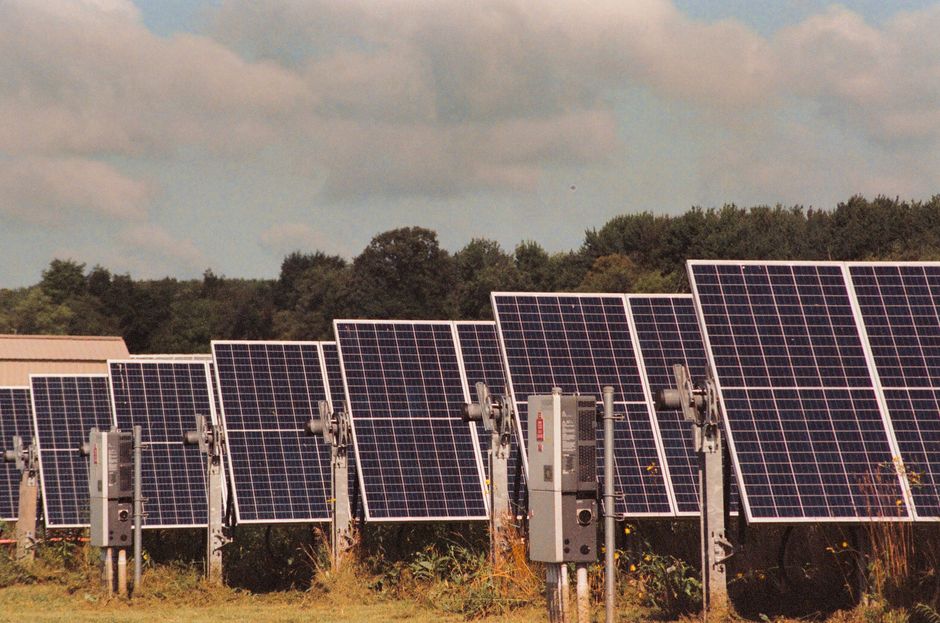
At the heart of the system are the photovoltaic (PV) modules. These panels are made of silicon cells that capture photons from the sun. Through the photovoltaic effect, these cells knock electrons loose, creating direct current (DC) electricity. But your toaster and the local power grid don’t run on DC; they need alternating current (AC).
This is where inverters come in. In large-scale projects, we often use central inverters that collect power from massive blocks of panels (usually 1 to 4 MW at a time). For more complex terrain, string inverters handle smaller groups of panels, offering more flexibility if one section gets shaded.
Other critical components include:
- Mounting Structures: The “bones” of the plant that hold panels at the perfect angle.
- Step-up Transformers: These boost the voltage from the inverters to the high levels required for the utility grid.
- Combiner Boxes: These gather the wiring from multiple strings of panels into a single circuit.
- Monitoring Sensors: High-tech “eyes” that track everything from solar irradiance to the temperature of individual components.
If you are just starting your journey into sun-power, our Solar Energy Guide For Beginners is a great place to brush up on the basics before diving into the deep end of industrial construction.
The Planning Phase: Feasibility and Site Selection
We’ve seen many enthusiastic developers jump straight into buying panels, only to realize later that their land is too steep or the local grid is “full.” A successful project starts with a rigorous feasibility study.
First, we look at solar irradiance. This isn’t just asking “is it sunny?” We use historical satellite data and on-site measurements to calculate exactly how many kilowatt-hours of energy we can expect per square meter. Next comes land suitability. Ideally, we want flat or gently sloping terrain. Why? Because heavy grading (moving earth) is expensive and can cause environmental headaches like erosion.
Site Selection Criteria:
- Grid Proximity: You could have the sunniest spot on Earth, but if you are 50 miles from the nearest high-voltage line, the cost of building a connection will kill your budget. Negotiating grid connection for a 1 MW plant typically costs around $30,000 just for the permissions.
- Land Requirements: For a utility-scale plant, we generally need 5 to 7 acres per megawatt (MW). If you are building a 10 MW plant, you’re looking at a 50-to-70-acre footprint.
- Environmental Screening: We have to check for protected species, wetlands, and historical artifacts. On public lands, an environmental review under the National Environmental Policy Act (NEPA) can take 3 to 5 years.
- Shading Analysis: Even a small row of trees or a distant hill can significantly drop your energy yield.
For inspiration on how massive these projects can get, look at Agua Caliente: How This Solar Giant Is Making Waves In The Desert, which proved that even the harshest environments can become energy goldmines. For a more detailed walkthrough of the preliminary steps, check out this guide on how to build a solar farm.
Designing and Engineering Your Solar Facility
Once the land is secured, the engineers take over. This phase is about precision. If your wiring is slightly too thin, you lose power to heat. If your panels are too close together, they shade each other.
The system layout must account for “inter-row shading.” As the sun moves, the shadow of one row can’t fall on the next. Engineers use specialized software like PVsyst or AutoCAD Electrical to simulate every hour of the year. Civil engineering is equally important—we need access roads that can support 40-ton trucks and drainage systems like culverts to ensure the plant doesn’t wash away in a summer storm.
Electrical design involves mapping out miles of DC cabling, selecting the right circuit breakers, and designing the substation where the plant connects to the grid. For those more interested in the residential side of things, our Home Solar Panel Installation Guide offers a simpler look at how these principles apply at a smaller scale. You can also find best practices for solar plant design to see how professionals optimize layouts.
Selecting Technology for Building a Solar Power Plant
Choosing the right “tech stack” is a balancing act between cost and performance.
- Monocrystalline Panels: These are the gold standard, offering efficiencies of 20% or higher and a long lifespan.
- Bifacial Modules: These clever panels capture sunlight on both sides—direct sun on the front and reflected light (albedo) on the back. This can boost output by up to 10-20% in the right conditions.
- Fixed-Tilt vs. Trackers: Fixed racks are cheaper and require less maintenance. However, single-axis trackers follow the sun from east to west, significantly increasing the energy yield, though they add to the upfront cost.
- Battery Storage: Integrating energy storage allows you to sell power when the sun goes down and prices go up. Check out our list of the Best Home Batteries For Energy Storage to see the tech currently leading the market.
The Construction Process: Building a Solar Power Plant Step-by-Step
Now the fun begins! Physical construction usually takes a few months for a 1 MW plant, though the “soft” prep work takes much longer.
1. Site Preparation and Grading We start by clearing vegetation and debris. We don’t want to strip the land bare if we don’t have to; “low-impact” solar keeps as much natural grass as possible to prevent dust. We then build the access roads and drainage.
2. Pile Driving and Racking Instead of pouring massive concrete foundations for every panel, we use pile drivers to push galvanized steel posts deep into the ground. Once the posts are in, we bolt on the racking or tracking systems.
3. Module Mounting This is a high-speed assembly line. A well-oiled team of four people can often install 250 panels per day. Each panel is bolted down and checked for alignment.
4. Electrical Integration Electricians wire the panels into “strings,” connect them to combiner boxes, and run the heavy DC cables to the inverters. From there, the AC power goes to the transformers and finally to the grid.
For a deeper dive into industrial-scale execution, we recommend this professional guide for industrial solar projects. Building these facilities is a massive part of our transition to Eco-Friendly Energy Solutions.
Key Stages in Building a Solar Power Plant
Construction doesn’t end when the last bolt is tightened. We go through a rigorous “commissioning” process:
- Cold Commissioning: Testing every wire and connection while the system is “off” to ensure there are no shorts or polarity issues.
- Hot Commissioning: The first time we “energize” the system. We monitor the inverters and transformers as they begin to handle live power.
- Grid Synchronization: Working with the utility company to ensure our power matches the grid’s frequency and voltage perfectly.
- Performance Ratio (PR) Testing: A final exam where we verify the plant is producing as much energy as the engineers promised.
Financial Breakdown: Costs and Return on Investment
Let’s talk money. Building a solar power plant is capital-intensive, but the “fuel” is free for the next 30 years.
As of 2025, the cost for a 1 MW solar plant typically ranges from $800,000 to $1.5 million. We break these down into “Hard Costs” (the stuff you can touch) and “Soft Costs” (the paperwork and people).
| Category | Component | Percentage of Total Cost |
|---|---|---|
| Hard Costs | Solar Panels | 12% |
| Inverters | 10% | |
| Racking & Mounting | 3% | |
| Wiring & Electrical | 9% | |
| Soft Costs | Labor | 7% |
| Permitting & Interconnection | 8% | |
| Sales, Marketing & Overhead | 29% | |
| Profit | 11% | |
| Logistics | Supply Chain & Sourcing | 9% |
The Silver Lining: Incentives In the U.S., the Investment Tax Credit (ITC) is a game-changer, often covering 30% or more of the total project cost. When you factor in the Levelized Cost of Energy (LCOE)—which measures the total cost of building and operating the plant over its life divided by the energy it produces—solar is now often cheaper than coal or gas.
Most large plants secure a Power Purchase Agreement (PPA), a long-term contract where a utility or a large company (like Google or Amazon) agrees to buy the electricity at a fixed price for 15-25 years. This makes the project “bankable” for lenders. You can learn more about Solar Panels Cost And Savings and explore Renewable Energy Incentives For Homeowners to see how these financial models work.
Operations, Maintenance, and Regulatory Compliance
A solar plant isn’t “set it and forget it.” To protect your 30-year investment, you need a solid Operations and Maintenance (O&M) plan.
Preventative Maintenance Includes:
- Panel Cleaning: In dusty areas, dirt can cut your output by 25%. Regular cleaning with water and soft brushes is essential.
- Thermal Imaging: We use drones with infrared cameras to spot “hot spots” on panels, which indicate a failing cell before it becomes a fire hazard.
- Vegetation Management: If the grass grows too high, it shades the panels. Many plants now use “solar sheep” to graze the grass—a win-win for the farmer and the plant owner!
- Inverter Servicing: Inverters are the most likely component to fail, so they need regular filter changes and cooling system checks.
On the regulatory side, you must stay compliant with your Interconnection Agreement. If your plant starts “leaking” electrical noise into the grid, the utility can shut you down. You also need to maintain your Zoning Permits and follow through on any wildlife mitigation promises (like maintaining “pollinator-friendly” habitats under the panels).
For those running smaller, independent setups, our Off-Grid Solar Panel Tips offer great advice on maintaining system health. And if you are curious about the costs of smaller commercial systems, see The 2025 Guide To 5kw Solar Panel System Costs.
Frequently Asked Questions about Solar Power Plants
How much land is required for a 1 MW solar power plant?
Utility-scale projects typically require between 5 and 7 acres per megawatt, though high-efficiency bifacial panels and tracking technology can sometimes reduce this footprint to as little as 4 acres. If the land is uneven or has protected areas, you may need more “buffer” space.
What is the average cost of building a solar power plant in 2025?
A 1 MW facility generally costs between $800,000 and $1.5 million. Ground-mounted arrays usually fall in the range of $0.82 to $1.36 per watt. Factors like local labor rates, the distance to the nearest substation, and the choice of single-axis tracking technology will drive the price toward the higher end of that range.
How long does the permitting and construction process take?
While the physical “boots on the ground” construction might take only 6 to 12 months, the entire development lifecycle—including siting, environmental reviews, and grid permitting—often takes 3 to 5 years. Patience is a virtue in the renewable energy business!
Conclusion
At Financefyx, we believe that the transition to clean energy is the greatest economic opportunity of our generation. Building a solar power plant is no small feat—it requires a marriage of high-stakes finance, precision engineering, and environmental stewardship. But with 80% of projects failing due to poor planning, the value of doing your homework cannot be overstated.
From the initial feasibility study to the final grid synchronization, every step you take brings us closer to a sustainable, energy-independent future. Whether you are a landowner looking to lease your back forty or an investor eyeing a 100 MW facility, the sun is ready to work for you.
Explore more Renewable Energy Category solutions on our site to stay ahead of the curve in the green revolution.
