
Is Cold Air Sneaking In Through Your uPVC Windows?
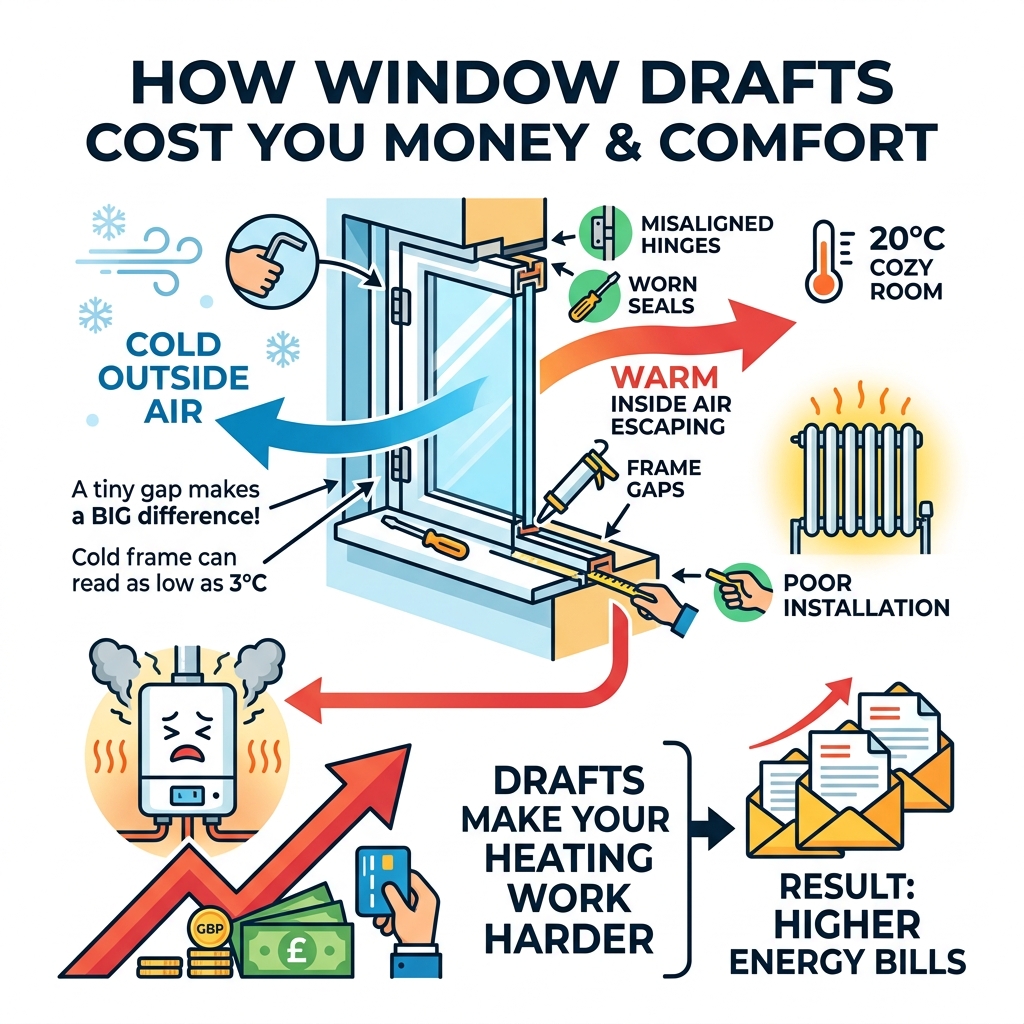
Drafty uPVC windows are one of the most common reasons homes feel cold even when the heating is running full blast. The good news? Most drafts can be fixed — often without calling a professional.
Here are the most common causes and quick fixes:
- Worn or damaged seals – Replace rubber gaskets or apply weatherstripping
- Misaligned hinges – Adjust with an Allen key to pull the sash tighter against the frame
- Dropped window sash – Realign using friction stay adjustment screws
- Poor installation or frame gaps – Apply silicone sealant around the frame edges
- Blown double glazing – Look for misting between panes; this needs professional attention
Even small drafts matter. A cold window frame can read as low as 3°C when your room is at 20°C — that’s a massive amount of heat escaping through a gap you might barely notice.
uPVC windows are built to last 20-30 years and are known for strong insulation. But over time, seals perish, hinges shift, and frames can move slightly. The result? Cold air finds its way in, your heating works harder, and your energy bills climb.
This guide walks you through exactly how to find the draft, fix it yourself where possible, and know when it’s time to call in help.
Understanding Why You Have Drafty uPVC Windows
To fix the problem, we first need to understand the material we’re working with. uPVC stands for unplasticised polyvinyl chloride. Unlike standard PVC, which is flexible, uPVC is rigid and durable, making it an industry favorite for window frames. It is prized for its low thermal conductivity, meaning it doesn’t transfer heat easily from the inside of your home to the cold outdoors.
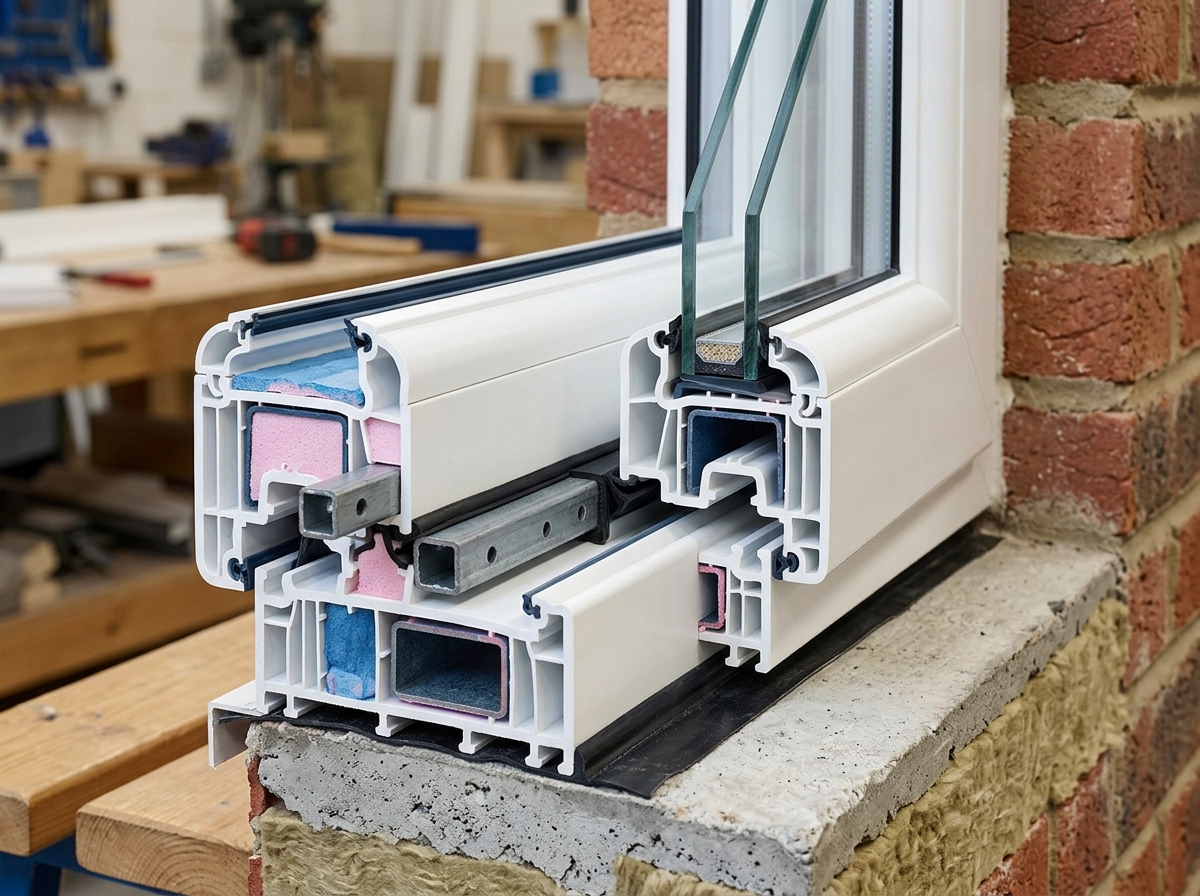
However, even the best materials aren’t immune to the laws of physics. One of the primary reasons we see drafty uPVC windows is the natural cycle of expansion and contraction. While uPVC is more stable than wood, it still reacts to temperature fluctuations. Over a decade or two, this repeated movement can cause the frame to shift or the sash (the part that opens) to “drop,” creating tiny gaps where air can whistle through.
Another factor is thermal transmittance, often measured as a “Uw value.” High-quality modern uPVC windows can achieve a Uw as low as 0.79 W/(m²K), but older installations often have much higher values, meaning they naturally lose more heat. If you want to dive deeper into how your home’s overall envelope works, check out The Ultimate Guide to Insulating Your Home.
As windows age, the rubber gaskets—those black strips that create the airtight seal—can become brittle or “perish.” When these seals lose their elasticity, they no longer compress fully when the window is closed, leaving your home vulnerable to the “chill.”
How to Pinpoint the Source of the Leak
Before you grab your toolbox, you need to play detective. Sometimes a draft feels like it’s coming from the glass, but it’s actually entering through the frame or the point where the window meets the wall.
A great first step is a visual inspection. Look for:
- Light gaps: Can you see daylight between the sash and the frame?
- Condensation: If you see moisture between the two panes of glass, the seal of the unit itself has failed (this is called “blown” glazing).
- Debris: Sometimes dirt or grit in the track prevents the window from closing flush.
If a visual check doesn’t reveal the culprit, it’s time to get proactive. Learning How to Seal Air Leaks to Save Energy is a vital skill for any homeowner. We recommend using two classic DIY tests to find exactly where those drafty uPVC windows are letting you down.
| Method | How to Do It | What to Look For |
|---|---|---|
| The Candle Test | Hold a lit candle near the window edges on a windy day. | If the flame flickers or smoke moves horizontally, you’ve found a leak. |
| The Paper Test | Place a sheet of paper across the frame and close the window. | Try to pull the paper out. If it slides out easily, the seal isn’t tight enough. |
Using the Candle Test for Drafty uPVC Windows
The candle test is best performed on a breezy day when the pressure difference between inside and outside is at its highest. Slowly move the candle around the entire perimeter of the window frame. Pay close attention to the corners and the hinged side. If you see the flame dance or flicker, it indicates an active air current. This is a clear sign that the external air is forcing its way past your seals.
Identifying Gaps with the Paper Test
The paper test is the gold standard for checking seal compression. Open your window, place a piece of standard printer paper over the rubber gasket, and lock the window shut. If the paper stays firmly in place when you tug it, your compression is good. If it pulls out with no resistance, the sash isn’t pulling tight against the frame. This usually points to a problem with the friction stays (the hinges) or the locking points (the cams).
DIY Solutions to Stop the Chill
Once you’ve identified the leak, many drafty uPVC windows can be rescued with a few simple adjustments. You don’t always need to replace the whole unit; sometimes, a quarter-turn of a screw is all it takes to restore your home’s comfort. For more ideas on keeping the warmth in, you might also consider how to Save Energy with Insulated Window Treatments.
Adjusting Hinges and Locking Cams
Most modern uPVC windows feature “eccentric cams” or “mushrooms.” These are the small metal parts on the side of the sash that move when you turn the handle. If you look closely, these cams are often slightly off-center. By using an Allen key to rotate them, you can increase the pressure the window applies to the seal when locked.
- Winter Setting: Turn the cam so the thickest part is facing the rubber seal. This pulls the window tighter for maximum insulation.
- Summer Setting: Turn it back to allow for a slightly looser fit and easier operation.
If the draft is coming from the hinged side, the hinges themselves might need a tweak. Over time, the weight of the glass can cause the sash to drop slightly. You can usually find adjustment screws on the friction stays. Small, incremental turns are key here—adjust a little, then test the window.
Replacing Seals on Drafty uPVC Windows
If your rubber gaskets look flat, cracked, or are falling out of their tracks, they need replacing. You can buy replacement “bubble” or “flipper” seals relatively cheaply.
- Remove the old seal: Pull it out of the groove in the frame.
- Clean the groove: Use a damp cloth to remove years of built-up grime. A clean surface is essential for a good fit.
- Press in the new seal: Start from the top center and work your way around. Make sure not to stretch the rubber, as it will eventually shrink back and leave gaps in the corners.
For gaps between the window frame and the brickwork, a fresh bead of high-quality silicone sealant can work wonders. This prevents air from bypassing the window unit entirely.
When to Seek Professional Help or Replacement
While we love a good DIY fix, some problems with drafty uPVC windows require an expert touch. uPVC windows typically have a lifespan of 20 to 30 years. If your windows are approaching the three-decade mark, the material itself may have become brittle, or the internal hardware may be beyond simple adjustment.
You should call a professional if:
- Misted Panes: If moisture is trapped inside the double glazing, the unit is “blown.” This significantly reduces its insulating properties and can only be fixed by replacing the glass unit.
- Structural Warping: If the frame itself has twisted or bowed, no amount of hinge adjustment will make it airtight.
- Hardware Failure: If the handle spins or the locking mechanism is jammed, internal parts may have snapped.
- Dropped Sash: While minor drops can be DIY-adjusted, a significant drop that causes the window to catch on the frame often requires a professional to “toe and heel” the glass—a process of repositioning internal packers to square up the frame.
If you’re unsure about the state of your windows, performing A Comprehensive Home Energy Audit Checklist can help you decide if it’s time for an upgrade. Sometimes, Remodeling Your Home for Energy Efficiency is more cost-effective in the long run than constant repairs.
The Benefits of Modern Energy-Efficient Windows
If your drafty uPVC windows are beyond repair, upgrading to modern replacements offers a massive return on investment. Technology has moved on significantly since the early days of double glazing.
Modern uPVC windows offer:
- Superior Insulation: Upgrading from old windows can increase your home’s energy rating by up to 30%.
- Soundproofing: Quality uPVC windows can provide sound insulation of around 36dB, turning a noisy street into a quiet sanctuary.
- Advanced Glazing: Many new units use “warm edge spacers” and argon gas filling between panes to achieve thermal transmittance as low as Uw = 0.79 W/(m²K).
- Eco-Friendly Materials: New profiles are often 100% lead-free and fully recyclable, supporting Smart Home Designs for Energy Efficiency.
- Security: Modern windows come with multi-point locking systems and F40 security ratings, making them much harder to breach than older models.
Frequently Asked Questions about Window Drafts
Why is my uPVC window drafty on the hinge side?
This is often caused by a misaligned hinge or a “bowed” frame. If the frame was installed too tightly or without enough fixings, it can curve away from the sash. Another common culprit is a missing “closing wedge”—a small plastic block that helps pull the hinged side of the window tight against the seal as it closes.
Can I fix a dropped window sash myself?
Yes, for minor issues. Most uPVC windows have friction stays with small adjustment screws. By tightening or loosening these, you can often realign the sash. However, if the window is physically hitting the frame when you try to close it, you likely need a professional to “toe and heel” the glass to restore the window’s square shape.
How often should uPVC window seals be replaced?
Rubber gaskets generally last about 10 to 15 years. However, if your windows face direct sunlight or harsh coastal weather, they may degrade faster. If the rubber feels hard or doesn’t “bounce back” when pressed, it’s time for a change.
Conclusion
At Financefyx, we believe that a comfortable home shouldn’t cost the earth. Dealing with drafty uPVC windows is one of the most effective ways to lower your energy bills and stop that annoying winter chill. Whether it’s a simple five-minute Allen key adjustment or a full seal replacement, taking action now will pay off in both comfort and savings.
Regular maintenance is the key to longevity. Keep your tracks clean, oil your hinges annually, and check your seals before the cold weather hits. For more comprehensive advice on keeping your home cozy, don’t forget to revisit The Ultimate Guide to Insulating Your Home. Stay warm!
