
The Best Insulation for Photovoltaics to Keep Your System Running Smoothly
Why Choosing the best insulation for photovoltaics Matters More Than You Think
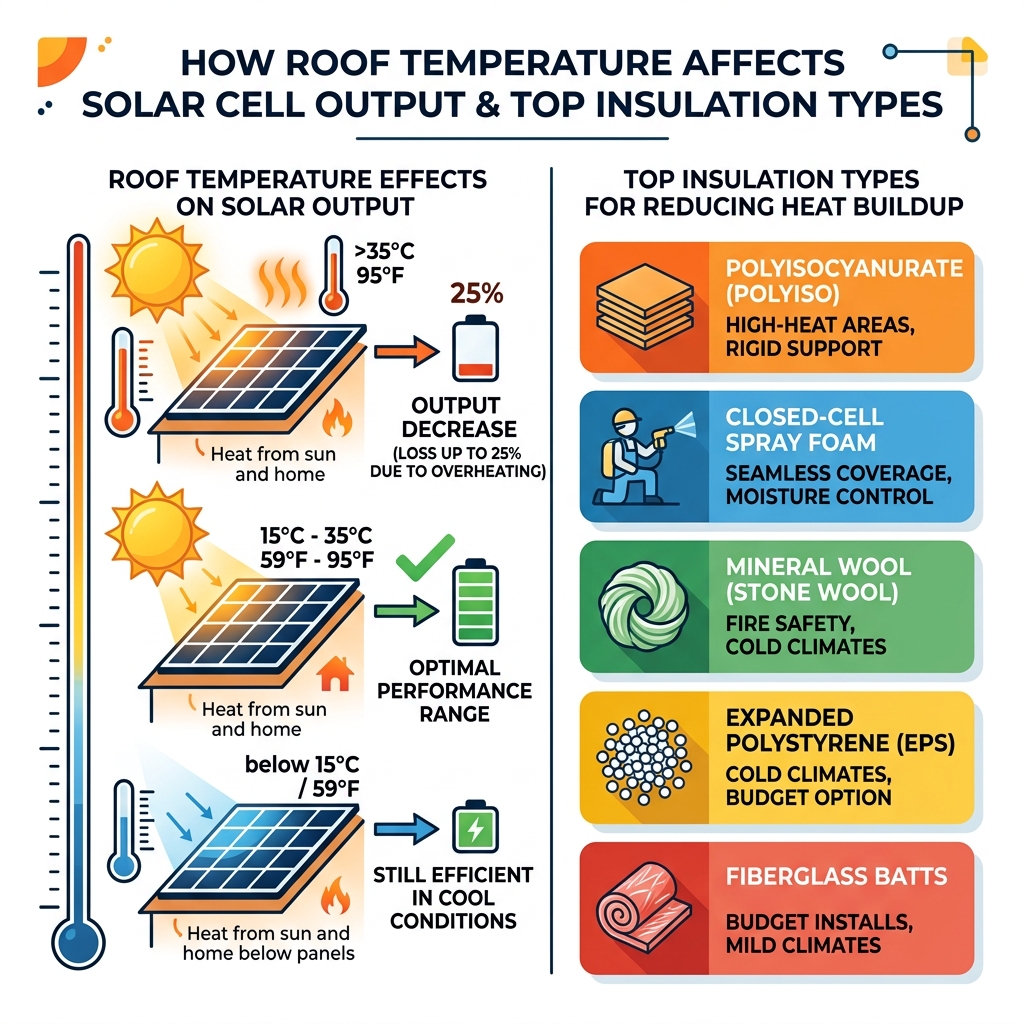
The best insulation for photovoltaics depends on your climate, roof type, and budget — but here are the top options at a glance:
| Insulation Type | R-Value per Inch | Best For | Fire Rating |
|---|---|---|---|
| Polyisocyanurate (Polyiso) | 6.5-7.0 | High-heat areas, rigid support | Class A |
| Closed-cell spray foam | 6.0-7.0 | Seamless coverage, moisture control | Class A |
| Mineral wool (stone wool) | 3.7-4.2 | Fire safety, cold climates | Non-combustible |
| Expanded Polystyrene (EPS) | 3.8-4.4 | Cold climates, polyiso pairing | Class A |
| Fiberglass batts | 3.2-3.8 | Budget installs, mild climates | Class A |
Most homeowners don’t realize that roof insulation directly affects how much electricity their solar panels produce.
Solar panels work best in a specific temperature range — roughly 59°F to 95°F. Above that, they lose efficiency. In fact, panels can shed up to 25% of their output simply from overheating caused by poor thermal management beneath them.
Poor insulation also means your home keeps pulling energy for heating and cooling — which cancels out a big chunk of what your solar system generates.
The good news? The right insulation under your panels fixes both problems at once. It stabilizes roof temperatures, reduces heat transfer into your home, and can actually accelerate your solar payback period by 1 to 3 years.
This guide walks you through every major insulation option, what the building science says about each one, and how to choose based on where you live.
Why Proper Roof Insulation is Critical for Solar Performance
When we think about solar panels, we usually look up at the sky. But the magic—and the potential for failure—often happens right beneath the panels. Proper insulation isn’t just about keeping your living room cozy; it’s a functional component of your renewable energy strategy.
Overheating Risks and Efficiency Loss
Solar panels are a bit like athletes: they perform best when they aren’t sweltering. For every degree the temperature rises above their optimal range, they lose about 0.5% efficiency. If your roof is poorly insulated, it absorbs solar radiation and radiates that heat back toward the underside of the panels. This “thermal sandwich” can lead to a staggering 25% efficiency loss. By choosing the best insulation for photovoltaics, we create a thermal break that prevents the roof deck from becoming a giant radiator.
Thermal Stress and System Longevity
Heat doesn’t just slow down electrons; it physically degrades your equipment. Constant cycles of extreme heat and cooling cause “thermal stress,” which can lead to micro-cracks in solar cells and wear out the seals on your mounting hardware. A stable roof temperature, maintained by high-quality insulation, ensures that your solar panels cost and savings stay balanced in your favor over the 25-plus year lifespan of the system.
Fire Safety and Global Trends
As we move toward a world where renewables are expected to account for 85% of the power mix by 2050, building codes are getting stricter. According to a McKinsey report on renewable energy growth, the sheer volume of solar installations is skyrocketing. This means fire safety is more critical than ever. Solar fires, while rare, often start with electrical malfunctions. If your insulation is combustible, a small spark can turn into a roof-wide blaze. Non-combustible insulation acts as a shield, protecting your home’s structure.
Top Materials: Finding the Best Insulation for Photovoltaics
Not all insulation is created equal when it comes to supporting a heavy, heat-generating solar array. We need to look at three key factors: R-value (thermal resistance), fire rating, and compression strength (how well it holds up under the weight of the racks).
| Material | Compression Strength | Moisture Resistance | Ideal Use Case |
|---|---|---|---|
| Polyiso | High | Moderate | Rigid exterior “warm roofs” |
| Spray Foam | Medium-High | Excellent (Closed-cell) | Sealing air leaks & odd shapes |
| Mineral Wool | Medium | High | Maximum fire safety |
| EPS | Medium | High | Cold climate “buffer” layers |
| Fiberglass | Low | Low | Interior attic retrofits |
When insulating your home for energy efficiency, we have to consider how these materials interact with the solar racking hardware.
Polyiso: The Best Insulation for Photovoltaics in High-Heat Areas
If there were a “gold medal” for solar-ready insulation, Polyisocyanurate (Polyiso) would likely take it. It offers the highest R-value per inch (6.5 to 7.0), meaning you get more protection with less thickness.
Why is it the best insulation for photovoltaics in sunny spots?
- Rigid Structure: It doesn’t squish. When you bolt solar racks through the roof, you need a material that maintains its shape.
- Temperature Stability: Unlike some foams that lose R-value as it gets colder or hotter, modern polyiso (like the GAF technical data on polyiso R-values suggests) is engineered for stability across a wide range of mean temperatures.
- Class A Fire Rating: It is naturally fire-resistant, providing an extra layer of security.
Mineral Wool: The Best Insulation for Photovoltaics and Fire Safety
Mineral wool (often called stone wool) is made from actual volcanic rock. It’s essentially “un-burnable.” In the Rockwool solar panel fire safety guide, experts highlight that this material can withstand temperatures over 2,000°F.
Beyond fire safety, mineral wool is:
- Vapor Permeable: It lets your roof “breathe,” which prevents moisture from getting trapped and causing rot.
- Rodent Resistant: Critters like squirrels (who love to nest under solar panels) find mineral wool much less appetizing than plastic-based foams.
- Acoustic Barrier: It’s great at blocking the sound of rain or wind vibrating against your solar racks.
Climate-Specific R-Values and Installation Best Practices
Where you live dictates how you should insulate. A roof in Arizona has very different needs than one in Minnesota.
Understanding Climate Zones
The Department of Energy breaks the U.S. into climate zones. In southern regions (Zones 1-3), we typically aim for R-30 to R-38. In the moderate middle (Zones 4-5), R-38 to R-49 is the goal. However, if you are in the frigid North (Zone 6 and above), you need R-49 to R-60 to keep your solar system efficient. These attic insulation tips to save energy and money can help you determine your specific needs.
The “Warm Roof” vs. “Cold Roof” Debate
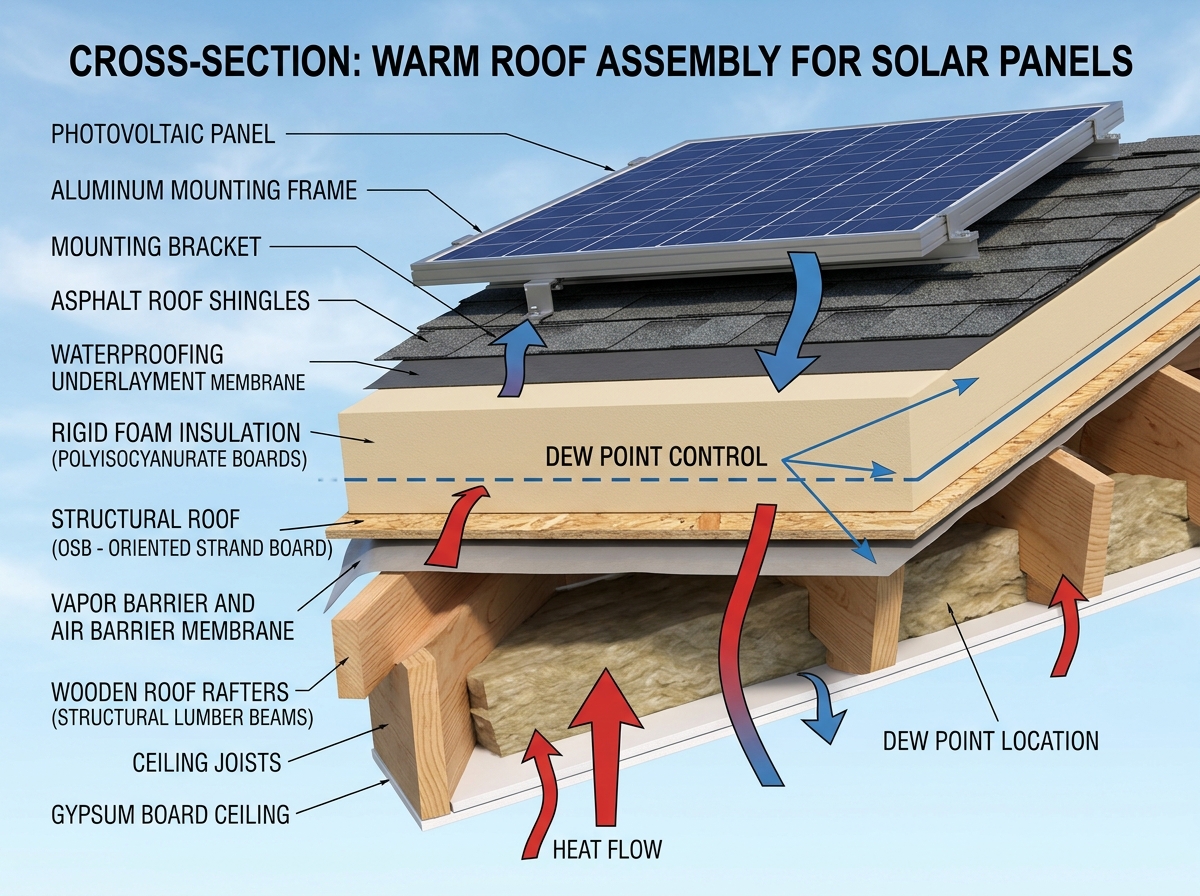
One of the most effective ways to prep for solar is the exterior rigid foam method, often called a “warm roof.” Instead of putting insulation inside the attic, we layer it on top of the roof deck.
- Exterior Placement: This prevents “thermal bridging,” where heat travels through the wooden rafters and bypasses your insulation.
- Dew Point Control: In cold climates like Zone 6, building science experts recommend that at least half of your total R-value be on the exterior. This prevents condensation from forming under your roof sheathing—a common mistake that leads to mold.
For a deep dive into how to layer these materials, the Building Science insights on over-roofing provide excellent diagrams on retrofitting older homes for maximum thermal performance.
Structural Support and Mounting Hardware Compatibility
You can’t just throw solar panels on top of squishy foam and hope for the best. The solar racks need to be anchored into the structural members of your home (the rafters or trusses).
Compression and Nailbase Panels
When using rigid foam boards like Polyiso or EPS, we recommend using nailbase panels. These are essentially sandwiches of rigid foam with a layer of OSB or plywood on top. This provides a solid “deck” for the solar installers to walk on and a firm foundation for the racking system.
Staggered Joints and Sealing
To get the most out of the best insulation for photovoltaics, always install rigid boards in at least two layers with staggered joints. If the seams line up, heat will leak through the gaps like water through a sieve. We also suggest sealing all seams with high-quality flashing tape to create an airtight barrier.
Airflow Gaps: The Secret to Efficiency
Even with the best insulation, you need airflow. We recommend maintaining a 1-2 inch gap between the solar panels and the roof surface. This “chimney effect” allows cool air to flow under the panels, carrying away excess heat and boosting your energy output by an additional 5-10%. Our home solar panel installation guide covers these spacing requirements in more detail.
For new constructions, consider Structural Insulated Panels (SIPs) for solar. These pre-fabricated panels combine the structure and insulation into one unit, making solar mounting much simpler and more robust.
Frequently Asked Questions about Solar Insulation
How does insulation prevent solar panel overheating?
It’s all about the “thermal break.” Without insulation, your roof deck can reach temperatures of 160°F or higher. This heat radiates upward, baking the solar cells from below. Quality insulation keeps the roof deck significantly cooler. When combined with a proper airflow gap, the panels can stay within their optimal temperature range, preventing that dreaded 25% efficiency drop.
Can I install insulation after my solar panels are already mounted?
It’s possible, but it’s a bit like trying to put on a t-shirt after you’ve already put on a winter coat.
- Interior Retrofit: If you can’t remove the panels, your best bet is to insulate from the inside. You can use closed-cell spray foam applied to the underside of the roof deck or blow in loose-fill cellulose into the attic floor.
- The Challenge: You won’t get the benefits of an exterior “warm roof,” and you’ll have to be careful not to block necessary ventilation. Check out the ultimate guide to insulating your home for more retrofit strategies.
What is the ROI of upgrading insulation before going solar?
Upgrading your insulation is often the single best way to improve your solar ROI.
- Lower Demand: Better insulation means your AC runs less. If your home uses 20% less energy, you can buy a smaller, cheaper solar system to cover 100% of your needs.
- Payback Acceleration: Most homeowners see their solar system pay for itself 1-3 years faster when they pair it with an insulation upgrade.
- Sealing the Deal: Before you insulate, always how to seal air leaks to save energy. Air leaks can account for up to 30% of your heat loss, making even the best insulation less effective.
Conclusion
Finding the best insulation for photovoltaics isn’t just a technical chore—it’s an investment in the “smoothness” of your energy future. By stabilizing roof temperatures with materials like Polyiso or Mineral Wool, we ensure that our solar panels live their longest, most productive lives.
At Financefyx, we believe that a truly sustainable home is a balanced one. It’s not enough to just generate green energy; we have to be smart about how we keep it. Whether you are building a new solar-ready home or retrofitting a classic cabin, prioritizing your roof’s thermal envelope is the key to energy independence.
Ready to dive deeper into clean energy? Explore more in our Renewable Energy Category to find guides on battery storage, system costs, and the latest in green building science.
