
The true price of powering your home with sunshine
What Does It Actually Cost to Have Solar Panels Installed?
The average cost to have solar panels installed in the U.S. sits at roughly $25,000 to $30,500 before any incentives — but what you actually pay depends heavily on where you live, how much power you use, and the equipment you choose. According to data from the Solar Energy Industries Association (SEIA), costs have continued to stabilize as adoption grows.
Here’s a quick snapshot to answer the most common questions upfront:
| System Size | Estimated Cost (Before Incentives) | Cost Per Watt |
|---|---|---|
| 5 kW | ~$13,962 | ~$2.79/W |
| 10 kW | ~$27,924 | ~$2.58-$2.84/W |
| 12 kW | ~$30,505 | ~$2.58/W |
| 15 kW | ~$36,600 | ~$2.44/W |
A few things worth knowing right away:
- The national average cost per watt is around $2.58-$2.84 for a typical residential system
- Solar costs have fallen more than 45% since 2010 (from ~$40,000 to ~$25,000 today)
- Most homeowners can expect to save $37,000 to $154,000 over 25 years
- The typical payback period is around 8 to 10 years
So if sticker shock has been holding you back, the real numbers may surprise you — and the long-term math often works strongly in your favor.
This guide breaks down everything you need to know: what drives the price up or down, what installers don’t always tell you upfront, and how to figure out what your home’s solar investment would actually look like.
Average cost to have solar panels installed vocab explained:
Breaking Down the average cost to have solar panels installed in 2026
As we move through 2026, we are seeing a fascinating stabilization in the solar market. While the massive price drops of the 2010s (where costs plummeted by 70%) have leveled off, the technology has become more efficient than ever. Currently, the national average cost to have solar panels installed is approximately $2.58 per watt. For a typical 12 kW system, this brings the gross price to about $30,505.
However, looking at the “gross cost” is a bit like looking at the sticker price of a car without considering the trade-in value. The “net cost”—what you actually write the check for or finance—is often significantly lower. Even as federal tax credits evolve, state-level incentives and the decreasing cost of hardware keep the barrier to entry manageable.
In 2026, the trend is moving toward “smarter” systems. Homeowners aren’t just buying panels; they are buying energy management. This means while the base price for panels remains steady, we are seeing more people opt for integrated systems that include high-efficiency inverters and battery readiness, which can shift the total investment range.
System Size and Equipment: How Scale Impacts Your Investment
Size matters, but perhaps not in the way you’d think. In the solar world, there is a “bulk discount” effect. The larger the system you install, the lower your cost per watt becomes. This is because many of the “soft costs”—like permitting, design, and getting a crew to your roof—are relatively fixed whether you install 10 panels or 20.
Estimating the average cost to have solar panels installed by System Size
When we look at the average cost to have solar panels installed across different home sizes, the economies of scale become clear. A smaller 5kW system might cost more per watt because the overhead is spread over fewer panels. Conversely, a 15kW system often enjoys the lowest per-watt pricing.
| System Size | Gross Cost Range (Before Incentives) | Avg. Cost Per Watt |
|---|---|---|
| 5 kW | $12,600 – $16,000 | $2.84 – $3.20 |
| 10 kW | $25,000 – $29,000 | $2.58 – $2.90 |
| 12 kW | $28,000 – $33,000 | $2.45 – $2.75 |
| 15 kW | $34,000 – $39,000 | $2.30 – $2.60 |
For those with smaller homes or lower energy needs, The 2025 guide to 5kw solar panel system costs provides a deep dive into how these entry-level systems are priced.
Beyond size, your choice of equipment plays a massive role:
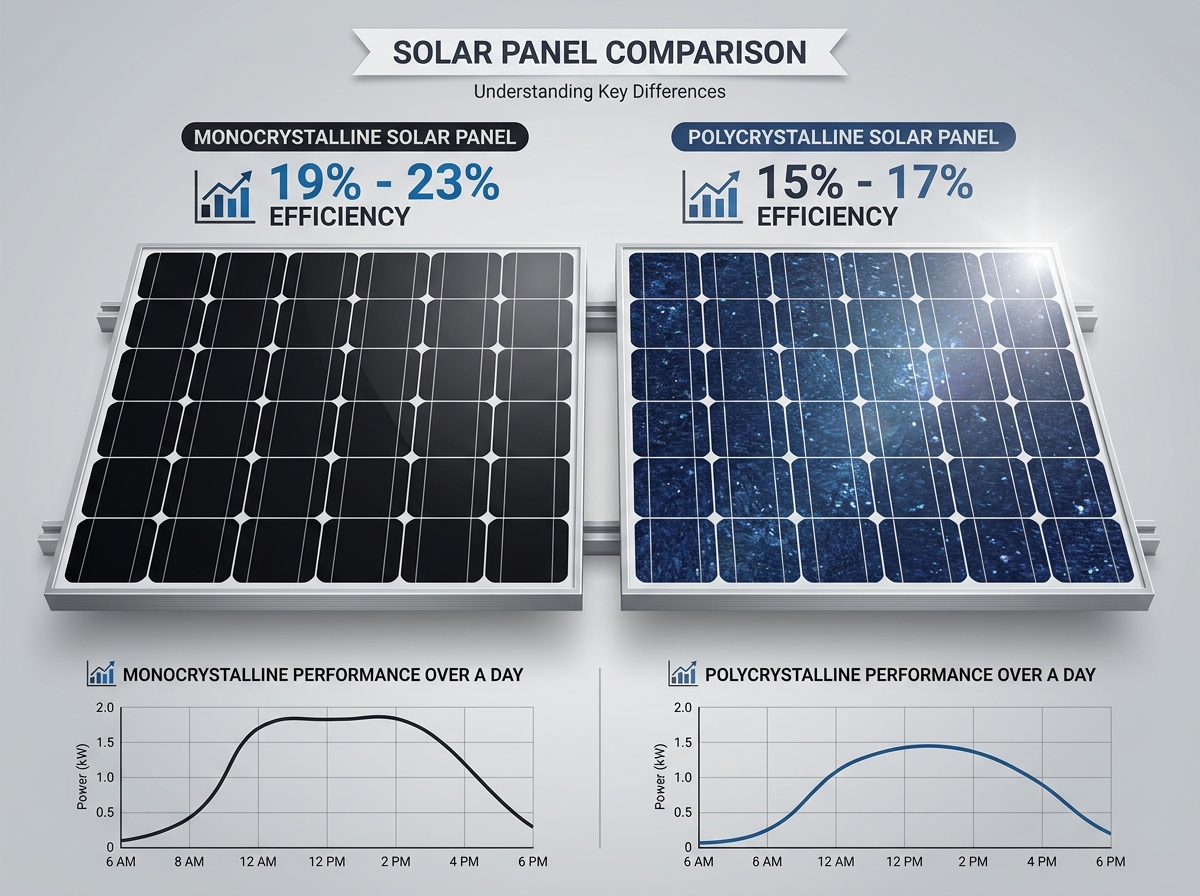
- Monocrystalline Panels: These are the sleek, black panels you see on most modern roofs. They are highly efficient (up to 24%) and perform better in low-light conditions, but they usually cost $1.00 to $1.50 per watt.
- Polycrystalline Panels: These have a blueish hue and are slightly less efficient. While they are cheaper ($0.90 to $1.00 per watt), they require more roof space to generate the same amount of power.
- Inverter Types: This is the “brain” of your system.
- String Inverters: The most budget-friendly option, but if one panel is shaded, the whole string’s performance drops.
- Microinverters: Installed under each panel. They are more expensive but allow each panel to operate independently—ideal for complex roofs with shading issues.
- Power Optimizers: A middle-ground solution that offers panel-level optimization paired with a central inverter.
Regional Pricing and the Impact of Local Incentives
Where you live can change the average cost to have solar panels installed by thousands of dollars. It’s not just about how much sun you get; it’s about the local labor market, state taxes, and utility company policies.
For example, Arizona often boasts some of the lowest costs in the country, with averages around $2.18 per watt. This is driven by a mature market and high competition among installers. On the flip side, California remains a powerhouse, but higher labor costs and specific building codes can push the average to $2.49 per watt or higher. In Hawaii, where electricity rates are astronomical, residents might pay over $3.30 per watt, yet the system still pays for itself quickly because the savings against utility bills are so high.
The real “secret sauce” in reducing your costs lies in incentives:
- Federal Residential Clean Energy Credit: While the 30% credit has seen changes, it remains a primary driver for affordability. Homeowners can find detailed guidance on these credits through the U.S. Department of Energy.
- SRECs (Solar Renewable Energy Certificates): In some states, you can actually earn money by selling the “green value” of the electricity you produce back to the utility.
- Net Metering: This allows you to send excess power back to the grid during the day and get a credit on your bill to use at night.
To understand how these factors combine to create long-term wealth, check out our guide on solar panels cost and savings.
Beyond the Panels: Hidden Costs and Long-Term ROI
If you only budget for the panels and the inverter, you might be in for a surprise. Only about 12% to 25% of the total average cost to have solar panels installed actually goes toward the panels themselves. So, where does the rest of the money go?
A significant portion of your investment covers “soft costs.” These include:
- Labor (7-15%): The physical act of mounting panels and wiring them into your home.
- Sales and Marketing (18-21%): The cost for companies to find customers and design systems.
- Permitting and Interconnection (8%): Fees paid to your local government and utility company to ensure the system is safe and legal.
- Overhead and Profit (10-12%): Keeping the lights on at the installation company’s office.
Factors That Increase the average cost to have solar panels installed
Sometimes, your home itself can throw a wrench in the works. We have seen several factors that can add $2,000 to $5,000 to a standard quote:
- Roof Characteristics: A very steep roof (high pitch) or a roof made of slate or wood tiles requires specialized mounting hardware and more labor time.
- Electrical Upgrades: If your home’s main electrical panel is old (less than 200 amps), you may need an upgrade to handle the solar input.
- Tree Trimming: If those beautiful oaks are casting a shadow on your south-facing roof, you’ll need to factor in the cost of professional arborist services.
- Battery Storage: Adding a battery (like a Tesla Powerwall or similar) can add $10,000 to $18,000 to the total price. While it increases the upfront cost, it provides invaluable resilience during power outages.
Don’t let high utility rates scare you off; instead, learn how to calculate the average cost of solar per kwh to see the true value of your investment.
Financing Your Sunshine: Cash, Loans, and Leases
How you pay for your system is just as important as how much it costs. The average cost to have solar panels installed can be handled in several ways, each with its own ROI profile.
1. Cash Purchase (The Gold Standard) If you have the liquidity, paying cash offers the highest return on investment. You own the system from day one, you get the full benefit of all tax credits, and you have no monthly interest payments. Your “payback period” is at its shortest here.
2. Solar Loans This is the most popular option. Many specialized lenders offer solar loans with little to no money down. While you will pay interest, the goal is to ensure your monthly loan payment is lower than your previous electric bill, making you “cash-flow positive” immediately.
3. Solar Leases and Power Purchase Agreements (PPAs) In these scenarios, a third party owns the panels on your roof. You either pay a fixed monthly “rent” (lease) or buy the power the panels produce at a set rate (PPA).
- Pros: No upfront cost, and the company handles all maintenance.
- Cons: You don’t get the tax credits, and it adds less value to your home than an owned system.
4. Subscription Models A newer trend in 2026 is the solar subscription. This is similar to a lease but often with more flexible terms, allowing homeowners to go green without the 25-year commitment of a traditional PPA.
Frequently Asked Questions about the average cost to have solar panels installed
Is solar worth it in 2026 without the federal tax credit?
Yes. While the tax credit is a massive “bonus,” the primary value of solar comes from offsetting utility rates that continue to rise. Most systems in 2026 still offer a 10-20% ROI, which beats most traditional savings accounts or even some stock market indices. Furthermore, the increase in home value (roughly 4.1% on average) often covers a large chunk of the initial investment.
How much does a typical 10kW system cost before incentives?
On average, a 10kW system will cost between $25,000 and $28,000. This covers the panels, inverter, racking, labor, and basic permitting. If you require a main lug upgrade or have a particularly difficult roof, you might see quotes closer to $32,000.
What are the most common hidden costs during installation?
The “big three” hidden costs are:
- Roof Repair: You should never put solar on a roof that has less than 10 years of life left. Replacing a roof concurrently can add $8,000+.
- Structural Reinforcement: Occasionally, an attic needs additional bracing to support the weight of the panels.
- Data Monitoring Fees: While most apps are free, some high-end proprietary monitoring systems carry a small subscription fee after the first few years.
Conclusion
At Financefyx, we believe that understanding the average cost to have solar panels installed is the first step toward true energy independence. While an upfront price tag of $25,000 might seem daunting, it is important to view it as “pre-paying” for 25 years of electricity at a massive discount.
When you factor in the $37,000 to $154,000 in lifetime savings, solar isn’t just an environmental choice—it’s one of the smartest financial moves a homeowner can make in 2026. Whether you choose to pay cash or find a low-interest loan, the sun is going to shine anyway; you might as well get paid for it.
Ready to dive deeper into sustainable living? Explore more renewable energy guides to find tips on everything from off grid solar panel tips to diy solar panel projects.
