
Velux Windows and the Case of the Missing Heat
Why a Draught Excluder for Velux Windows Can Cut Your Heating Bills
The fastest ways to stop draughts around a Velux window:
- Self-adhesive foam strips – Press into gaps of 1-5mm around the window frame
- EPDM rubber strips – Longer-lasting seal for window edges and closing faces
- Brush strips – Best for warped or uneven timber frames
- Silicone sealant – Fill cracks between the frame and surrounding roof structure
- Triangular weighted excluder – Place along the internal bottom edge of the roof window
A draught excluder for Velux windows is one of the simplest, lowest-cost fixes for a cold, draughty room — and it can make a real difference to your heating bills.
Roof windows are brilliant for light and ventilation. But they’re also a common weak point in home insulation. Unlike a standard wall window, a Velux sits on a pitched roof, surrounded by flashing, timber, and seals that take a beating from rain, wind, and temperature swings year after year.
Over time, rubber gaskets shrink. Seals pull away from frames. And suddenly, you’re standing in your loft room wondering why it feels like a wind tunnel — even with the window shut.
As one homeowner put it on a DIY forum: the draught was bad enough, but on windy days it was driving them absolutely nuts.
The good news? Most Velux draught problems are fixable without calling in a specialist. You just need to know where the cold air is actually coming from — and which solution fits your situation.
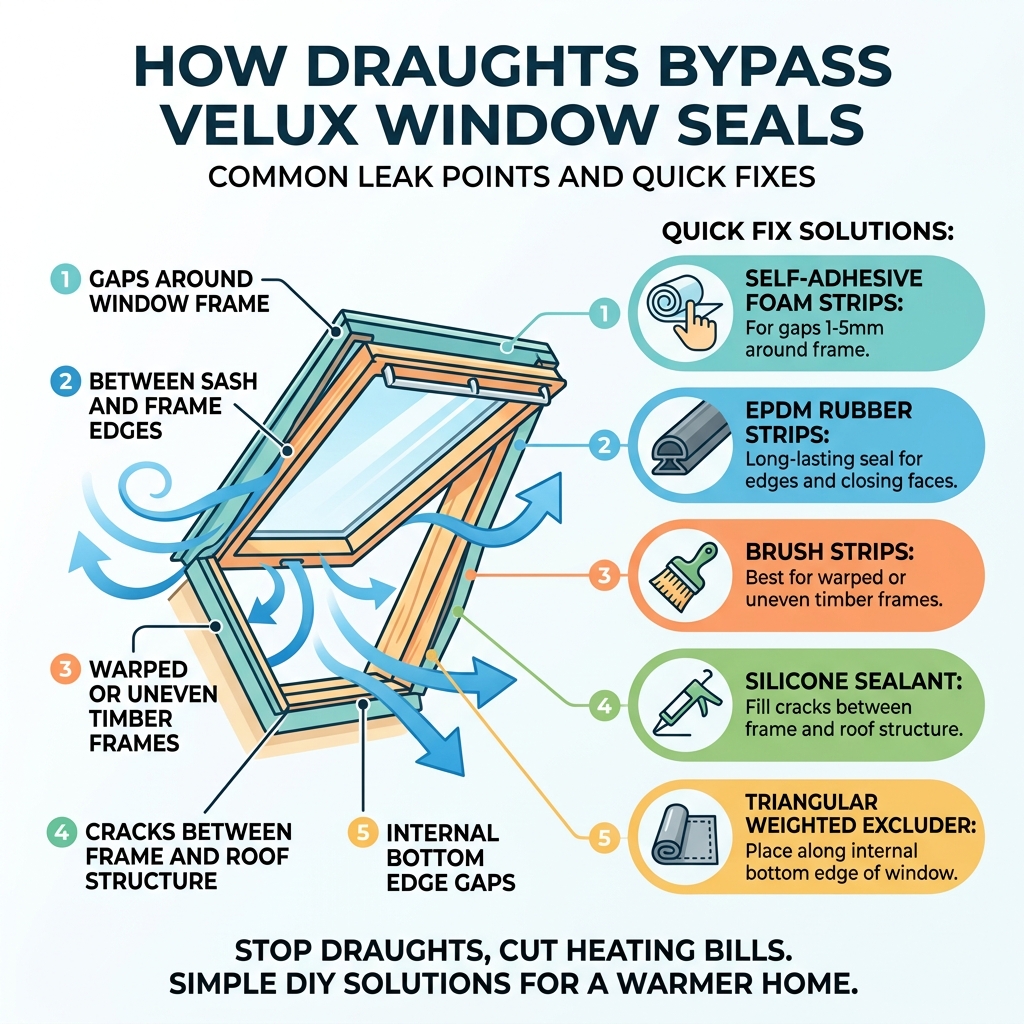
Identifying the Source of the Chill
Before we start sticking foam everywhere, we need to play detective. Not every “breeze” in an attic is a window leak; sometimes it’s poor wall insulation or a gap in the eaves. However, if you feel a chill specifically when standing under your roof light, the window is the prime suspect.
The most common culprit isn’t actually the glass itself, but the transition points where the moving sash meets the fixed frame. To find the exact leak, we recommend two simple DIY tests:
- The Hand Test: On a cold, windy day, slowly run your hand along the entire perimeter of the window frame. Pay close attention to the corners and the top ventilation flap. If you feel a distinct stream of cold air, you’ve found a gap.
- The Candle Test: Hold a lit candle (carefully!) or an incense stick near the window edges. If the flame flickers or the smoke dances horizontally, air is forcing its way through.
Visible damage is also a huge giveaway. Look for cracked wood, peeling paint, or black mould spots, which suggest that moisture is hitching a ride on those draughts. If you notice condensation between the panes of glass, unfortunately, the vacuum seal of the double glazing has failed, and a simple draught excluder for velux windows won’t be enough to fix the thermal loss.
For more broad advice on tightening up your property, check out our guide on how to seal air leaks to save energy.

Signs of a Failing Velux Seal
Velux windows rely on rubber gaskets and foam strips to remain airtight. Over a decade or two, these materials lose their “bounce.”
- Shrunken Rubber: If the black rubber gasket looks shorter than the frame or has gaps in the corners, it’s no longer doing its job.
- Brittle Gaskets: If the seal feels hard or snaps when you touch it, it can’t compress enough to block the air.
- The “Whistle”: On high-wind days, a failing seal often creates a high-pitched whistling sound as air is forced through a microscopic gap.
- Ventilation Flap Failure: The foam on the control bar (the ventilation flap) often disintegrates into black dust over time. This is a very common source of “mystery” draughts.
Improving these seals is a key part of attic insulation tips to save energy and money, as heat naturally rises and escapes through the highest points of your home.
Choosing the Best Draught Excluder for Velux Windows
Not all draught excluders are created equal. The right choice depends on the size of the gap and the material of your window.
| Excluder Type | Best For | Gap Size | Durability |
|---|---|---|---|
| Foam Strips | Standard PVC or wood frames | 1–5mm | 1–2 years |
| EPDM Rubber | High-use windows; long-term fix | 3–7mm | 5+ years |
| Brush Strips | Warped wooden frames | Irregular | Moderate |
| Silicone Sealant | Fixed gaps/cracks in frame | N/A | Up to 20 years |
| Blade Seals | Sliding or pivot points | Variable | High |
For those looking for a non-permanent, aesthetic solution, a waterproof velvet draught excluder can be placed along the internal sill of the window to catch air that manages to bypass the primary seals. These are especially useful if you have a “deep” window reveal where the cold air pools before dropping into the room.
Benefits of a Draught Excluder for Velux Windows
Why bother with these small fixes? The impact is bigger than you might think.
- Heat Retention: By stopping the “chimney effect” (where warm air escapes out the top of the house), your rooms stay warmer for longer.
- Lower Energy Bills: When your home holds heat better, your boiler doesn’t have to work as hard, leading to significant savings.
- Noise Reduction: Air leaks are also sound leaks. Sealing gaps can noticeably reduce the sound of wind, rain, and traffic.
- Comfort: No more cold spots or “phantom” breezes while you’re trying to sleep or work.
This is a fundamental step in insulating your home for energy efficiency.
Specialized Solutions for Roof Windows
Because Velux windows are often installed at an angle, traditional “bean bag” style excluders tend to slide off. This is where specialized designs come in.
The Draught Excluder Triangular® is a brilliant invention for this scenario. Its right-angled design allows it to sit snugly against the frame. Many of these models are weighted with a stone blend (averaging about 1.5kg) to ensure they stay put even on a slope. Some even come with a “hooking rail” or transparent adhesive hooks, allowing you to attach the excluder directly to the bottom of the window sash so it moves with the window.
Using these in combination with internal blinds is one of the best ways to save energy with insulated window treatments.
Step-by-Step Installation Guide
Ready to get to work? Installing a draught excluder for velux windows is a satisfying afternoon project. Here is how we recommend doing it:
- Clean the Surface: This is the most important step. Use a degreaser or soapy water to clean the frame where the adhesive will go. If the surface is greasy or dusty, the strip will peel off within a week.
- Measure Twice: Measure the length of the top, bottom, and sides of the frame.
- Cut to Size: Use sharp scissors or a utility knife. For foam and rubber strips, it is often best to cut the ends at a 45-degree angle to create a “picture frame” join in the corners, which prevents air from leaking through the butt joints.
- Apply the Strip: Peel back a few inches of the adhesive backing at a time. Press firmly as you go. Ensure the strip is positioned so that when the window closes, the sash presses against the strip rather than sliding across it (which can peel it off).
- The “Prop” Hack: If your original rubber seals have shrunken but are still in one piece, you can sometimes stick a thin foam draught strip underneath the existing rubber. This “props up” the old seal, forcing it to make contact with the frame again.
For more tips on dealing with modern window frames, see our article on how to stop the chill with these easy ways to fix drafty upvc windows.
Common Mistakes When Fitting a Draught Excluder for Velux Windows
- Blocking the Ventilation Flap: Most Velux windows have a “trickle vent” feature. While it’s tempting to seal this shut to stop all air, you need some ventilation to prevent condensation and mould. Don’t seal the flap entirely; just replace the perished foam.
- Using Material That is Too Thick: If you use a thick rubber strip on a window with tight tolerances, you might find the window won’t lock properly. This puts immense strain on the hinges and handles.
- Applying to Wet Frames: If there is condensation on the frame when you apply the adhesive, it won’t stick. Wait for a dry day and use a hairdryer to ensure the wood or PVC is bone-dry.
Understanding these nuances is part of mastering energy saving methods for home insulation.
Maintenance and Professional Repairs
Once your draught excluder for velux windows is installed, it doesn’t need much work, but a little maintenance goes a long way.
- Silicone Durability: If you used silicone sealant to fill cracks between the window frame and the plasterboard, check it annually. High-quality silicone can last 20 years, but building movement can sometimes cause it to pull away.
- Spot Cleaning: For fabric or velvet excluders, spot clean with a lint-free cloth. Many modern triangular excluders have removable, machine-washable covers.
- Replacing Film: If you use insulating window film (a type of secondary glazing), remember it typically needs replacing every 5 years as it becomes brittle.
For a deep dive into long-term home care, read the ultimate guide to insulating your home.
When to Call a Professional
Sometimes, a DIY strip isn’t enough. You should call a window specialist if:
- The Frame is Rotting: If you can poke a screwdriver into the wooden frame and it feels soft, the structural integrity is compromised.
- Broken Hinges: If the window hangs crookedly, it will never seal correctly, no matter how much draught excluder you use.
- Misted Glass: As mentioned, this requires a new glazing unit.
- External Leaks: If water is dripping from the top of the window during rain, the problem is likely the external flashing or “mini-gutters” on the roof, not the internal seals.
Frequently Asked Questions about Velux Draughts
Can draught excluders prevent water leaks?
To an extent, yes. Internal rubber seals are designed to keep out both air and “driving rain.” If your window seeps water during a storm because the seals are shrunken, a high-quality EPDM rubber draught excluder can restore the watertight seal. However, it won’t fix a leak caused by blocked external gutters or cracked roof tiles.
How long do self-adhesive seals last?
Foam is the budget option and usually lasts 1–2 years before it loses its spring. EPDM rubber is much tougher and can last 5–10 years. For the longest-lasting fix, silicone sealant used on non-moving cracks can last up to 20 years.
Do draught excluders work on older Velux models?
Absolutely. In fact, older timber Velux windows benefit the most. Over time, wood can warp slightly, creating irregular gaps. A flexible draught excluder for velux windows, particularly a brush strip or a thick EPDM D-profile, can conform to these irregular shapes much better than the original factory seals.
Conclusion
At Financefyx, we believe that saving money on energy shouldn’t always require expensive solar panels or heat pumps. Often, the “case of the missing heat” can be solved with a ten-pound roll of rubber and a bit of DIY spirit.
By identifying your leaks, choosing the right draught excluder for velux windows, and installing it with care, you can transform a chilly attic into a cozy sanctuary. Not only will you feel the difference in comfort, but you’ll also see the difference in your monthly outgoings.
For more expert advice on keeping your home efficient, don’t miss The Ultimate Guide to Insulating Your Home. Stay warm!
