
Why Your Basement Renovation Layout Ideas Matter Before You Pick a Single Finish
Basement renovation layout ideas are the foundation of any successful remodel — and the most popular options for 2026 include:
- Multi-functional family hubs — open-concept spaces combining media rooms, game areas, and guest suites
- Home entertainment zones — wet bars, home theaters, and flexible seating layouts
- Wellness and fitness spaces — home gyms, sauna nooks, and cold plunge areas
- Rental or in-law suites — self-contained apartments with private entrances and code-compliant egress
- Home offices and creative studios — quiet, separated workspaces with strong lighting and soundproofing
- Kids’ playrooms and teen retreats — adaptable zones that grow with your family
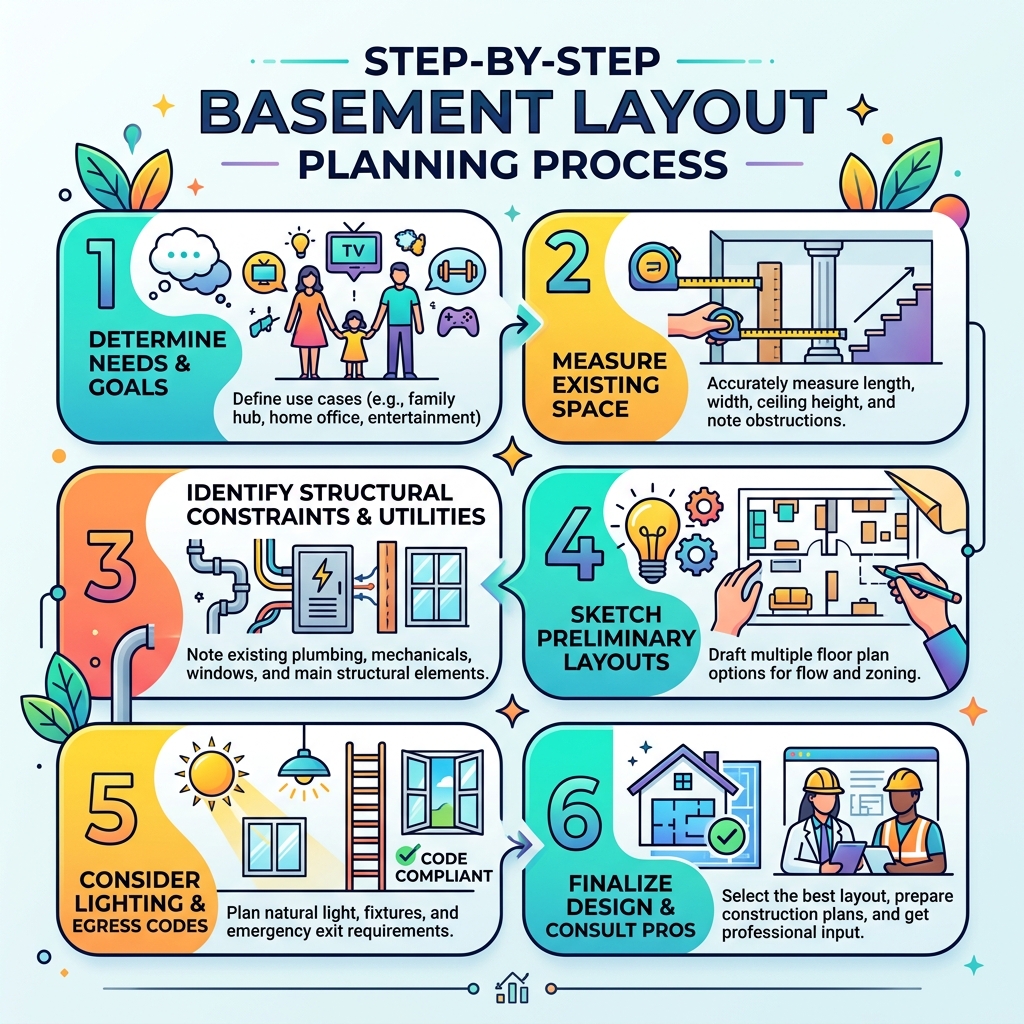
The single biggest mistake homeowners make is rushing straight to finishes — picking flooring, paint, and furniture — before thinking about how the space will actually be used.
A well-planned layout determines how your basement feels every single day. No amount of expensive tile or stylish lighting can fix a space that was poorly laid out from the start.
And the payoff for getting it right is real. Finishing a basement can return up to 75% of renovation costs, and adding a bathroom alone can boost home value by 10% to 40%.
But before you start dreaming about a hidden speakeasy bar or a cinema room, there are structural constraints, building codes, lighting challenges, and zoning decisions that need to come first.
This guide walks you through everything — so your layout works for your life, not just your Pinterest board.
Trending Basement Renovation Layout Ideas for 2026
As we look toward 2026, the “dark and damp” basement is officially a relic of the past. Today, we see homeowners treating their lower levels as premium square footage that mirrors the quality of the main floor. The trend is moving away from chopped-up, tiny rooms and toward expansive, lifestyle-driven spaces.
One of the most exciting shifts is the rise of the “Wellness Sanctuary.” We aren’t just talking about a treadmill in the corner where laundry goes to hang dry. We mean dedicated zones for yoga, infrared saunas, and even cold plunge tubs. According to recent design insights, these wellness areas are becoming non-negotiable for homeowners who want to eliminate the “excuses” of a gym commute.
Another major player in 2026 is the self-contained rental suite. With housing markets staying tight, a basement apartment can cost between $75,000 and $110,000+ but offers a massive ROI through monthly rental income. If you need a bit of visual inspiration to get the wheels turning, you can browse through 75 Basement Ideas You’ll Love to see how pros are blending these high-end features.
Multi-Functional Family Hubs and Guest Suites
The modern family hub is all about “zoning.” Instead of building walls that block light and conversation, we recommend using furniture and flooring to define areas. You might have a plush sectional for movie nights that sits adjacent to a craft table or a pool table.
When planning a guest suite, comfort and safety are the top priorities. Under ICC Building Codes, any room designated as a bedroom must have a legal egress window. This isn’t just for light; it’s a life-saving exit in case of fire. To make the space feel like a true retreat rather than a “basement room,” we suggest investing in high-quality Bedroom products and furniture that match the aesthetic of your upstairs primary suite.
High-End Entertainment and Wellness Zones
For those who love to host, the “Speakeasy Bar” is a massive trend for 2026. Think dark cabinetry, antique mirror backsplashes, and quartz countertops. If plumbing is a challenge (which can happen below grade), a “dry bar” with a high-end wine fridge and microwave is a fantastic, cost-effective alternative.
Home theaters are also evolving. We’re seeing a move toward tiered seating and integrated soundproofing to ensure that “Blockbuster Night” doesn’t wake up the kids on the second floor. And for the fitness enthusiasts, your Basement gym equipment and layout should prioritize rubber flooring to protect your joints and the concrete slab.

Designing Functional Zones in an Open-Concept Space
One of the hardest things to do in a basement is making a large, open space feel “cozy” rather than “cavernous.” The secret lies in creating functional zones without using traditional walls. This maintains the flow of light and makes the basement feel much larger than it actually is.
Creating Zones Without Walls
To separate a home office from a playroom, you don’t need a drywall partition. Instead, try these “soft dividers”:
- Flooring Transitions: Switch from a luxury vinyl plank (LVP) in the bar area to a plush, low-pile carpet in the media zone.
- Lighting Layers: Use different Lighting fixtures for zones. A chandelier over a game table and recessed “pot lights” in the TV area naturally signal a change in purpose.
- Area Rugs: A large rug can “anchor” a seating group, creating a room-within-a-room feel.
- Furniture Placement: Use the back of a sofa or a long console table to act as a low-profile wall. You can find great Living room products that serve as excellent spatial anchors.
Integrating Storage into Your Basement Renovation Layout Ideas
Storage is often the “afterthought” of a renovation, but in a basement, it needs to be a primary focus. If you don’t plan for it, your beautiful new layout will quickly become a graveyard for holiday decorations and old toys.
We love “hidden” storage solutions. Built-in bookshelves can flank a fireplace, or you can utilize the often-wasted space under the stairs. That triangular nook is perfect for a wine cellar, a tiny “Harry Potter” style playhouse for kids, or even a pull-out shoe rack. For more creative ways to hide the clutter, check out Home decor and organization options that blend seamlessly with your furniture.
Structural Constraints and Building Code Requirements
Basements come with a unique set of “uninvited guests”: support posts, HVAC ducts, and plumbing stacks. In a perfect world, these wouldn’t exist, but in the real world, they are the bones of your house.
Navigating Mechanical and Structural Obstacles
Instead of fighting these obstacles, we recommend “hiding them in plain sight.”
- Column Wrapping: You can wrap those steel support posts in wood trim or stone veneer to make them look like intentional architectural columns.
- Ceiling Details: If you have low-hanging ductwork, consider a “soffit” or a tray ceiling. A black-painted ceiling is a popular 2026 trend that makes pipes and ducts “disappear” visually.
- Energy Efficiency: Don’t forget the invisible stuff. Proper insulation is key to keeping the space warm. Refer to the Energy.gov basement insulation guide for the best materials to prevent moisture and mold.
When moving plumbing for a new bathroom or wet bar, keep in mind that you may need a “sewage ejector pump” if your drains are below the main sewer line. This is a common part of remodeling-your-home-for-energy-efficiency and overall home functionality.
Essential Building Codes for Basement Bedrooms
If your basement renovation layout ideas include a bedroom, you must follow strict safety codes.
- Egress Windows: These must be large enough for a firefighter in full gear to enter and for you to exit.
- Ceiling Height: Most codes require a minimum of 7 to 7.5 feet.
- Smoke and CO Detectors: These must be hardwired and interconnected with the rest of the house.
Following these ICC Building Code requirements isn’t just about passing inspection; it’s about the safety of your family and guests. Plus, code-compliant renovations are much easier to insure and sell later. For more on making your renovation sustainable, look into eco-friendly-home-renovations-to-save-energy.
Maximizing Light and Flow in Your Basement Design
The biggest complaint about basements is that they feel like, well, basements. To fix this, we have to master the art of “lighting deception.”
Strategies for Natural and Artificial Lighting
Natural light is the “gold standard.” If you have a walk-out basement, prioritize glass sliding doors. If you’re fully underground, egress windows with oversized “window wells” can let in a surprising amount of sun.
For artificial light, “layering” is the secret.
- Ambient: Recessed LED lights provide the main wash of light.
- Task: Pendant lights over a bar or desk.
- Accent: LED strips under cabinets or “uplighting” behind a TV.
Using full-spectrum bulbs can mimic natural daylight, helping to combat the “cabin fever” feeling. Explore various Lighting products to find bulbs that offer a warm, inviting glow rather than a clinical, blue tint.
Balancing Privacy and Openness in Basement Renovation Layout Ideas
Sometimes you want an open feel, but you also need to shut out the noise of a teenager’s video game session. This is where “flexible openings” come in.
- French Doors: Glass panes allow light to pass through while blocking sound.
- Barn Doors: Great for saving space in tight hallways.
- Acoustic Panels: These can be disguised as wall art to help dampen sound in home theaters or music rooms.
Strategic sound insulation in the ceiling (like rockwool) is a great way to save-energy-with-cost-effective-home-improvements while keeping the peace between floors.
ROI and Cost Estimates for Popular Layouts
How much should you spend? While every home is different, here is a look at what we’re seeing for 2026.
| Layout Type | Estimated Cost (2026) | Potential ROI | Typical Timeline |
|---|---|---|---|
| Basic Family Room | $20,000 – $35,000 | 65-70% | 3–5 Weeks |
| Home Theater Hub | $35,000 – $55,000 | 60-65% | 4–6 Weeks |
| Rental Apartment | $75,000 – $110,000+ | 75%+ (Rental Income) | 8–12 Weeks |
| Home Office/Gym | $25,000 – $45,000 | 70% | 4–6 Weeks |
Note: Costs vary based on finishes and local labor rates. Data sourced from HomeAdvisor basement remodel costs.
Frequently Asked Questions about Basement Renovation Layouts
How much does a basement layout impact home value?
A lot! A poorly designed layout can actually make a home harder to sell. Buyers want to see “usable” space. If your layout is awkward or lacks a bathroom, you won’t see the same 70-75% recoup on investment that a well-planned layout offers. Adding a bathroom is one of the single best ways to boost equity, often increasing value by up to 40%.
What are the most common basement layout mistakes to avoid?
- Ignoring the Sump Pump: Never build a permanent wall over a sump pump or electrical panel without an access door.
- Poor Lighting: Relying on a single overhead light makes the room feel small and dingy.
- Skipping Waterproofing: If you don’t fix moisture issues before you frame the walls, you’re just building a future mold problem.
- Over-partitioning: Too many small rooms make the basement feel like a maze. Keep it open!
How long does a typical basement renovation take in 2026?
Expect the process to take anywhere from 4 to 12 weeks. The biggest “time-wasters” are usually waiting for permits or specialized plumbing/electrical work. If you are doing a full apartment with a kitchen, plan for the longer end of that spectrum.
Conclusion
At Financefyx, we believe that your home should work for you, not the other way around. Choosing the right basement renovation layout ideas is about more than just resale value — it’s about creating a space where your family actually wants to hang out.
Whether you’re building a wellness sanctuary to start your mornings right or a rental suite to help pay down the mortgage, start with a solid plan. Focus on light, flow, and code compliance first, and the “pretty” stuff will fall into place. For more advice on making your home more efficient and valuable, check out More energy saving tips.
Happy planning!
