
Why Your Metal Roof Is Making Your Home Uncomfortable (And Costly)
Attic insulation for metal roofs is one of the most impactful upgrades you can make to a home with a steel or corrugated roof. Here’s a quick summary of your best options:
| Insulation Type | R-Value per Inch | Best For | Avg. Cost per sq ft |
|---|---|---|---|
| Closed-cell spray foam | 6–7 | Airtight seal, irregular surfaces | ~$2.00 |
| PIR rigid foam board | 5.6–7 | High thermal resistance, durability | ~$1.15 |
| Fiberglass batts | 3–4 | Budget-friendly, standard attics | ~$0.93 |
| Reflective/radiant barrier | N/A (reflects 97% radiant heat) | Hot climates, combined systems | Varies |
Metal roofs are incredibly durable. But they come with a serious thermal weakness: metal conducts heat rapidly. In summer, your attic can turn into an oven. In winter, that same conductivity lets warmth escape just as fast.
The result? Skyrocketing energy bills. Cold drafts. Condensation problems that quietly rot your roof from the inside.
Here’s the scale of the issue: 66% of energy consumption in buildings goes toward heating, cooling, and ventilation. The roof is the single biggest source of heat loss in an uninsulated building. For metal roofs specifically, that problem is even more pronounced.
The good news: the right attic insulation completely changes the equation.
The Science of Attic Insulation for Metal Roofs
To understand why attic insulation for metal roofs is so critical, we need to look at how metal interacts with the environment. Unlike wood or asphalt shingles, metal is an exceptional conductor. This means it absorbs solar radiation and transfers that thermal energy directly into your attic space with almost zero resistance.
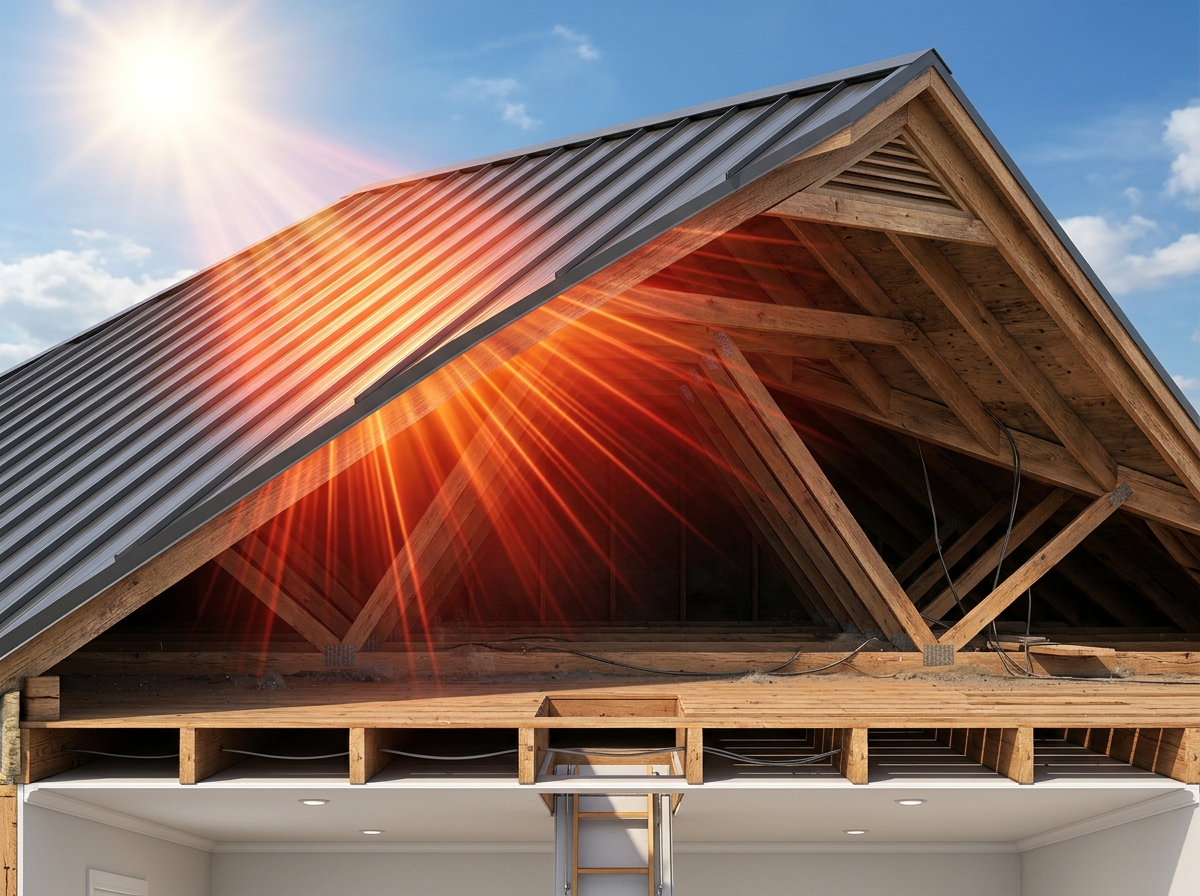
Thermal Conductivity and Heat Transfer
During a sweltering summer day, a bare metal roof can reach temperatures far exceeding the ambient air. Without a barrier, this heat radiates downward, turning your attic into a giant radiator. This “heat sink” effect forces your HVAC system to work overtime. Conversely, in the winter, the metal roof becomes a cold bridge, pulling heat out of your living space and into the freezing sky.
The Battle Against Condensation
One of the most overlooked challenges of metal roofing is the “sweat” factor. Condensation occurs when warm, moist air from inside your home hits the cool underside of the metal roof panels. This is particularly common at night when the metal cools rapidly.
If the surface temperature of the metal drops to or below the “dew point,” water droplets form. Over time, this moisture leads to:
- Mold and mildew growth in your attic.
- Corrosion and rust on the underside of your metal panels.
- Saturated insulation that loses its thermal effectiveness.
Properly insulating your home for energy efficiency requires managing this moisture. As noted in this PDF1.5 MB Metal Roof Insulation | ROCKWOOL, high-quality insulation not only regulates temperature but also acts as a buffer against these acoustic and moisture-related issues.
Noise Suppression
Let’s be honest: metal roofs can be loud. Whether it’s a heavy rainstorm or hailstones, the “drumming” effect can be disruptive. Mass insulation materials like stone wool or fiberglass are excellent at absorbing these sound waves, providing a much-needed acoustic barrier that turns a “tinny” roar into a dull, manageable hum.
Comparing the Best Insulation Materials
When we look at the market for attic insulation for metal roofs, four main contenders emerge. Each has its own set of strengths, R-values, and price points.
| Material | R-Value (per inch) | Estimated Lifespan | Primary Benefit |
|---|---|---|---|
| Closed-Cell Spray Foam | 6.0 – 7.0 | 80–100 years | Superior air seal & moisture barrier |
| PIR Rigid Foam Board | 5.6 – 7.0 | 50 years | High R-value with low thickness |
| Fiberglass Batts | 3.0 – 4.0 | 20–30 years | Most cost-effective / DIY friendly |
| Reflective Foil | N/A | 15–20 years | Blocks 97% of radiant heat |
Spray Foam Insulation
Spray foam is often considered the “gold standard” for metal roofs. It expands to fill every nook, cranny, and corrugated ridge, creating an airtight seal.
- Closed-cell foam is particularly effective because it acts as its own vapor barrier, preventing moist air from ever touching the metal.
- Open-cell foam is slightly cheaper and offers better sound dampening but requires a separate vapor barrier in most climates.
Rigid Foam Boards
Polyisocyanurate (PIR) and Extruded Polystyrene (XPS) boards are fantastic for creating a continuous thermal break. Because they don’t sag or compress over time, they maintain their R-value for decades. However, they can be tricky to install around irregular attic framing or corrugated surfaces without leaving gaps.
Fiberglass Batts
This is the classic choice for many homeowners. While fiberglass is the most affordable option, it has a significant drawback: it is highly susceptible to moisture. If your metal roof develops a condensation issue, wet fiberglass batts will lose their R-value and can become a breeding ground for mold.
For those looking at a comprehensive solution, products like the RetroShield ® A Complete Metal Building Retrofit Insulation System offer a way to combine reflective technology with durable materials to address the unique needs of metal structures.
Choosing the Best Attic Insulation for Metal Roofs
The “best” choice depends heavily on your specific situation. We recommend considering three main factors:
- Climate: If you live in a tropical zone, your focus should be on blocking radiant heat. In colder climates, maximizing R-value to prevent heat loss is the priority.
- Budget: Fiberglass is the cheapest upfront, but spray foam often pays for itself faster through energy savings.
- Sustainability: Materials like stone wool are highly recyclable, while some foams are petroleum-based.
For more detailed strategies, check out our ultimate guide to insulating your home.
Radiant Barriers: A Specialized Attic Insulation for Metal Roofs
If you live in a region where the sun beats down relentlessly, a radiant barrier is a game-changer. Unlike traditional insulation that slows down heat transfer (conductive heat), a radiant barrier reflects it.
These barriers are typically made of highly reflective aluminum foil. When installed with a small air gap, they can block up to 97% of the radiant heat coming off your metal roof. This can reduce attic temperatures by as much as 30°F during the summer months.
A premium option like Silver Shield™ Radiant Barrier Attic Insulation | FI-FOIL® uses multi-layer technology to create additional air spaces, further enhancing thermal performance. Following these attic insulation tips save energy and money can help you decide if a radiant barrier is the right primary or secondary layer for your home.
Essential Installation Components: Vapor Barriers and Ventilation
You can have the most expensive insulation in the world, but if you don’t manage air and moisture, you’re asking for trouble.
The Role of the Vapor Barrier
In the context of attic insulation for metal roofs, a vapor barrier (or vapor retarder) is a material that prevents water vapor from migrating into the roof assembly. For metal roofs, this is non-negotiable. Without it, the “dew point” will occur inside your insulation or against the metal panels, leading to rot.
Ventilation and the Air Gap
Many homeowners make the mistake of packing insulation tightly against the metal. This is a recipe for disaster. You generally need an air gap (typically 1–2 inches) between the insulation and the roof deck.
- Soffit Vents: These draw cool air in from the eaves.
- Ridge Vents: These allow hot air and moisture to escape from the peak of the roof.
This continuous airflow carries away any moisture that manages to bypass your vapor barrier. It also helps cool the metal panels, extending the life of any coatings or paints on the exterior. Using proper energy saving methods for home insulation ensures these systems work in harmony rather than against each other.
Step-by-Step Guide to Insulating from the Inside
If you’re ready to tackle your attic, here is a simplified process for installing attic insulation for metal roofs from the interior.
Step 1: Inspection and Preparation
Before you buy a single roll of fiberglass, you must inspect the underside of your roof. Look for:
- Existing rust or water stains.
- Gaps where daylight is visible.
- Potential “thermal bridges” (metal studs or rafters that conduct heat). Seal any leaks with high-quality caulk or expandable foam before proceeding.
Step 2: Seal the Gaps with Foam Fillers
For corrugated metal roofs, the ridges and valleys create natural gaps at the eaves and ridges. Install corrugated foam fillers to seal these openings. This prevents drafts, insects, and wind-driven rain from entering your attic space.
Step 3: Create the Air Gap
If you are using rigid boards or radiant barriers, use furring strips or spacers to ensure there is a 1-inch air gap between the metal and the insulation. This gap is what allows a radiant barrier to actually “reflect” heat.
Step 4: Install the Insulation
- For Batts: Cut them to fit snugly between rafters. Do not compress them, as this reduces their R-value.
- For Rigid Boards: Tape the seams with foil tape to ensure a continuous seal.
- For Spray Foam: This is usually a job for professionals, as it requires specialized PPE and mixing equipment.
Step 5: Final Inspection
Check for sagging sections. Ensure your vents (soffit and ridge) are not blocked by the new insulation. A blocked vent is one of the most common causes of attic moisture problems.
For a deeper dive into the tools and safety gear needed, refer to the ultimate guide to insulating your home.
Frequently Asked Questions about Metal Roof Insulation
How do I stop condensation under my metal roof?
The best way to stop condensation is a three-pronged approach:
- Seal Air Leaks: Stop warm, moist air from your living room from entering the attic.
- Install a Vapor Barrier: Use a dedicated poly-film or closed-cell spray foam.
- Ensure Proper Ventilation: Maintain a clear air path from soffit to ridge to flush out moisture.
Can I install insulation directly against the metal panels?
Only if you are using closed-cell spray foam. Because closed-cell foam is airtight and moisture-impermeable, it prevents air from reaching the metal surface, thus eliminating the condensation risk. For all other materials (fiberglass, wool, rigid board), you must leave an air gap to prevent moisture buildup.
Is DIY insulation feasible for metal roof attics?
Yes, for fiberglass batts and rigid foam boards. However, spray foam and high-performance radiant barrier systems often require professional calibration to ensure they meet local building codes and U-value requirements. If you’re unsure, it’s always safer (and often more cost-effective in the long run) to consult an expert.
Maximizing Your Investment and Energy Savings
Investing in attic insulation for metal roofs isn’t just about comfort—it’s a financial strategy. At Financefyx, we’ve seen how proper thermal management can slash cooling costs by up to 16% and heating costs by even more in northern climates.
By reducing the temperature swings your roof experiences, you also extend its lifespan. Metal expands and contracts with heat; by keeping it at a more stable temperature, you reduce the stress on fasteners and seams, preventing leaks decades down the line.
Don’t let your home’s efficiency leak out through the roof. Whether you’re looking for catch the heat insulation tips for winter or summer cooling strategies, the right insulation is your first line of defense.
Learn more about energy-saving strategies and start turning your “hot box” attic into a high-performance thermal shield today. Your wallet—and your thermostat—will thank you.
