
Don’t Get Burned by High Thermostat Installation Costs
What Does Thermostat Installation Cost? Here’s What to Expect
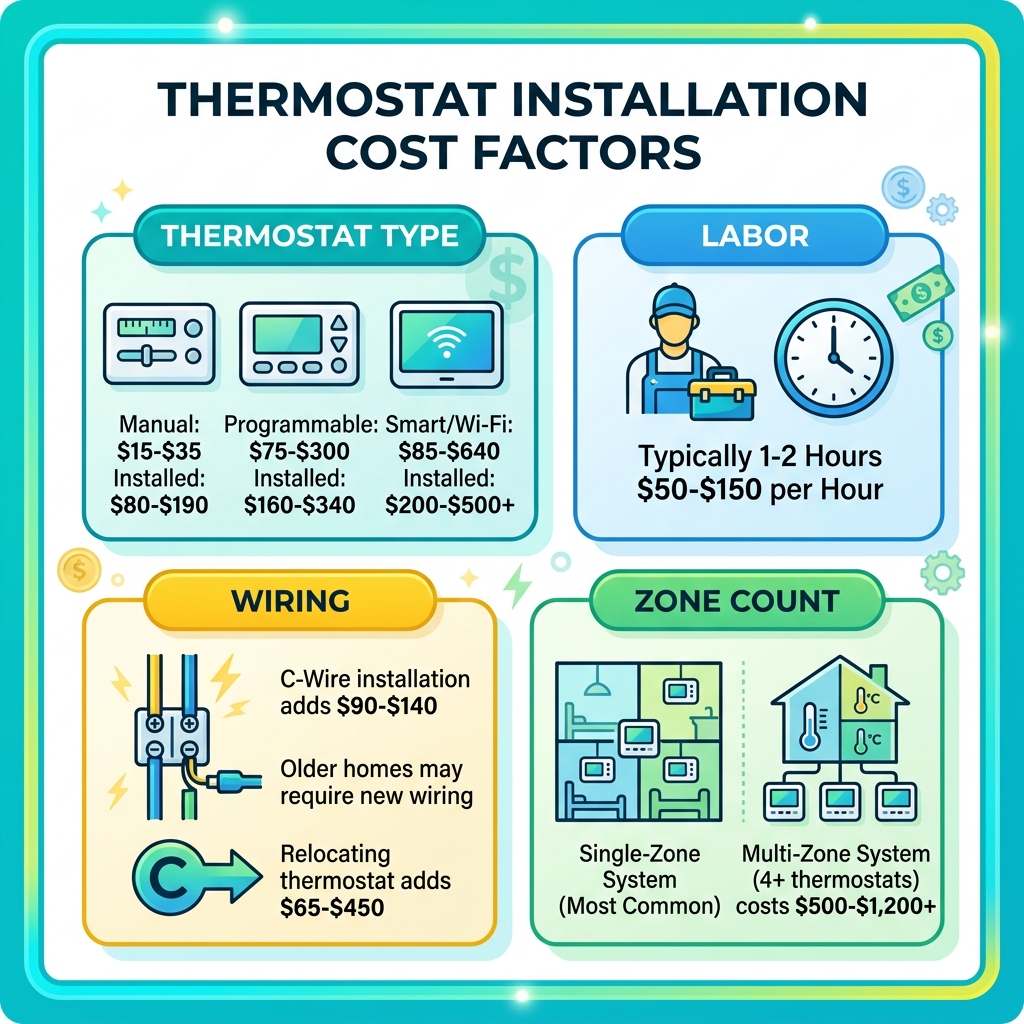
Thermostat installation cost typically ranges from $114 to $264 for most homes, with a national average around $184. But the full picture depends on the type of thermostat you choose and whether your home needs any wiring work.
Here’s a quick overview of what to budget:
| Thermostat Type | Unit Cost | Total Installed Cost |
|---|---|---|
| Manual | $15 – $35 | $80 – $190 |
| Programmable | $75 – $300 | $160 – $340 |
| Smart / Wi-Fi | $85 – $640 | $200 – $500+ |
- Labor alone typically runs $50 – $150 per hour
- Adding a C-wire (common in older homes) adds $90 – $140
- Relocating a thermostat can add $65 – $450 to the bill
- Multi-zone systems with 4+ thermostats can cost $500 – $1,200
That little device on your wall does a big job. It controls your heating and cooling 24/7, and it has a direct impact on your monthly energy bills. Yet most homeowners don’t think about the cost of replacing or upgrading it until something goes wrong — usually on the coldest day of the year.
Whether your old thermostat is acting up or you’re eyeing a smart upgrade to cut your heating costs, knowing what the installation will actually cost helps you avoid overpaying. Prices vary more than most people expect — from a simple $80 swap to a $1,200+ multi-zone project.
This guide breaks it all down clearly so you can budget with confidence.
Breaking Down the Average Thermostat Installation Cost
When we look at the thermostat installation cost for 2026, we see a market that is increasingly divided between budget-friendly basic units and high-tech energy management hubs. While the national average sits comfortably below $200, the “all-in” price can fluctuate wildly based on the hardware you select and the professional expertise required to wire it correctly.
According to data from Thermostat Installation Cost – Trane®, the unit itself can be as cheap as $15 for a manual slider or as expensive as $640 for a top-of-the-line smart model. When you add professional labor—which typically ranges from $75 to $150 per hour—the total project price reflects the complexity of your HVAC system.
| Component | Basic Setup | Mid-Range Setup | High-End Smart Setup |
|---|---|---|---|
| Thermostat Unit | $15 – $50 | $75 – $150 | $200 – $600+ |
| Professional Labor | $80 – $150 | $100 – $200 | $150 – $300 |
| Supplies/Wiring | $0 – $20 | $20 – $50 | $90 – $150 |
| Total Estimated Cost | $95 – $220 | $195 – $400 | $440 – $1,050+ |
As we move through 2026, price projections suggest that while hardware costs for mid-range smart units are stabilizing, labor rates in urban areas continue to climb. A “simple” swap in a major city like Chicago or New York might start at $422 to $506 per thermostat when factoring in minimum service call fees and local labor premiums.
Manual and Programmable Thermostat Installation Cost
If you aren’t interested in talking to your walls or checking your temperature from a beach in Hawaii, manual and non-programmable digital units remain the most budget-friendly options. These units are often “low-voltage” systems that work by simply opening or closing a circuit to trigger your furnace or AC.
For those looking for a bit more control without the high price tag, programmable thermostats offer a happy medium. These devices allow you to set schedules—such as lowering the heat while you’re at work—which can save you up to 10% on annual energy costs.
Installation for these units is usually straightforward. If you are replacing an old manual dial with a new digital programmable version in the same location, the labor is minimal. However, even these “simple” units require a basic understanding of your HVAC’s stages (single-stage vs. two-stage) to ensure the device can actually communicate with your equipment.
Smart Thermostat Installation Cost and Advanced Features
This is where the thermostat installation cost starts to climb, but for good reason. Smart thermostats are essentially small computers for your wall. They offer features that traditional units can’t touch:
- Wi-Fi Connectivity: Control your home from an app on your phone.
- Learning Algorithms: Some models “learn” your schedule over a week and program themselves.
- Geofencing: The thermostat uses your phone’s GPS to know when you’ve left the house, automatically entering “Eco Mode.”
- Remote Sensors: Place small pucks in drafty bedrooms to ensure the whole house stays comfortable, not just the hallway where the main unit sits.
Because of these advanced features, the hardware cost for a smart unit typically falls between $130 and $350, though premium models with large glass displays and built-in voice assistants can hit $600. For more details on which models offer the best bang for your buck, check out our smart thermostat reviews for energy saving.
Key Factors Influencing Your Total Project Price
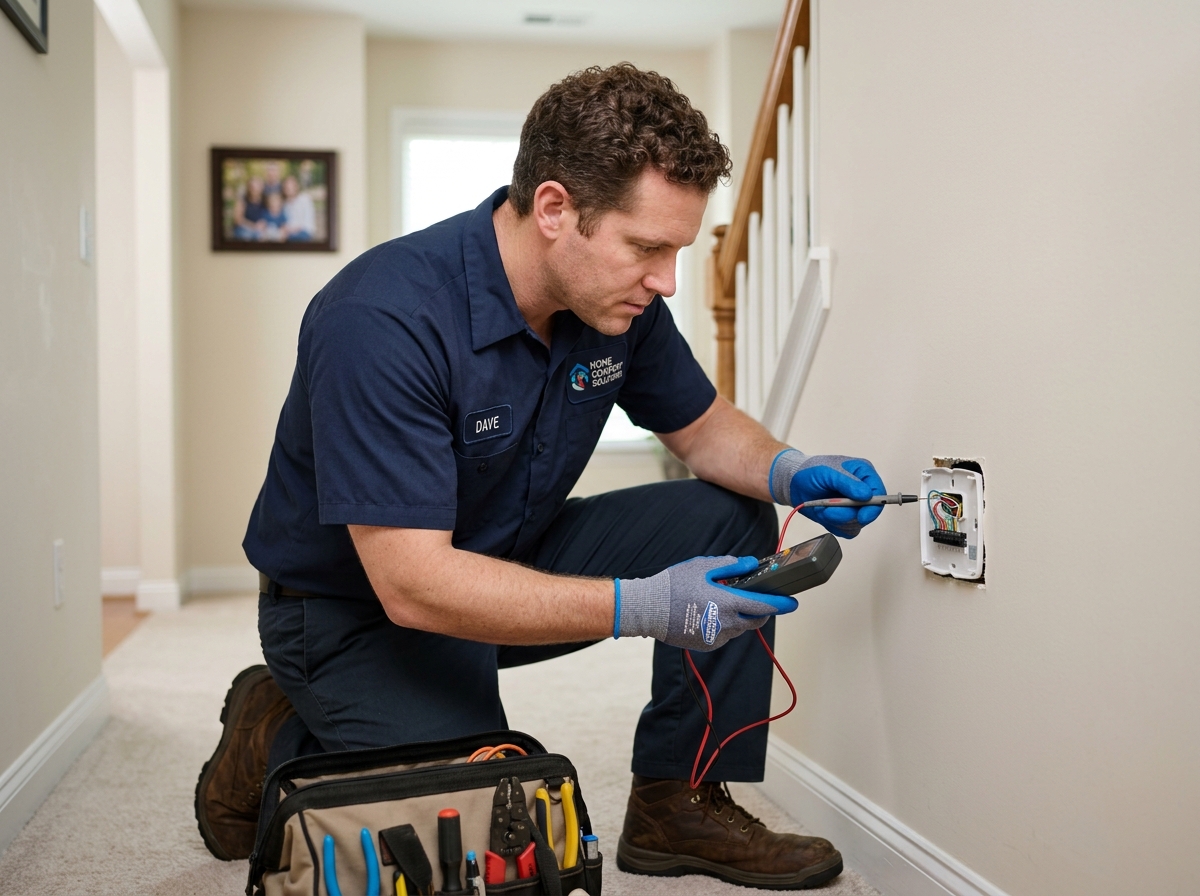
Why does one neighbor pay $150 while another pays $500? It usually comes down to what’s happening behind the drywall and inside your HVAC cabinet.
- Labor Rates and Location: Geographic location is a massive driver of cost. If you live in a high-cost-of-living urban area like Austin or San Francisco, expect to pay 20-40% more for labor than someone in a rural town. HVAC pros often charge a flat “diagnostic” or “service call” fee just to show up, ranging from $75 to $200, which may or may not include the first hour of work.
- HVAC System Compatibility: Not all thermostats play nice with all heaters. If you have a standard forced-air furnace, most thermostats work fine. However, if you have a heat pump with “auxiliary heat,” a boiler, or a high-efficiency variable-speed system, you need a specific (and often more expensive) thermostat. Using the wrong one can actually damage your HVAC system or lead to massive electric bills because the “emergency heat” is running constantly.
- Number of Units: If you have a large home with multiple zones, your costs will scale. While some pros offer a discount for the second or third unit installed during the same visit, you’re still looking at a significant multiplier for both hardware and labor.
Wiring Complexity and the C-Wire Requirement
In thermostat upgrades, the “C-wire” (or Common wire) is the most frequent hurdle. Older thermostats ran on AA batteries or “stole” power from the HVAC system in tiny pulses. Modern smart thermostats with color screens and Wi-Fi need a constant, steady stream of 24V power. That power comes through the C-wire.
If your home was built before the mid-2000s, there’s a good chance you don’t have one. According to How Much Does Thermostat Replacement Cost?, adding a C-wire can involve:
- Running new 18/5 cable: This is the “proper” way but requires fishing wire through walls, costing $90–$140 in labor.
- C-Wire Adapters/Power Extender Kits: Many brands like Nest or Ecobee sell a “Power Extender Kit” (PEK) for $25–$50. This allows the thermostat to work without a dedicated C-wire by reconfiguring the existing wires.
Dealing with electrical wiring carries a risk of blowing a fuse on your HVAC control board—a mistake that turns a $150 DIY project into a $400 professional repair.
Multi-Zone Systems and Relocation Costs
If you want to move your thermostat from a drafty hallway to a central living area, be prepared for “scope creep.” Relocating a thermostat is rarely as simple as moving the box. It involves:
- Running new wiring through the wall/ceiling.
- Patching and painting the old hole.
- Ensuring the new location isn’t in direct sunlight or near a kitchen vent, which would give false temperature readings.
This process can add $65 to $450 to your thermostat installation cost. Furthermore, if you are installing a multi-zone system (where different floors have different temperatures), you aren’t just buying a thermostat. You are paying for zone controllers and dampers inside your ductwork. A full multi-zone overhaul can range from $2,000 to $12,500 depending on the size of the home and the complexity of the ductwork.
DIY vs. Professional Installation: When to Hire a Pro
We all love the satisfaction of a successful DIY project, and for a “like-for-like” swap (replacing an old digital unit with a new one using the exact same wires), most homeowners can handle it in 30 minutes. Most smart thermostats even come with step-by-step apps that walk you through the process.
However, we recommend hiring a professional in the following scenarios:
- Warranty Validity: Some high-end brands require professional installation to keep the manufacturer’s warranty valid. If the unit fails in year two and you installed it yourself, you might be out of luck.
- Complex Systems: If you have a heat pump, a dual-fuel system (gas furnace + electric heat pump), or integrated humidifiers/dehumidifiers, the wiring gets complicated quickly.
- No C-Wire: If you aren’t comfortable opening your furnace cabinet to install a power adapter or fishing wire through a wall, call a pro.
- The 50% Rule: If your current thermostat is broken and the repair (calibration, wiring fix, etc.) costs more than 50% of a new unit, it’s always better to put that money toward a modern replacement.
For a deeper dive into which smart models are worth the professional investment, see our smart thermostat reviews 2026.
Maximizing ROI: Energy Savings and Rebates
The best part about the thermostat installation cost is that it’s one of the few home improvements that actually pays you back.
- Direct Savings: The Department of Energy (DOE) notes that homeowners can save about 10% a year on heating and cooling by simply turning their thermostat back 7°-10°F for 8 hours a day from its normal setting. Smart thermostats do this automatically, often resulting in 8-15% annual savings ($100 – $145 per year).
- Utility Rebates: Many utility companies (like those in the Mass Save® program) offer instant rebates of $50 to $100 for installing an ENERGY STAR® certified smart thermostat. In some cases, the rebate covers nearly the entire cost of the device!
- Home Value: While a new thermostat won’t add $5,000 to your home’s appraisal, it significantly boosts “buyer appeal.” Modern buyers look for smart home features and energy efficiency as a sign that the home has been well-maintained.
Frequently Asked Questions about Thermostat Costs
What are the signs that my thermostat needs to be replaced rather than repaired?
If your HVAC system is “short-cycling” (turning on and off every few minutes), your display is blank despite fresh batteries, or your home temperature doesn’t match the reading on the screen, it’s time for a change. Also, if your thermostat is more than 10 years old, it likely uses outdated technology that is costing you money in efficiency.
How long does a professional thermostat installation typically take?
A straightforward replacement usually takes an HVAC technician between 30 and 90 minutes. If they need to run a new C-wire or troubleshoot a complex multi-stage system, it could take up to 3 hours.
Are there specific permits required for upgrading to a smart thermostat?
For a simple swap of an existing unit, permits are almost never required. However, if the project involves significant electrical upgrades, moving the unit to a brand-new location that requires new wiring through the framing, or modifying your HVAC system’s core components, a small electrical permit ($25–$100) might be necessary depending on your local building codes.
Conclusion
Upgrading your home’s climate control doesn’t have to be a financial headache. While the initial thermostat installation cost might seem like an annoying expense, it is an investment in your comfort and your wallet. By choosing the right hardware for your needs—whether it’s a simple programmable unit or a cutting-edge learning thermostat—you can take control of your utility bills for years to come.
Before you buy, always check your HVAC compatibility and look for those sweet utility rebates that can slash your out-of-pocket costs. If you’re ready to explore more ways to modernize your living space, check out our more info about smart device services to see how technology can make your home more efficient.
At Financefyx, we believe in making home maintenance transparent and affordable. Get a few professional quotes, compare them against the national averages we’ve discussed, and you’ll be well on your way to a cozier, more cost-effective home.
