
How to Get Paid for a Cozier Home
The Government Will Pay You to Insulate Your Home (Here’s How)
Tax credits for insulation let you claim 30% of your insulation material costs back on your federal taxes — up to $1,200 per year — with no lifetime limit through 2025.
Here’s a quick summary:
| Detail | Amount |
|---|---|
| Credit percentage | 30% of product costs |
| Maximum annual credit (insulation) | $1,200 |
| Overall annual credit cap | $3,200 |
| Available through | December 31, 2025 |
| Labor costs covered? | No — materials only |
| Income limits? | None |
| Refundable? | No |
This credit comes from the Energy Efficient Home Improvement Credit, expanded by the Inflation Reduction Act of 2022. It applies to existing homes used as your primary residence in the US.
If your home is cold in winter, drafty near windows, or your heating bill keeps climbing — upgrading your insulation is one of the highest-ROI home improvements you can make. And right now, the federal government helps foot part of the bill.
One homeowner paid $4,200 for attic and exterior wall insulation, got $1,200 back through the tax credit, and saw heating costs drop by 30% the following winter. That’s a real return on investment — before you even count the energy savings.
The credit is straightforward, requires no special income qualifications, and can be claimed every single year through 2025.
Understanding the Federal Tax Credits for Insulation
When we talk about getting a “kickback” for making your home more efficient, we are referring to the Energy Efficient Home Improvement Credit (formally known as Section 25C of the tax code). This isn’t just a small deduction; it is a dollar-for-dollar credit against the taxes you owe.
Under the current rules, you can claim 30% of the cost of the materials you buy to seal and insulate your home. The maximum amount you can get back for insulation specifically is $1,200 per year. It is important to remember that this is a non-refundable credit. This means it can reduce your tax bill to zero, but the IRS won’t send you a check for the difference if your credit is larger than what you owe.
Because there is no “lifetime limit,” we can think of this as an annual budget. If you insulate your attic this year, you can claim the credit. If you decide to insulate your crawlspace next year, you can claim it again! This allows for a multi-year strategy to slowly turn your house into a thermal fortress. For a deeper dive into why this matters, check out our guide on Insulating Your Home for Energy Efficiency.
For more official details, you can visit the Energy Efficient Home Improvement Credit page on the IRS website.
Annual Limits and the $3,200 Cap
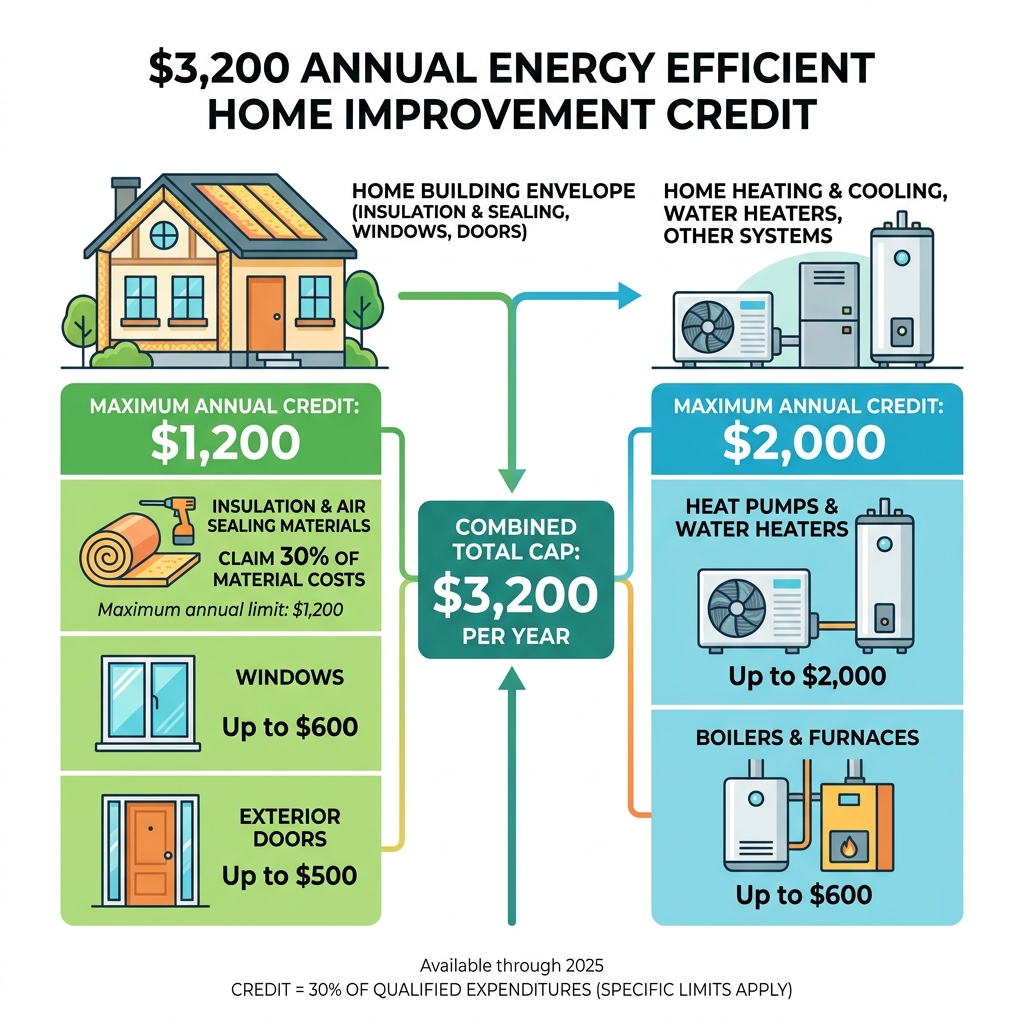
While the $1,200 limit for tax credits for insulation is generous, it is part of a larger “pot” of money. The total annual limit for the Energy Efficient Home Improvement Credit is $3,200. This is split into two main categories:
- The $1,200 Envelope Limit: This covers things like insulation, air sealing, windows ($600 max), and exterior doors ($250 per door, $500 total).
- The $2,000 Heat Pump Limit: This is a separate “bonus” limit specifically for heat pumps, heat pump water heaters, and biomass stoves.
If you are planning a massive home overhaul, you need to watch these caps. For example, if you spend $4,000 on insulation (30% is $1,200) and also install a heat pump, you could potentially claim the full $3,200 in a single year.
| Category | Annual Credit Max | Percentage of Cost |
|---|---|---|
| Insulation & Air Sealing | $1,200 | 30% |
| Exterior Windows/Skylights | $600 | 30% |
| Exterior Doors | $500 ($250 each) | 30% |
| Home Energy Audits | $150 | 30% |
| Heat Pumps / Biomass Stoves | $2,000 | 30% |
To see how these fit into the broader federal landscape, visit Federal Tax Credits for Energy Efficiency.
Material Costs vs. Labor Expenses
Here is the “catch” that many homeowners miss: for building envelope improvements like insulation, windows, and doors, the tax credit only covers the cost of the materials.
If you hire a contractor to blow cellulose into your attic for $3,000, and the invoice shows $1,000 for materials and $2,000 for labor, you can only claim 30% of that $1,000 ($300). This is why it is absolutely vital to ask your contractor for an itemized receipt that clearly separates product costs from labor.
On the bright side, this makes insulation a fantastic project for the weekend warrior. If you go to the hardware store, buy the batts yourself, and spend Saturday in the crawlspace, the entire purchase qualifies for the 30% credit because there are no labor costs to subtract! If you’re ready to get your hands dirty, check out The Ultimate DIY Guide to Mastering Batt Insulation.
What Qualifies? Eligible Materials and Technical Standards
Not every roll of pink fluff or can of foam qualifies for the credit. To keep things simple, the IRS looks for products that are primarily designed to reduce heat loss or gain.
Types of Eligible Tax Credits for Insulation Materials
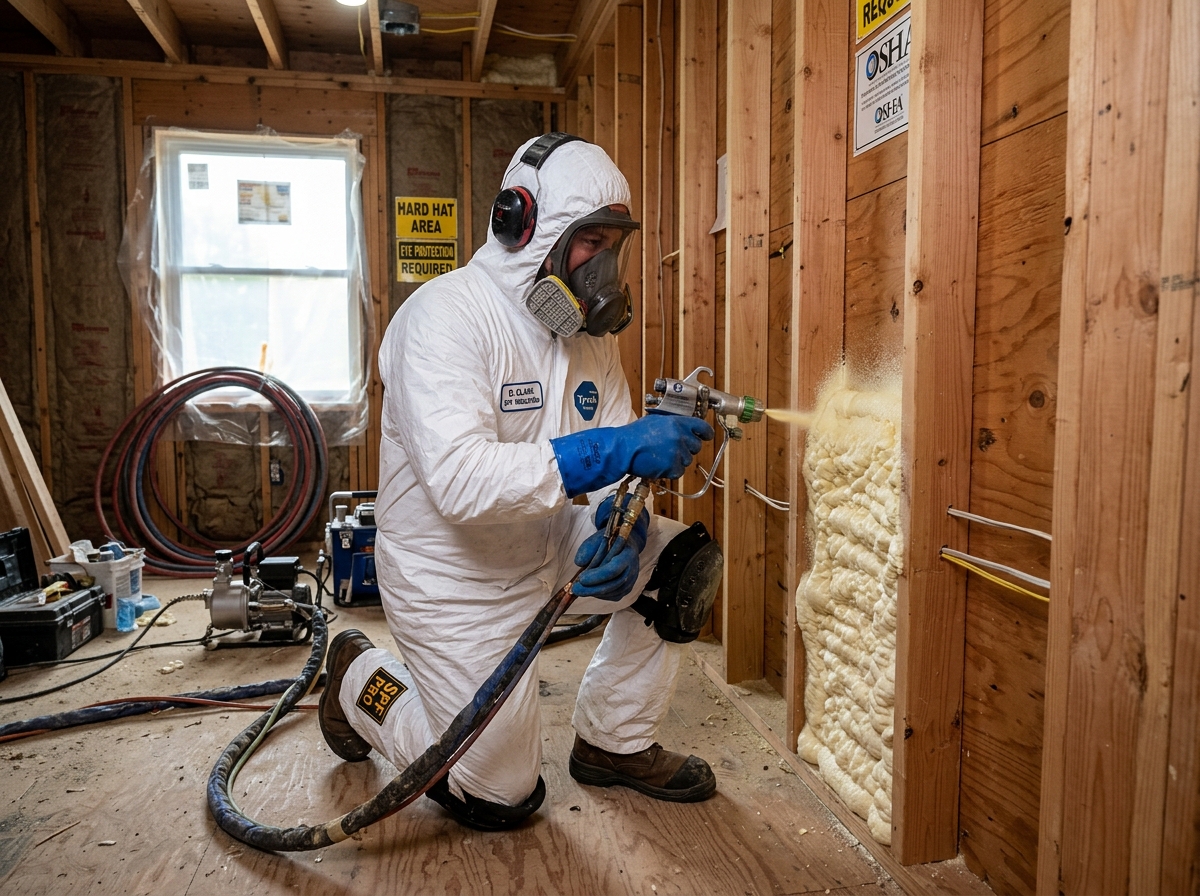
The credit covers “typical bulk insulation products” and “air sealing products.” This includes:
- Fiberglass Batts and Rolls: The classic insulation found in most attics.
- Cellulose: Often used for “blow-in” applications in walls and attics.
- Rigid Foam Board: Great for basement walls and exterior sheathing.
- Expanding Spray Foam: Both professional-grade and the “stuff in a can” for small gaps.
- Air Sealing Materials: This is a huge win for homeowners. Things like caulk, weather stripping, and house wrap qualify as long as they come with a Manufacturer’s Certification Statement.
If you are wondering which material is right for your specific climate or room, take a look at our A Comprehensive Thermal Insulation Comparison. You can also find a list of eligible product types at Insulation Tax Credit | ENERGY STAR.
Meeting IECC Standards for Tax Credits for Insulation
To qualify for the tax credits for insulation, the materials must meet the International Energy Conservation Code (IECC) standards that were in effect two years prior to the year of installation. For 2024 and 2025, this generally means following the 2021 IECC standards.
What does this mean for you? It means you should look for the Manufacturer’s Certification Statement. This is a document (often found on the manufacturer’s website) that officially states the product meets the required energy standards for the tax credit. Keep a digital or physical copy of this with your tax records; you don’t need to send it to the IRS, but you’ll need it if you’re ever audited.
The Department of Energy provides a great breakdown of these standards in their Energy-Efficient Home Improvement Credit Insulation and Air-Sealing Essentials.
Eligibility Requirements for Homeowners
Before you head to the store, we need to make sure your home qualifies. The rules are fairly specific:
- Existing Home: The credit is for improvements to your current home. It cannot be used for new construction.
- Principal Residence: The insulation must be installed in a home that you own and use as your main home.
- US Location: The home must be located in the United States.
- Renters Can Qualify: Surprisingly, if you are a renter and you pay for the insulation yourself (with the landlord’s permission, of course), you can claim the credit for your principal residence!
Insulating an older home is one of the best ways to bring modern comfort to a vintage space. We’ve put together a guide on Old House New Warmth a Guide to Modern Insulation to help you navigate the quirks of older buildings.
Property Restrictions and Business Use
There are a few “No-Go” zones for these tax credits:
- Second Homes: Generally, you cannot claim the insulation credit for a vacation home or a second home. The “envelope” improvements (insulation, windows, doors) are strictly for your primary residence. (Note: Some HVAC and water heater credits can be used for second homes, but not insulation).
- Rental Properties: If you are a landlord and you insulate a property you don’t live in, you cannot claim this specific tax credit.
- Business Use: If you use part of your home for business (like a home office), you can still claim the full credit as long as the business use is 20% or less. If your home is more than 20% business, you have to calculate the credit based on the percentage of the home used for living.
For those living in older homes that might be “burning money” through the walls, check out Stop Burning Money and Start Insulating Your Vintage Home.
How to Claim and Maximize Your Savings
Claiming the credit is actually the easiest part of the process. You don’t need to apply for a grant or wait for a rebate check in the mail. You simply claim it when you file your annual federal income tax return.
The Golden Rule: Use IRS Form 5695. You will fill out Part II of IRS Form 5695 (Residential Energy Credits). You’ll enter the total cost of your insulation materials on the appropriate line, calculate the 30%, and then transfer that number to your main 1040 form.
Record Keeping is Key: You don’t need to attach your receipts to your tax return, but we strongly recommend keeping a “Tax Credit Folder” that includes:
- The sales receipt (showing the cost of the insulation).
- The Manufacturer’s Certification Statement.
- The date the insulation was actually installed (the “placed in service” date).
The IRS provides a step-by-step guide on How to claim an energy efficient home improvement tax credit – exterior doors, windows, skylights and insulation materials. For more ideas on how to save, see our Energy Saving Methods for Home Insulation.
Strategic Planning for Tax Credits for Insulation
If you want to be a “tax credit pro,” don’t do everything at once. Because the $1,200 limit resets every year, we recommend spreading your projects out.
- Year 1: Get a professional Home Energy Audit (you get a $150 credit for this!). Use the audit to find the biggest leaks. Then, spend $4,000 on attic insulation to max out your $1,200 credit.
- Year 2: Now that your attic is sealed, your house is more efficient. This might allow you to install a smaller (and cheaper) heat pump. Claim up to $2,000 for the heat pump and maybe $600 for new windows.
- Year 3: Insulate the crawlspace or basement walls. Claim another $1,200.
A Note for 2025 and Beyond: Starting in 2025, the IRS may require a “Product Identification Number” (PIN) or a Qualified Manufacturer Identification Number (QMID) for certain items. While insulation is currently exempt from some of the stricter PIN requirements, always check the packaging for a 2025-compliant code before you buy.
For more tips on starting with the attic, read Attic Insulation Tips Save Energy and Money.
Frequently Asked Questions about Insulation Credits
Are there income limitations for the insulation tax credit?
No! Unlike many state-level rebates or the upcoming HEEHRA rebates (which are income-dependent), the federal tax credits for insulation are available to everyone regardless of how much money you make. The only “limit” is that you must have some tax liability (meaning you actually owe taxes) to use the credit, as it is non-refundable. For more on other types of incentives, see Renewable Energy Incentives for Homeowners.
Can I carry over unused credits to next year?
Unfortunately, no. The Energy Efficient Home Improvement Credit (Section 25C) is a “use it or lose it” annual credit. If you have $1,500 in credits but only owe $1,000 in taxes, the remaining $500 disappears. This is different from the Residential Clean Energy Credit (for solar panels), which does allow you to carry over unused amounts. This is why we suggest reading The Ultimate Guide to Insulating Your Home to plan your spending wisely.
What is the deadline for installation?
The current version of the $1,200 annual credit is available for products “placed in service” through December 31, 2025. However, the Inflation Reduction Act actually extended the program in various forms through 2032. While the rules might shift slightly after 2025, the incentive to insulate isn’t going away anytime soon. If you’re tired of feeling a breeze through your walls, see our advice on Stop the Draft with These Exterior Wall Insulation Choices.
Conclusion
At Financefyx, we believe that the best way to grow your wealth is to stop wasting it on high utility bills. By taking advantage of tax credits for insulation, you aren’t just getting a discount on a home improvement project; you are investing in an asset that pays you back every month in the form of lower energy costs.
Whether you are doing a DIY project in your crawlspace or hiring a pro to revitalize your 100-year-old attic, the federal government is ready to help you cover 30% of the cost. Don’t leave that money on the table—start planning your upgrades today and enjoy a cozier, more affordable home tomorrow.
