
The Hinge Side of Life: A Door Insulation Guide
Why Cold Drafts Around Your Door Are Costing You Money
Door frame insulation is one of the most effective and affordable ways to stop heat loss, lower energy bills, and make your home more comfortable in winter.
Here’s a quick overview of how to insulate your door frame:
- Detect drafts – Hold your hand or a lit candle near the door frame edges to find air leaks
- Measure the gap – Use a ruler to measure the space between your door and the frame
- Choose the right product – Match the material (foam, rubber, silicone, or vinyl) to your gap size
- Clean the surface – Wipe down the frame before applying any adhesive product
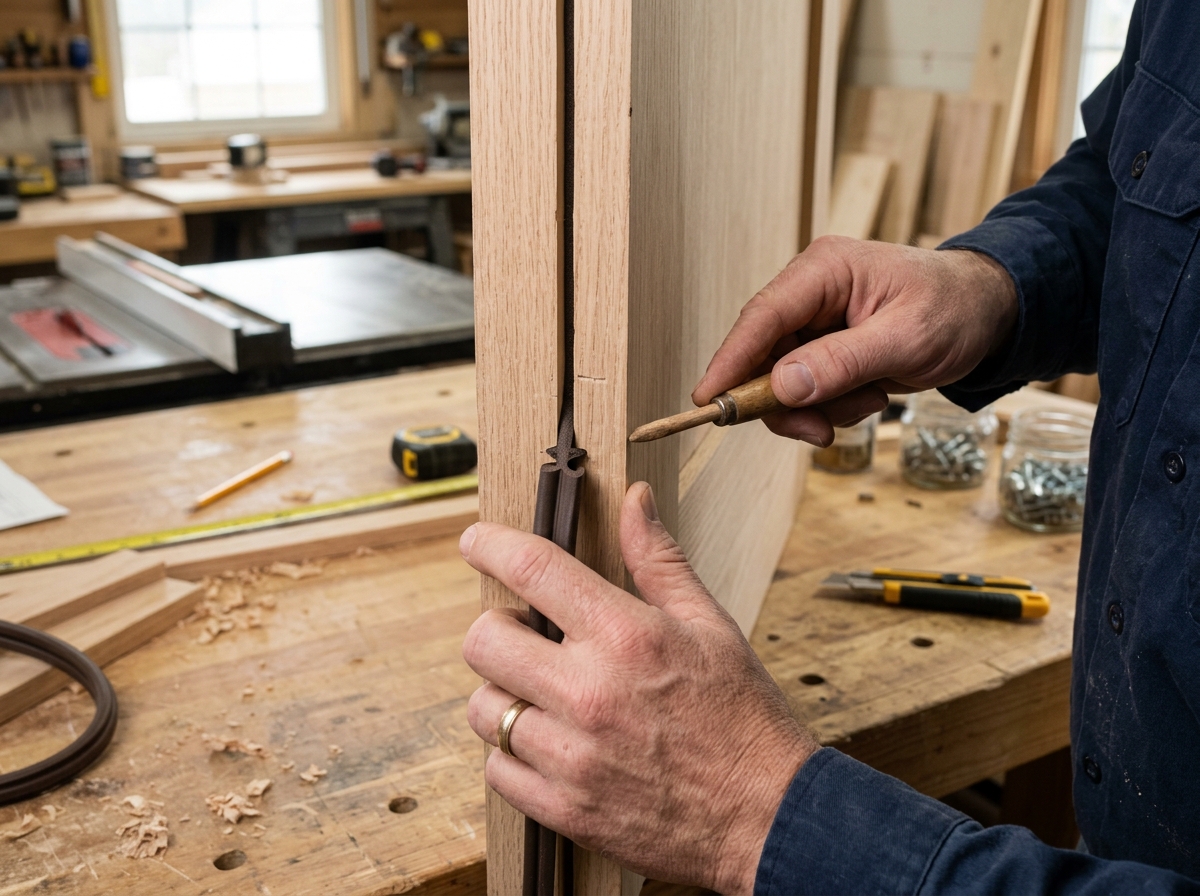
- Install the seal – Press self-adhesive strips firmly into place, or insert kerf-style strips into the door groove
- Test the seal – Close the door and check for remaining light or airflow
Most homeowners can complete this in under an hour with basic tools and products costing as little as $5–$20.
Doors and windows are among the biggest sources of heat loss in any home. That thin gap between your door and its frame might look small, but it works like an open vent — letting warm air out and cold air in, all winter long.
The result? Your heating system works harder, your bills go up, and you still feel a chill near the entrance.
The good news is that fixing it doesn’t require a contractor or a new door. With the right insulation products and a bit of know-how, you can seal those gaps yourself and start saving money almost immediately.
This guide walks you through everything — from picking the right materials to installing them correctly and keeping them in good shape for years to come.
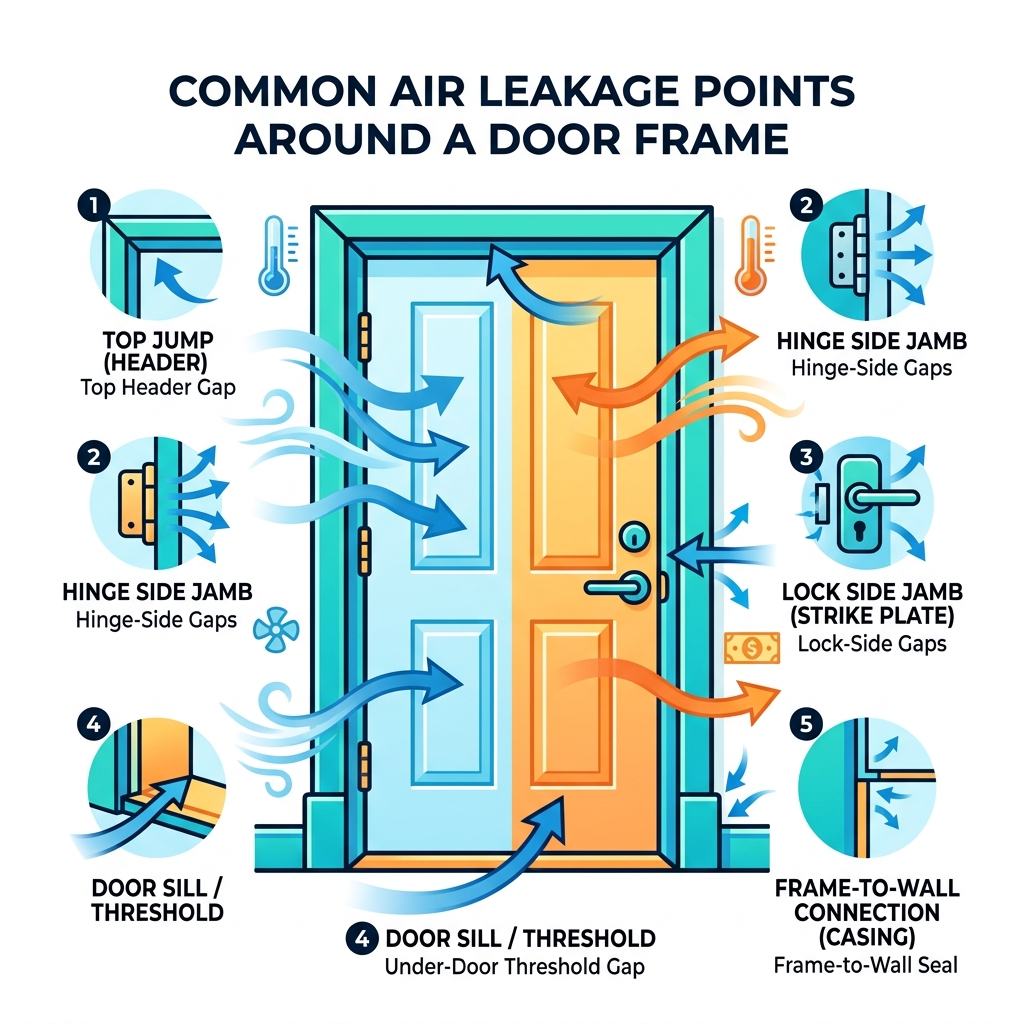
Understanding Door Frame Insulation and Its Benefits
When we talk about door frame insulation, we aren’t just talking about stuffing pink fiberglass into the walls (though that is part of it if you’re doing a deep renovation!). For most of us, it refers to the specialized seals and barriers applied to the “jamb”—the vertical and horizontal parts of the frame that the door meets when it closes.
Think of it like a warm blanket for your entryway. By creating a tight thermal barrier, we effectively stop the “exchange” of air. In the winter, this keeps your expensive heated air inside. In the summer, it keeps the humid, sweltering air out. This is a core part of insulating your home for energy efficiency, as doors are often the “weakest link” in a home’s thermal envelope.
The benefits go far beyond just your wallet, though:
- Noise Reduction: High-density door frame insulation products, like rubber or silicone D-strips, act as acoustic seals. They dampen the sound of traffic, barking dogs, or noisy neighbors.
- Dust and Pollen Prevention: If air can get in, so can particulates. Sealing your door frame helps keep your indoor air quality higher and your dusting chores lower.
- Insect Deterrent: Spiders and ants don’t need a wide-open door; a 1/8-inch gap is like a highway for them. Proper sealing shuts down their entry points.
- Moisture Control: Gaps can allow wind-driven rain to seep into the frame, leading to rot. Specialized Door and Window Frame Insulation products create a water-resistant seal that protects the structural integrity of your home.
By addressing these gaps, we aren’t just saving pennies on the dollar; we are fundamentally improving the “feel” of our living space.
Choosing the Right Materials for Your Door Gaps
Not all gaps are created equal. Some are consistent slivers of light, while others are wide, uneven chasms caused by a house settling over time. Before you head to the store or browse Amazon (where you’ll find over 4,000 results for door frame insulation), you need to know what you’re looking for.
To find the right fit, we recommend the “coin test.” If you can slide a nickel into the gap, you have a medium gap. If a quarter fits easily, you’re looking at a large gap. This measurement is crucial because if the material is too thick, the door won’t latch; if it’s too thin, it won’t seal.
Here is a quick comparison of the most common materials we use:
| Material | Best For | Durability | Ease of Install |
|---|---|---|---|
| Open-Cell Foam | Small gaps, interior doors | Low | Very Easy (Self-adhesive) |
| Closed-Cell Rubber | Medium/Large gaps, exterior | High | Easy (Self-adhesive) |
| Silicone | All-weather, high-end finish | Excellent | Moderate |
| Vinyl/V-Strip | Sliding doors, consistent gaps | Moderate | Easy |
| Kerf/Q-Foam | Doors with pre-cut grooves | High | Moderate (No adhesive) |
When you’re diving into the ultimate guide to insulating your home, you’ll notice that the “shape” of the seal matters just as much as the material.
- D-Shape Seals: These are hollow in the middle, allowing them to compress significantly. They are perfect for uneven gaps.
- Wedge Foam: These are often used in the corners of the door frame (the “hinge side”) to prevent air from sneaking through the 90-degree joints.
- Self-Adhesive Backing: Most DIY products come with a “peel and stick” back. While convenient, the quality of the adhesive varies. For long-term success, look for high-bond tapes.
Selecting Door Frame Insulation for Exterior Doors
Exterior doors take a beating. They deal with UV rays, freezing rain, and constant slamming. For these, we need heavy-duty solutions.
Rubber and silicone are the champions of the exterior world. Unlike cheap foam, which can crumble after one season of sun exposure, high-quality rubber stays flexible down to -40°F. If you have a modern door, it might already have a “kerf” or a slot cut into the frame. In this case, you should use a vinyl-clad polyurethane foam seal. These don’t use adhesive; they simply “press” into the slot.
Another pro tip for exterior doors is to look for “compression seals.” These are designed to be squished when the door closes, creating a vacuum-like airtight fit. This is essential for how to seal air leaks to save energy effectively, especially in climates with high wind.
Specialized Door Frame Insulation for Interior and Garage Doors
We often forget about interior doors, but if you have a room that you don’t heat (like a guest room or a basement), that door needs insulation too. For interior doors, soundproofing is often the primary goal. Using a high-density felt or a thin foam tape can stop the “whistling” of air moving between rooms and keep the noise of the TV out of the bedroom.
Garage doors are a different beast entirely. Because they are so large, they move and shift. We recommend brush seals or heavy-duty “top and side” seals made of dual vinyl. These can bridge gaps up to an inch wide and are tough enough to handle the dust and grime of a garage environment.
If you’re looking to keep the heat in your garage-adjacent rooms, check out our catch the heat insulation tips for winter for more specialized advice.
Step-by-Step Guide to Installing Weather Stripping
Ready to get your hands dirty? (Don’t worry, it’s not actually that dirty.) Follow these steps to ensure your door frame insulation stays put and does its job.
1. Surface Preparation
Adhesive is the “Achilles’ heel” of weather stripping. If the door frame is dusty, oily, or has peeling paint, your new seal will fall off within a week.
- Clean: Use a mixture of water and mild soap (or rubbing alcohol) to wipe the entire jamb.
- Dry: Let it dry completely. If you’re in a rush, a hair dryer works wonders.
2. Measuring and Cutting
Measure twice, cut once!
- Measure the top horizontal piece first, then the two vertical sides.
- Use sharp scissors or a utility knife. For rubber seals, we find that a “square” cut at the corners is usually better than a miter cut for beginners, as it’s easier to butt the pieces together tightly.
3. Application
- Peel and Stick: Peel back about 6 inches of the adhesive backing at a time.
- Placement: Position the strip so that it will be compressed by the door when it closes, but not so far in that it interferes with the latch.
- Pressure: Once it’s in place, run your thumb firmly down the entire length of the strip to “set” the adhesive.
4. Kerf Insertion (If applicable)
If your door has a groove, you don’t need adhesive. Simply start at the top corner and push the “barb” of the weather stripping into the channel. You can use a flat-head screwdriver to gently tuck it in if it’s being stubborn.
5. The “Paper Test”
To see if you’ve been successful with your energy-saving methods for home insulation, try the paper test. Close the door on a piece of notebook paper. If you can pull the paper out easily, the seal isn’t tight enough. If the paper stays put or offers significant resistance, you’ve got a winner!
Troubleshooting and Maintaining Your Door Seals
Even the best door frame insulation won’t last forever. Most products have a lifespan of 3 to 8 years, depending on use and climate.
Common Issue: Peeling Adhesive If your seal is peeling, don’t just tape it back up. Remove the loose section, clean the frame with alcohol to remove old residue, and apply a fresh piece. In some cases, you can use a tiny bead of super glue or a couple of small staples (if the frame is wood) to secure the ends.
Common Issue: Compression Set Over time, foam can lose its “bounce” and stay flat. This is called a compression set. When this happens, the seal is gone. You’ll need to strip it and replace it.
The “Hidden” Leaks Sometimes the frame is sealed, but you still feel a draft. Check these two culprits:
- The Letterbox: If you have a mail slot in the door, it’s a giant hole for air. Install a brush-style letterbox seal.
- The Keyhole: On older doors, the keyhole can be a surprisingly large source of drafts. A simple swinging keyhole cover can fix this.
- Loose Screws: Check the hinges. If the screws are loose, the door will sag, creating an uneven gap that no weather stripping can fix. Tighten those up first!
For more tips on maintaining your home’s thermal envelope, our attic insulation tips save energy and money guide offers great insights into how air moves through the entire house.
Frequently Asked Questions about Door Sealing
How do I measure my door frame gaps accurately?
Accuracy is key! We recommend using a ruler or a tape measure at three points: the top, the middle, and the bottom. Doors are rarely perfectly straight. If your gap is 1/8″ at the top but 1/4″ at the bottom, you’ll need a flexible D-shape seal or a “medium-to-large” gap product that can handle the variance. You can also use the “Coin Test” mentioned earlier:
- Dime: Small gap (1/16″)
- Nickel: Medium gap (1/8″)
- Quarter: Large gap (3/16″+)
When should I replace my door instead of just insulating the frame?
Sometimes, no amount of door frame insulation will save a dying door. If your door is warped (you can see a curve when looking down the edge), the frame is rotting at the bottom, or there are visible cracks in the door’s core, it’s time for a replacement.
If the gaps are inside the wall (between the door jamb and the studs), you can use a product like Hilti Window and Door Pro Low-Pressure Filler Insulating Foam. This “low-pressure” foam is specifically designed not to expand so much that it bows the door frame, which is a common mistake with standard expanding foams.
Can door insulation help with soundproofing?
Absolutely! Sound travels through air. If air can get through, sound can too. By using high-density rubber or silicone seals, you can achieve a significant decibel reduction. For the best results, look for “acoustic seals” or “triple-fin” designs that create multiple air pockets to dampen vibrations.
Conclusion
At Financefyx, we believe that home improvement shouldn’t be a headache or a drain on your savings. Door frame insulation is the “low-hanging fruit” of energy efficiency. It’s a project you can tackle on a Saturday morning that pays for itself by the time your next utility bill arrives.
By choosing the right materials, preparing your surfaces properly, and performing an annual check-up on your seals, you can enjoy a quieter, cleaner, and much warmer home. Once you’ve mastered the door, why stop there? You can further save energy with insulated window treatments to keep the rest of your home just as cozy.
Ready to take the next step in your home’s efficiency journey? Explore more energy-saving tips and let’s make your home the most comfortable place it can be!
