
Stop the Draft with These Home Winter Caulking Tips
Why Drafty Windows and Doors Are Costing You More Than You Think
Home winter caulking tips can make a real difference in your comfort and your heating bill this season. Here’s a quick summary if you need it fast:
Quick Answer: Home Winter Caulking Tips
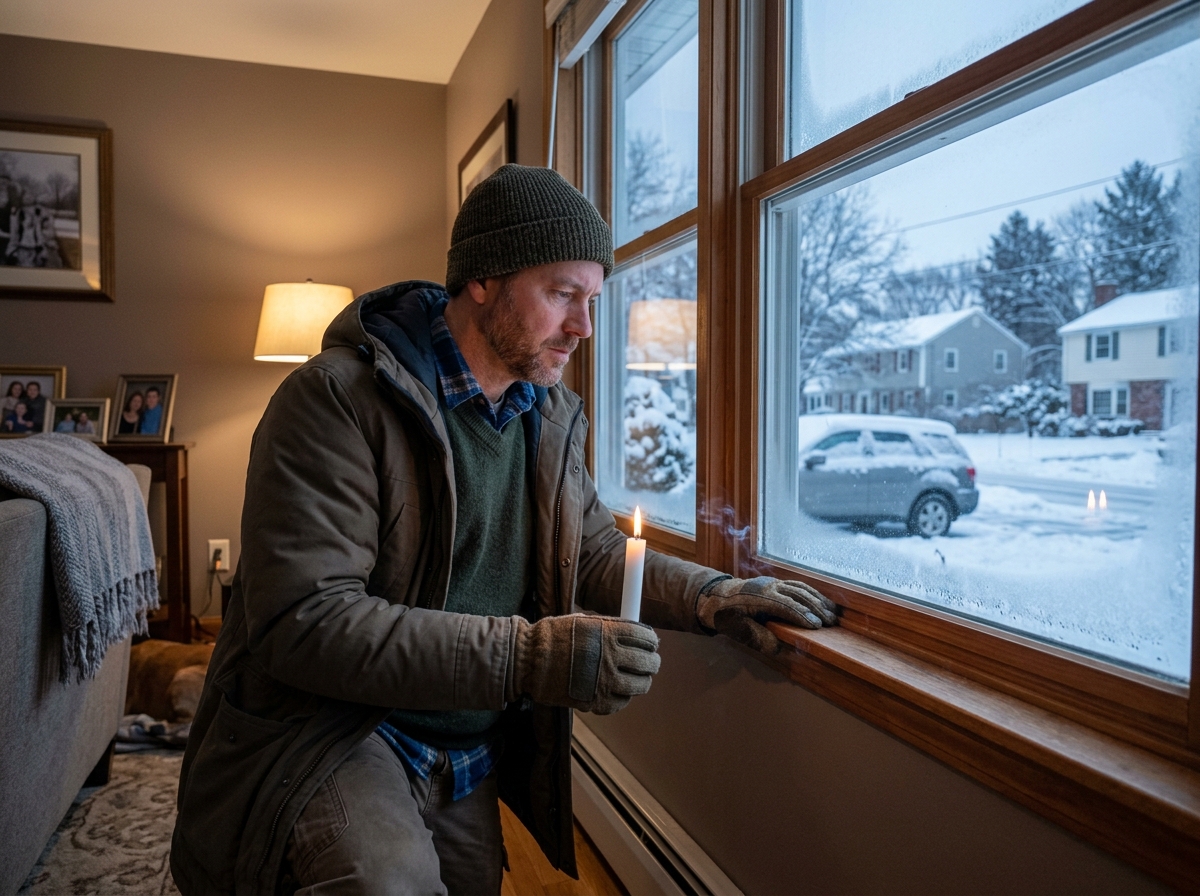
- Find the leaks – Hold a candle or incense stick near windows and doors. Watch for flickering or smoke movement.
- Pick the right caulk – Use silicone or acrylic-latex caulk rated for cold weather (some work down to 20°F).
- Prep the surface – Remove old caulk, clean with a damp cloth, and make sure the surface is completely dry.
- Warm the caulk tube – Store it indoors at room temperature for at least a day before use.
- Apply on a dry day – Aim for above 40°F. Work during the warmest part of the day.
- Seal the right spots – Apply caulk between window frames and siding (exterior) and between windows and trim (interior).
- Avoid these areas – Never caulk weep holes, moving window parts, or over existing caulk.
- Let it cure – Cold weather can extend full curing to up to 10 days. Keep it dry during this time.
- Repeat every 3-5 years – Inspect caulk annually and replace when it cracks or peels.
Here’s a number that stings: according to the Department of Energy, 25% to 30% of your home’s heat escapes through leaky windows. Overall, windows and walls together can account for 15% to 35% of total heat loss.
That’s not a small leak. That’s your furnace working overtime, every single day, all winter long.
The good news? Fixing it doesn’t require a contractor or a big budget. A tube of caulk and a couple of hours can seal those gaps and start paying you back in lower heating bills almost immediately.
And yes – you can caulk in winter. Even in cold weather. You just need to know what products to use and how to apply them correctly.

Why home winter caulking tips Matter for Your Budget
We often think of home maintenance as a chore, but when it comes to winterizing, it’s more like an investment that pays dividends every month. When we talk about home winter caulking tips, we aren’t just talking about aesthetics; we are talking about protecting your wallet.
As mentioned, the Department of Energy highlights that a massive chunk of heat loss occurs through leaky windows. If you can feel a draft when you walk past your front door or sit near a window, you are essentially paying to heat the great outdoors. By learning how to seal air leaks to save energy, you reduce the load on your HVAC system. This doesn’t just lower your monthly bill; it extends the lifespan of your furnace because it isn’t forced to work overtime to keep up with the cold air seeping in.
Beyond the immediate energy savings, caulking is vital for maintaining your home’s structural integrity. Winter brings snow and ice, which eventually melt. Without a proper seal, that moisture can find its way into your wall cavities, leading to mold growth, wood rot, and expensive structural repairs. A simple $10 tube of sealant can prevent thousands of dollars in water damage. It’s the ultimate “ounce of prevention” for any homeowner.
Choosing the Best Caulk for Winter Applications
Not all caulks are created equal, especially when the mercury starts to drop. If you grab a random tube off the shelf in January, you might find it’s as stiff as a board and refuses to stick to anything. For successful home winter caulking tips, you need to match the material to the environment.
| Caulk Type | Best Use | Temperature Range | Paintable? |
|---|---|---|---|
| Silicone | Exterior/Wet areas | Can apply down to 20°F | No |
| Polyurethane | Exterior/High traffic | Above 40°F | Yes |
| Acrylic Latex | Interior trim | 40°F – 80°F | Yes |
| Butyl Rubber | Gutters/Siding | Above 40°F | No |
When insulating your home for energy efficiency, we generally recommend a high-quality silicone sealant for exterior windows and doors. Silicone is highly water-resistant and stays flexible even in freezing temperatures, meaning it won’t crack when your house settles or the window frames expand and contract.
For interior projects where you want to match the wall color, Acrylic-latex caulks (often called “painter’s caulk”) are the standard. However, be careful with these in winter; they are water-based and can freeze before they cure if used outdoors in the cold. If you need a “do-it-all” option, look for hybrid formulations that combine the paintability of latex with the durability of silicone.
Essential Tools for home winter caulking tips
Before you start, gather your gear. Having the right tools makes the difference between a professional-looking seal and a sticky mess on your siding.
- Quality caulking gun: Look for a “smooth rod” gun rather than a cheap ratchet style. It requires less hand force and provides a much steadier flow.
- Utility knife: Essential for cutting the tip of the caulk tube and removing old, dried material.
- Putty knife: For scraping away old, peeling caulk.
- Foam backer rod: If the gap is wider than 1/4 inch, you shouldn’t just fill it with caulk. Stuff this foam rod in first to provide a “backing.”
- Cleaning rag: A microfiber cloth works best to wipe away dust and debris.
Step-by-Step Guide to Caulking in Cold Weather
Applying caulk when it’s freezing outside is a bit like grilling in the snow—it’s doable, but you need a plan. Here is how we recommend tackling the project to ensure the sealant actually sticks.
1. Detect the Leaks
Don’t guess where the air is coming in. On a windy day, hold a lit incense stick or a candle near the edges of your windows and doors. If the smoke dances or the flame flickers, you’ve found a leak. This is a great time to also check attic-insulation-tips-save-energy-and-money as drafts often travel upward.
2. Surface Preparation
Caulk will not stick to ice, wet surfaces, or old, crumbling caulk. Use a How To Caulk Windows guide’s advice: use a putty knife to scrape away every bit of the old sealant. Once the area is clear, wipe it down with acetone or MEK to remove oils.
3. Deal with Frost and Moisture
In winter, invisible “micro-ice” can form on exterior surfaces. We suggest using a hairdryer to warm the area and evaporate any lingering moisture right before you apply the bead. If you are working in a garage or a very cold porch, Portable heaters can help keep the work area manageable, but never leave them unattended.
4. Warm the Product
This is one of the most important home winter caulking tips: keep your caulk tubes inside the house until the moment you need them. Cold caulk is thick and difficult to extrude. By keeping it at room temperature (around 70°F), it will flow smoothly and adhere much better to the cold window frame.
Applying the Bead: Pro home winter caulking tips
Now for the main event. Cut the nozzle of your tube at a 45-degree angle. We recommend making the hole small at first—about 1/4 inch. You can always cut more, but you can’t put it back!
Hold the gun at a 45-degree angle to the gap. Instead of just pulling the gun along, try to “push” the bead into the crack. Use a steady, continuous motion. If you are doing a long vertical stretch, move your whole body rather than just your wrist to keep the line straight.
Once the bead is down, you need to “tool” it. This means smoothing it out so it forms a concave shape that sheds water. You can use a Caulk-smoothing tool or professional Finishing tools for a perfect look. If you don’t have those, a wet finger (for latex) or a gloved finger dipped in mineral spirits (for silicone) works in a pinch.
Pro-tip: In cold weather, curing takes longer. While caulk might be “rain-ready” in 30 minutes, it can take up to 10 days to fully cure in freezing temps. Avoid touching it or cleaning it during this window. To further boost your comfort, consider how to save-energy-with-insulated-window-treatments while you wait for the sealant to set.
Critical Areas to Seal (and What to Avoid)
Where should you actually put the caulk? It’s not just about the windows. To truly winterize, we need to look at all the “penetrations” in your home’s envelope.
Where to Seal:
- Window and Door Frames: Specifically where the trim meets the siding (exterior) and where the trim meets the wall (interior).
- Siding Transitions: Where two different materials meet, like wood siding touching a brick chimney.
- Utility Entries: Check where pipes, dryer vents, and electrical conduits enter the house.
- Thresholds: The gap under your exterior doors is a major source of heat loss.
Areas to Avoid (Do NOT Caulk Here!):
- Weep Holes: These are small holes in the bottom of window frames or brick walls designed to let moisture escape. If you seal them, you’ll trap water inside your walls, leading to rot.
- Movable Parts: Never caulk a window shut or apply sealant to the sliding tracks. Use weatherstripping for those areas instead.
- Over Old Caulk: It might be tempting to just “add a layer,” but new caulk won’t bond to old, dirty sealant. It will peel off within weeks.
By following these home winter caulking tips, you can turn a drafty, chilly house into a cozy sanctuary. It’s one of the most cost-effective ways to manage your home’s energy use and keep your heating bills under control all winter long. Don’t wait for the next blizzard—grab a caulk gun and start sealing today!
