
Budget Window Hacks to Keep the Heat In
Is Your Home Leaking Heat Through the Windows?
Inexpensive window insulation is one of the smartest ways to cut your heating bill without spending a fortune. Here are the most effective low-cost methods you can use right now:
- Window insulation film – Apply clear shrink film with double-sided tape and a hairdryer ($10-$20 per kit)
- Weatherstripping – Seal gaps around moving window frames with foam or V-strip tape (under $10)
- Rope caulk – Press into cracks and gaps for a removable, temporary seal ($5-$10)
- Thermal curtains – Hang insulated drapes to block cold air, especially at night ($25-$100)
- Bubble wrap – Stick directly to the glass with water spray for an ultra-cheap barrier (nearly free)
- Caulking – Seal fixed frames permanently with silicone or latex caulk ($5-$10 per tube)
Windows are silent budget killers in winter. Research shows that 25-30% of residential heating and cooling energy is lost directly through windows. That cold draft you feel on the couch? It is costing you real money every single month.
The good news: you do not need to replace your windows to fix this.
Most DIY insulation projects cost under $30 per window and can pay for themselves in a single heating season. Whether you own your home or rent, there are solutions that work for your situation and your budget.
Why Inexpensive Window Insulation is a Game Changer
We have all been there—huddling under three blankets because the living room feels like a walk-in freezer. While replacing old windows with modern triple-pane units is a great long-term goal, it can cost between $500 and $1,000 per window. For most of us, that is a massive financial hurdle. This is where inexpensive window insulation steps in as a hero for your wallet.
By focusing on low-cost DIY fixes, homeowners and renters alike can see a significant return on investment. According to Energy Star, sealing and insulating your home for energy efficiency can result in saving 10% on your annual utility bill. In colder climates, those savings can be even more dramatic.
Beyond the dollar signs, there are several “quality of life” benefits to tackling these window leaks:
- Improved Comfort: No more “cold spots” or drafts hitting the back of your neck while you watch TV.
- Condensation Control: Proper insulation helps prevent frost and moisture buildup on the glass, which protects your frames from rot and prevents mold growth.
- Noise Reduction: Many of the same materials that block air also dampen street noise, giving you a quieter, more peaceful home.
- Environmental Impact: Using less energy means a smaller carbon footprint. It is a win-win for your bank account and the planet.
Top DIY Methods for Sealing Drafts
Before you start buying supplies, we recommend doing a quick “draft audit.” On a windy day, hold a lit candle or a stick of incense near the edges of your windows. If the flame flickers or the smoke dances wildly, you’ve found a leak. Once you know where the air is getting in, you can choose the right tool for the job.
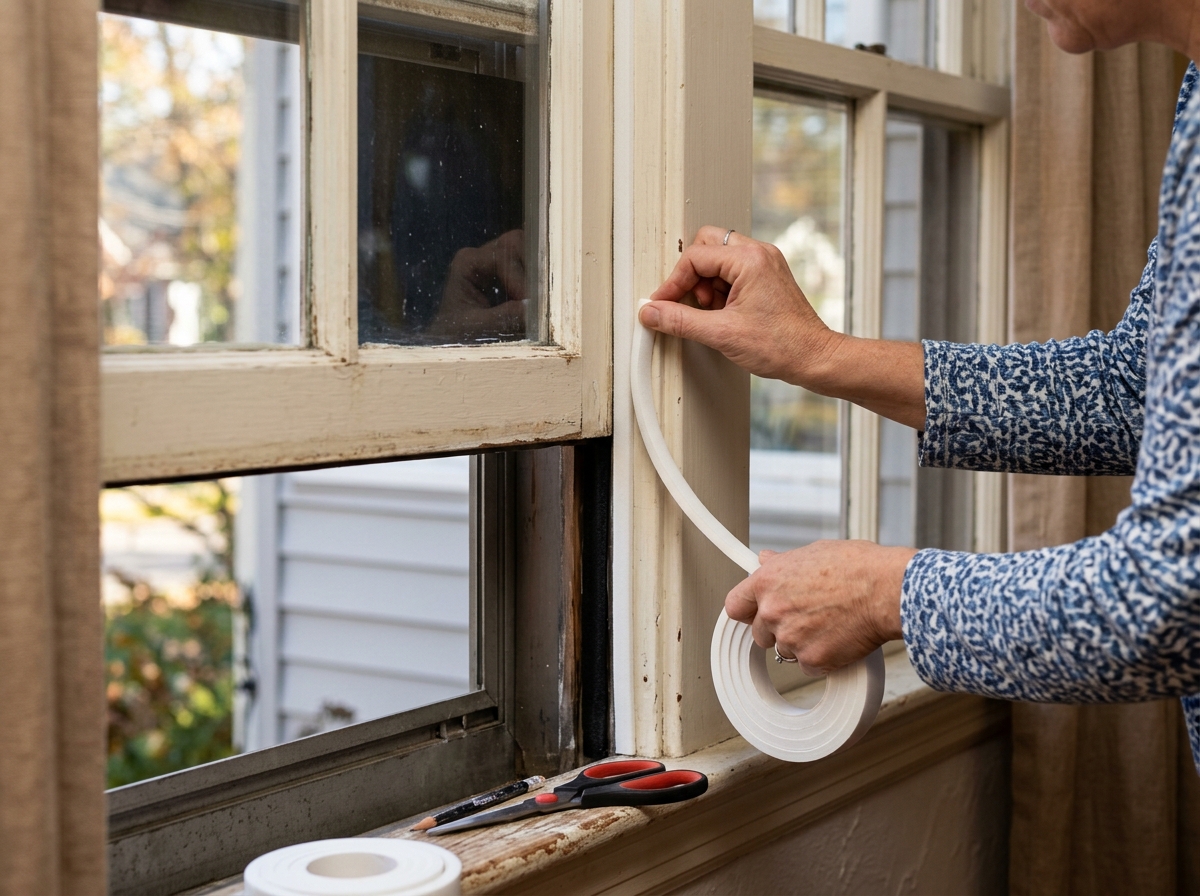
1. Weatherstripping
This is the go-to solution for windows that you still need to open and close. Weatherstripping comes in several forms:
- Foam Tape: Adhesive-backed strips that compress when the window closes. It’s incredibly cheap (often under $10 for a large roll) and very easy to install.
- V-Strips (Tension Seals): Durable plastic or metal strips that fold into a ‘V’ shape to bridge the gap between the sash and the frame.
- Felt: A traditional, low-cost option, though it is less durable than foam or plastic.
2. Caulking
If air is leaking through the fixed parts of the window—like where the frame meets the wall—caulk is your best friend. A single tube of silicone or latex caulk costs about $5 to $10 and can seal several windows. For interior work, we suggest a paintable latex caulk so you can match it to your trim.
3. Rope Caulk
This is a fantastic, renter-friendly secret. Rope caulk comes in a roll and has the consistency of modeling clay. You simply pull off a strip and press it into the gaps with your fingers. It stays flexible and can be peeled off easily in the spring without damaging the paint.
Comparison of Popular Insulation Methods
| Method | Estimated Cost | Ease of Use | Durability | Best For |
|---|---|---|---|---|
| Window Film | $10 – $20 | Medium | 1 Season | Large glass areas |
| Weatherstripping | $5 – $15 | Easy | 1-3 Years | Moving sashes |
| Rope Caulk | $5 – $10 | Very Easy | 1 Season | Renters/Temporary |
| Thermal Curtains | $25 – $100 | Easy | Many Years | Nighttime insulation |
| Bubble Wrap | < $5 | Very Easy | 1 Season | Basements/Attics |
For more detailed strategies, check out our guide on energy-saving methods for home insulation.
Applying Inexpensive Window Insulation Film
If you are looking for the most “invisible” form of inexpensive window insulation, look no further than heat-shrink window film. These kits, sold by brands like 3M and Duck Brand, consist of a clear plastic sheet and double-sided mounting tape.
When applied correctly, the film creates an airtight barrier that acts like a second pane of glass. This creates a “dead air” space between the film and the window, which is a powerful insulator. In fact, some manufacturers claim it can improve the insulating R-value of a single-pane window by up to 90%.
The “magic” happens when you use a hairdryer on the film. The heat causes the plastic to shrink tight, removing all wrinkles until it is nearly invisible. It is a perfect solution for large picture windows or drafty sliding glass doors.
Weatherstripping and Caulking
While film covers the glass, weatherstripping and caulk handle the “bones” of the window.
- Frame Gaps: Use caulk to seal the stationary gaps where the window frame meets the siding or the interior drywall.
- Sash Seals: Use foam backer rods for particularly large gaps (over 1/4 inch) before applying caulk. This provides a solid base for the sealant and saves you money on caulk.
- Window Locks: Don’t overlook your hardware! Simply engaging the window locks can pull the sashes together more tightly, creating a better seal against existing weatherstripping.
Creative and Low-Cost Thermal Barriers
Sometimes the best way to keep the heat in is to add a physical barrier that you can move as needed. These methods are often highly effective because they address both the air leaks and the “radiant” cold coming off the glass.
1. Draft Snakes
A draft snake is essentially a long, fabric tube filled with weighted material like dried beans, rice, or even sand. You place them along the window sill to block air from creeping in under the sash. You can buy these for $10-$20, or make them yourself using old socks or fabric scraps for free.
2. Magnetic Inserts
For a more permanent-feeling but still removable solution, magnetic window kits are a great choice. You apply magnetic tape to the window trim and a corresponding strip to a sheet of clear vinyl or acrylic. This allows you to “snap” the insulation into place and easily remove it if you want to open the window on a freakishly warm winter day.
For more seasonal advice, read our tips for winter insulation.
Bubble Wrap: The Most Inexpensive Window Insulation Hack
It might not win any beauty contests, but bubble wrap is arguably the cheapest way to insulate a window. It is especially useful for windows where a clear view isn’t a priority, such as in a basement, garage, or attic.
How to do it:
- Cut a piece of bubble wrap to the exact size of your window pane.
- Use a spray bottle to mist the glass with plain water.
- Press the “bubble side” of the wrap against the wet glass.
- The surface tension of the water will hold it in place all winter!
The bubbles create tiny pockets of air that significantly slow down heat loss. It’s completely renter-friendly, leaves no residue, and can be reused next year.
Thermal Curtains and Insulated Drapes
Think of thermal curtains as a winter coat for your windows. These drapes are engineered with multiple layers, often including a high-density foam or a reflective thermal lining.
To get the most out of them, we recommend the “Sun Management” strategy:
- During the day: Open the curtains on south-facing windows to let the sun naturally heat your home (solar gain).
- At night: Close all curtains as soon as the sun goes down to trap that heat inside and block the evening chill.
For the best results, ensure the curtains are floor-length and wide enough to overlap the window frame on all sides. This prevents “convection loops,” where cold air sinks behind the curtain and flows out into the room. Learn more in our guide to insulated window treatments.
Step-by-Step Guide to Installing Window Film
Installing window film is a rite of passage for many dwellers in cold climates. If you have never done it before, it can seem intimidating, but we promise it is a simple 20-minute job.
Step 1: Clean the Surface This is the most important step! If the window frame is dusty or greasy, the tape will peel off within a week. Wipe the frame down with rubbing alcohol or a mild detergent and let it dry completely.
Step 2: Apply the Tape Apply the double-sided tape included in the kit to the window frame (not the wall). Leave the paper backing on for now. Press firmly to ensure a good bond.
Step 3: Measure and Cut Measure your window and cut the plastic film so that it is at least 2 inches wider and longer than the frame. It is much better to have too much than too little!
Step 4: Attach the Film Peel the paper backing off the top piece of tape first. Press the film onto the tape, ensuring it is straight. Then, peel the sides and bottom and pull the film as taut as possible as you press it down. Don’t worry if there are still some wrinkles.
Step 5: The Heat Shrink Set your hairdryer to the highest heat setting. Hold it a few inches away from the film and move it in a steady motion. You will see the wrinkles magically disappear as the film tightens.
Step 6: Trim the Excess Once the film is drum-tight, use a sharp utility knife or scissors to trim the extra plastic hanging off the edges of the tape.
Frequently Asked Questions about Window Insulation
How much can I expect to save on energy costs?
While every home is different, the Department of Energy suggests that heat loss through windows accounts for roughly 25-30% of your heating and cooling costs. By using inexpensive window insulation methods like film and weatherstripping, many homeowners see a reduction of 10% to 15% on their monthly bills. If you spend $200 a month on heating, that is $30 back in your pocket every month!
What are the best renter-friendly insulation methods?
If you can’t make permanent changes, focus on “removable” tech:
- Window Film: Peels off easily (just use a little heat from a hairdryer if the tape is stubborn).
- Rope Caulk: Can be removed with your fingers and leaves no residue.
- Draft Snakes: Simply pick them up and take them with you when you move.
- Bubble Wrap: Only uses water for adhesion, making it the ultimate “no-trace” hack.
Can I insulate my windows without blocking the view?
Yes! Heat-shrink window film is specifically designed to be crystal clear. Once it is shrunk tight, most people won’t even notice it’s there. Weatherstripping and clear caulk also improve insulation without affecting your view at all. If you want to maintain the view but need extra help at night, thermal curtains are the perfect compromise—open them during the day and close them when it’s dark.
Conclusion
You don’t need a massive renovation budget to have a warm, cozy home this winter. By spending just a few dollars on inexpensive window insulation, you can take control of your indoor climate and stop “heating the outdoors.”
From the invisible protection of shrink film to the ultra-cheap utility of bubble wrap, these hacks are accessible to everyone. We encourage you to start with one or two windows—perhaps the ones in your bedroom or living room—and feel the difference for yourself. Your wallet (and your toes) will thank you.
For a complete look at how to protect your home from the elements, don’t miss The Ultimate Guide to Insulating Your Home. Happy winterizing!
