
Shrink Wrap Your Way to a Lower Heating Bill
Why Cold Windows Are Costing You More Than You Think
Plastic window covering is one of the cheapest, fastest ways to stop cold drafts and cut your heating bill this winter.
Here’s the quick answer if you need it now:
- What it is: A clear plastic film or shrink wrap you apply over your window frame from the inside
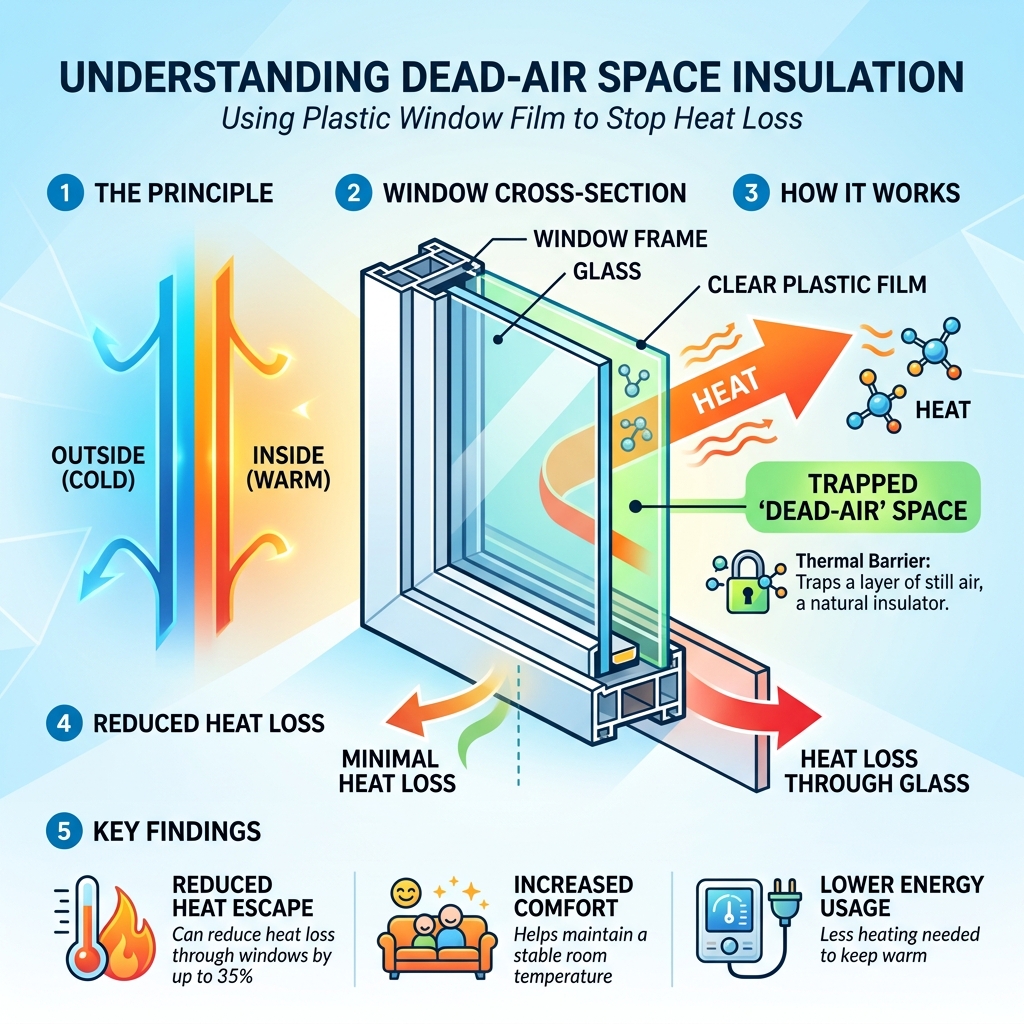
- How it works: It traps a layer of still air between the film and the glass, acting as a thermal barrier
- What it costs: Most kits cover 3–5 windows and cost under $20
- How much it saves: Can reduce heat loss through windows by up to 35%
- Time to install: Most homeowners finish in under a day
If you’ve ever felt a chill sitting near a window in January, you already know the problem. Windows are one of the biggest weak spots in any home’s insulation. In fact, windows account for roughly 25% of wasted energy in a typical home — and energy escapes through glass up to ten times faster than through walls.
The good news? You don’t need a contractor or a big budget to fix it.
A simple plastic film kit — like those from Duck Brand or Frost King — can seal out drafts and make a real difference in how warm your home feels. Customers report a 3–5°F increase in room temperature after installation, and properly sealed homes can save hundreds of dollars a year on heating costs.
It’s one of the most cost-effective winter upgrades you can make.
Why Your Home Needs a plastic window covering This Winter
We’ve all been there: you’re curled up on the couch with a hot cocoa, but you still feel a ghostly shiver. No, your house isn’t haunted; it’s just drafty. According to energy experts, a plastic window covering can reduce heat loss through windows by up to 35%. When you consider that nearly a quarter of your heating bill is literally flying out the window, this simple DIY project becomes a financial no-brainer.

How do you know if your windows are the culprits? Sometimes the signs are obvious, like a curtain fluttering when the window is closed. Other times, you need to be a bit of a “draft detective.” Here are the common symptoms we look for:
- The Incense Stick Test: Light an incense stick (or a damp match) and hold it near the edges of your window frame. If the smoke begins to dance or gets sucked away, you’ve found a leak.
- Rattling Windows: If your windows rattle when the wind blows, the seal is loose, and air is definitely getting through.
- Peeling Paint or Moisture: Look for peeling paint around the frame or excessive moisture buildup (condensation) on the glass. This often indicates that cold outside air is meeting warm inside air right at the surface of your window.
- Visible Gaps: If you can see daylight through the corners of your window trim, it’s time to act.
For a more comprehensive look at your home’s efficiency, we recommend checking out DOE’s Home Improvement Expert Checklists. You can also use the Home Energy Yardstick to see how your home’s energy use compares to similar households.
By sealing these leaks, we aren’t just saving money; we’re improving home comfort. A properly sealed home feels warmer because you’ve eliminated the “convection loops” that pull heat away from your body.
Essential Materials for DIY Insulation
Before we start “shrink-wrapping” the house, we need to gather our supplies. Most people opt for a pre-packaged kit, which usually includes the film and the double-sided tape. However, you’ll need a few household tools to finish the job professionally.
The Shopping List:
- Window Insulation Kit: Brands like Duck Brand and Frost King are the industry standards. A standard Duck Brand 5-Window Kit covers about 90 square feet.
- Double-Sided Tape: Usually included in the kit, but it never hurts to have a spare roll of heavy-duty mounting tape if your frames are particularly textured.
- Rubbing Alcohol and Cotton Balls: This is the secret to a successful install. You must clean the frames to ensure the tape sticks.
- Measuring Tape: To ensure your film is cut with enough “overhang” (usually 2 inches on each side).
- Hairdryer: This is what turns the baggy plastic into a drum-tight, crystal-clear barrier.
- Utility Knife or Sharp Scissors: For trimming the excess. A fresh blade prevents the plastic from snagging or tearing.
If you are looking for more industrial or specific sizes, you might explore Flexible Plastic Window Sheet options, which offer various thicknesses for different applications.
Choosing the Right plastic window covering Material
Not all plastic is created equal. Depending on your needs—whether it’s extreme cold, pet protection, or privacy—you have several options:
- Standard Shrink Film: This is the most common. It’s thin, very clear, and shrinks tightly. It’s great for standard windows where you still want a clear view outside.
- Polyethylene Sheeting: Often found in rolls (like 4-mil or 6-mil thickness). This is much tougher but isn’t as clear as shrink film. We often use this for basement windows or attic spaces where aesthetics don’t matter as much.
- Vinyl Pane/Heavy Duty: Products like the Duck MAX Strength kit are made of thicker film that resists punctures from curious cats or toddlers.
- UV-Blocking Films: Some films are designed to block up to 96% of UV rays, which prevents your furniture and carpets from fading while still keeping the heat in.
For most indoor residential applications, a 4-mil thickness provides a good balance between durability and ease of installation. If you’re winterizing an outdoor porch, you’ll want to move up to an 8-mil or even 10-mil vinyl for wind resistance.
Step-by-Step Installation Guide for Shrink Film Kits
Ready to get to work? Follow our guide to ensure a seal so tight you could bounce a quarter off it (though we don’t actually recommend trying that).
Step 1: Surface Preparation We cannot stress this enough: the tape will not stick to a dusty or oily window frame. Use rubbing alcohol and a cotton ball to wipe down the entire perimeter of the frame where the tape will go. Let it dry completely.
Step 2: Apply the Tape Press the double-sided tape firmly onto the window frame (or the trim). We recommend leaving the paper backing on the tape for now. Overlap the tape at the corners to ensure there are no tiny gaps for air to sneak through.
Step 3: Measure and Cut Measure your window and cut the plastic film so that it is at least 2 inches wider and longer than the window frame. It’s much easier to trim excess than to try and stretch a piece that’s too small!
Step 4: Affix the Film Peel the paper backing off the top strip of tape first. Press the film onto the tape, starting from the center and working your way out to the corners. Then, peel the side and bottom backings and press the film down, trying to keep it as straight as possible. Don’t worry if it looks wrinkled or baggy right now—the heat will fix that.
Step 5: The Heat Shrink Set your hairdryer to the highest heat setting. Hold it about an inch or two away from the film and move it in a constant back-and-forth motion. You will see the wrinkles disappear and the film become transparent and tight. Pro Tip: Don’t stay in one spot too long, or you might melt a hole in the plastic!
Step 6: Trim the Excess Once the film is tight, use your utility knife to trim away the extra plastic hanging off the edges of the tape.
| Feature | Standard Shrink Film | Heavy-Duty Vinyl Sheeting |
|---|---|---|
| Clarity | Crystal Clear | Slightly Opaque/Cloudy |
| Durability | Low (can tear) | High (puncture resistant) |
| Application | Heat-shrink with dryer | Staples or heavy tape |
| Best For | Living rooms, bedrooms | Basements, garages, porches |
For more tips on choosing between different window treatments, see our article on how to save-energy-with-insulated-window-treatments.
Maximizing the Efficiency of Your plastic window covering
To get the most out of your plastic window covering, we have a few “expert secrets” to share:
- Corner Reinforcement: If you live in a very windy area, apply a small extra square of tape at the corners. These are the points of highest tension and are usually where the seal fails first.
- The “Potato Chip” Sound: If your film makes a crinkling sound after installation, it’s usually due to static or the film being too tight. You can solve this by slightly loosening one corner before the final heat shrink.
- Mini-Blind Adjustments: You can actually use your blinds even with the film on! Before applying the film, remove the rotating wand. Apply the film over the window, then poke a tiny hole for the wand hook to come through. Reinforce that tiny hole with a bit of clear Scotch tape so it doesn’t tear.
- Removal Tips: When spring arrives, use the hairdryer to warm the tape slightly. This softens the adhesive, allowing you to peel it off without damaging your paint or wood finish.
Don’t forget to check the DSIRE database for state incentives. Some utility companies actually offer rebates or free weatherization kits to help you improve your home’s efficiency!
Frequently Asked Questions about Window Insulation
How much money can I save with plastic window covers?
While every home is different, the statistics are impressive. Because windows account for 25% of heat loss, and the film can reduce that loss by up to 35%, many homeowners see a reduction in their heating bills of 10% to 15%. In a cold climate, this can add up to hundreds of dollars over a single winter.
The film works by creating a “dead-air” space. This air layer acts as a buffer, preventing the warm air in your room from touching the cold glass. It effectively increases the R-value (insulating power) of your windows. For example, some Frost King kits claim to increase R-values by up to 90%.
Can I still use my blinds with window film installed?
Yes! As mentioned earlier, the best method is to remove the wand and pull the lift cords out before sealing. Some creative users even use neodymium magnets on the outside of the film to manipulate metal blinds inside. However, for most people, the “wand-hole” method with tape reinforcement is the easiest way to maintain light control.
What are the best alternatives to shrink film?
If you don’t like the look of plastic film or want something more permanent, consider these options:
- Weatherstripping: Best for sealing the actual moving parts of the window.
- Static Cling Privacy Film: Great for bathroom windows; it blocks the view and provides a small amount of thermal insulation without tape.
- Thermal Curtains: These are heavy, insulated drapes that block drafts. They work well but must be closed to be effective.
- Caulk Savers/Backer Rods: These are foam tubes you stuff into large gaps before caulking.
- Pleated Screens: Often used for larger areas like garages or patios to provide a stylish, semi-permanent barrier.
Conclusion
Installing a plastic window covering is perhaps the most rewarding Saturday afternoon project you can undertake. It’s low-cost, high-reward, and immediately noticeable. You’ll stop hearing the wind whistle through the frames, and you’ll stop seeing your hard-earned money vanish into the cold night air.
While DIY kits are fantastic for most standard windows, if you have historical windows with significant structural damage, or if you’re dealing with massive floor-to-ceiling glass walls, you might eventually want to consider professional window sealing or replacement. But for the vast majority of us, a $15 kit and a hairdryer are all we need to stay cozy.
At Financefyx, we are dedicated to helping you find practical ways to keep your home comfortable and your wallet full. For more deep dives into winterizing your space, check out The Ultimate Guide to Insulating Your Home.
Stay warm out there!
