
Stop Burning Cash with These Simple Propane Saving Hacks
Why Your Propane Bill Keeps Climbing (And What You Can Do About It)
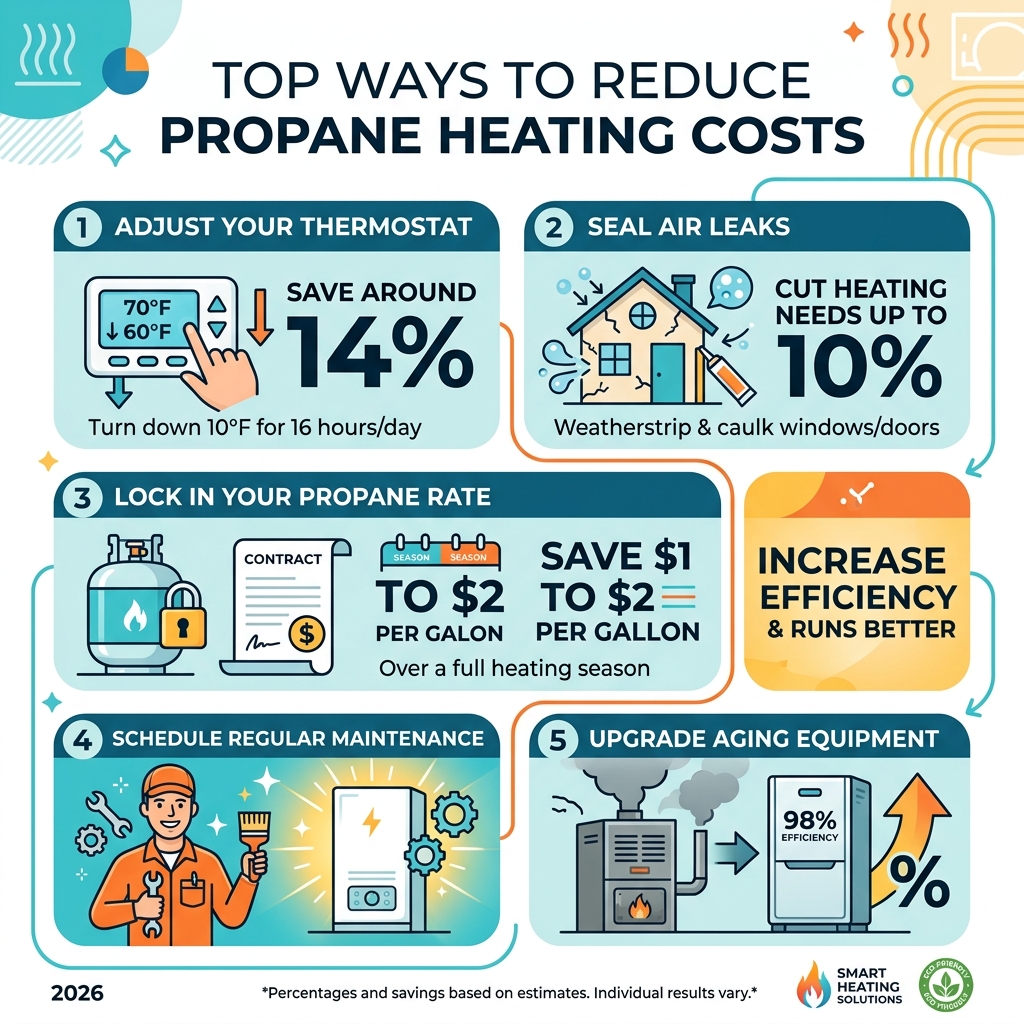
How to reduce propane heating costs is simpler than most homeowners think. Here are the fastest ways to start saving:
- Adjust your thermostat – turning it down just 10 degrees for 16 hours a day saves around 14% on heating bills
- Seal air leaks – weatherstripping and caulking around windows and doors can cut heating and cooling needs by up to 10%
- Lock in your propane rate – payment plans can save $1 to $2 per gallon over a full heating season
- Schedule regular maintenance – a well-tuned furnace runs more efficiently and burns less fuel
- Upgrade aging equipment – high-efficiency propane furnaces operate at up to 98% efficiency, converting nearly all fuel directly into heat
Propane heats millions of homes across the country. It’s reliable, it burns hot, and modern propane systems are genuinely efficient. But efficiency only helps if you’re not losing heat through drafty windows, a poorly tuned furnace, or an expensive emergency delivery fee.
The good news? Most of the biggest savings come from small, consistent changes – not expensive overhauls.
Whether you’re dealing with a sky-high winter bill or just want to get ahead of rising fuel costs, this guide covers every practical angle: pricing plans, insulation, thermostat habits, equipment upgrades, and smart tank management.
Smart Pricing Strategies on How to Reduce Propane Heating Costs
One of the most overlooked aspects of how to reduce propane heating costs isn’t about how you use the gas, but how you buy it. Propane prices are notorious for fluctuating based on global markets, local demand, and even the severity of a single winter storm. If you simply wait until your tank is empty to call for a refill, you are at the mercy of the “spot price,” which is often at its highest during the freezing months.
To avoid these price spikes, we recommend looking into specialized payment and pricing plans offered by most reputable suppliers. According to consumer protection data, utilizing these plans can save homeowners between $1 and $2 per gallon over the course of a single heating season.
Comparing Propane Pricing Plans
| Plan Type | How It Works | Best For |
|---|---|---|
| Pre-Buy | You purchase your entire season’s estimated fuel in the summer at a lower rate. | Homeowners with upfront cash who want the lowest possible price. |
| Fixed-Price | You lock in a specific price per gallon that won’t change, regardless of market spikes. | People who want budget certainty and protection against winter price surges. |
| Price-Cap | You pay a small fee to ensure your price never goes above a certain limit, but it can drop if market prices fall. | Those who want “insurance” against high prices but still want to benefit from market dips. |
| Budget Plan | Your estimated annual cost is divided into equal monthly payments (usually over 9-12 months). | Families who want to avoid massive bills in January and February. |
By choosing a pre-buy or price-cap program, you take the “gambling” out of your winter heating budget. It’s much easier to sleep at night knowing your fuel rate is locked in while your neighbors are watching the market prices climb during a polar vortex.
Seal the Gaps: Insulation and Air Sealing
Think of your home like a thermal coffee mug. If the lid is cracked, the coffee gets cold regardless of how hot it was when you poured it. Your home works the same way. About 10% to 12% of a home’s heat loss occurs through tiny gaps around windows and doors. If you live in an older home, windows alone can account for up to 25% of your total heat loss!
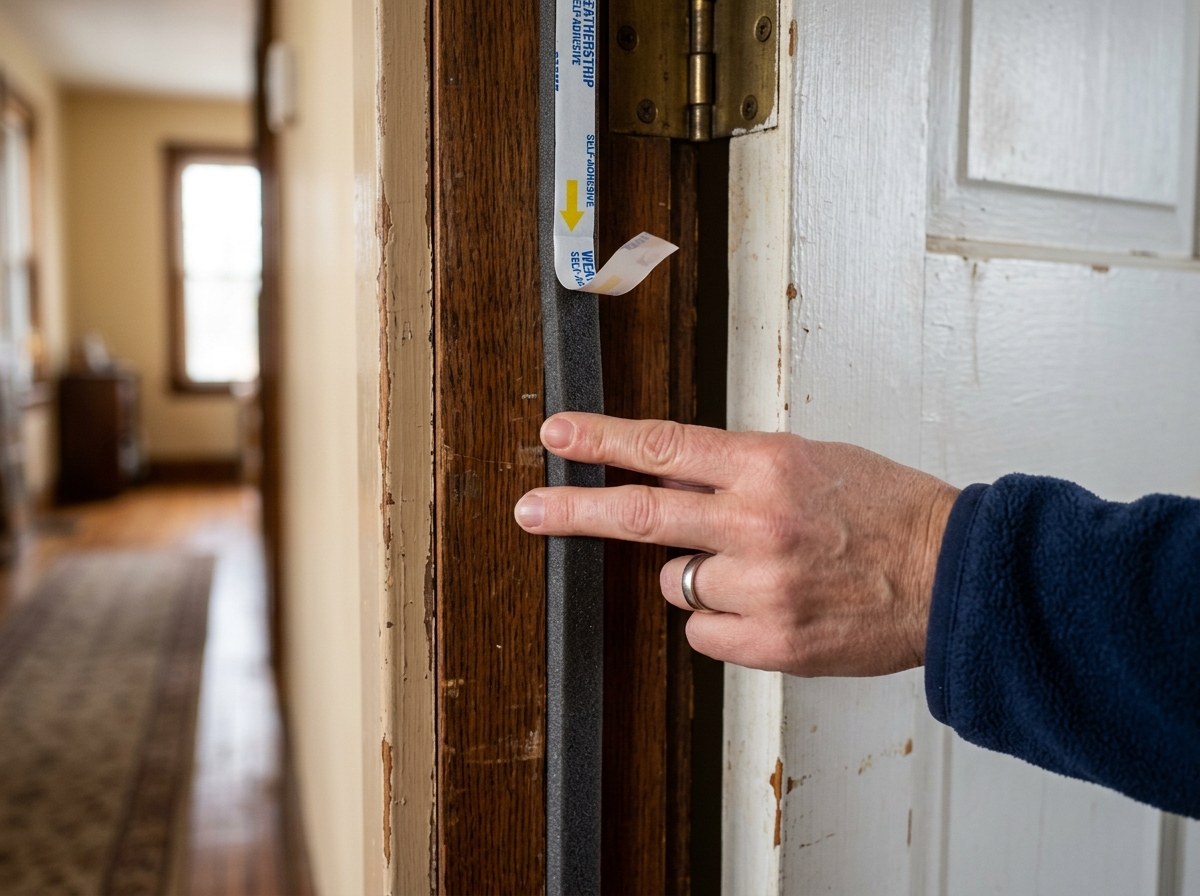
To stop “heating the outdoors,” we need to focus on air sealing. This is often the highest-return investment you can make when looking at how to reduce propane heating costs.
- Weatherstripping and Caulking: These are the “low-hanging fruit” of energy efficiency. Use caulk to seal permanent gaps around window frames and weatherstripping for the moving parts of doors and windows. Even a simple door sweep can stop a massive draft from entering under your front door.
- Window Film: If you have older, single-pane windows, applying a clear plastic film kit can create an extra layer of insulation that mimics double-pane performance for a fraction of the cost.
- Insulation Upgrades: Investing in proper insulation, particularly in the attic, can reduce your overall heating and cooling needs by up to 10%. Heat rises, and without a thick “blanket” of insulation in your attic, your propane furnace has to work overtime to replace the heat escaping through your roof.
For a deeper dive into these techniques, check out our guides on how to seal air leaks to save energy and insulating your home for energy efficiency.
Master Your Thermostat to Lower Propane Heating Costs
Your thermostat is the remote control for your wallet. The “Rule of Thumb” in the propane industry is that you save approximately 3% on your heating bill for every degree you turn the dial down.
If you keep your home at 72°F all day, you are burning significantly more fuel than if you set it to 68°F. By lowering the temperature just 10 degrees for 16 hours a day (while you’re at work or asleep), you can see a total savings of about 14%.
We highly recommend installing a programmable or smart thermostat. These devices allow you to “set it and forget it,” ensuring the heat drops automatically when the house is empty and warms back up just before you wake up. It’s the ultimate way to maintain comfort without the “bill shock” at the end of the month.
High-Efficiency Upgrades and Appliance Maintenance
If your propane furnace is more than 15 or 20 years old, it might only be operating at 60% or 70% efficiency. That means for every dollar you spend on propane, 30 to 40 cents is literally going up the chimney.
Modern high-efficiency propane furnaces can operate at up to 98% efficiency. This means almost every drop of fuel is converted directly into heat for your home. These units often save homeowners 10% to 14% compared to standard electric heat pumps or oil furnaces.
Another major upgrade to consider is a propane tankless water heater. Traditional water heaters keep a giant tank of water hot 24/7, which is incredibly wasteful. Tankless models heat water on demand. Switching can save a typical family about $100 per year compared to electric models, and they tend to perform much better in cold climates where electric heat pumps struggle.
Maintenance Tips to Reduce Propane Heating Costs
You wouldn’t drive your car for three years without an oil change, right? Your heating system is no different. Regular maintenance is essential for keeping your home energy efficient.
- Change Filters Regularly: A clogged air filter forces your furnace blower to work harder, consuming more energy and potentially leading to a breakdown. Check them monthly during the winter.
- Professional Tune-ups: A biennial (every two years) professional inspection ensures your burners are clean and your combustion is optimized. This simple step can save you 3% to 10% on your annual bills.
- Duct Sealing: Leaky ducts in unconditioned spaces (like crawlspaces or attics) can lose a massive amount of heat before it ever reaches your living room. Sealing these with foil tape or mastic can drastically improve your system’s efficiency.
- Clear the Vents: Ensure that furniture, rugs, and curtains aren’t blocking your heating registers. Obstructed vents prevent air circulation, making your furnace run longer to reach the desired temperature.
For more detailed strategies on appliance care, take a look at these 10 ways to conserve home propane usage.
Behavioral Hacks and Daily Conservation Habits
Sometimes the best ways to save don’t cost a dime. By changing a few daily habits, you can significantly reduce the load on your propane system.
- Harness the Sun: During the day, open curtains on south-facing windows to let the sun naturally warm your home. At night, close them to provide an extra layer of insulation against the cold glass. Using insulated window treatments can be even more effective.
- Reverse Your Ceiling Fans: Most fans have a small switch on the motor. In the winter, run the fan in reverse (clockwise) at a low speed. This creates an updraft that pushes the warm air trapped at the ceiling back down to floor level.
- Layer Up: It sounds old-fashioned, but wearing a sweater and thick wool socks allows you to keep the thermostat a few degrees lower without feeling the chill.
- Limit Exhaust Fans: Kitchen and bathroom exhaust fans are great for removing smells and moisture, but they also suck out a houseful of warm air in just one hour! Turn them off within 20 minutes of finishing your shower or cooking.
- Zone Heating: If you have a propane fireplace, use it! Propane fireplaces are over 90% efficient (compared to just 15% for wood-burning ones). By heating the room you are actually in and lowering the main thermostat for the rest of the house, you can save a fortune.
Strategic Propane Tank Management
Managing your actual propane supply is just as important as managing how you burn it. Running out of propane is not just an inconvenience; it can be an expensive disaster. If your tank goes dry, a technician must perform a mandatory leak test before the system can be restarted, which usually comes with a hefty fee.
Furthermore, “emergency” or “special” deliveries often carry surcharges that can add $50 to $100 or more to your bill.
The 25-30% Rule
We recommend checking your tank gauge regularly. Never let your tank dip below 25-30%. This provides a safety cushion for delivery delays caused by snowstorms or high demand. In extreme cold, propane needs “room” in the tank to vaporize into gas; if the level is too low, the pressure may drop, causing your appliances to run inefficiently.
- Automatic Delivery Plans: Many suppliers offer automatic delivery based on “degree days” (a calculation of how cold it’s been). This takes the guesswork out of monitoring your tank and usually protects you from emergency fees.
- Clear the Path: After a snowstorm, clear a path to your tank and keep the top of the tank clear of snow. This helps the regulator function properly and ensures the delivery driver can reach the fill valve safely.
- Tank Monitoring: Some modern suppliers offer wireless tank monitors that send your fuel level directly to an app on your phone. This is the ultimate way to stay on top of your usage.
Frequently Asked Questions about Propane Savings
How much can I save by lowering my thermostat by one degree?
The standard rule is a 3% savings for every degree you lower the thermostat below 70°F. If you consistently keep your home at 67°F instead of 70°F, you could reduce your heating bill by nearly 10% over the winter. Cumulative setbacks—like dropping the temp further when you are at work—can increase these savings to 14% or more.
Are propane tankless water heaters more efficient than electric?
Yes, particularly in cold climates. Propane tankless water heaters only heat water when you turn on the tap, whereas electric tank heaters constantly cycle to keep 50 gallons of water hot. A typical family can save about $100 per year by switching. Additionally, propane units have a much longer lifespan (20+ years) compared to electric heat pumps (10-15 years).
When is the best time of year to lock in propane prices?
The best time to lock in rates or refill your tank is typically in the late summer or early autumn (August through September). Demand is at its lowest during this time, and suppliers are eager to fill tanks before the winter rush. This is also when most “price-cap” and “pre-buy” enrollment periods open.
Conclusion
Learning how to reduce propane heating costs isn’t about one “magic bullet”—it’s about a combination of smart buying, home maintenance, and efficient habits. By sealing air leaks, mastering your thermostat, and keeping your appliances in peak condition, you can stay cozy all winter without feeling like you’re burning cash.
At Financefyx, we believe that a long-term energy strategy is the key to sustainable savings. Whether you’re making small DIY fixes like weatherstripping or investing in a high-efficiency furnace, every step you take puts more money back in your pocket.
Ready to take control of your home’s efficiency? Explore more of our guides at https://www.financefyx.com/ to find more ways to save on your monthly utilities.
