
Stop the Slither of Cold Air with a Window Draft Stopper
Why Cold Windows Are Costing You Money This Winter
Draft snakes for windows are simple, affordable tube-shaped barriers placed along window sills to block cold air from sneaking into your home.
Quick answer — what you need to know:
- What they are: Long, narrow tubes filled with weighted material (rice, sand, or kitty litter) that seal the gap at the bottom of windows
- How they work: They press against the sill and frame to stop cold air infiltration and prevent warm air from escaping
- DIY or buy: You can sew one at home for under $5, or buy a commercial version for $10–$33
- Best for: Window sills, sliding glass doors, and any gap where cold air gets in
- Key benefit: Lower heating bills, less noise, and a warmer, more comfortable home
You’re sitting at home in winter. The thermostat is set to warm. But somehow, it’s still cold.
The culprit is often your windows. Even closed windows can leak air around the sill, frame, or glass edges. That cold air pushes in. Your warm air pushes out. Your heating system works harder. Your energy bill climbs.
Draft snakes are one of the simplest fixes you can make today — no tools, no contractor, no big investment. Whether you make one yourself or pick one up online, the impact on your comfort and your bills can be surprisingly significant.
This guide covers everything: how to make one, what to fill it with, the best products to buy, and how to get the most out of it all winter long.
What is a Window Draft Blocker and How Does It Work?
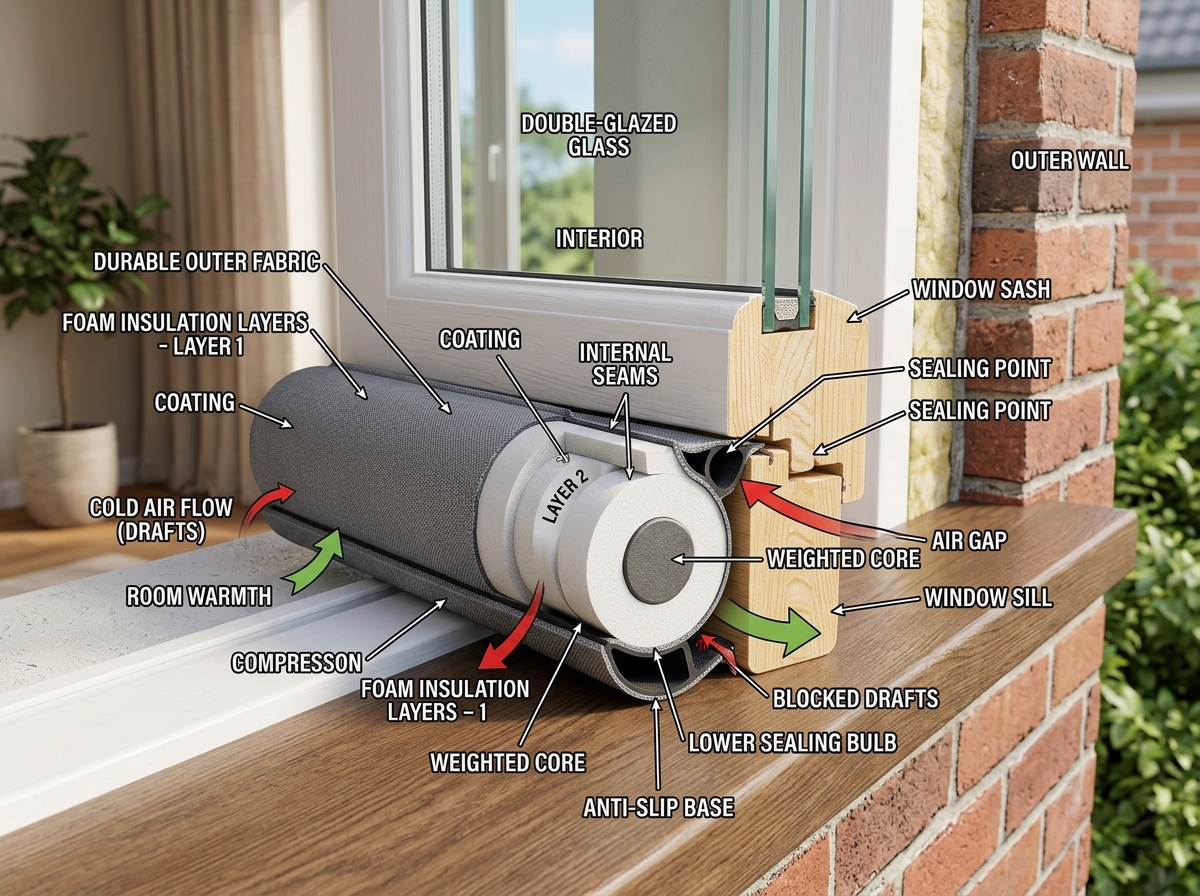
At its core, a window draft blocker (often called a “draft snake” or “draft dodger”) is a low-tech solution to a high-cost problem. These devices work by creating a physical barrier that stops the exchange of air between the inside and outside of your home.
When we place draft snakes for windows along a leaky sill, we are essentially sealing a gap that weatherstripping might have missed. They work through two main scientific principles: thermal mass and dead air.
- Thermal Mass: Many draft snakes are filled with heavy materials like sand or stones. These materials hold onto the ambient temperature of the room, helping to buffer the cold glass.
- Dead Air: By filling the gap where the window meets the sill, the snake creates a pocket of “dead air.” This stagnant air acts as a natural insulator, much like the space between the panes of a double-glazed window.
We often recommend these for older homes with wooden sashes or even modern uPVC windows that have settled over time. If you’ve ever wondered how-to-seal-air-leaks-to-save-energy, starting with the most obvious gaps at the bottom of your windows is the most cost-effective first step.
Benefits of Sealing Your Home Against Winter Winds
While the primary goal is usually to stop that “slither” of cold air, the benefits of using draft snakes for windows extend far beyond just warmth.
- Energy Savings: Reducing air infiltration can significantly lower your heating and cooling costs. According to industry data, sealing air leaks is one of the fastest ways to see a return on investment in home maintenance.
- Noise Reduction: If you live near a busy street, you’ll notice that where air goes, sound follows. A weighted draft snake acts as a sound dampener, muffling the hum of traffic and neighborhood noise.
- Dust and Pollen Prevention: Drafty windows are gateways for outdoor allergens and dust. By sealing the sill, you keep your indoor air cleaner and reduce the time spent dusting.
- Pest Control: Tiny insects often use window gaps to enter your home during the colder months. A snug-fitting draft snake makes it much harder for these uninvited guests to find a way in.
- Moisture Barrier: In some cases, draft snakes can help prevent condensation from dripping onto your wooden sills or drywall, protecting your home from potential rot or mold.
For more on the big picture of home efficiency, check out our guide on insulating-your-home-for-energy-efficiency.
How to Choose or Make the Perfect Draft Snake for Windows
Choosing the right draft snake depends on your specific window type and your aesthetic preferences. Commercial options are great for convenience, but DIY versions allow for total customization.
When selecting a snake, consider the weight. A lightweight snake might be easily pushed aside by a strong gust of wind or the movement of curtains. Heavier options, often filled with ground stone or sand, stay firmly in place.
If you are looking for a more permanent or specialized fix for uPVC windows specifically, you might want to read about how to stop-the-chill-with-these-easy-ways-to-fix-drafty-upvc-windows.
Best Materials for Filling DIY Draft Snakes for Windows
If you decide to go the DIY route, the filler is the most important component. Here is a breakdown of the most common materials we’ve seen used:
| Filler Material | Weight | Pest Resistance | Best For |
|---|---|---|---|
| Play Sand | Heavy | High | Maximum draft blocking; irregular gaps |
| Rice/Dried Beans | Medium | Low | Budget-friendly; easy to handle |
| Kitty Litter | Medium | High | Non-clumping is best; great for moisture |
| Cedar Shavings | Light | Very High | Repelling moths; closets and bedrooms |
| Buckwheat Hulls | Light | High | Conforming to shapes; lightweight needs |
| Bubble Wrap | Very Light | High | Insulation only; poor for stopping air flow |
Expert Tip: We suggest avoiding edible fillers like rice or corn if you have a history of mice in your home. Instead, opt for inorganic materials like sand or non-clumping kitty litter. Cedar shavings are a fantastic addition because they provide a pleasant scent and naturally repel insects.
Measuring Your Sills for Custom Draft Snakes for Windows
Don’t guess! An ill-fitting draft snake is about as useful as a screen door on a submarine. To get the perfect seal:
- Measure Jamb-to-Jamb: Measure the width of the window opening from the inside of the left frame to the inside of the right frame.
- Account for Overlap: We recommend adding 1 to 2 inches to your measurement. This ensures the snake “wedges” into the corners, where the most significant drafts often occur.
- Check Sill Depth: If your window sill is very narrow, you’ll need a thinner snake (about 2-3 inches wide). For deep sills or sliding glass doors, a wider, 4-inch version provides more stability.
- Height Requirements: Ensure the snake is tall enough to cover the entire gap between the window sash and the sill.
Step-by-Step Guide to Making a DIY Draft Blocker
Ready to get crafty? Making your own draft snakes for windows is a great weekend project.
- Select Your Fabric: Choose a sturdy, heavy-duty fabric like canvas, denim, or fleece. Avoid thin silks or polyesters that might tear easily.
- Cut the Tube: Cut a strip of fabric that is your measured length (plus 2 inches) and about 8 to 10 inches wide.
- The Initial Stitch: Fold the fabric in half lengthwise with the “right” sides facing each other. Sew along the long side and one short end, creating a long pouch.
- Turn and Iron: Turn the tube right-side out so the seam is on the inside. Iron it flat for a professional look.
- Fill It Up: Use a funnel (or a rolled-up piece of cardstock) to pour in your chosen filler.
- The Dual-Chamber Secret: For a better fit against slanted sills, sew a seam down the middle of your tube to create two parallel chambers. Fill each side separately. This allows the snake to “bend” and hug the window more effectively.
- Final Seal: Hand-sew the open end shut using a whip stitch or a hidden ladder stitch.
For those who want to see a similar process in action for larger barriers, you can check out this Video – Draft-Blocker Screen In The Making for inspiration on professional-grade seals.
Commercial Options and All-Season Alternatives
If sewing isn’t your speed, there are some fantastic commercial products on the market. Based on our research, here are the top contenders:
- Frost King DS2Z Cloth Seal: This is a fan favorite with a 4.4 out of 5-star rating from over 335 reviews. It’s 3 feet long and features a washable zippered cover.
- XFasten Transparent Weather Sealing Tape: For those who don’t want a “snake” sitting on their sill, this tape is a powerhouse. It boasts a 4.5-star rating and provides a residue-free seal that is almost invisible.
- Weighted Animal Draft Stoppers: These are perfect for kids’ rooms or adding a bit of whimsy to your decor. Options like the 38-inch Plush Cat or Dog are popular, though remember that the “feet” are often included in the length measurement!
- The Draft Blocker Screens: For a more high-tech approach, companies like Metro Screenworks offer customizable vinyl inserts that act like seasonal storm windows. You can even find them on Pinterest.
Don’t forget that your windows might need more than just a bottom seal. You can also save-energy-with-insulated-window-treatments like cellular shades or heavy curtains to double your protection.
Maintenance and Troubleshooting Common Issues
To keep your draft snakes for windows working effectively for years, a little maintenance goes a long way.
- Cleaning: Fabric snakes are magnets for dust and pet hair. We recommend buying or making snakes with removable, washable covers. If yours doesn’t have a zipper, you can vacuum it weekly using an upholstery attachment.
- Storage: When spring arrives, don’t just throw them in a damp basement. Ensure they are completely dry (especially if using organic fillers like rice) and store them in a plastic bin to prevent pests from finding them.
- Slipping: If your snake keeps sliding off a narrow sill, you can sew small “loops” onto the ends and hook them onto the window hardware, or use a small piece of non-slip rug padding underneath.
- Mice: If you suspect rodents are interested in your draft snake, switch to a sand or ground stone filler immediately.
- Sun Fading: Over time, UV rays will fade fabric. If your windows get direct sunlight, choose UV-resistant outdoor fabrics for your DIY project.
Frequently Asked Questions about Window Insulation
Can draft snakes be used year-round for AC efficiency?
Absolutely! While we usually talk about keeping the cold out, draft snakes for windows are just as effective at keeping your expensive air-conditioned air in during the summer. They block the heat from radiating through the sill and prevent “cool air loss.”
What is the best filler to avoid attracting rodents?
We always recommend play sand, ground stone, or non-clumping kitty litter. These are inorganic and offer no nutritional value to mice or rats. Avoid rice, beans, corn, or flaxseed if you have concerns about pests.
How do I stop a draft snake from falling off a vertical window?
For vertical gaps or double-hung windows where you want to seal the middle rail, a traditional “snake” might fall. In these cases, it’s better to use weather sealing tape or a specialized “double-sided” draft blocker that slides onto the sash and stays put when the window moves.
Conclusion
Stopping the slither of cold air doesn’t require a massive home renovation. By using draft snakes for windows, you’re taking a proactive step toward a more comfortable, sustainable, and affordable home. Whether you spend $10 on a weighted plush snake or 30 minutes sewing your own with spare fabric and sand, the results will be felt the moment the next winter wind howls.
At Financefyx, we believe that small changes in home maintenance lead to big changes in your financial health. For more tips on winterizing your space, don’t miss the-ultimate-guide-to-insulating-your-home.
Note: For technical users looking for digital “snakes,” you may be interested in log monitoring tools like SnakeTail v1.8.2 or the SnakeTail Free Download. For hardware-related bug reports, see the GitHub Issues page.
