
The Best 10kWh Battery Backups for Ultimate Peace of Mind
Why a 10kWh Battery Backup Could Be the Smartest Home Investment You Make
A 10kWh battery backup is one of the most popular home energy storage sizes available today — and for good reason.
Here’s a quick summary to answer your key questions right away:
| Question | Quick Answer |
|---|---|
| How long will it power my home? | 8-10 hours of essential loads |
| What power output can I expect? | 3-5 kW continuous output |
| What does it cost? | $990 to $18,000 depending on brand |
| Best battery chemistry? | LiFePO4 (Lithium Iron Phosphate) |
| How long do they last? | 6,000-8,000+ cycles (15-20 years) |
| Is there a tax credit? | Yes — 30% Federal Clean Energy Credit |
The average American home uses 28-30 kWh per day. A 10kWh battery won’t run everything, but it will keep your most critical loads — lights, refrigerator, medical devices, phone charging — running through an outage.
It’s also a smart tool for solar owners who want to store daytime energy for use at night, and for anyone trying to avoid expensive peak-rate electricity charges.
Whether you’re worried about winter blackouts, rising utility bills, or simply want more energy independence, a 10kWh system sits in a sweet spot: enough capacity to matter, at a price that’s increasingly affordable.
This guide breaks down the best options on the market, what to look for, and how to make sure you’re getting real value for your money.
Understanding the 10kwh battery backup for Home Use
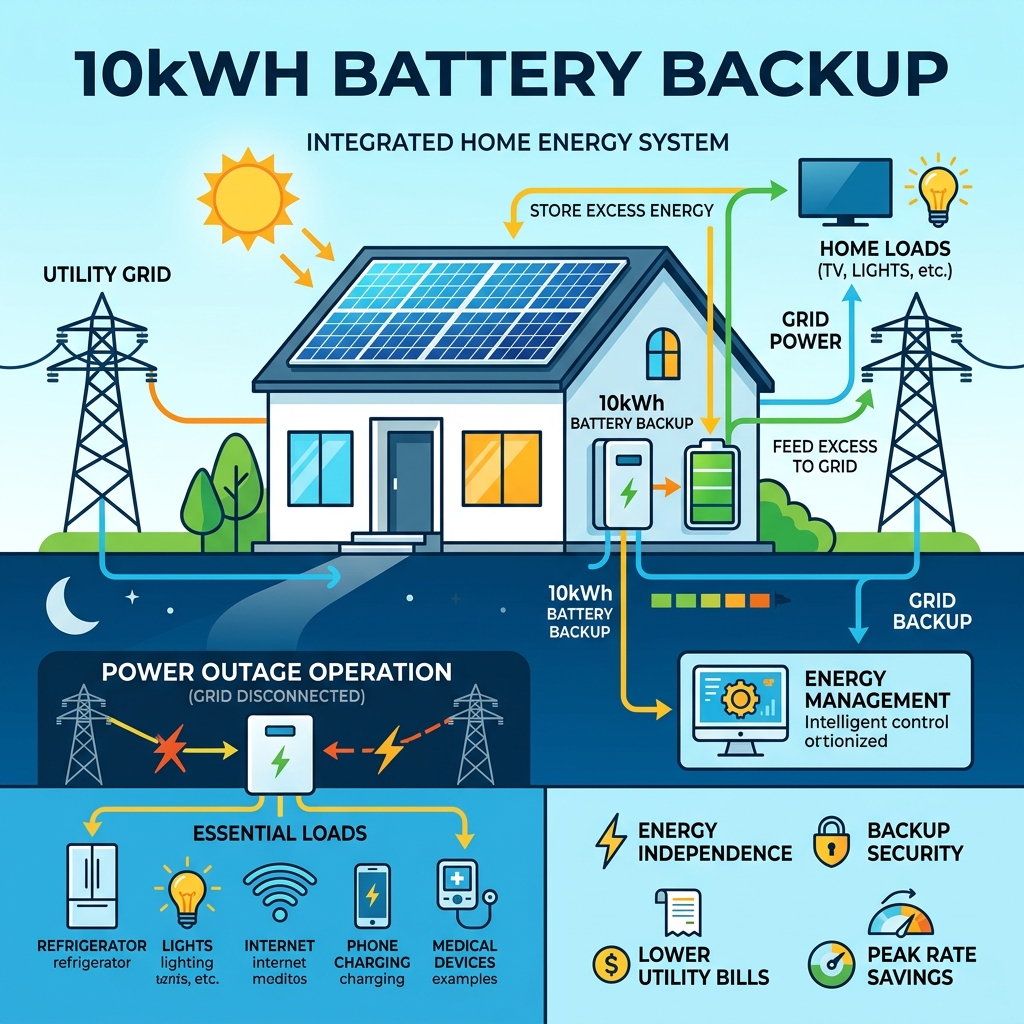
When we talk about a 10kwh battery backup, we are referring to the “energy” the system can store—think of it like the size of a fuel tank. In residential energy storage, 10kWh has become the “Goldilocks” zone. It is large enough to provide meaningful security during a blackout but compact enough to fit in a garage or on an exterior wall without requiring a massive construction project.
Usable Capacity vs. Total Capacity
It’s important to distinguish between total and usable capacity. Some older battery chemistries shouldn’t be drained to zero, but modern lithium systems are much more resilient. Most high-quality 10kWh systems offer a “Depth of Discharge” (DoD) of 90% to 95%, meaning you can actually use about 9kWh to 9.5kWh of that stored energy. Learn more about the best home batteries for energy storage to see how different brands handle these limits.
Grid-Tied vs. Off-Grid Applications
Most of us live in “grid-tied” homes. In this setup, your 10kwh battery backup sits ready to pounce the second the utility grid fails. However, these systems are also increasingly popular for off-grid cabins or RVs. The beauty of modern engineering is modularity. If you start with 10kWh and realize you need more, many systems allow you to “stack” units. For example, some specialized units can be expanded up to 16 units in parallel, giving you a massive 160kWh of total capacity.
Performance and Capacity: What to Expect
Capacity (kWh) tells you how long you can run things, but Power Output (kW) tells you what you can run. Most 10kWh systems provide between 3kW and 5kW of continuous power, though some premium models can surge up to 10kW or even 20kW for a few seconds to start up heavy motors like a well pump or a refrigerator compressor.
| Load Type | Items Powered | Estimated Runtime (on 10kWh) |
|---|---|---|
| Essential Loads | LED Lights, Fridge, Wi-Fi, Phone Charging | 18–24 Hours |
| Typical Household | Essentials + TV, Microwave, Some Fans | 8–10 Hours |
| High Demand | Essentials + Central AC or Electric Oven | 2–4 Hours |
If you are looking for a high-performance option, the EcoFlow 10kWh LFP Battery is a strong contender, often utilizing a dual-module setup to reach that 10kWh threshold with high efficiency.
How Long Does a 10kwh battery backup Last?
As noted, the average US home consumes about 1.2kWh per hour. If you try to run your whole house exactly as you do when the grid is up, a 10kwh battery backup will likely be exhausted in less than 8 hours. However, by managing your “essential loads”—prioritizing the refrigerator, a few lights, and medical devices—you can easily stretch that power to 10 hours or even overnight until the sun comes up to recharge your solar panels.
Real-World Use Cases for Energy Storage
- Emergency Backup: The most common reason for purchase. When the neighborhood goes dark, your lights stay on.
- Solar Self-Consumption: If your utility doesn’t offer good “net metering” rates, it’s cheaper to store your own solar power and use it at night than to sell it to the grid for pennies. Discover home battery storage for solar to see how to maximize this setup.
- Time-of-Use (TOU) Optimization: In areas with high peak electricity rates (like $0.30/kWh), your battery can power your home during the expensive evening hours and recharge late at night when rates are low. This is often called “peak shaving.”
Battery Chemistry and Safety Standards
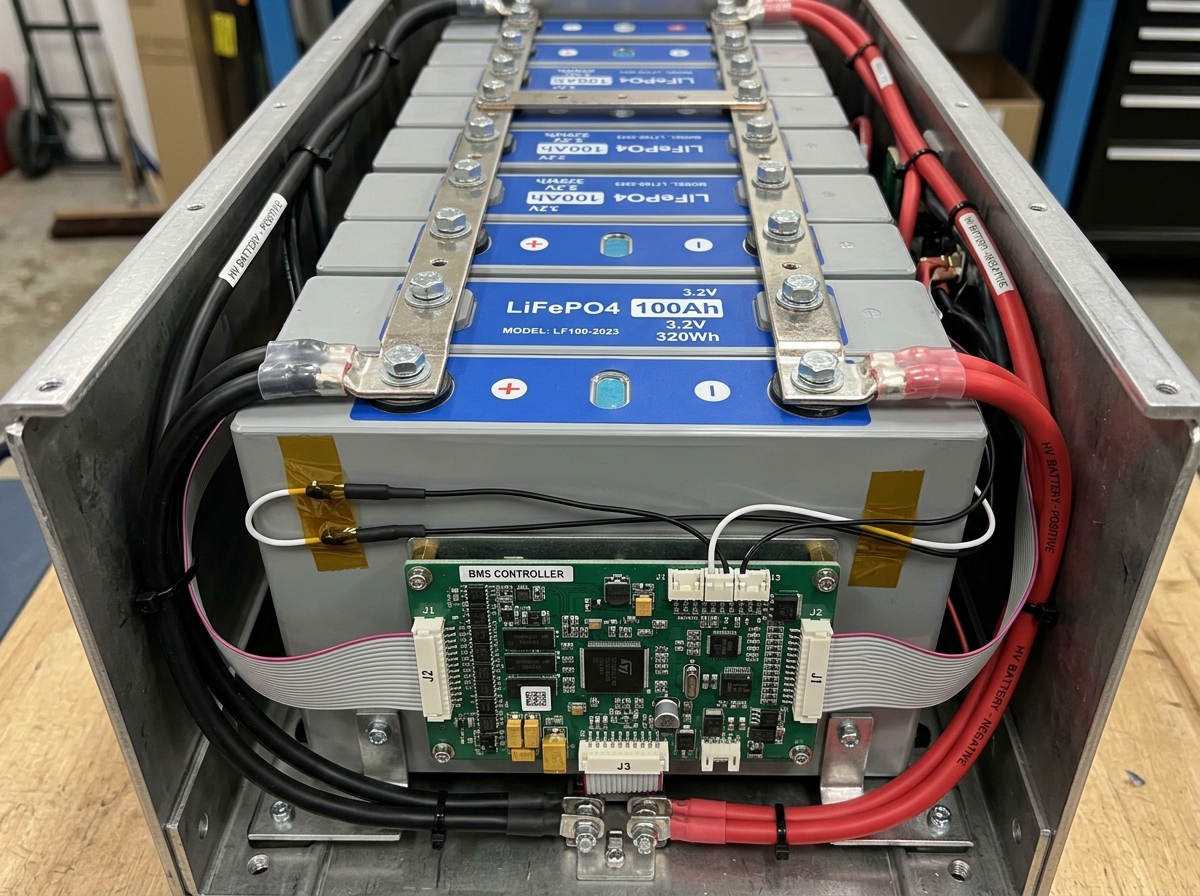
Not all batteries are created equal. In the past, Nickel Manganese Cobalt (NMC) was the standard, but the industry has shifted toward Lithium Iron Phosphate (LiFePO4) for residential use.
The Advantages of LiFePO4 Technology
LiFePO4 (often called LFP) is widely considered the safest lithium technology available. Unlike other chemistries, LFP has almost zero risk of “thermal runaway” (fire).
- Longevity: LFP batteries typically offer 6,000 to 8,000 cycles. If you charge and discharge it every single day, it could last 15 to 20 years.
- Efficiency: Systems like the DELONG dPOWER 10 Stackable Home Battery | 10-50kWh Backup System boast round-trip efficiencies of up to 96-98%, meaning very little energy is lost as heat during the storage process.
- Eco-Friendly: These are cobalt-free, making them easier to recycle and more ethically sourced.
Essential Components: BMS and Inverters
A battery is just a “dumb” box of energy without two critical components:
- Battery Management System (BMS): This is the brain. It monitors temperature, balances the voltage between cells, and prevents overcharging. A good BMS ensures your battery doesn’t die prematurely.
- Inverter: Batteries store DC power, but your home runs on AC power. You need a high-quality inverter to bridge that gap. Some systems come “AC-coupled” (all-in-one), while others are “DC-coupled,” which are often more efficient for solar-heavy setups. More info about home battery storage options can help you decide which coupling method fits your existing solar array.
Installation Requirements and Financial Incentives
Installing a 10kwh battery backup isn’t quite as simple as plugging in a toaster. Because of the high voltages involved, safety is paramount.
Choosing the Right 10kwh battery backup System
When shopping, you’ll see a massive price range.
- Budget Options: Brands like OSM or certain direct-manufacturer Powerwalls can be found for $990 to $3,000. These offer great value but may require more technical knowledge to set up.
- Premium Options: Brands like Enphase or EcoFlow range from $9,000 to $15,000. These usually include “plug-and-play” software, sleek apps for monitoring, and robust 10-12 year warranties.
- Scalability: If you have a large home, look for stackable systems. The DELONG dPOWER 10 Stackable Home Battery | 10-50kWh Backup System allows you to start at 10kWh and grow to 50kWh as your needs (or your family) expand.
Installation and Safety Standards
Professional installation typically adds $2,000 to $5,000 to your total cost. This covers permits, electrical upgrades (like a “critical loads” sub-panel), and labor. Ensure your system meets UL1973 and UL9540A standards. These certifications prove the battery has undergone rigorous fire and electrical safety testing.
Maximizing ROI with Tax Credits and Savings
The financial side of a 10kwh battery backup has never looked better.
- Federal Tax Credit: Under the Residential Clean Energy Credit, you can claim 30% of the total cost (including installation) as a credit on your federal taxes through 2032.
- Payback Period: If you live in a state with high electricity rates ($0.30/kWh), a 10kWh battery can pay for itself in 6 to 8 years through TOU optimization and avoiding peak charges.
- Home Value: Much like a kitchen remodel, a permanent battery backup system is a “sticky” asset that generally increases the resale value of your home.
Frequently Asked Questions
Can a 10kWh battery run an air conditioner?
Technically, yes, but not for very long. A standard central AC unit can pull 3kW to 5kW of power. A 10kwh battery backup would be drained in about 2 to 3 hours if the AC runs constantly. However, it is perfect for running a smaller window unit or a high-efficiency mini-split for a much longer duration.
What is the difference between 10kWh capacity and 5kW power output?
Think of it like water. Capacity (10kWh) is the size of the bucket—how much water it holds. Power Output (5kW) is the size of the tap—how fast the water can flow out. You need enough capacity to last the night and enough power to run your appliances at the same time.
Do I need solar panels to use a 10kWh battery backup?
No! You can install a “grid-only” backup. The battery will charge from your wall outlet when power is cheap and sit ready to keep your home running if the grid goes down. However, pairing it with solar allows you to recharge during an extended multi-day outage, providing true energy independence.
Conclusion
Investing in a 10kwh battery backup is about more than just keeping the lights on; it’s about taking control of your home’s most vital resource. Whether you choose a budget-friendly modular system or a premium all-in-one unit, the peace of mind that comes with knowing your food won’t spoil and your home will remain comfortable during a storm is priceless.
As technology continues to advance, we expect to see even higher energy densities and even faster payback periods. For now, a 10kWh system remains the smartest entry point for most homeowners looking to balance cost and capability.
Ready to take the next step toward a more resilient home? Explore more renewable energy solutions and start your journey toward energy independence today.
