
The Dirty Truth About DIY Attic and Wall Insulation
The Dirty Truth About Tackling Attic Insulation Removal DIY
Attic insulation removal DIY is absolutely something most homeowners can do themselves — but it’s not the quick weekend job many expect.
Here’s what you need to know upfront:
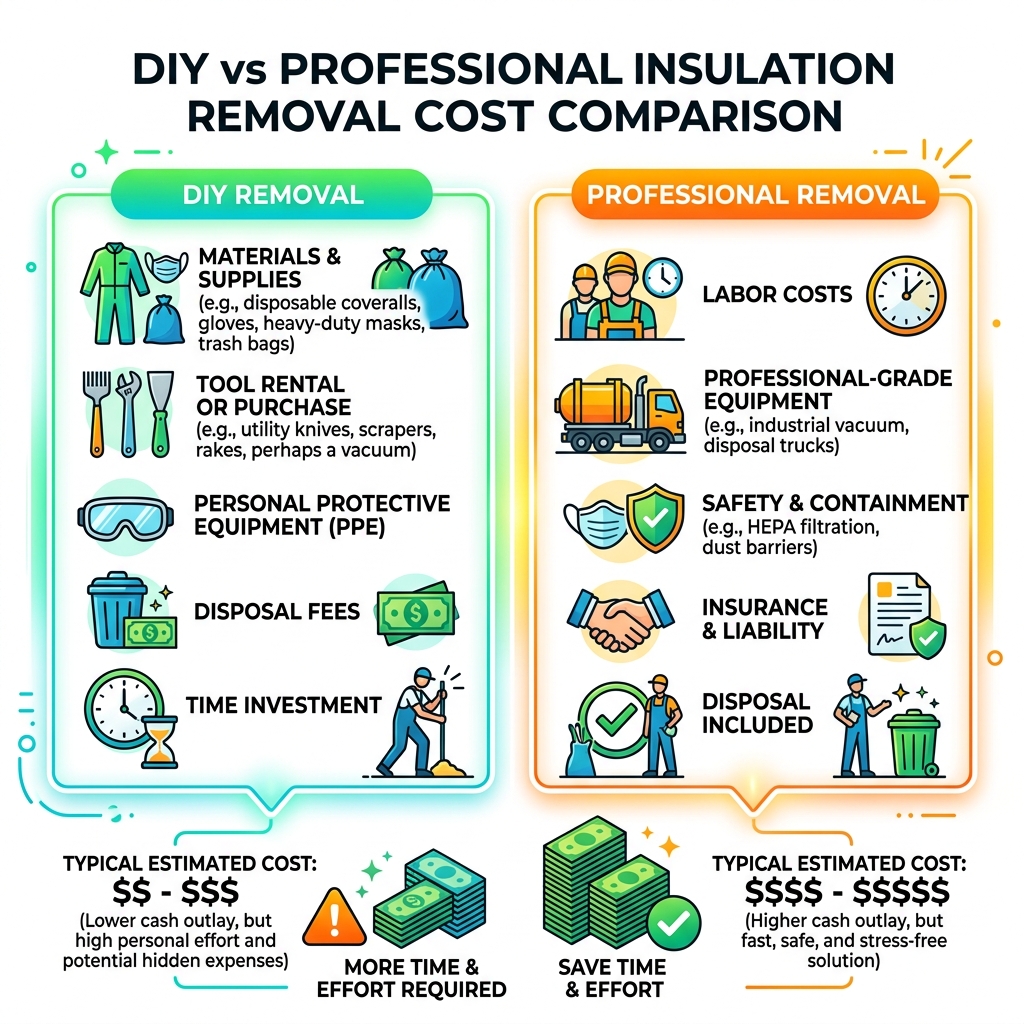
- Cost: DIY removal runs roughly $1,000 in equipment, bags, and disposal. Professionals charge $2,000–$3,000 for the same job.
- Time: Expect 6–8 hours if you’re experienced. First-timers often need up to 20 hours.
- Key tools: Insulation vacuum rental, heavy-duty disposal bags, N95 respirator, Tyvek coveralls, safety goggles.
- When to stop and call a pro: If you find asbestos, heavy mold, or rodent contamination, don’t DIY it.
- Bottom line: With the right gear and a solid plan, DIY removal is realistic — and can save you over $1,000.
Your energy bills are climbing. Your house feels cold no matter how high you crank the heat. You suspect the insulation in your attic is the culprit — and you’re probably right.
But here’s where many homeowners get tripped up: they assume pulling out old insulation is like clearing out a dusty storage room. It’s not. One homeowner described spending three nights raking cellulose insulation out of a 1,000 sq ft attic through holes in the ceiling — and still needed friends to haul the bags out.
The job is doable. But going in blind makes it far harder, messier, and riskier than it needs to be.
This guide cuts through the noise and gives you the real process — safety hazards, tools, step-by-step removal, and what to do when the old insulation is finally gone.

Attic insulation removal diy terms you need:
Why You Can’t Just Layer New Insulation Over the Old
We often get asked: “Can’t I just throw the new stuff on top of the old stuff?” In some cases, yes. But if you are reading a guide on attic insulation removal diy, chances are your current situation requires a fresh start.
Adding new insulation over old material can lead to several “hidden” failures. First, if the old insulation is damp or has been wet in the past, layering new material on top creates a moisture trap. This leads to wood rot in your joists and a breeding ground for mold. Furthermore, old insulation—especially blown-in cellulose—settles over time. This compression reduces its R-value (the measure of thermal resistance), meaning it isn’t doing its job anyway.
There is also the “pest factor.” An old attic is a rodent’s dream house. If mice or squirrels have been living in your insulation, it’s likely contaminated with urine and feces, which severely degrades your indoor air quality. By removing the old material, you can perform proper attic insulation tips to save energy and money like air sealing, which is impossible to do effectively when the floor is covered in three decades of dust and debris.
Finally, consider the weight. Multiple layers of heavy, moisture-laden insulation can put undue stress on your ceiling drywall. To avoid heating the neighborhood with your attic, a clean slate is often the only way to ensure your home is truly energy-efficient.
Assessing the Risks: When to Call a Pro vs. Attic Insulation Removal DIY
Before we strap on our goggles, we need to have a “come to Jesus” talk about whether you should actually be doing this. While we love a good DIY project, some attics are literal health hazards.
The Hazards
- Asbestos: If your home was built between the 1930s and 1950s (and even up to the late 80s), you might have vermiculite insulation. This often looks like small, shiny pebbles and frequently contains asbestos. If you suspect asbestos, stop immediately. Professional abatement is required by law in many areas; you can find more safety guidelines on the EPA website.
- Mold Spores: If your roof has leaked, that gray fluff is likely hiding colonies of mold. Disturbing it without professional-grade HEPA filtration can send spores throughout your home.
- Pests and Hantavirus: Rodent droppings aren’t just gross; they can carry hantavirus or plague. If you see significant “tunnels” or heavy droppings, the risk of infection is real.
- Heat Exhaustion: Attics can reach 140°F in the summer. Working in a Tyvek suit in those temperatures is dangerous. We recommend only tackling this in the early spring or late fall.
The Investment
As noted, attic insulation removal diy costs roughly $1,000. This includes renting a high-powered 20-23 HP insulation vacuum (about $50-$100/day), buying $200 worth of specialized disposal bags, and renting a dumpster. Compare this to the $2,000–$4,000 quotes you’ll get from pros. You are essentially paying yourself about $100 an hour for some of the dirtiest work you’ll ever do. If you have a 1,500 sq ft attic, expect to spend at least 15-20 hours of actual “attic time.”
Essential Gear and Tools for Attic Insulation Removal DIY
You cannot do this with a standard shop-vac. We’ve seen people try; they usually end up with a clogged hose and a face full of dust within 20 minutes. To do this right, you need industrial-grade equipment.
Safety First: PPE for Attic Insulation Removal DIY
Do not skimp here. You are going to be crawling through fiberglass “cotton candy” and decades of dust.
- N95 or P100 Respirator: A simple dust mask won’t cut it. You need a NIOSH-approved respirator that fits tightly to your face.
- Tyvek Suit: Get the ones with the hood and booties. Fiberglass sticks to everything and causes “the itch” that lasts for days.
- Safety Goggles: Use anti-fog goggles. You’ll be sweating, and losing your vision while balancing on ceiling joists is a recipe for a trip through the drywall.
- Gloves and Knee Pads: Use rubber-coated gloves for grip. Knee pads are non-negotiable because you’ll be kneeling on hard wooden joists for hours.
Tools of the Trade
- Insulation Vacuum: These are massive machines with 4-inch to 10-inch diameter hoses. They usually live on a trailer or the back of a truck, with the hose running through a window or door into the attic.
- Contractor Bags: If you are removing batts (the long rolls), you’ll need heavy-duty 3-mil or 4-mil contractor bags.
- Headlamp: Even a well-lit attic has dark corners. A high-lumen headlamp keeps your hands free.
- Scrap Plywood: Use “kneeling boards” to bridge the joists so you don’t accidentally step through your living room ceiling.
Before starting, check out our guide to mastering batt insulation to understand the material you might be handling.
Estimating Materials for Attic Insulation Removal DIY
To estimate how many bags you need, calculate the cubic volume. Measure the square footage of your attic (length x width) and multiply it by the depth of the insulation in feet. For example, a 600 sq ft attic with 5 inches of insulation (0.42 ft) equals about 252 cubic feet of material. Standard industrial vacuum bags hold about 100 cubic feet, but they fill up fast with “fluffed” material, so always buy 20% more than you think you need.
Step-by-Step Guide to Attic Insulation Removal DIY
Ready to get dirty? Here is the workflow for a successful attic insulation removal diy project.
1. Worksite Preparation
Clear a path from your attic access to the exit of your home. Lay down drop cloths or plastic sheeting everywhere. Tape off doorways to living areas to prevent “dust creep.” If you’re using a vacuum, route the hose through the nearest window rather than dragging it through the whole house.
2. Joist Navigation
Safety Warning: Never step between the joists. The drywall of your ceiling will not hold your weight. Always keep your feet on the wooden beams or on your kneeling boards.
3. Removing Blown-In Cellulose and Fiberglass
For blown-in material, use the “partner system.” One person stays in the attic with the vacuum hose, and the other stays outside by the vacuum machine to manage the bags.
- Zone Cleaning: Divide the attic into sections. Start at the furthest corner and work your way back toward the access hatch.
- Hose Routing: Keep the hose as straight as possible to prevent clogs. If you hit a clog (usually caused by a stray piece of wood or a large clump of wet insulation), shut down the machine immediately.
- Bag Management: When a bag is full, tape it shut and swap it quickly. These bags can weigh up to 350 lbs when full of dense cellulose, so don’t overfill them if you have to move them by hand.
Proper removal is the first step toward insulating your home for energy efficiency.
4. Handling Fiberglass Batts and Rolls
If you have fiberglass batts, the vacuum isn’t the tool for the job.
- Manual Rolling: Start at the edges and roll the batts up tightly like a sleeping bag.
- Double Bagging: Place the rolled batt directly into a contractor bag while still in the attic. This prevents dust from flying around as you carry the bag out.
- Debris Raking: Once the batts are gone, there will be a layer of “crumbs” and dust. Use a rake and a dustpan (or a HEPA shop-vac) to get the floor down to the bare wood.
What to Do After the Insulation is Gone
Congratulations! You’ve survived the hardest part. But don’t start blowing in new insulation just yet. A clean, empty attic is a rare opportunity to fix old house warmth issues that you’ll never get again.
1. Air Sealing
This is the most important step. Use spray foam or caulk to seal every “penetration” in the attic floor. This includes where wires go through top plates, around plumbing stacks, and around recessed light cans. This prevents warm air from your house from leaking into the attic. Check out the ultimate guide to insulating your home for more on this.
2. Electrical and Plumbing Inspection
Check for frayed wires, “knob and tube” wiring (common in vintage homes), or leaky pipes that were hidden under the fluff. It’s much cheaper to fix a pipe now than after you’ve covered it with 15 inches of new fiberglass.
3. Vapor Barriers and Baffles
Ensure your soffit vents are clear. Install “baffles” (foam or plastic channels) to ensure air can flow from your eaves up into the attic without being blocked by your new insulation. This is vital for preventing ice dams in the winter.
By following these energy-saving methods for home insulation, you’ll ensure that your hard work translates into lower utility bills.
Frequently Asked Questions about Attic Insulation Removal DIY
How long does it take to remove attic insulation myself?
For a standard 1,500 sq ft attic, a team of two DIYers should plan for a full weekend (about 16-20 total man-hours). If the insulation is water-damaged and heavy, it can take longer. Professionals with 23 HP vacuums can usually do the same job in 4-6 hours.
Can I dispose of old insulation in my regular trash?
Generally, no. Most municipal trash services won’t take 30 bags of fiberglass. You will likely need to rent a small dumpster or haul the bags to a local landfill. Always call your waste management company first to ask about “construction and demolition” (C&D) waste rules.
How do I know if my old insulation contains asbestos?
You can’t tell just by looking. If you have “pebbly” vermiculite insulation, consult the EPA’s guide on vermiculite or buy a DIY test kit (available at most hardware stores) or hire a local lab to take a sample. It usually costs about $50 and is well worth the peace of mind.
Conclusion
Tackling an attic insulation removal diy project is a “hardcore” home improvement task. It is dirty, exhausting, and requires meticulous attention to safety. However, for the homeowner on a budget, it offers a way to save upwards of $1,600 and ensures that the foundation of your home’s energy efficiency is solid.
By removing the old, dirty, and compressed material, you aren’t just making your house warmer; you’re improving your air quality and protecting your home from future pest and moisture issues. Once the floor is clean and sealed, you’ll be ready to install a modern insulation system that will keep you cozy for decades.
For more energy saving tips, stay tuned to Financefyx as we help you master every corner of your home.
