
Stop Burning Cash with the Cheapest 2×4 Wall Insulation
Why Your Uninsulated 2×4 Walls Are Draining Your Wallet This Winter
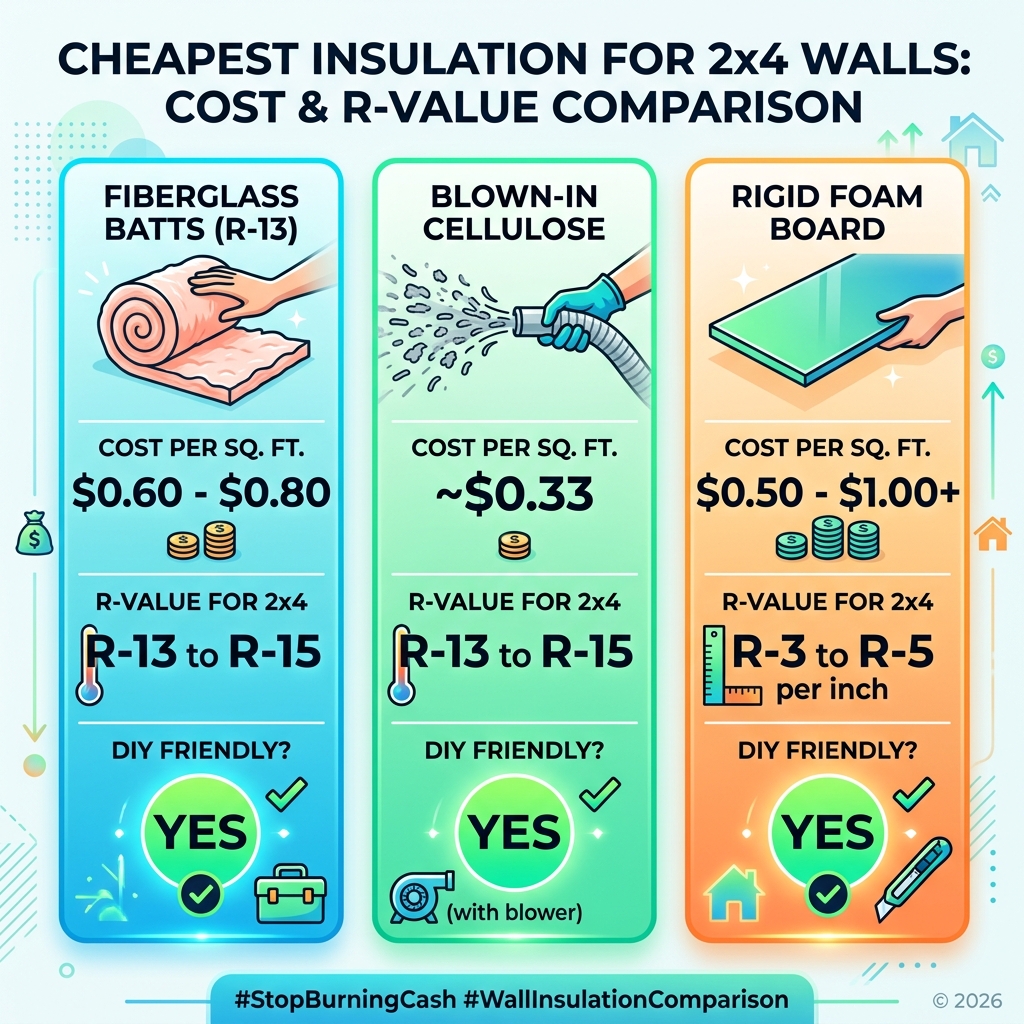
The cheapest insulation for 2×4 walls is R-13 kraft-faced fiberglass batt insulation, costing between $0.60 and $0.70 per square foot — making it the go-to budget option for most homeowners and DIYers.
Here’s a quick comparison of the most affordable options:
| Insulation Type | Cost Per Sq. Ft. | R-Value for 2×4 | DIY Friendly? |
|---|---|---|---|
| Fiberglass Batts (R-13) | $0.60 – $0.80 | R-13 to R-15 | Yes |
| Blown-In Cellulose | ~$0.33 | R-13 to R-15 | Yes (with blower) |
| Rigid Foam Board | $0.50 – $1.00+ | R-3 to R-5 per inch | Yes |
If your heating bills spike every winter and cold drafts follow you from room to room, your walls are likely working against you. Uninsulated or poorly insulated 2×4 walls let heat escape fast — and that means your furnace runs longer, works harder, and costs you more every single month.
The good news? A well-insulated home can cut heating and cooling costs by up to 15%. For most homeowners, that’s real money back in your pocket — often within the first heating season.
This guide covers the best budget insulation options for standard 2×4 walls, so you can stop burning cash and start staying warm.
Cheapest insulation for 2×4 walls word list:
Top 3 Materials for the Cheapest Insulation for 2×4 Walls
When we talk about 2×4 walls, we are dealing with a specific physical constraint: a 3.5-inch deep cavity. Unlike 2×6 framing, which offers more room for “fluff,” 2×4 walls require materials that pack a punch in a small space without breaking the bank. Choosing the right material involves balancing the upfront purchase price with the ease of installation and the long-term thermal performance.
To help you decide, we have put together a comprehensive thermal insulation comparison that looks at how these materials stack up. Generally, if you are looking for the absolute cheapest insulation for 2×4 walls, your search will begin and end with three main contenders: fiberglass, cellulose, and rigid foam.
| Material | Est. Cost (sq. ft.) | R-Value (per 3.5″) | Primary Benefit |
|---|---|---|---|
| Fiberglass Batts | $0.60 – $0.80 | R-13 to R-15 | Easiest for DIYers |
| Blown-In Cellulose | ~$0.33 | R-13 to R-14 | Lowest material cost |
| Rigid Foam Board | $0.50 – $1.20 | R-10 to R-15 | Excellent air seal |
Budget planning is more than just looking at the price tag at the hardware store. You also need to consider “ancillary costs.” For example, while cellulose is incredibly cheap per pound, you might need to rent a blower machine. While fiberglass is affordable, you’ll need protective gear (mask, goggles, gloves) to handle the “pink stuff” safely.
Fiberglass Batts: The Standard for Cheapest Insulation for 2×4 Walls
For decades, 2 x 4 Wall Fiberglass Insulation has been the undisputed heavyweight champion of the residential market. It is widely available, lightweight, and specifically sized to friction-fit between studs spaced 16 or 24 inches on center.
Standard R-13 batts are the baseline. If you want a bit more thermal resistance, you can opt for high-density R-15 batts, though these come at a slightly higher price point. One of the biggest advantages of fiberglass for the budget-conscious is the “kraft-facing.” This is the brown paper attached to one side of the batt. It acts as a built-in vapor retarder, which is essential in many climates to prevent moisture from condensing inside your walls.
If you are tackling this yourself, check out the ultimate DIY guide to mastering batt insulation to ensure you don’t make common mistakes like over-compressing the material. Fiberglass works by trapping air; if you squash it, you lose the R-value you paid for.
Blown-In Cellulose: The Budget Champion
If you are looking at the raw cost of the material alone, blown-in cellulose is often the winner. At approximately $0.33 per square foot for a standard wall application, it is hard to beat. Made primarily from recycled newspaper treated with fire retardants (like boric acid), it is also an eco-friendly choice.
Cellulose is particularly effective for “dense packing.” When blown into a closed wall cavity at high pressure, it fills every nook and cranny, significantly reducing air infiltration compared to loosely installed fiberglass. This makes it a great choice for those learning about insulation thermal conductivity comparison for beginners, as its ability to stop air movement adds “effective” R-value that simple laboratory tests might miss.
The “catch” with cellulose is the equipment. To insulate open 2×4 walls, you typically use a “drill and fill” method for existing walls or a “wet-spray” or “mesh” method for new construction. Most big-box retailers will rent you the blower for free if you buy a certain number of bags, which helps keep it the cheapest insulation for 2×4 walls overall.
Rigid Foam Board: Slim Profile Savings
Rigid foam board, such as EPS (Expanded Polystyrene) or ISO (Polyisocyanurate), is often overlooked for 2×4 walls because it is more expensive per square foot than fiberglass. However, it offers a high R-value per inch (up to R-6.5 for some products).
In a workshop or garage setting where you might not want to install full drywall, Foam Board Insulation can be a lifesaver. It provides a continuous thermal break if installed over the studs, or it can be cut to fit tightly between them. Because it is closed-cell (in many cases), it is highly resistant to moisture. This makes it the best insulation to use between studs in your wet zones, such as a basement or a damp workshop.
Maximizing R-Value and Performance on a Budget
When working with 2×4 walls, you are limited to a 3.5-inch cavity. This means you can’t just keep adding more material to get a higher R-value. You have to be smart about the material you choose and how you install it.
Standard 2×4 walls usually take R-13 insulation. However, many manufacturers now offer R-15 high-density batts. While R-15 is slightly more expensive, the 15% increase in thermal resistance can be worth the extra few cents per square foot if you live in a particularly harsh climate. For more help on choosing, see our guide to stop the draft with these exterior wall insulation choices.
Why Air Sealing is the Secret to Cheapest Insulation for 2×4 Walls
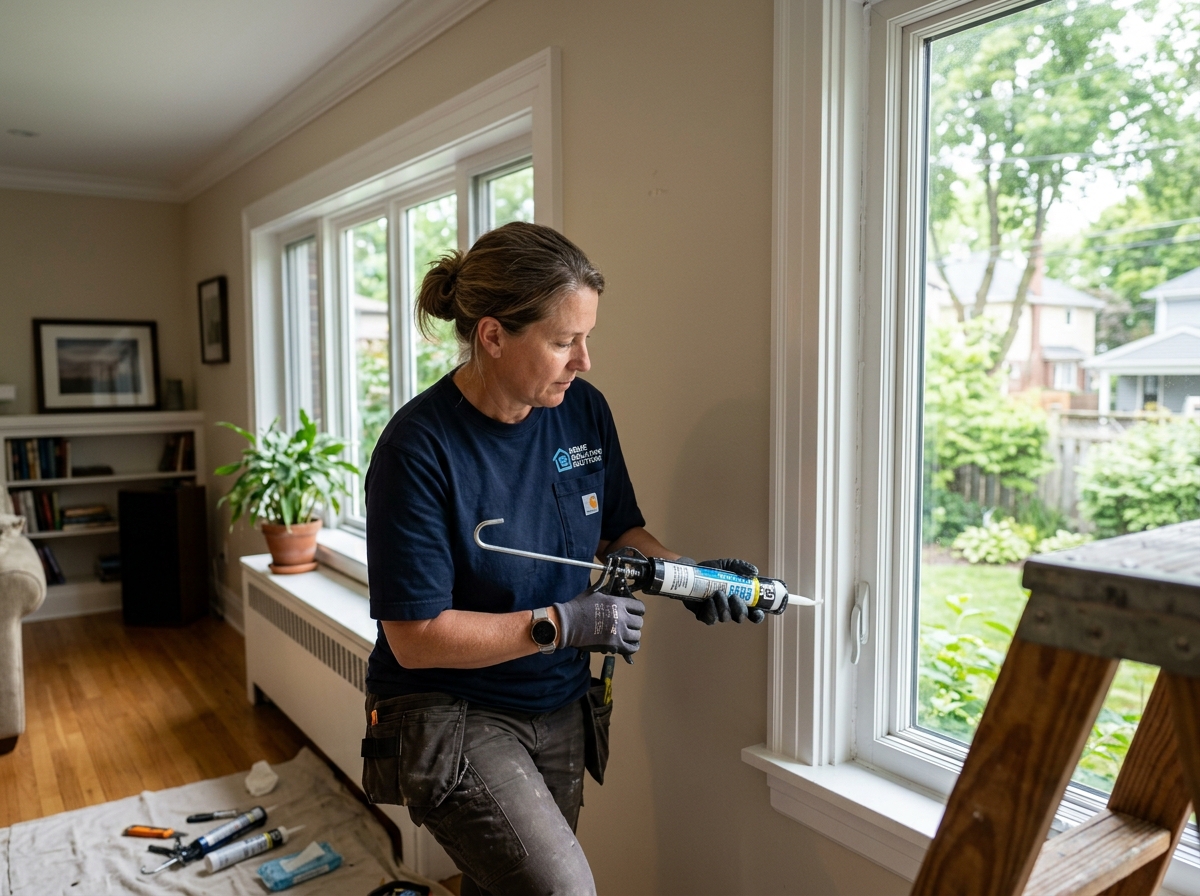
You could buy the most expensive insulation in the world, but if air is whistling through gaps in your wall plates, around electrical outlets, or near window frames, that insulation won’t do its job. Air sealing is the most cost-effective “insulation” step you can take.
Before the insulation goes in, we recommend using a combination of:
- Caulk: For small gaps between wood members.
- Expanding Spray Foam: For larger gaps around plumbing pipes or wires.
- Gaskets: For electrical boxes on exterior walls.
These energy saving methods for home insulation cost very little—a few tubes of caulk and a couple of cans of spray foam—but they can improve the “real world” performance of your cheapest insulation for 2×4 walls by 20% or more. Think of insulation like a wool sweater and air sealing like a windbreaker; you need both to stay truly warm.
Avoiding the Compression Trap
One of the most common DIY mistakes is thinking that “more is better.” We have seen people try to stuff R-19 insulation (designed for 6-inch 2×6 walls) into a 3.5-inch 2×4 cavity. Don’t do this.
Insulation works by trapping tiny air pockets. When you compress the material, you squeeze out those air pockets, significantly reducing the R-value. In fact, compressed R-19 can end up providing less warmth than a properly installed R-13 batt. To get the most out of your project, focus on insulating your home for energy efficiency by ensuring the material is “lofty” and fills the cavity completely from side to side and top to bottom without being bunched up.
Workshop and Garage Specifics: Beyond the Batts
Insulating a workshop or garage is a different beast than insulating a bedroom. You have to consider durability. If you are working with wood, metal, or cars, your walls are going to take a beating. You also need to think about moisture, especially if the space isn’t heated 24/7. For specific shed advice, check out these DIY shed wall insulation tips.
Affordable Interior Wall Finishes: OSB vs. Drywall
Once you have installed the cheapest insulation for 2×4 walls, you need to cover it. While drywall (sheetrock) is often the cheapest material per square foot (sometimes under $15 for a 4×8 sheet), it isn’t always the best for a workshop. It’s fragile, it creates dust when you hit it, and it can mold if it gets damp.
Many DIYers prefer 7/16-inch OSB (Oriented Strand Board).
- Pros: You can screw tool racks anywhere on the wall without finding a stud. It’s much more impact-resistant than drywall.
- Cons: It is more expensive than drywall (though often still under $20 a sheet) and isn’t fire-rated like “Type X” drywall.
If you are renovating an older space, our guide on old house new warmth: a guide to modern insulation can help you navigate the tricky balance between modern materials and vintage structures.
Don’t Forget the Ceiling: Preventing Heat Rise
We have seen people spend thousands on wall insulation only to wonder why their workshop is still freezing. The answer is simple: heat rises. If your walls are insulated but your ceiling is just a thin layer of plywood or open rafters, your heat is escaping straight through the roof.
Insulating the ceiling should actually be your first priority.
- Attic Storage: If you use your rafters for storage, consider installing batts between the rafters and then covering them with a slatted floor to maintain airflow while keeping the heat down.
- Targets: While R-13 is fine for walls, you should aim for R-38 to R-49 in the ceiling/attic.
For a deep dive into this, see our article: stop heating the neighborhood with this attic insulation guide.
Frequently Asked Questions about Budget Insulation
What is the absolute cheapest way to insulate a 2×4 wall?
The absolute cheapest method is usually blown-in cellulose if you can get a free blower rental, or R-13 fiberglass rolls if you are buying in bulk. You can often find fiberglass rolls for as low as $0.50 per square foot when purchasing large quantities or “special buy” pallets at home improvement stores.
Can I use R-19 insulation in a standard 2×4 wall cavity?
Technically, you can physically shove it in there, but you shouldn’t. R-19 is 6.25 inches thick. Compressing it into a 3.5-inch space ruins its thermal properties. You are better off using an R-15 high-density batt specifically designed for 2×4 walls; it will perform better and cost you less than a wasted R-19 batt.
Is mineral wool worth the extra cost over fiberglass for workshops?
Mineral wool (like Rockwool) is significantly more expensive—often double the price of fiberglass. However, it is fire-resistant, water-repellent, and provides superior soundproofing. If you do a lot of “hot work” (welding, grinding) or loud machinery work in your shop, the extra investment might be worth it for safety and noise reduction. But if the goal is strictly the cheapest insulation for 2×4 walls, fiberglass wins.
Conclusion
Insulating your 2×4 walls doesn’t have to be a financial burden. By choosing affordable materials like R-13 fiberglass batts or blown-in cellulose, and pairing them with low-cost air sealing techniques, you can transform a drafty, expensive-to-heat space into a comfortable haven.
At Financefyx, we want to help you maximize your ROI. A well-insulated envelope can lead to a 15% reduction in energy costs, meaning your insulation project could pay for itself in just a few seasons. Don’t let your hard-earned money leak out through the studs this winter.
For more ways to stay cozy without breaking the bank, check out our catch the heat: insulation tips for winter or explore our full library of more energy saving tips. Happy insulating!
