
The Great Window Chill and How to Kill It
That Cold Feeling Isn’t Just in Your Head — Here’s What to Do About It
A draft coming in through windows is one of the most common reasons your home feels cold even when the heat is running.
Here’s a quick summary of how to find and fix it:
| Step | What to Do |
|---|---|
| Detect the draft | Run your hand along window edges, or hold a candle near the frame and watch for flickering |
| Identify the cause | Look for cracked caulk, worn weatherstripping, or gaps between the frame and wall |
| Quick fix | Apply adhesive foam tape, use a draft snake, or hang thermal curtains |
| Long-term fix | Replace weatherstripping, re-caulk the frame, or install storm windows |
| Worst case | Replace old single-pane windows with double- or triple-pane glass |
Picture this: it’s a cold evening, you’re warm on the couch — and then a chill brushes across your arm. The heat is on. So why does your home still feel like a freezer?
That cold air isn’t coming from nowhere. It’s sneaking in through gaps you probably can’t even see.
And it’s costing you money. When cold air gets in, your heating system has to work harder to keep up. That means higher energy bills, uneven room temperatures, and a home that never quite feels warm enough.
The good news? Most window drafts are fixable — often without replacing the windows at all. Some fixes take less than an hour and cost just a few dollars.
This guide walks you through exactly how to find drafts and stop them, from simple weekend DIY fixes to long-term solutions that will keep your home comfortable for years.
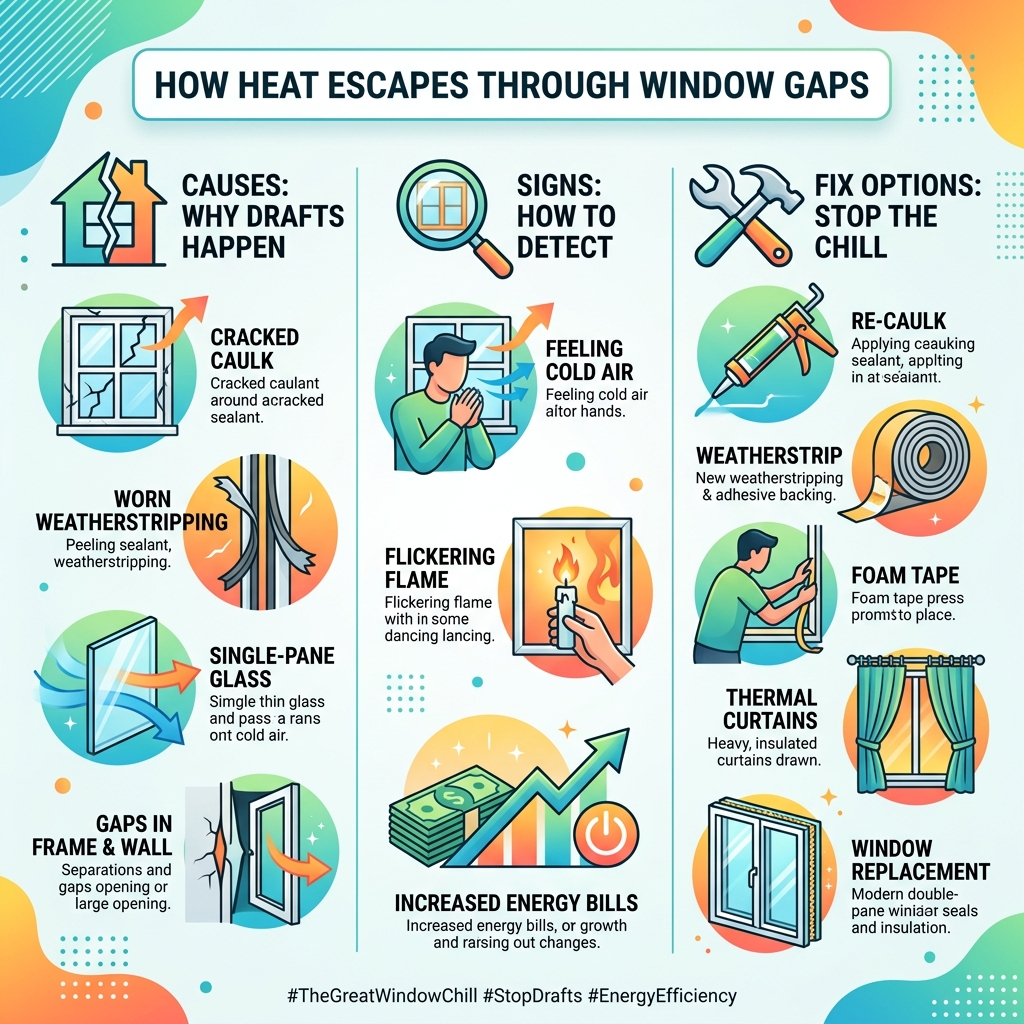
Why is a Draft Coming in Through Windows?
To kill the chill, we first have to understand the enemy. Why does a draft coming in through windows happen in the first place? It isn’t always just because the window is “old.” Even relatively new windows can fail if they aren’t maintained or were installed poorly.
One of the biggest culprits is the material of the window itself. Older homes often feature single-pane glass, which offers almost zero insulation. Imagine wearing a t-shirt in a snowstorm versus a puffer jacket; that is the difference between single and double-pane glass.
| Feature | Single-Pane Windows | Double-Pane Windows |
|---|---|---|
| Insulation Value | Very Low | High (often gas-filled) |
| Draft Resistance | Poor | Excellent (when seals are intact) |
| Noise Reduction | Minimal | Significant |
| Energy Efficiency | Low (High bills) | High (Lower bills) |
Beyond the glass, the moving parts of a window are prime real estate for leaks. Worn or damaged seals are a leading cause of drafts. Weatherstripping—that rubber or felt material that creates a seal when the window closes—typically only lasts 2 to 5 years before it starts to compress, crack, or peel away.
Then there is the issue of shifting frames and structural movement. Houses settle over time. As the foundation shifts, window frames can become slightly “out of square.” This creates tiny gaps where the sash (the moving part) no longer meets the frame perfectly. In crank-style or casement windows, this often manifests as “sash sag,” where the weight of the glass causes the window to dip, leaving a gap at the top.
Improper installation is another silent thief of comfort. If a window wasn’t leveled correctly or if the space between the window frame and the house studs wasn’t properly insulated with foam, air will whistle right through the wall cavity. This is often why you might feel a draft coming from the wooden trim around the window rather than the glass itself.
Finally, keep an eye out for condensation damage. If you see moisture trapped between your double-pane glass, it means the factory seal has failed. Once that seal is gone, the insulating gas (like Argon) escapes, and cold air moves in to take its place. To learn more about how different materials affect your home’s temperature, check out our guide on how to save energy with insulated window treatments. You can also explore advanced options in this Brochure for energy-efficient window technology.
How to Identify and Detect Air Leaks
Before you start grabbing tubes of caulk and rolls of tape, you need to play detective. Not every draft coming in through windows is obvious. Some are sneaky “micro-drafts” that slowly drain your bank account.

The first step is a simple visual inspection. On a bright day, look for “daylight” peeking through the edges of the frame. If light can get in, air certainly can. Look for cracked or peeling caulk on the outside of the house and check the weatherstripping for flat spots or missing chunks.
Sometimes, your ears are better tools than your eyes. On a windy day, listen for whistling or howling sounds. If the glass is rattling in the frame, it’s a surefire sign that the glazing putty or the seals have shrunk, leaving the glass loose and the air free to move.
If you want to get high-tech, infrared thermometers (thermal leak detectors) are fantastic. You can point them at the window edges and see a literal “cold spot” where the temperature drops significantly compared to the rest of the wall. For a truly deep dive, a professional energy audit using a “blower door test” can depressurize your house, making every single leak stand out like a sore thumb. For more tips on this process, see our article on how to seal air leaks to save energy.
Using DIY Tests to Find a Draft Coming in Through Windows
You don’t need expensive gear to find a leak. Here are five classic DIY tests we recommend:
- The Hand Test: On a cold, windy day, dampen your hand with a little water and run it slowly along the edges of the window. The moisture makes your skin much more sensitive to moving air.
- The Candle or Incense Test: Hold a lit candle or an incense stick near the window seams. If the flame flickers wildly or the smoke is sucked toward or blown away from the window, you’ve found a leak.
- The Flashlight Method: This requires two people. At night, have one person stand outside with a bright flashlight and shine it around the window edges while the person inside looks for beams of light.
- The Dollar Bill Test: Open the window, place a dollar bill across the seal, and close the window. Try to pull the bill out. If it slides out easily without any resistance, your seal is too weak to stop a draft.
- The Cardstock Test: Similar to the dollar bill test, use a piece of stiff cardstock to see if you can slide it into the gaps around the “sash rail” (the metal or plastic channel where the window slides).
Quick Fixes and Renter-Friendly Solutions
If you are renting or just need to survive a sudden cold snap without spending a fortune, there are plenty of temporary ways to stop a draft coming in through windows. These solutions are generally inexpensive and can be removed without damaging the property.
Draft snakes and fabric blockers are the oldest tricks in the book. These are long, weighted fabric tubes (often filled with sand or dried beans) that you place along the window sill. They are great for stopping air that leaks through the bottom of the sash. If you’re in a pinch, a rolled-up towel works just as well!
Adhesive foam tape is another lifesaver. It comes in rolls with a sticky backing. You simply peel and stick it into the window channel. When you close the window, the foam compresses, filling the gaps. For larger, irregular gaps, rope caulk is a fantastic “removable” option. It feels like modeling clay and can be pressed into cracks with your fingers. In the spring, you just peel it off and throw it away.
One of the most effective temporary solutions is window shrink film. This is a clear plastic sheet that you stick to the window frame with double-sided tape and then “shrink” with a hair dryer. It creates an airtight drum over the entire window. While it means you can’t open the window for the season, it is incredibly effective at stopping drafts and adding a layer of still-air insulation.
Finally, don’t underestimate the power of thermal curtains and cellular blinds. Heavy, insulated curtains can act as a “blanket” for your windows, trapping the cold air behind the fabric so it doesn’t circulate into the room. For more seasonal advice, check out our winter insulation tips.
Long-Term Solutions for Permanent Comfort
While tape and plastic film are great for a quick fix, they aren’t exactly a permanent lifestyle choice. If you own your home and want to solve the problem for good, you need to look at more robust repairs.
The gold standard for stopping a draft coming in through windows is weatherstripping replacement. If your current seals are cracked or flattened, pull them out, clean the track with rubbing alcohol, and install new high-quality seals. V-strips (tension seals) are great for the sides of sliding windows, while felt seals or compression gaskets work best for the top and bottom.
For the exterior, re-caulking is essential. Over time, the sun’s UV rays cause caulk to shrink and pull away from the siding. Use a high-quality silicone or polyurethane caulk, which remains flexible even in freezing temperatures.
If the draft is coming from around the frame (the trim), you may need to pop off the interior molding and use low-expansion spray foam. Be very careful here—standard spray foam expands with enough force to warp a window frame, making it impossible to open. Always look for “window and door” specific foam that is labeled “low-pressure.”
If your home has beautiful, historic wood windows, you might not want to replace them. In this case, reglazing is the answer. This involves removing the old, brittle putty that holds the glass in the wood frame and applying fresh glazing compound. Adding storm windows (either interior or exterior) can also provide a massive boost to energy efficiency without altering the look of your home. To understand the broader picture of home efficiency, read our guide on insulating your home for energy efficiency.
Permanent Repairs for a Draft Coming in Through Windows
Sometimes the window itself is fine, but the “bones” are loose. Here is how to tighten things up:
- Hardware Tightening: Check the locks. A window lock isn’t just for security; its main job is to pull the two sashes together tightly. If the lock is loose or misaligned, the window won’t seal. Tighten the screws or move the “keeper” so it pulls the window shut more firmly.
- Frame Re-caulking: Don’t just layer new caulk over old. Use a putty knife to scrape away the old, dried-out stuff, clean the area, and apply a fresh, smooth bead.
- Structural Adjustments: If your house has settled and the window is crooked, you might need a professional to “re-shim” the window so it sits squarely in the opening again.
- U-Factor Awareness: When looking at repairs or replacements, check the U-factor. This rating measures how well a window prevents heat from escaping. The lower the number, the better. Modern high-efficiency windows can have U-factors as low as 0.17! This translates to massive energy saving methods for home insulation.
Frequently Asked Questions about Window Drafts
How much can I save on energy bills by fixing drafts?
On average, leaky windows can account for 10% to 25% of your total heating bill. By sealing drafts with simple weatherstripping and caulk, many homeowners see a reduction of $100 to $300 per year in energy costs. If you upgrade from old single-pane windows to Energy Star-certified double-pane windows, the savings can be even higher.
When should I replace my windows instead of repairing them?
Repairing is usually the first choice, but replacement is necessary if:
- The wooden frames are rotted or soft to the touch.
- The windows are double-paned and consistently foggy (failed seals).
- The windows are more than 30 years old (most last 15-30 years).
- The frames are severely warped and no longer open or close properly.
What is the best type of weatherstripping for my window material?
- Vinyl/Aluminium Windows: Usually use “bulb” or “pile” (fuzzy) weatherstripping that slides into a pre-cut groove.
- Wood Windows: Work best with V-strips (metal or plastic) or adhesive-backed foam.
- Large Gaps: High-density foam tape is the best for filling irregular spaces where the sash doesn’t meet the frame.
Conclusion
A draft coming in through windows is more than just a minor annoyance—it’s a drain on your comfort and your wallet. Whether you choose a quick DIY fix like a draft snake or a permanent solution like re-caulking and hardware tightening, taking action today will pay off in a warmer, more efficient home.
By addressing these leaks, you aren’t just saving money; you are also extending the life of your HVAC system by reducing its workload. At Financefyx, we believe that a comfortable home is a well-insulated one. If you’re ready to take the next step in home improvement, dive into The Ultimate Guide to Insulating Your Home for even more expert tips. Stay warm!
