
Tape Your Way to Warmth with These Top Sealers
Why Finding the Best Window Draft Sealer Can Cut Your Heating Bills
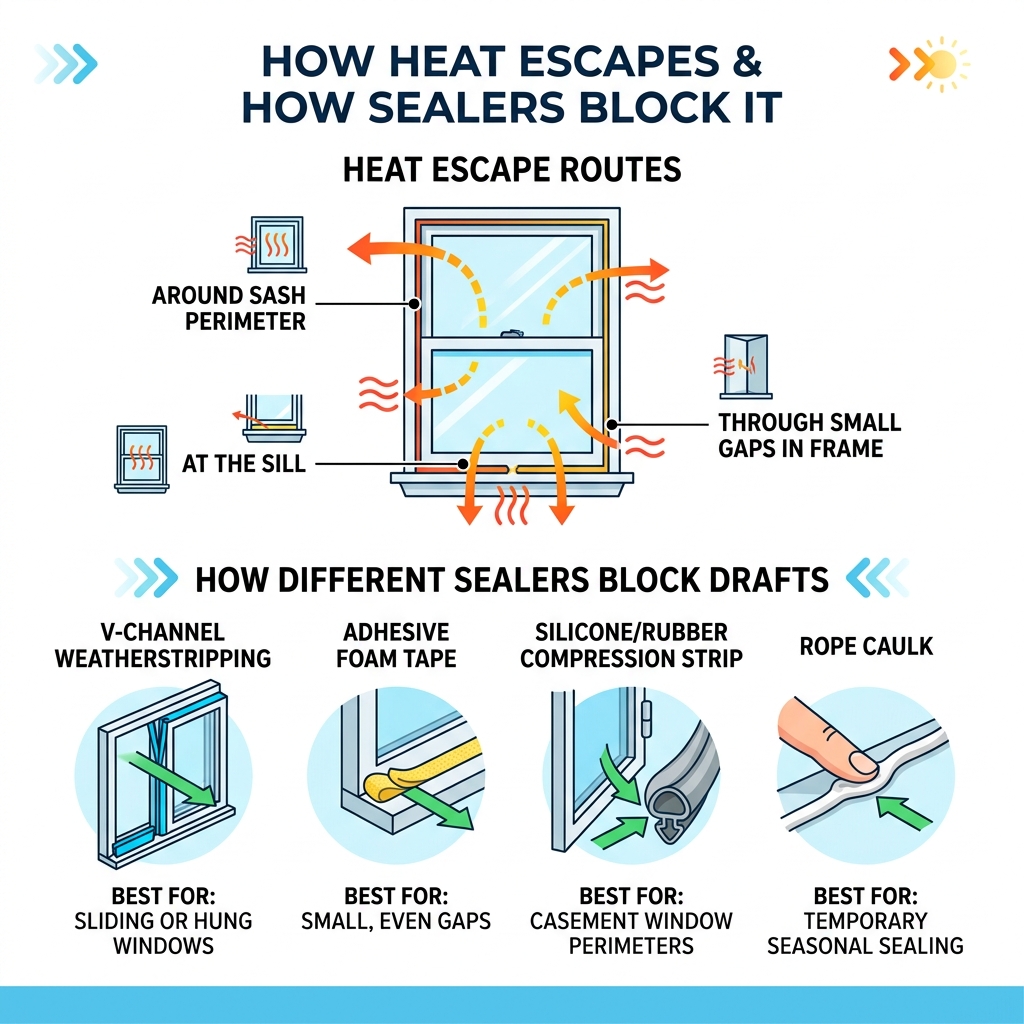
The best window draft sealer depends on your window type and gap size, but here are the top options most homeowners rely on:
| Product Type | Best For | Difficulty |
|---|---|---|
| Silicone/rubber compression strip | Casement window perimeters | Easy |
| Adhesive foam tape | Small, even gaps | Easy |
| V-channel weatherstripping | Sliding or hung windows | Moderate |
| Rope caulk | Temporary seasonal sealing | Easy |
| Shrink film insulation kit | Full window coverage | Easy |
| 100% silicone sealant | Permanent exterior gaps | Moderate |
Drafty windows are more than just uncomfortable. According to the U.S. Department of Energy, they can push your energy bills up to 25% higher than they need to be. On the flip side, properly sealing those leaks can save you an average of 15% on heating and cooling costs every year.
The fix is often simpler than you’d think. A few dollars of weatherstripping or sealant tape can make a noticeable difference by the next heating bill.
Not sure if your windows are actually leaking? Hold a lit candle near the frame on a windy day. If the flame flickers, you’ve found a draft.
This guide covers the best products to stop that cold air in its tracks — whether you’re dealing with a warped wooden casement window or just a few hairline gaps around the frame.
Understanding Your Options for the Best Window Draft Sealer
When we talk about the best window draft sealer, we aren’t just talking about one magic roll of tape. The world of weatherstripping is surprisingly diverse. To choose the right one, you first need to understand how your window moves (or doesn’t move).
For windows that open and close frequently, you need a solution that compresses when the window is shut but doesn’t interfere with the mechanism. Silicone bulb seals and rubber compression seals are the gold standard here. They act like a gasket, squishing down to create an airtight barrier.
On the other hand, if you have sliding windows, a V-channel (or tension seal) is often better. This is a durable plastic or metal strip folded into a ‘V’ shape that bridges the gap between the sash and the frame. For older windows with uneven surfaces, adhesive foam tape is a popular, budget-friendly choice, though it tends to wear out faster than silicone. If you’re looking for a deep dive into the mechanics of air leaks, check out our guide on how to seal air leaks to save energy.
Choosing the Best Window Draft Sealer for Large Gaps
Not every window gap is a neat, straight line. We’ve all seen those older wooden frames that have warped over time, leaving a “smile” or a “frown” where the wood should meet. For these larger, irregular gaps, standard thin tape won’t cut it.
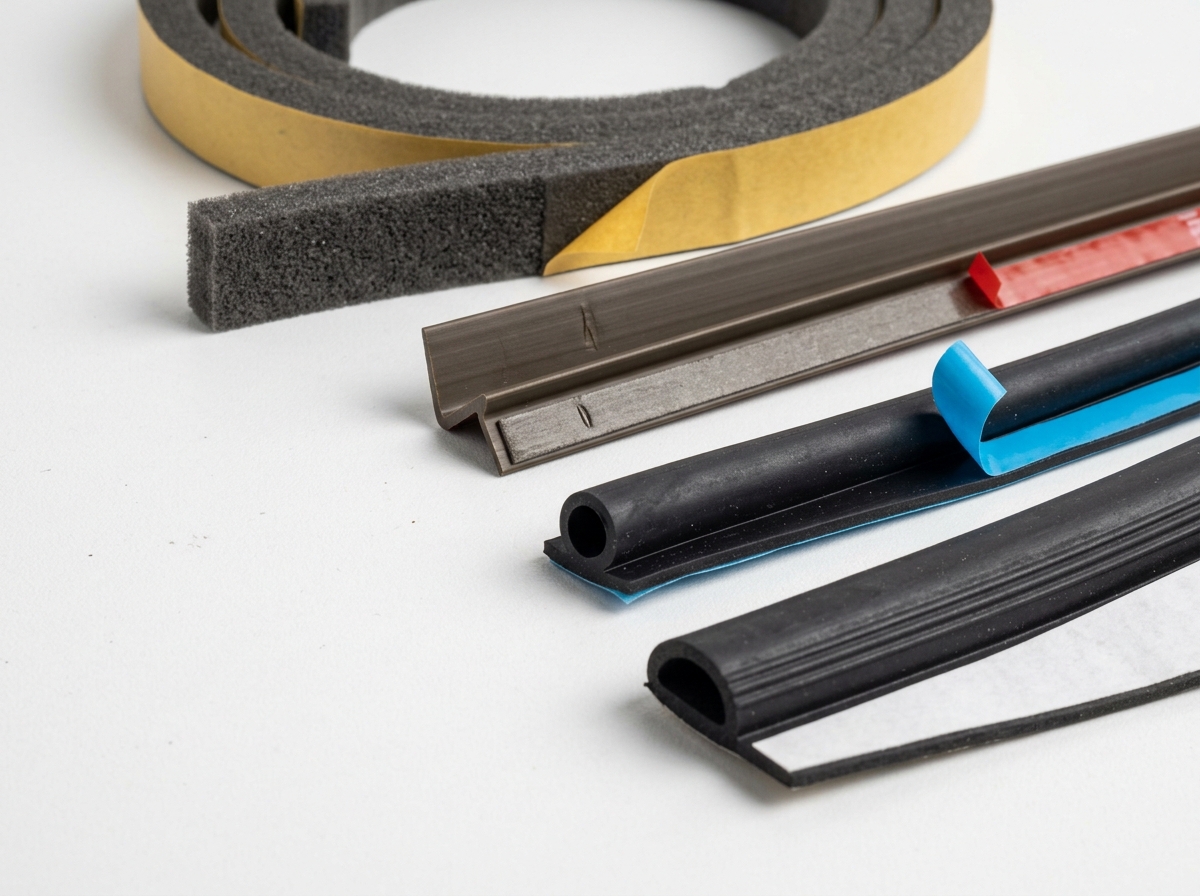
You’ll want to measure the widest part of the gap before buying. If the gap is wider than 1/4 inch, a tubular rubber gasket or a thick open-cell foam is your best bet. These materials can fill significant voids while still allowing the window to lock. In extreme cases of warping, you might even need to “shim” the hinges or use a self-adhesive door sweep modified for the window sill.
| Material | Durability | Best Gap Size |
|---|---|---|
| Open-Cell Foam | 1-2 Years | Small to Medium |
| EPDM Rubber | 5-10 Years | Medium to Large |
| Silicone | 10+ Years | Variable |
| Felt | 1-2 Years | Very Small |
Material Selection by Climate
Your local weather dictates how long your sealer will last. If you live in a place with extreme temperature swings—like Minnesota, where it can hit -10°F—you need a material that stays flexible.
Silicone is the undisputed champion of temperature resistance. It won’t become brittle in the freezing cold or melt/degrade under intense summer UV rays. If you live in a high-humidity area, look for products labeled as mold and mildew resistant. Some high-performance sealants, like silyl-terminated polymer (STP) formulas, can even be applied to damp surfaces, which is a lifesaver if you’re trying to fix a leak in the middle of a rainy autumn.
Top-Rated Products to Seal Out the Cold
If you’re ready to head to the store (or your favorite online retailer), here are the heavy hitters we recommend. These products have been tested in real-world conditions and consistently rank as the best window draft sealer options for DIYers.
- 3M Transparent Weather Sealing Tape: This is the “ninja” of window sealing. It’s nearly invisible and incredibly strong. It’s perfect for sealing the seam where the window meets the frame if you don’t plan on opening it until spring. Get 10 yards of 3M Transparent Weather Sealing Tape at Amazon.
- Duck MAX Strength Window Insulation Kit: For windows that are just fundamentally “leaky” through the glass or the entire frame, a shrink-film kit is a game changer. You apply double-sided tape, stick the plastic film on, and use a hair dryer to shrink it tight. It creates an extra dead-air space that acts like a temporary storm window. Get the Duck MAX Strength Window Insulation Kit at Amazon.
- Duck Brand Heavy-Duty Adhesive Weatherstrip: A solid choice for perimeter sealing, this EPDM rubber seal stays flexible down to -40°F. Get Duck Brand Heavy-Duty Adhesive Weatherstrip Seal at Amazon.
- Frost King Draft Stop Cloth Seal: Sometimes the draft is coming from the very bottom of the sash. These weighted “snakes” or cloth seals are an old-school but effective way to block air at the sill. Get the Frost King Draft Stop Cloth Seal at Amazon.
Solving Specific Issues: Casement Windows and Warped Frames
Casement windows—the ones that crank outward—are notorious for drafts, especially when they are made of wood. Over decades, the wood-to-wood contact can wear down, or the sash can warp, leaving a gap even when the handle is cranked tight.
The problem is often “air infiltration” through the perimeter. Unlike double-hung windows that slide, casement windows rely on compression. If the sash doesn’t press firmly against the frame, you’re going to feel the breeze. Sometimes, a simple hinge adjustment can pull the window closer to the frame, but often, the hardware has reached its limit.
The Best Window Draft Sealer for Casement Windows
For these windows, we recommend a silicone bulb or a vinyl compression seal. You want to attach the sealer to the frame so that when the window closes, it “squishes” the bulb. This creates a much tighter seal than a flat piece of foam.
If you have a warped section where one corner stays open, you can “double up” by using a thicker foam in just that spot. Another pro tip: check the “fin seals” or “pile weatherstripping” if your casement has a sliding track. These fuzzy strips often get matted down with dirt and lose their effectiveness. Replacing them is a key step in insulating your home for energy efficiency.
Temporary Fixes for Seasonal Drafts
Not every fix needs to be a permanent construction project. If you’re a renter or just need to get through one more winter before replacing the windows, there are several “quick and dirty” tricks:
- Rope Caulk: This looks like a roll of grey clay or “silly putty.” You pull off a strand and press it into the cracks. It never hardens, so you can peel it off in the spring. Get a 45-foot Roll of Frost King Caulking Cord at Amazon.
- Bubble Wrap: It sounds crazy, but it works. Spritz the window glass with a little water, press the bubble wrap against it (bubble side toward the glass), and it will stick. It’s an instant, albeit ugly, way to add a layer of insulation to thin panes.
- Clear Nail Polish: If you have a tiny crack in the glass that is letting in a whistle of air, a few coats of clear nail polish can seal it and prevent the crack from spreading until you can get a new pane.
- Thermal Curtains: Sometimes the best window draft sealer is actually a heavy fabric. Insulated curtains can block the drafts you missed and keep the radiant heat inside your home.
For more creative ways to stay warm, explore our list of energy saving methods for home insulation.
Maximizing Energy Savings Through Proper Installation
Even the most expensive, high-tech sealer will fail if you don’t install it correctly. Most DIY failures happen because the adhesive didn’t stick or the gap was mismeasured.
Preparation is 90% of the job. You must remove any old, crumbling caulk or peeling foam first. Use a putty knife or a specialized caulk removal tool, then scrub the area with soap and water (or rubbing alcohol for a truly clean surface). If you are applying a permanent liquid sealant, like DAP 100% Silicone, make sure the surface is dry unless the product specifically says it works on damp substrates.
Step-by-Step Application Guide
- Clean and Prep: Scrub the frame. If the wood is bare, consider a quick coat of primer or paint first, as adhesive sticks better to finished surfaces than to dusty, bare wood.
- Measure Twice: Measure the gap when the window is closed. You want a sealer that is just slightly thicker than the gap so it compresses, but not so thick that you have to force the window shut.
- Cut to Size: Use sharp scissors or a utility knife. For corners, try to “butt” the pieces tightly together or miter them at a 45-degree angle for a professional look.
- Apply Even Pressure: When sticking down adhesive tape, press firmly along the entire length.
- Test the Seal: Close and lock the window. Does it feel snug? Can you still see light through the cracks? If so, you may need a second layer or a backer rod for deep gaps.
For more winter-proofing strategies, read our insulation tips for winter.
Maintenance and Longevity
Weatherstripping isn’t a “set it and forget it” solution. Over time, rubber dries out, foam loses its bounce, and adhesive fails. We recommend a quick visual inspection every autumn. Look for signs of mold or mildew, which can indicate that moisture is getting trapped behind the seal.
High-quality silicone sealants can last 20 years or more, but cheap foam might only last a single season. If you notice the “snug” feeling is gone when you lock your windows, it’s time for a refresh. Keeping your seals in good shape is just as important as maintaining your attic insulation.
Frequently Asked Questions about Window Sealing
How much can I save by sealing window drafts?
The savings are real. The EPA estimates that homeowners can save an average of 15% on heating and cooling costs by air sealing and adding insulation. If your windows are particularly old and “rattly,” you might see your energy bills drop by as much as 25% to 30% after a weekend of sealing. Beyond the money, your HVAC system won’t have to work nearly as hard, which can extend the life of your furnace or AC unit. You can also look into insulated window treatments for even more savings.
When should I choose permanent sealant over temporary tape?
Choose permanent sealants (like 100% silicone caulk) for the exterior of the window where the frame meets the siding. These areas don’t need to move, and you want a seal that can withstand the sun and rain for decades.
Choose temporary tapes or rope caulk for the interior “moving” parts of the window during the winter. If you’re a renter, temporary solutions are a must to avoid damaging the paint and losing your security deposit.
How do I know if my windows need replacement instead of sealing?
Sealing is a great bandage, but it can’t fix a broken bone. You should consider professional replacement if:
- The wood frame is soft or rotting.
- The double-pane glass is “foggy” (this means the factory seal has failed).
- The window is structurally warped so badly that it won’t lock.
- You have single-pane windows and live in a very cold climate; even the best window draft sealer can’t match the efficiency of a modern Energy Star-rated window.
Conclusion
At Financefyx, we know that home maintenance can feel overwhelming, but sealing your windows is one of the highest-ROI tasks you can tackle. For the price of a few lattes, you can transform a drafty, shivering room into a cozy sanctuary—all while putting money back into your pocket every month.
Whether you choose a high-end silicone compression strip or a simple roll of rope caulk, the key is to act before the first frost hits. For a complete look at how to protect your home from the elements, don’t miss the ultimate guide to insulating your home. Happy sealing!
