
The Real Cost of Spraying Your Way to a Warmer Old Home
What Does Foam Insulation Actually Cost in an Old House?
Foam insulation cost in old house projects typically runs between $8,300 and $21,700 for a whole home — significantly more than insulating a new build.
Here’s a quick breakdown by area:
| Area | Typical Cost Range |
|---|---|
| Whole house | $8,300 – $21,700 |
| Attic | $5,100 – $10,300+ |
| Exterior walls (injection foam) | $4,300 – $8,800+ |
| Crawl space | $2,000 – $3,100 |
| Rim joists | $2,000 – $2,300 |
Per square foot, expect to pay roughly $1.50 to $4.00 depending on foam type and location. Most contractors also have a minimum charge of around $2,000, regardless of project size.
Old homes leak heat through every surface — walls, attics, floors, you name it. If you’re dealing with cold drafts, icy walls, or heating bills that keep climbing, poor insulation is almost certainly part of the problem.
Spray foam is one of the most effective fixes. It expands to fill gaps, seals air leaks, and can cut heating and cooling bills by 15% to 50%. But retrofitting an existing home costs nearly three times more than insulating during new construction — because walls are already closed up, old insulation may need removing, and crews face access challenges that simply don’t exist in a fresh build.
The good news? Rebates, tax credits, and long-term energy savings can make the investment pay off in as little as 3 to 7 years.
This guide walks you through exactly what drives those costs — and how to make smart decisions for your specific home.

Breaking Down the Average Foam Insulation Cost in Old House Projects
When we talk about the foam insulation cost in old house retrofits, we aren’t just looking at a bucket of chemicals. We are looking at a complex logistical operation. Unlike a new build where the “ribs” of the house are exposed, an old house is a finished puzzle that we have to work inside of.
For a standard 1,500 to 2,000 square foot existing home, the total investment often lands between $8,300 and $21,700. If you are targeting specific trouble spots rather than the whole envelope, the prices break down further.
Insulating an attic in an existing home typically costs between $5,100 and $10,300. This is often the highest-impact area because, as we know, heat rises. For exterior walls, we use “injection foam,” which costs between $4,300 and $8,800. Smaller but critical areas like crawl spaces ($2,000–$3,100) and rim joists ($2,000–$2,300) help seal the “basement” of your thermal envelope, preventing that “cold floor” feeling in the winter.
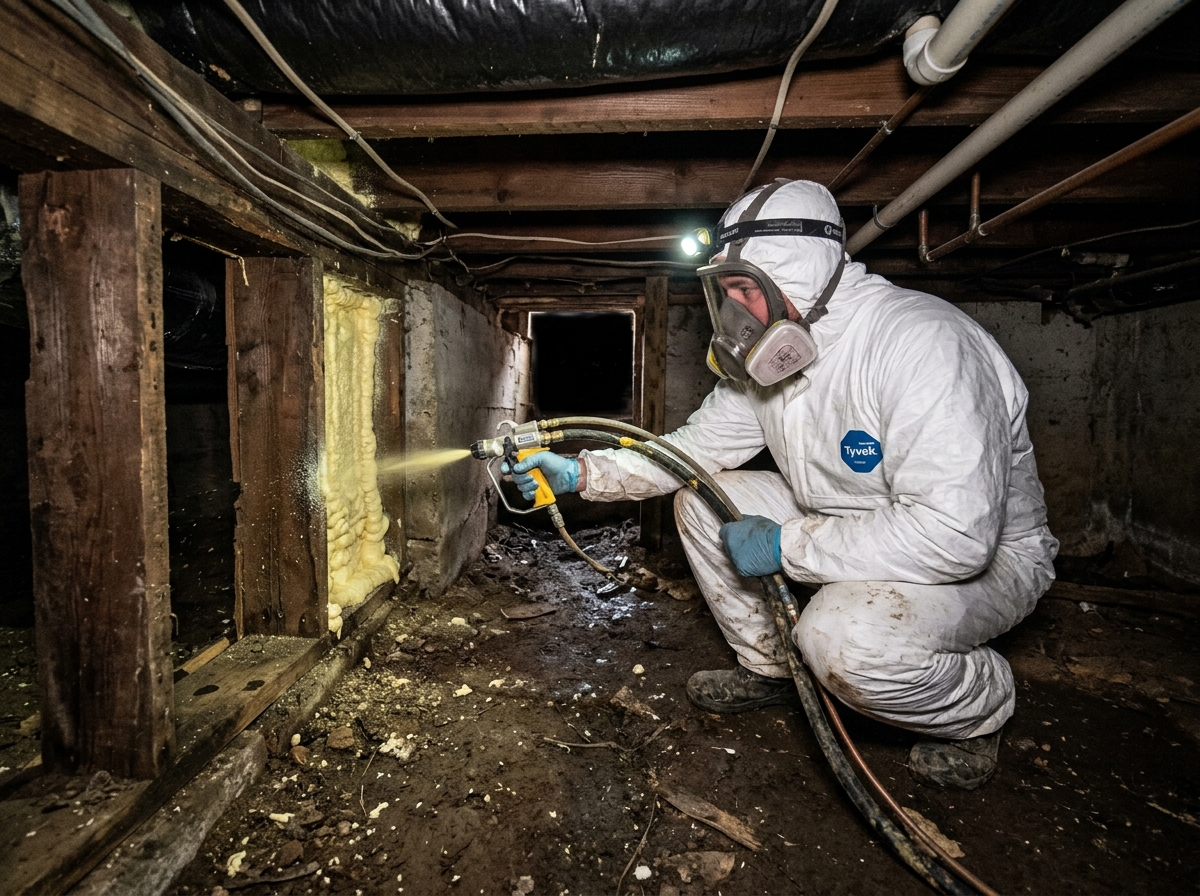
Estimating the Foam Insulation Cost in Old House Attics and Walls
To get a precise handle on your budget, you need to understand two terms: square footage and board feet. While most of us think in square feet, contractors often calculate volume in board feet (one square foot at one inch thick).
In 2025 and 2026, the national average for professional installation ranges from $1.50 to $4.00 per square foot. However, don’t expect a tiny job to be cheap. Most reputable contractors maintain a minimum charge of $2,000. This covers the cost of bringing out the high-tech rig, the specialized chemicals, and a trained crew. Whether you are doing one small wall or a whole room, that base price usually applies.
Why Foam Insulation Cost in Old House Retrofits Exceeds New Construction
It might seem unfair, but insulating an old house is significantly more expensive than insulating a new one. In fact, it can cost nearly three times more. For a 3,000 square foot home, you might see quotes of $9,450 to $22,500 for an existing structure, compared to $8,250 to $19,500 for new construction.
Why the gap?
- Labor Intensity: In a new house, the installer walks through open studs. In your old house, we may have to remove sections of drywall or drill hundreds of small holes in your siding to inject foam.
- Structural Obstacles: Old houses are full of surprises—unexpected fire blocks, knob-and-tube wiring, or settled debris that makes it harder for foam to flow evenly.
- Protection and Cleanup: We have to protect your furniture, flooring, and personal belongings from overspray, which adds hours of prep time.
Critical Factors and Hidden Expenses in Retrofit Pricing
The “sticker price” of spray foam is heavily influenced by the physical makeup of your home. One of the biggest variables is your siding type.
If you have vinyl or aluminum siding, the process is relatively straightforward. We can often unzip the siding, drill through the sheathing, and snap the siding back into place, leaving almost no trace. However, if you have a brick or stone exterior, the labor costs can jump by 20% or more. We have to drill through the mortar, inject the foam, and then meticulously patch the masonry to match your existing home.
Accessibility is another major factor. A crawl space with only 18 inches of clearance or a steeply pitched “steamboat” attic requires more time and specialized safety gear. If a crew has to spend half their day shimmying on their bellies, the labor cost will reflect that difficulty. For more on how these upgrades fit into a larger plan, check out our guide on remodeling your home for energy efficiency.
Preparation and Remediation Costs
Before the first drop of foam is sprayed, your old house might need some “TLC” that adds to the final bill:
- Old Insulation Removal: You can’t just spray over old, soggy fiberglass or dusty cellulose. Removing it typically costs $1 to $2 per square foot.
- Mold Remediation: If we find mold in your attic or crawl space, it must be treated before being sealed. This can add $1,100 to $3,400 to the project.
- Vapor Barriers: In some moisture-prone areas, we may need to install a dedicated vapor barrier, costing between $0.65 and $1.00 per square foot.
- Permits and Fees: Depending on your county, you might need a building permit, which can range from $50 to $200.
Open-Cell vs. Closed-Cell: Choosing the Right Material
Not all foam is created equal. Choosing between open-cell and closed-cell is one of the biggest decisions affecting your foam insulation cost in old house projects.
| Feature | Open-Cell Foam | Closed-Cell Foam |
|---|---|---|
| Cost (per sq ft) | $1.00 – $2.00 | $2.50 – $4.50 |
| R-Value (per inch) | 3.5 – 3.8 | 6.0 – 7.0 |
| Expansion | High (expands 100x) | Low/Dense |
| Best For | Interior walls, attics | Basements, moisture areas |
| Soundproofing | Excellent | Moderate |
According to data on spray foam insulation cost in 2025, open-cell is the most common choice for residential retrofits. It’s more affordable and stays flexible, which is great for old houses that “shift” with the seasons.
Performance Differences in Older Structures
In an older home, closed-cell foam is sometimes preferred for its structural benefits. Because it dries as hard as a rock, it can actually add structural integrity to old, “soft” roof decks or wall frames. It also acts as its own vapor barrier, which is a lifesaver in damp basements.
However, open-cell is the king of comfort. Because it expands so much, it finds every tiny crack and crevice that has developed over the last 50 to 100 years. If your goal is to stop drafts and dampen the sound of the street outside, open-cell is likely your best bet.
Maximizing ROI Through Rebates and Energy Savings
The upfront foam insulation cost in old house retrofits can be a bit of a shock, but the return on investment (ROI) is where the magic happens. Most homeowners see their energy bills drop by 15% to 30% immediately, and some report cutting their bills in half.
Typically, the “payback period”—the time it takes for the energy savings to equal the cost of the project—is between 3 and 7 years. Given that spray foam can last 50 to 80 years, that’s decades of pure profit.
To help lower the initial hurdle, look into these options:
- Federal Tax Credits: Under the Inflation Reduction Act, you can claim 30% of the project cost, up to $1,200 annually, through 2032.
- Utility Rebates: Many energy providers offer mail-in rebates ranging from $50 to $1,100 for insulation upgrades.
- Financing: Many contractors offer low-interest financing plans that allow you to pay for the insulation using the money you’re already saving on your utility bills.
For more ways to keep your home cozy without breaking the bank, see our attic insulation tips to save energy and money.
Frequently Asked Questions about Foam Insulation Cost in Old House
Is spray foam worth the higher upfront cost compared to fiberglass?
Yes, in almost every case for an old house. While fiberglass is cheaper, it doesn’t stop air flow. In an old home with thousands of tiny air leaks, fiberglass acts like a “filter” rather than a “barrier.” Spray foam creates an airtight seal that fiberglass simply cannot match, leading to much higher long-term savings and comfort.
Can I use a DIY spray foam kit for an entire old house?
We generally don’t recommend it for large projects. While DIY kits can save you 30% to 40% on labor, they are difficult to use correctly in finished walls. If the chemical mix is slightly off, the foam can pull away from the studs or off-gas odors. For an entire home, professional equipment and expertise are worth the investment to ensure a lifetime warranty and proper safety.
How long does the installation take for an existing home?
Most “whole-house” projects take about two days. A crew can typically finish an attic or all exterior walls in a single 5-to-8-hour shift. Because the foam cures quickly, you can usually stay in the home (though some people prefer to leave for 24 hours to let any installation odors dissipate).
Conclusion
At Financefyx, we know that your home is your biggest investment. While the foam insulation cost in old house retrofits is significant, it is one of the few home improvements that actually pays you back every single month. By choosing the right type of foam and taking advantage of federal tax credits, you can transform a drafty, expensive old house into a modern masterpiece of efficiency.
Ready to take control of your comfort? Start by getting professional estimates and exploring our other energy-saving tips to see how much you could be saving today!
