
The Best Solar Operations and Maintenance Companies for Every Project
Why Choosing the Right Solar O&M Company Matters for Your System
Solar operations and maintenance companies are specialized providers that keep solar energy systems running safely, efficiently, and profitably over their full lifespan.
Solar panels are often described as “set-and-forget” — and for the most part, that’s true. Residential systems rarely need much attention over their 25+ year lifespan.
But stuff happens.
Inverters fail. Vegetation overgrows arrays. Panels get soiled. Installers go out of business, leaving homeowners with what the industry calls orphaned systems — working panels and no one to call when something breaks.
That’s exactly where solar O&M companies come in. They handle everything from 24/7 remote monitoring and emergency repairs to panel washing and vegetation management — so your system keeps producing at its peak, year after year.
As one industry perspective puts it: solar sites don’t just run on sunlight — they run on parts, people, and experience.
Whether you own a rooftop system or manage a multi-gigawatt utility portfolio, the right O&M partner makes a real difference to your long-term return on investment.
Top Features of Solar Operations and Maintenance Companies
When we look at the leaders in the industry, we see that the best solar operations and maintenance companies go far beyond just fixing broken wires. Modern O&M is a high-tech field that blends electrical engineering with data science.
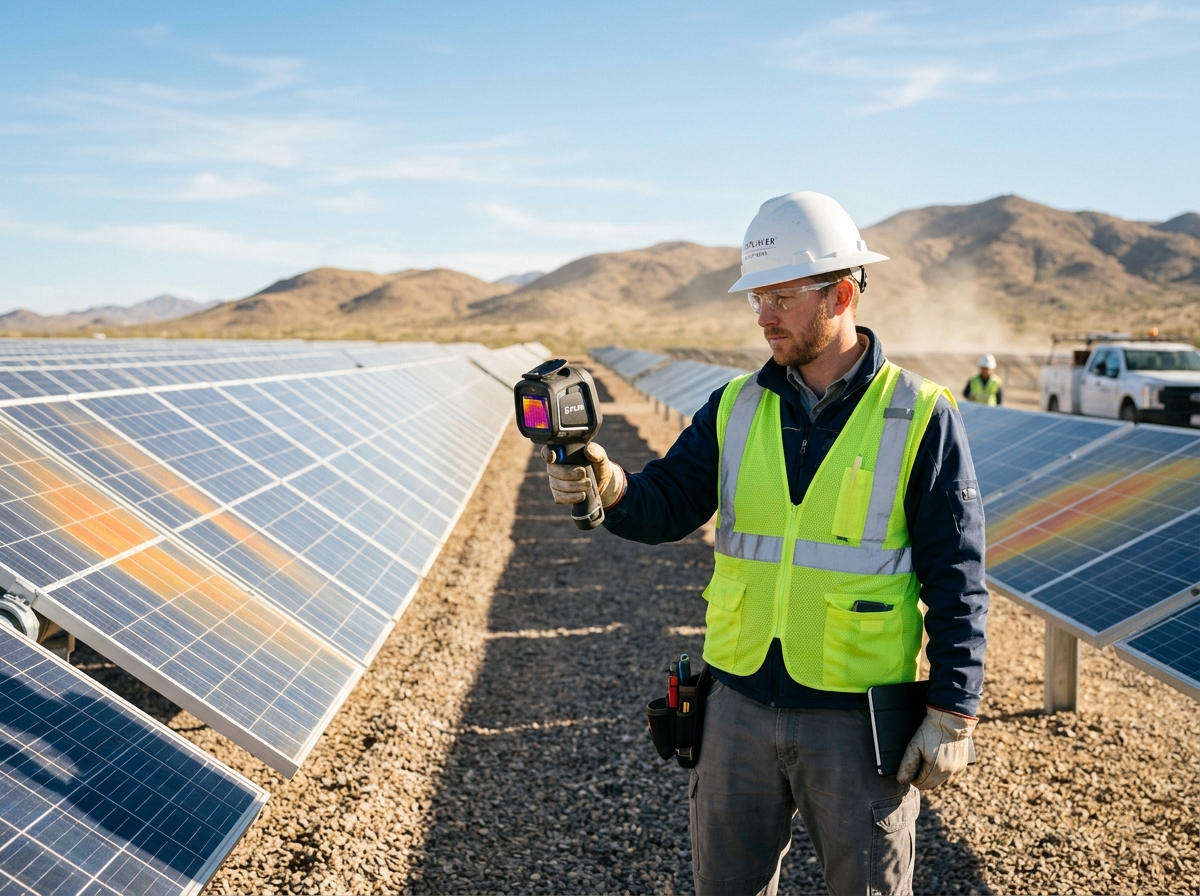
A comprehensive O&M strategy is built on several pillars. First, there is preventative maintenance. Think of this like the “100,000-mile checkup” for your car. Technicians perform 360-degree safety inspections, torque components to ensure they haven’t loosened, and conduct string testing.
Then there is corrective maintenance, which is the “emergency room” of the solar world. When a monitoring system flags a fault, these companies dispatch licensed electricians to diagnose and repair the issue immediately.
To catch these issues before they cause a total blackout, top-tier providers use real-time monitoring and SCADA (Supervisory Control and Data Acquisition) systems. These systems collect data 24/7, allowing performance analysts to spot underperformance trends that might be invisible to the naked eye. If you are just starting your journey into how these systems work, our Solar Energy Guide for Beginners is a great place to start.
Types of Services Offered by Solar Operations and Maintenance Companies
The menu of services offered by solar operations and maintenance companies is extensive. While a homeowner might just need a quick checkup, a utility-scale plant requires a small army of specialists.
- Preventative Care: Scheduled visits involving thermal imaging (FLIR) to find “hot spots” in panels, inverter servicing, and transformer inspections.
- Emergency Response: Rapid dispatch for fault restoration to minimize downtime.
- Balance of Plant (BOP): This includes everything around the panels, such as road repair, fence maintenance, and even snow removal.
- Administrative Management: Handling warranty claims with manufacturers (like Enphase or SolarEdge) and tracking spare parts inventory.
For those still in the planning stages, understanding these needs early can help you choose the right setup. Check out our Home Solar Panel Installation Guide to see how installation choices impact future maintenance.
How to Evaluate Solar Operations and Maintenance Companies
Not all solar operations and maintenance companies are created equal. When we evaluate a provider, we look at several critical metrics:
- Response Times: Does the company guarantee a technician on-site within 24 hours, or could it take 10 days? In the solar world, time is literally money.
- Technical Expertise: Do they have NABCEP-certified professionals and Master Electricians on staff? Top-tier providers emphasize using in-house experts rather than subcontractors to ensure quality.
- Coverage Details: Does the plan cover pest control (like critter guards) and panel cleaning, or are those “add-ons”?
- Ownership Mindset: The best providers treat your asset as if it were their own, focusing on long-term ROI rather than just quick fixes.
Cost is also a major factor. While O&M is an added expense, it’s often cheaper than the lost revenue from a dead system. To understand the baseline costs of getting into solar, read our breakdown: Don’t Overpay for Solar: A Breakdown of 5kW Installed Prices.
Key Benefits of Professional Asset Management
The primary goal of professional O&M is to protect your investment. A solar array is designed for a 25-year lifespan, but it won’t reach that milestone without help.
One of the biggest headaches in the industry is the “orphaned system.” This happens when an installation company goes bankrupt, leaving the homeowner with no one to honor the labor warranty. In these cases, a third-party O&M provider is a lifesaver. They can step in to provide the inverter monitoring and technical support that the original installer can no longer offer.
Even if your installer is still in business, dedicated O&M providers often offer faster response times because they aren’t busy installing new systems. They focus entirely on the “health” of existing assets. For more on the long-term financial outlook of solar, see The 2025 Guide to 5kW Solar Panel System Costs.
Maximizing ROI with Solar Operations and Maintenance Companies
Can maintenance actually make you money? The data says yes.
For example, industry studies have found that professional module washing programs increase asset production by 6% on average. When you’re talking about a multi-megawatt site, a 6% increase in yield translates to thousands of dollars in extra revenue.
Similarly, proactive vegetation management ensures that tall grass or weeds don’t shade the panels. Shading is a silent killer of solar ROI, as even a small amount of shade on one panel can significantly drop the output of an entire string. By keeping the site clear and the panels clean, solar operations and maintenance companies ensure you get every kilowatt-hour you paid for. Learn more about the math behind this in our guide on Solar Panels Cost and Savings.
Comparing Residential, Commercial, and Utility-Scale O&M
The scale of the project dictates the intensity of the maintenance. While a residential user might only need a cleaning every few years, utility-scale plants are managed like power stations.
| Feature | Residential | Commercial / Industrial | Utility-Scale |
|---|---|---|---|
| Primary Focus | Warranty & Inverter health | Uptime & Safety | Grid compliance & ROI |
| Monitoring | App-based (Enphase/SolarEdge) | 24/7 NOC Monitoring | Full SCADA Integration |
| Vegetation | Home landscaping | Minimal | Extensive (Mowing/Grazing) |
| Cleaning | Rainwater (usually) | Scheduled washing | Heavy equipment washing |
| Scale Example | 5-10 kW | 185 MW+ | 5 GW+ |
Leading providers manage massive portfolios totaling over 5 GW. At this scale, O&M also involves BESS (Battery Energy Storage Systems) integration. Managing the thermal health of large-scale batteries is just as important as managing the solar panels themselves.
If you are interested in how large-scale solar works, you might enjoy reading about Agua Caliente: How This Solar Giant is Making Waves in the Desert. For residential users looking to add storage, check out our list of the Best Home Batteries for Energy Storage.
Advanced Technology in Modern Solar Maintenance
Technology is the secret sauce that allows solar operations and maintenance companies to manage thousands of sites simultaneously.
One of the coolest advancements is the use of drones equipped with infrared (IR) cameras. Instead of a technician walking a 50-acre field with a handheld camera, a drone can fly the entire site in an hour. It creates a thermal map that pinpoints “hot spots”-individual cells that are failing or overheating. This level of precision allows for surgical repairs rather than replacing entire rows of panels.
Beyond drones, companies use:
- 24/7 NOC (Network Operations Centers): Centralized hubs where analysts watch live data feeds from across the country.
- Predictive Analytics: Using weather data and historical performance to predict when a part might fail before it actually does.
- Safety Protocols: High-level O&M requires strict safety standards. For instance, leading O&M firms maintain a Total Recordable Incident Rate (TRIR) as low as 0.22, which is incredibly low for such a high-voltage industry.
For readers who want more background on the monitoring and control side of modern energy infrastructure, SCADA is a useful reference point. Whether you’re managing a small home system or looking into Power to the People: A Step-by-Step Guide to Building a Solar Power Plant, technology like Home Battery Storage for Solar is making these systems more reliable than ever.
Frequently Asked Questions about Solar O&M
What happens to my O&M plan if my installer goes bankrupt?
If your installer goes out of business, your labor warranty usually disappears, but your equipment warranties (from the panel and inverter manufacturers) remain valid. You should contact a specialized third-party O&M provider. They specialize in “orphaned systems” and can take over the monitoring and repair of your array.
How often should solar panels be professionally cleaned?
In most regions, rainwater does a fine job of cleaning panels. However, if you live in a dusty area, near a highway, or in a region with frequent wildfires, professional cleaning can boost production by 5% to 10%. Most solar operations and maintenance companies recommend an annual inspection to see if “soiling” is impacting your output.
Is a dedicated O&M plan worth the cost for residential systems?
For most homeowners, a full-service O&M plan might be overkill if your installer is reliable and your system is under a strong labor warranty. However, an “inspection-only” plan or a monitoring service is highly valuable for peace of mind. If you own a large residential array or a commercial property, a dedicated plan is almost always worth it to protect the long-term ROI.
Conclusion
At Financefyx, we believe that solar is one of the best investments you can make for your home or business—but only if that investment is protected. Solar operations and maintenance companies provide the “insurance” you need to ensure your system doesn’t just work today, but continues to churn out clean energy for the next three decades.
From the high-tech drone inspections of national providers to the regional expertise of specialized firms, there is a provider for every scale of project. By choosing a partner with an “owner’s mindset,” you ensure that your solar asset remains a source of profit rather than a source of stress.
Ready to take your energy independence to the next level? Explore more renewable energy solutions on our site to stay ahead of the curve.
