
The Real Deal on Fiberglass Batts and Your Energy Bill
Why Fiberglass Batts Cost Savings Matter for Your Energy Bill
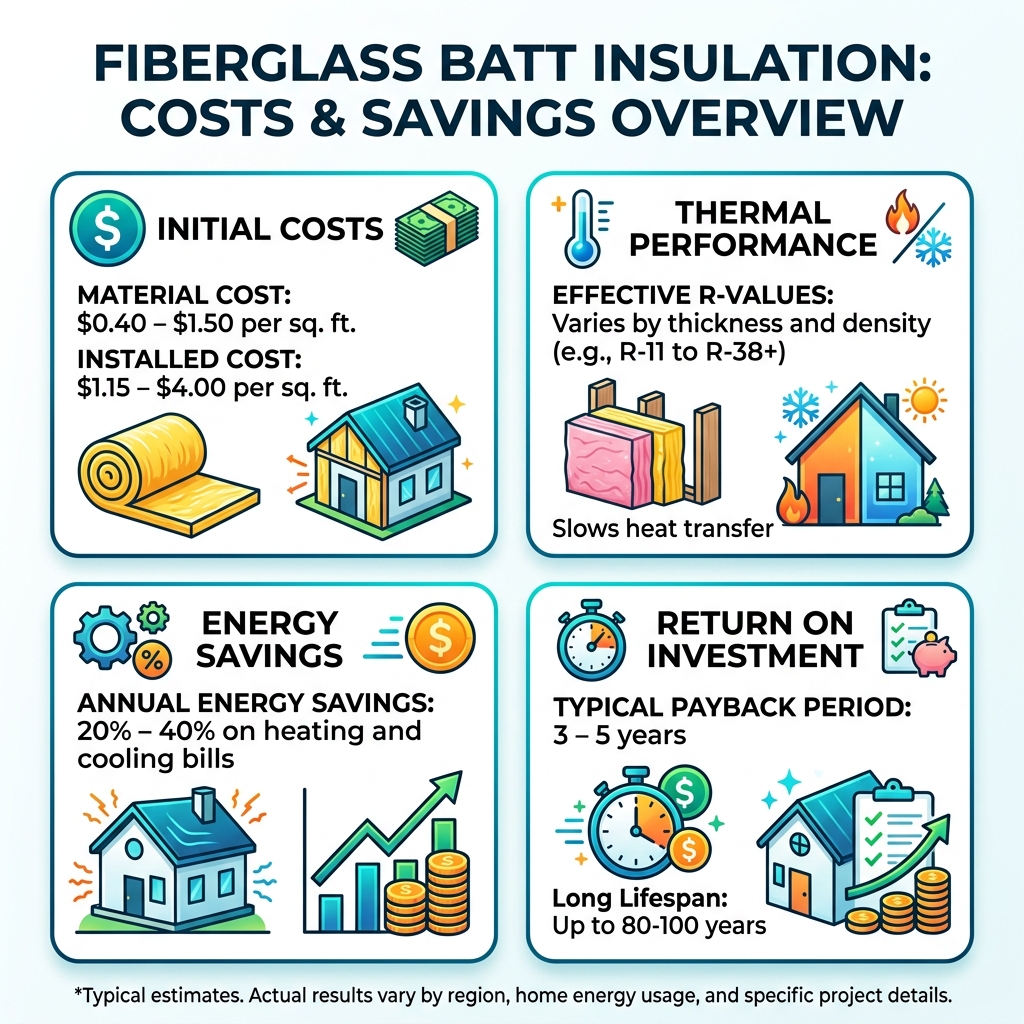
Fiberglass batts cost savings are real, measurable, and available to most homeowners — here’s a quick snapshot before we dive deeper:
| Factor | What to Expect |
|---|---|
| Material cost | $0.40 – $1.50 per sq. ft. |
| Installed cost | $1.15 – $4.00 per sq. ft. |
| Annual energy savings | 20% – 40% on heating and cooling bills |
| Typical payback period | 3 – 5 years |
| Lifespan | Up to 80 – 100 years |
If your home feels drafty in winter and your heating bills keep climbing, you’re likely losing a serious amount of warmth — and money — through under-insulated walls, attics, and floors.
Here’s a striking fact: airflow alone accounts for nearly 40% of total energy loss in a typical home. Fiberglass batts work by trapping tiny pockets of air inside their glass fiber structure, slowing down heat transfer and keeping conditioned air where it belongs — inside.
The good news? Fiberglass batts are the most affordable insulation option on the market. They hold over 70% market share in new U.S. homes for a reason: they hit a sweet spot of low cost, solid thermal performance, and long lifespan.
In this guide, we break down exactly what fiberglass batts cost, how much you can realistically save, and how they stack up against other insulation types — so you can make a confident, informed decision.
Breaking Down the Initial Investment
When we talk about the upfront price of insulation, fiberglass batts are almost always the budget champion. Unlike spray foam, which requires complex chemical mixing and specialized rigs, fiberglass batts are essentially “pillows” of spun glass fibers that are relatively inexpensive to manufacture and transport.
The initial investment is split into two main buckets: materials and labor.
- Material Costs: On average, you can expect to pay between $0.40 and $1.50 per square foot for the batts themselves. This price varies based on the thickness and the “facing” (the paper or foil attached to one side). For example, a standard R-13 batt for a 2×4 wall might cost around $0.54 per square foot, while a thick R-38 batt for an attic can jump to over $2.00 per square foot.
- Installation Labor: If you hire a professional, labor typically adds another $0.75 to $2.50 per square foot. Total installed costs generally land between $1.15 and $4.00 per square foot.
According to the Fair Cost Guide – Fiberglass Batt Insulation, localized factors like your zip code and the complexity of the space (think cramped crawl spaces vs. wide-open attics) will influence the final quote. We always recommend getting at least three bids to ensure you’re getting a fair market rate.
How R-Value Impacts Fiberglass Batts Cost Savings
The term “R-value” is just a fancy way of saying “how well does this stuff stop heat?” The higher the R-value, the better the thermal performance. However, higher R-values require thicker material, which increases the price.
To maximize your fiberglass batts cost savings, you need to find the “sweet spot” for your specific climate. If you live in a mild climate, an R-13 or R-15 in your walls might be plenty. But if you’re bracing for a New York or Chicago winter, you’ll want R-21 in the walls and at least R-49 in the attic.
While thicker insulation costs more today, the long-term energy reduction usually pays for that extra thickness within a few seasons. As noted in How Much Is Fiberglass Insulation?, choosing the right R-value for your zone is the single most important factor in determining your eventual ROI.
Facing and Vapor Barriers
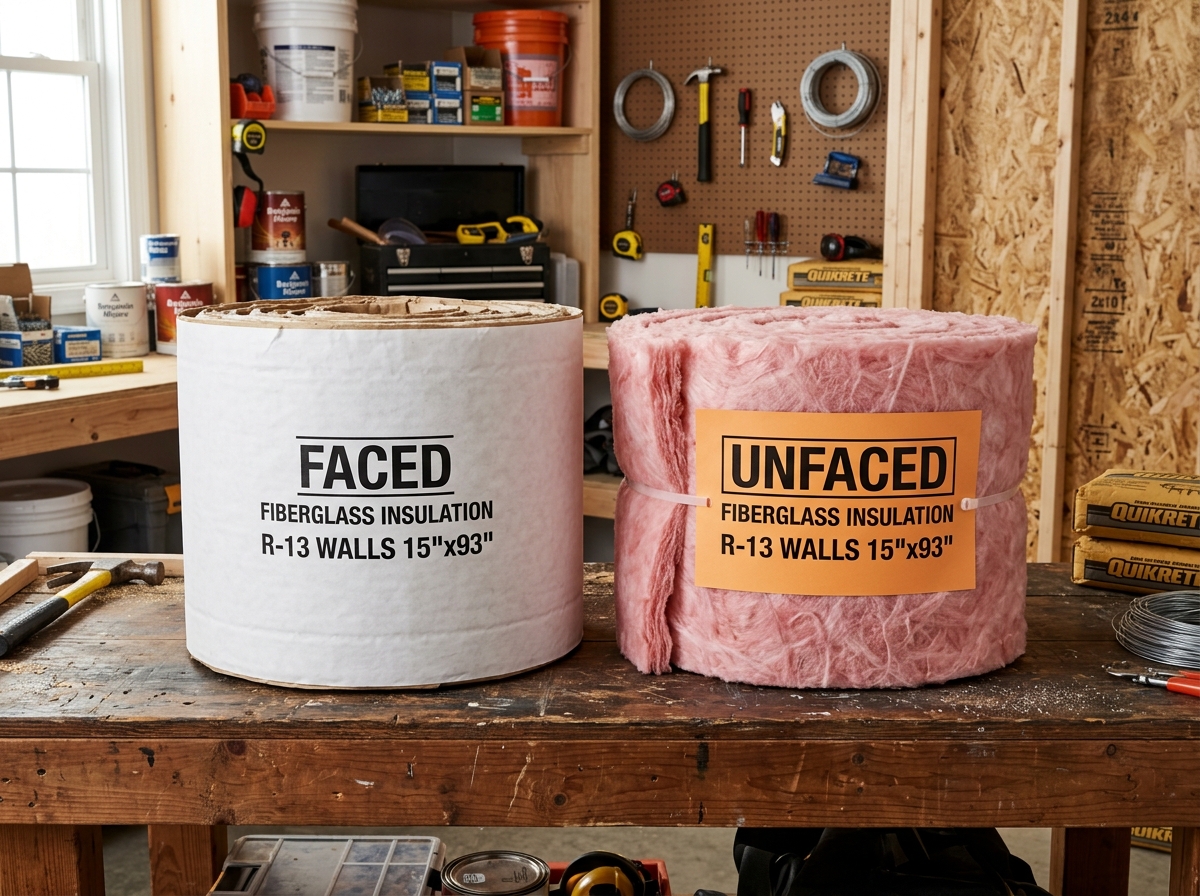
When browsing the aisles of a home improvement store, you’ll see “faced” and “unfaced” batts. Faced batts have a layer of Kraft paper or foil attached. This isn’t just for decoration; it acts as a vapor retarder.
In many climates, moisture from inside your home (from showering, cooking, or breathing) can migrate into the walls, hit the cold exterior, and condense into water. This leads to mold and rot. Faced insulation helps prevent this by blocking that moisture. For specific advice on moisture-prone areas, check out our guide on The Best Insulation To Use Between Studs In Your Wet Zones.
Maximizing Fiberglass Batts Cost Savings
The real magic of fiberglass isn’t just the low price tag at the store; it’s what happens to your utility bill over the next 20 years. Homeowners who upgrade from thin, outdated insulation to modern fiberglass batts typically see a 20% to 40% reduction in annual energy costs.
This happens because fiberglass addresses the two biggest enemies of your HVAC system: conduction and convection. By trapping air, the batts prevent heat from moving through the ceiling (conduction) and help dampen the “chimney effect” where warm air escapes through the roof (convection). For more ways to keep your home efficient, see our Energy Saving Methods For Home Insulation.
Long-Term ROI and Fiberglass Batts Cost Savings
One of the most impressive statistics about fiberglass is its durability. When kept dry and protected from pests, fiberglass can last 80 to 100 years. That is essentially the lifespan of the house itself!
Because the material doesn’t settle significantly over time (unlike some loose-fill options), your fiberglass batts cost savings remain consistent decade after decade. The “payback period”—the time it takes for the energy savings to equal the cost of installation—is usually just 3 to 5 years. After that, every dollar saved on your bill is pure profit. Plus, a well-insulated home has a higher resale value because buyers love low utility projections.
Beyond the Bill: Comfort and Soundproofing
We often focus on the money, but what about your sanity? Fiberglass is an excellent acoustic dampener. If you have a noisy street or a loud teenager in the next room, installing fiberglass batts in interior walls can reduce noise transfer by up to 10 decibels.
Consistent indoor temperatures also mean you won’t have “hot spots” or “cold zones” in your house. No more wearing a parka in the living room while the bedroom is a sauna! For more comfort-focused tips, read Catch The Heat: Insulation Tips For Winter.
Strategic Placement for Maximum Efficiency
To get the most out of your investment, you have to put the insulation where it matters most.
- The Attic: This is the #1 priority. Heat rises, and in the winter, an uninsulated attic is like a giant hole in your wallet.
- Exterior Walls: These are your primary defense against the elements.
- Crawl Spaces and Rim Joists: These are often overlooked but are major sources of cold drafts.
Properly fitting the batts is crucial. If there are gaps, heat will find them. If you compress the batts to make them fit a smaller space, you actually lose R-value because you’re squishing the air pockets that do the insulating. For more attic-specific strategies, check out our Attic Insulation Tips: Save Energy And Money.
Insulating Unfinished Walls and Basements
Fiberglass batts are perfect for unfinished basements or garage walls because they are “friction-fit.” This means they are designed to be slightly wider than the space between studs (usually 15 or 23 inches), so they stay in place without needing dozens of staples. If you’re planning a basement finish, this is a key step for Remodeling Your Home For Energy Efficiency.
Sealing the Envelope
Even the best insulation can’t stop a draft from a literal hole in the wall. Before installing batts, we always recommend “air sealing.” Use spray foam or caulk to seal gaps around pipes, wires, and light fixtures. Since airflow accounts for roughly 40% of energy loss, combining air sealing with fiberglass batts is the ultimate recipe for fiberglass batts cost savings. Learn the step-by-step process in our guide on How To Seal Air Leaks To Save Energy.
Comparing Fiberglass Batts to Other Insulation Types
How does fiberglass stack up against the competition? Here is a quick comparison:
| Insulation Type | Cost per Sq. Ft. (Installed) | Best For |
|---|---|---|
| Fiberglass Batts | $1.15 – $4.00 | Walls, DIY, Budget |
| Blown-In Fiberglass | $1.50 – $2.20 | Attic floors, Irregular spaces |
| Spray Foam | $3.00 – $7.00 | Air sealing, Maximum R-value |
| Rock Wool | $2.50 – $6.00 | Fire resistance, Soundproofing |
While rock wool offers superior fire resistance, it is significantly more expensive. For more on that specific matchup, see the Rock Wool vs Fiberglass Cost Comparison 2026 – LatestCost – Real-Time Price Insights.
Batts vs. Blown-In Fiberglass
Blown-in (or loose-fill) fiberglass is great for attics because it fills every nook and cranny. However, it requires a machine rental and can be messy. Batts are much easier for a DIYer to handle and provide a more predictable R-value because you can see the thickness clearly. As the Fiberglass Batt Insulation Guide and Cost – PICKHVAC points out, batts are generally preferred for vertical wall applications where loose-fill would simply fall to the bottom of the cavity.
Fiberglass vs. Spray Foam Performance
Spray foam is the “luxury” option. It creates a perfect air seal, but it can cost 3 to 4 times more than fiberglass. For most homeowners, the massive jump in price doesn’t justify the marginal increase in energy savings. Fiberglass batts remain the most cost-effective way to reach modern energy standards. If you are interested in other green options, explore Eco-Friendly Home Renovations To Save Energy.
DIY vs. Professional Installation: A Cost-Benefit Analysis
Can you do this yourself? Absolutely. Fiberglass batts are one of the most DIY-friendly home improvements. By doing it yourself, you can save roughly 50% on the total project cost.
However, it is itchy, dusty work. You must wear proper safety gear:
- Long sleeves and pants
- Gloves
- Safety glasses
- An N95 mask or respirator
Professional installers have the advantage of speed and precision. They know how to cut around electrical boxes without leaving gaps and how to avoid compressing the material. If you’re unsure about the state of your current insulation, start with A Comprehensive Home Energy Audit Checklist.
The Hidden Costs of DIY Mistakes
The biggest risk of DIY is “the gap.” If you leave just a 1-inch gap at the top of a wall cavity, you can lose a significant portion of that wall’s R-value due to convection loops. Similarly, squishing a 6-inch thick batt into a 4-inch wall cavity reduces its effectiveness. These small errors can eat away at your fiberglass batts cost savings over time. For more on avoiding common errors, see Save Energy With Cost-Effective Home Improvements.
When to Hire a Pro for Maximum ROI
If your attic is a “low-slope” roof where you have to crawl on your stomach, or if you need to remove old, contaminated insulation (like material with rodent droppings), hire a pro. They have the vacuums and safety equipment to handle the “nasty” stuff safely. Ensuring a perfect fit in complex areas is key to Insulating Your Home For Energy Efficiency. You can also find more details in the Fiberglass Insulation Cost: Complete Pricing And Installation Guide | Zavza Seal LLC.
Frequently Asked Questions about Fiberglass Batts
How much can I save on my energy bill with new fiberglass batts?
Most homeowners see a reduction of 20% to 40% on their heating and cooling costs. In a typical home, this translates to $200–$400 in savings every year, allowing the project to pay for itself in under five years.
How long do fiberglass batts last before they need to be replaced?
If kept dry and uncompressed, fiberglass batts can last 80 to 100 years. Unlike cellulose, which can settle and lose R-value, or spray foam, which can occasionally pull away from studs, fiberglass is incredibly stable.
Is it cheaper to buy fiberglass batts in bulk?
Yes! Most major retailers offer bulk discounts. If you buy 15 or more bags/units, you can often save 10% to 15% on the material cost. This is a great way to boost your fiberglass batts cost savings if you’re doing a whole-house retrofit.
Conclusion
At Financefyx, we believe that smart home ownership starts with making your money work harder for you. Upgrading to fiberglass batts is one of the few home improvements that offers a guaranteed return on investment while simultaneously making your life more comfortable.
By combining the low upfront cost of fiberglass with strategic air sealing and proper R-value selection, you can slash your utility bills for decades to come. Whether you’re tackling a small weekend DIY project or hiring a team for a full-home overhaul, the fiberglass batts cost savings are undeniable.
Ready to take control of your home’s efficiency? Check out our guide on Reducing Your Home’s Electricity Bills: A Guide For AdSense Users or start saving today with our comprehensive energy-saving tips.
